INDEPENDENT AUTOMOTIVE NEWSGLOBAL PERSPECTIVE / AUSTRALIAN EDITION
TDCNTHE DAILY
CAR NEWS.

The road ahead.
Every day.

RSS ↗
Latest/Australia

247 original articles

Australia / TDCN ORIGINAL

Denza adds 17 regional service points across Australia

The BYD-owned premium brand is placing authorised servicing at existing BYD dealerships in country areas, with more network growth planned for 2027.

Denza is adding 17 authorised service points in regional Australia, all located at existing BYD dealerships, as the BYD-owned premium brand widens its support network beyond the metropolitan areas where its showrooms are concentrated. The new outlets are due to come online over the coming months.

Where the new service points will be

The locations span every mainland state and the Northern Territory. New South Wales gains Orange, Dubbo, Tamworth and Nowra; Queensland gets Mackay, Bundaberg and Rockhampton; Victoria adds Wodonga, Bendigo, Ballarat, Traralgon and Warrnambool; South Australia gets Mount Gambier; Western Australia adds Geraldton, Bunbury and Albany; and Darwin covers the Northern Territory.

The additions sit alongside 18 dedicated Denza sites nationwide, with further expansion of the sales and service network planned during 2027. Denza has not said which of its models each individual service point will be equipped to handle; the brand describes the work available as varying by location rather than naming models.
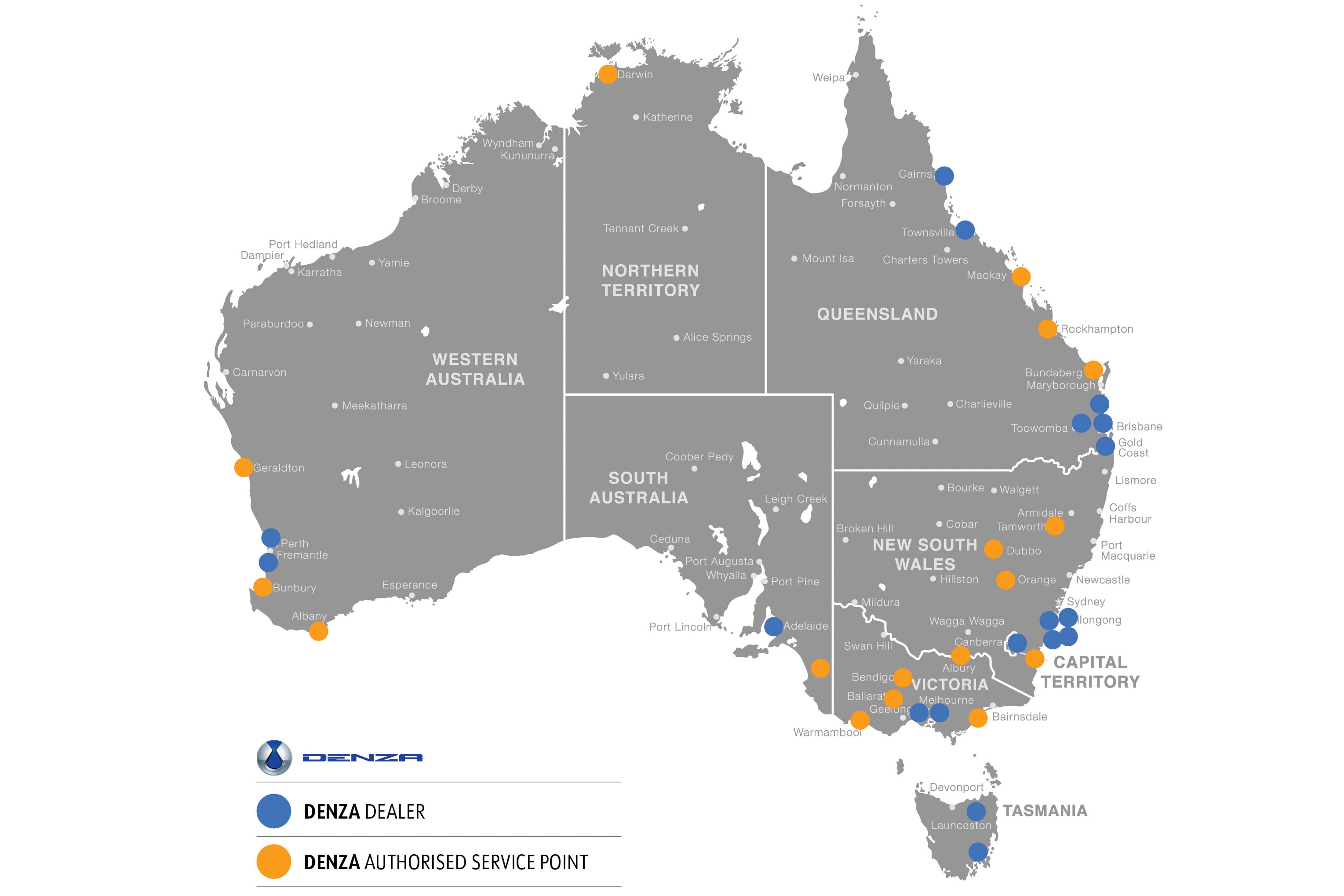
Denza's new authorised service points plotted across Australia
Denza's new authorised service points plotted across Australia, Image: CarExpert

What the service points can do

Depending on the site, the outlets may carry out scheduled servicing, general mechanical repairs, warranty diagnoses and repairs, and other diagnostic and technical work including software upgrades. Denza says it will keep technical oversight of customer cases to ensure work meets its factory standard, and where a service point cannot complete a job it will "determine the appropriate repair pathway on a case-by-case basis".

Denza has not published a servicing price list for the new locations, so costs will presumably follow whatever schedule the brand already applies at its dedicated sites.

Denza Australia chief operating officer Mark Harland framed the expansion around travel: "Australia is a vast country and we want our customers to explore it far and wide. The introduction of authorised servicing points gives Denza customers the confidence to travel further, knowing there is an increasingly strong support network behind them".

That matters because regional coverage is often the deciding factor for buyers outside the capitals. An owner in Dubbo or Geraldton weighing a Denza against a brand with a closer workshop now has a local authorised option for routine work, which removes one of the practical objections to a low-volume premium marque.
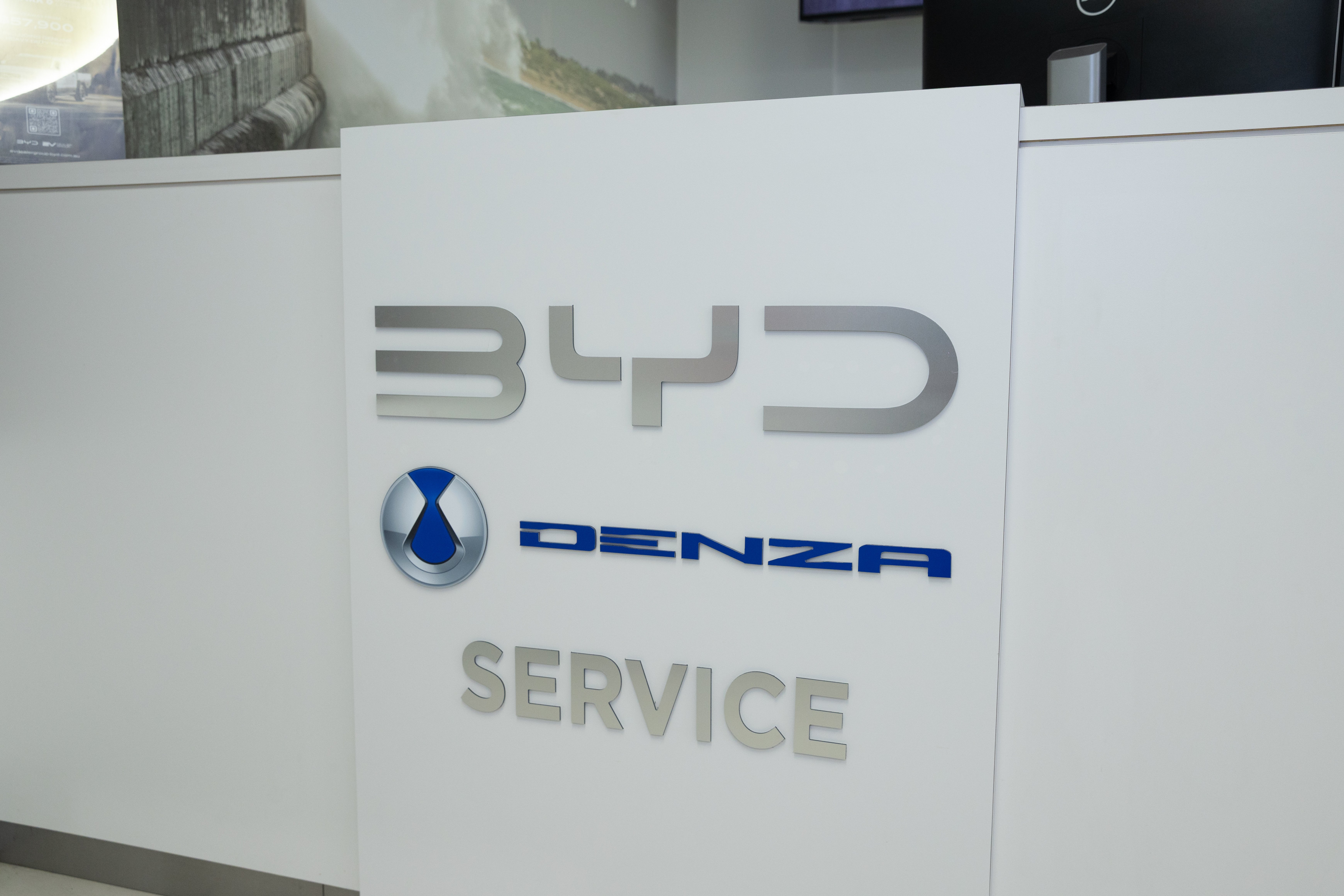
Denza service signage sharing space with BYD branding
Denza service signage sharing space with BYD branding, Image: CarExpert

Borrowing BYD's parts machine

Denza sells through different showrooms than sister brand BYD, but it can draw on BYD Australia's national parts and logistics network. The company says most parts orders can be fulfilled within 24 hours from distribution centres in Sydney, Melbourne, Brisbane and Perth.

BYD says it holds around 95 per cent of its spare parts locally, with more than 580,000 components and over $25 million worth of stock on hand at any one time. Its largest parts and distribution centre, in Melbourne's outer west, is run with SF Express and accounts for 15,000m2 of the company's complex.

The scale gap between the two brands is stark: BYD has more than 120 retail locations in Australia and expects to reach 146 by December 2026, and it is opening a 25,000m2 super delivery and service centre at Port Melbourne in early 2027. Denza's 18 dedicated sites plus the 17 new service points are a fraction of that footprint, which is why leaning on BYD's logistics is the practical route to keeping regional owners on the road.
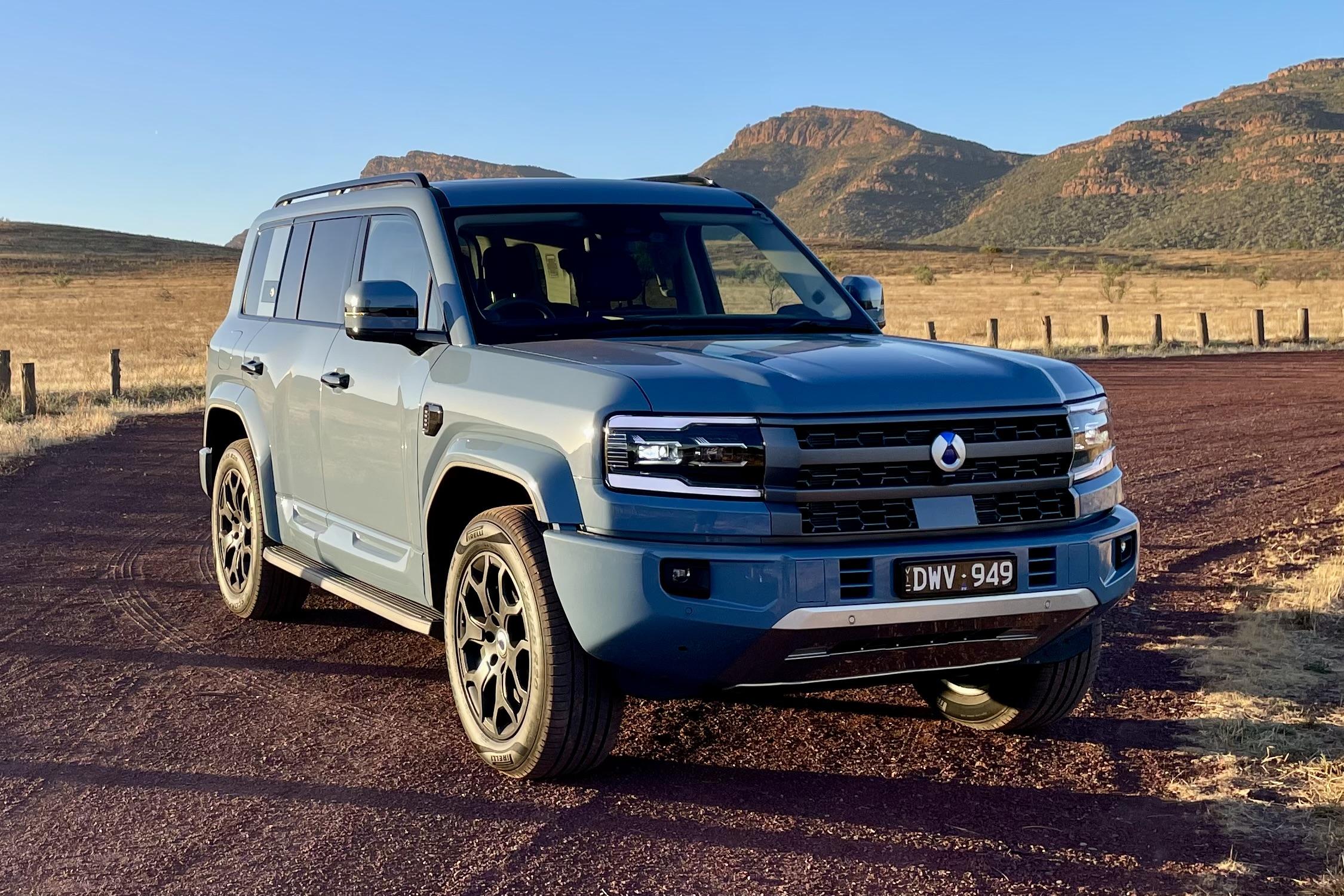
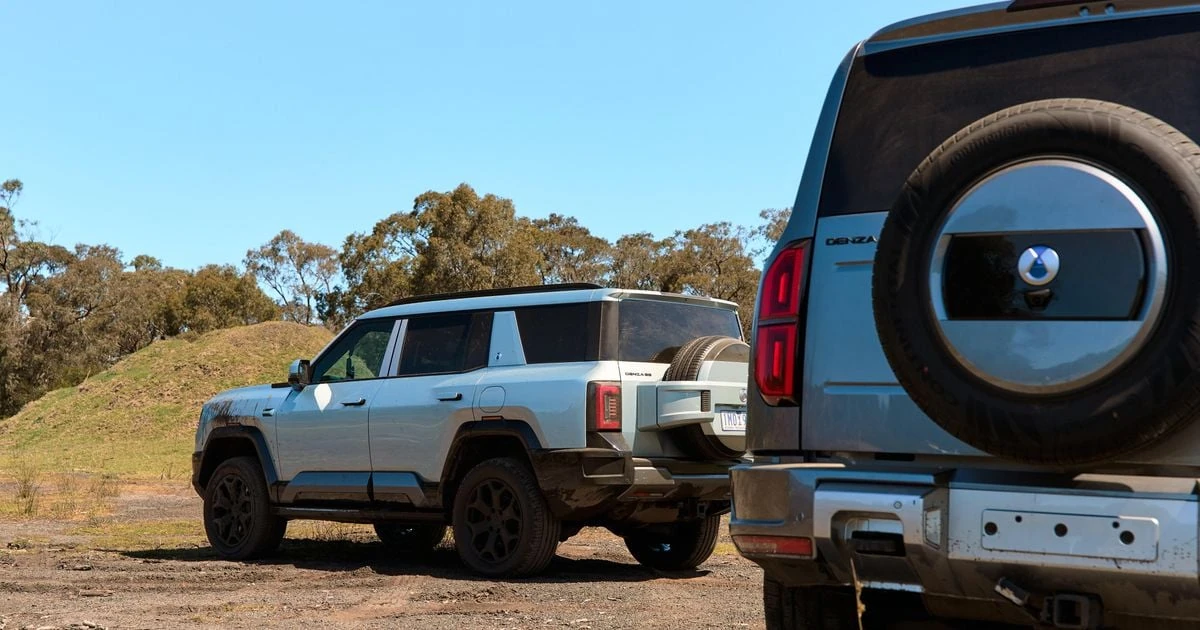
A Denza SUV out in the Australian landscape
A Denza SUV out in the Australian landscape, Image: CarExpert
Open this article ↗
Electric / TDCN ORIGINAL

Ford Fathom electric truck to use two aluminium castings in place of 146 parts

Ford has produced 5,000 unicastings for the $29,945 compact EV ahead of a spring debut, but range and battery details remain unannounced.

Image: Carscoops

Ford will build its $29,945 Fathom electric compact truck using two large aluminium castings that replace 146 structural components, the company has detailed ahead of the model's debut next spring. The 2028 model year truck is the first Ford to use the process, which the automaker calls unicasting and which mirrors the gigacasting approach used by Tesla.

Ford says 5,000 castings, enough for 2,500 trucks, have already been produced at its Shelbyville Technical Center for the Fathom's official debut next spring. Production Fathoms will be assembled at Ford's Louisville Assembly Plant in Kentucky.

How the castings are made and checked

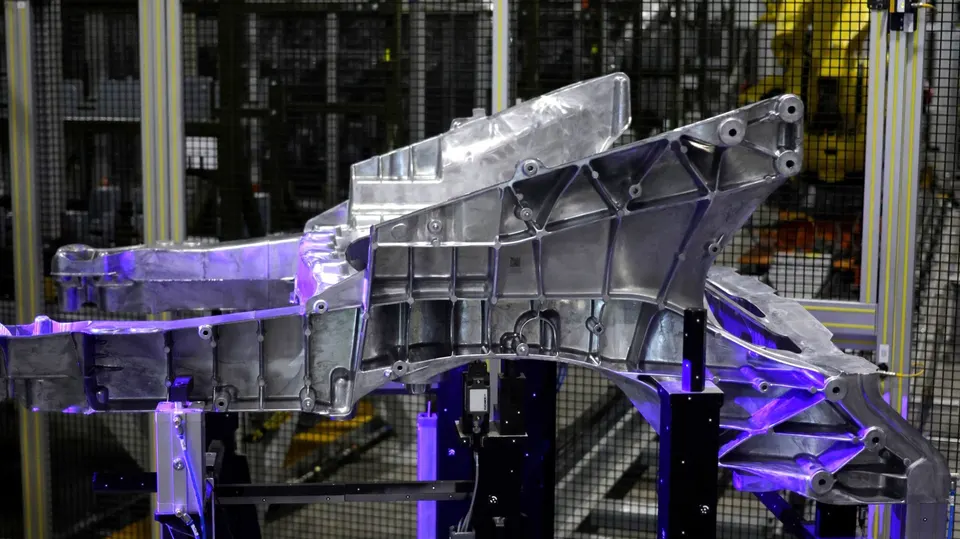
Each casting begins as an aluminium ingot, fed into a furnace by an elevator and melted at 1,300 degrees Fahrenheit (700 degrees Celsius) before entering a casting machine. Ford makes two per truck, one for the front and one for the rear.

Before shipping to Louisville, every casting undergoes a coordinate check in a climate-controlled room to confirm dimensions and hole locations match specification. An industrial X-ray system then inspects the interior for defects such as pores and voids, an optical scanner rechecks dimensions, and samples of the aluminium are tensile strength tested and chemically analysed. Ford does not release a batch to Louisville until every test is passed.

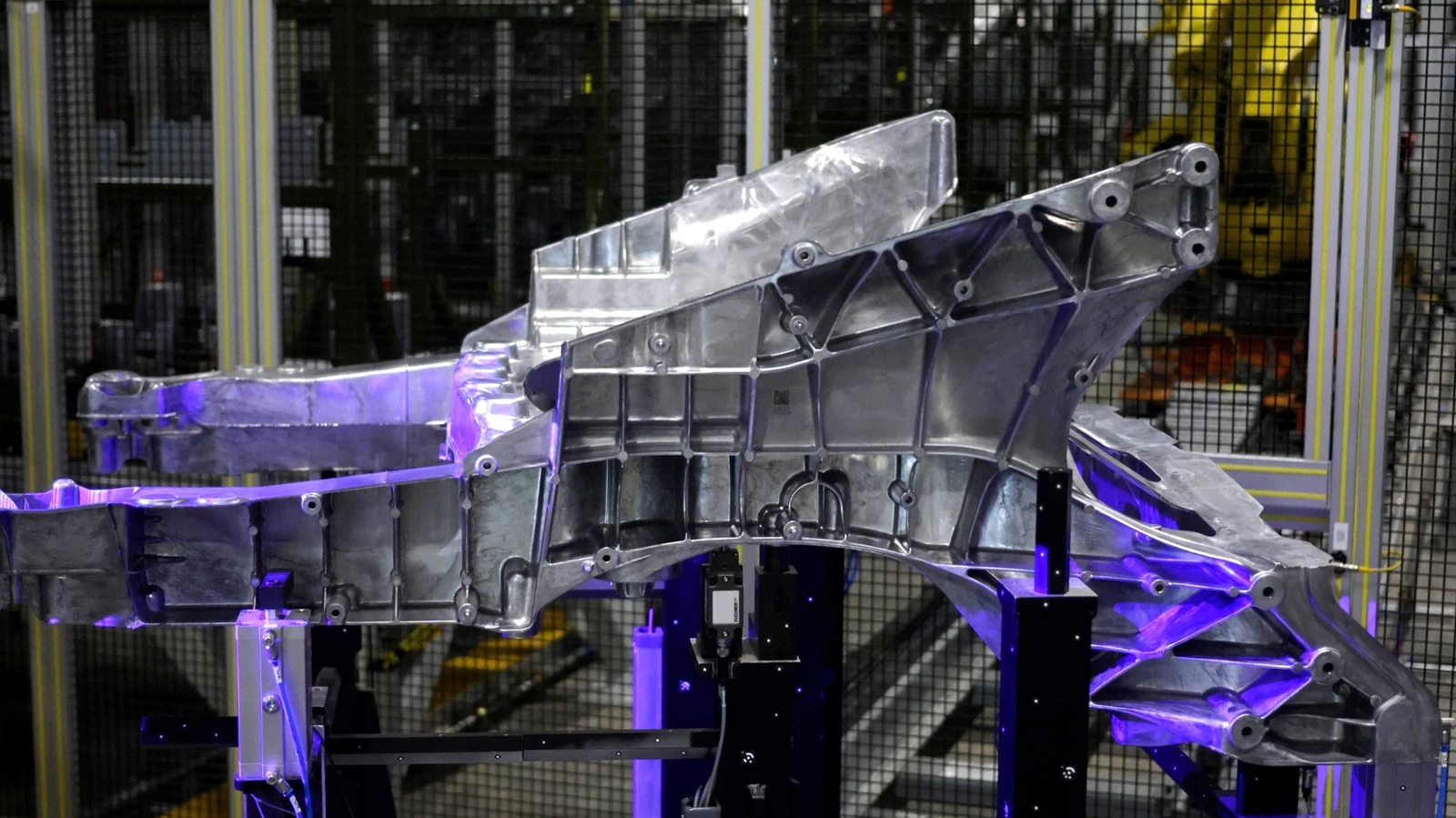
Ford's giant aluminium casting, one of two that replaces 146 separate parts
Ford's giant aluminium casting, one of two that replaces 146 separate parts, Image: Carscoops

A different assembly line

At Louisville, the Fathom will not move down a single production line in the manner Henry Ford introduced. Instead it will be assembled in three separate sub-sections and only united into a complete truck late in the build cycle, a step Ford says saves time.

The casting strategy is central to hitting the Fathom's $29,945 price. Fewer parts means fewer joins and faster builds, which is the same arithmetic that has driven Tesla's large castings. For buyers, the question is whether that saving shows up in the showroom price rather than only in Ford's cost base, and the sticker figure Ford has quoted suggests the company intends it to.

What Ford has confirmed, and what it has not

Ford has confirmed the Fathom will seat five and offer more passenger space than a Toyota RAV4. It will support bidirectional charging and accelerate from 0 to 60 mph (97 kph) in around 4.5 seconds.

Range, battery capacity and charging rates have not been announced. Ford has also yet to show the exterior design. Those figures will matter more than the casting process to most buyers, and they are the numbers that will decide whether the Fathom competes on anything beyond its price.

Open this article ↗

Keep scrolling to read the next story.

Older articles →