INDEPENDENT AUTOMOTIVE NEWSGLOBAL PERSPECTIVE / AUSTRALIAN EDITION
TDCNTHE DAILY
CAR NEWS.

The road ahead.
Every day.

RSS ↗
Latest/New cars

242 original articles

New cars / TDCN ORIGINAL

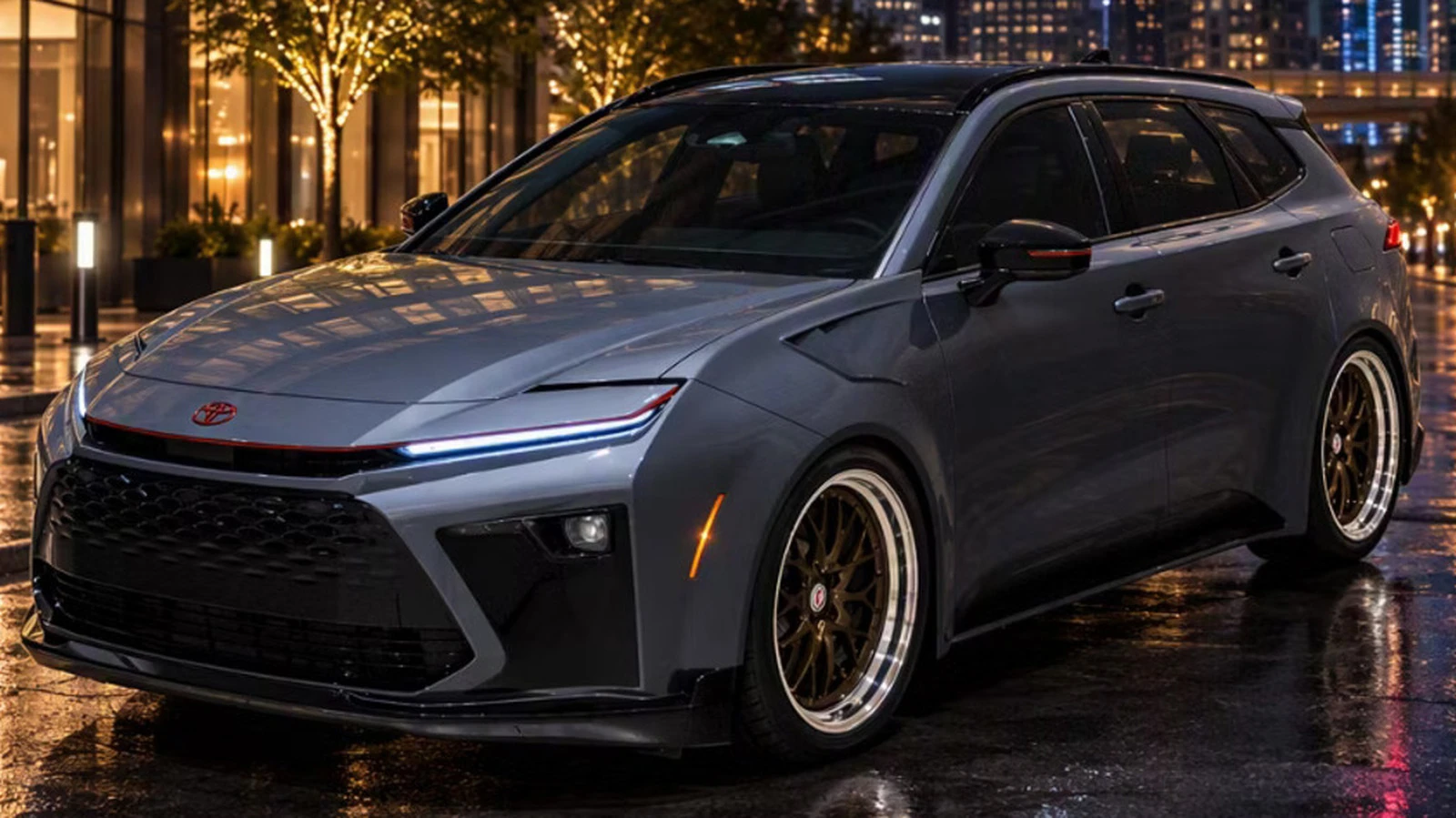
Toyota Crown Signia GT-S concept brings lowered stance and Lexus brakes to SEMA

The one-off show car drops its ride height by five inches and wears a custom widebody, but keeps the standard 238hp hybrid powertrain.

Image: Carscoops

Toyota will show a one-off Crown Signia GT-S concept at next week's SEMA Show in Las Vegas, built by Toyota Motorsports Garage as a lowered, widebody take on the hybrid crossover. The concept joins Toyota's Snowhunter truck and SUV concepts on the stand.

Despite the performance-car styling, the GT-S makes no changes to the Crown Signia's powertrain, which in U.S. form pairs a 2.5-litre inline-four hybrid with an electronically controlled CVT and 238 horsepower.

Suspension and bodywork

The headline chassis change is a set of MCS coilovers that lower the ride height by five inches while, Toyota says, improving handling. The drop is enough to make the Crown read as a performance car rather than a tall crossover.

Toyota Motorsports Garage added a custom body kit with flared front and rear fenders and a large front lip, blacked out the grille and added red accents around the headlights. The build also includes louvres on the front fenders, extended rocker panels and a new rear end with a diffuser and tailpipes. Whether the louvres deliver any aerodynamic or brake-cooling benefit in this application has not been established.
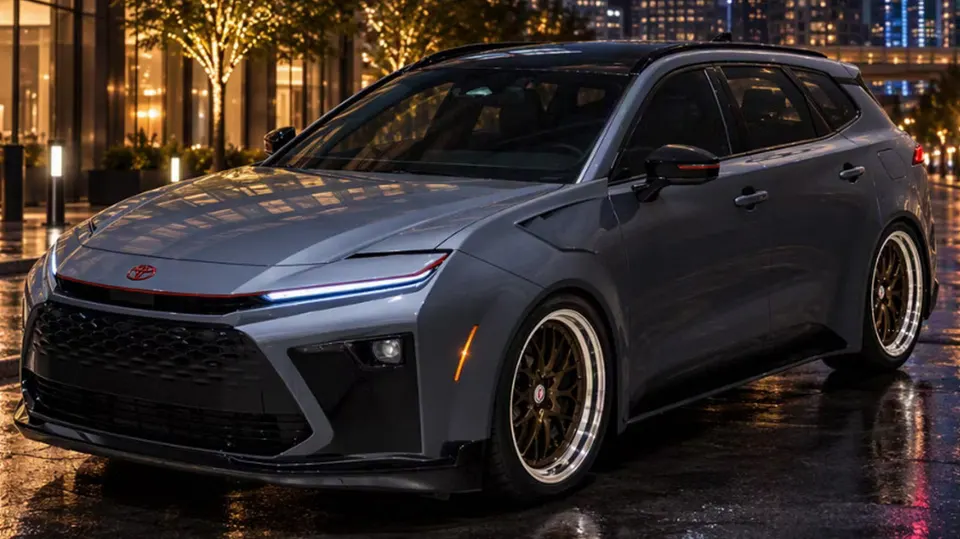
The Crown Signia GT-S concept's slammed ride height and aggressive front aero on show under city lights
The Crown Signia GT-S concept's slammed ride height and aggressive front aero on show under city lights, Image: Carscoops

Paint, brakes and interior

The show car is finished in a dark grey metallic with more clear coats than usual for a glossier finish. It rides on 21-inch HRE wheels, with brakes adapted from a Lexus RX 500h F Sport.

Inside, the changes are modest: seats trimmed in black leather with GT-S branding and a bright red GT-S logo on the electronic shifter.

Toyota frames the concept as a family vehicle intended to be as suited to the school run as to a canyon road, which explains why the mechanical package stays stock. The obvious question is whether a show car with this much visual aggression should have backed it up with more power; swapping the hybrid setup for Toyota's turbocharged 1.6-litre GR three-cylinder would have been one route.

What it means for buyers

The GT-S is a concept, so it previews a look rather than a production model. The standard Crown Signia, which is being refreshed for 2027, continues in the U.S. with the 238hp hybrid 2.5-litre inline-four and CVT.

Toyota has not announced pricing for the GT-S concept, which is unsurprising for a one-off show car; the figure that matters to buyers is the price of the 2027 Crown Signia, which has not been given in these reports. Production timing, Australian availability and Australian pricing for the refreshed Crown Signia are likewise not addressed in the source material.

Open this article ↗
Electric / TDCN ORIGINAL

UK government pledges £100m to cut public EV charging costs from 2027

The Treasury funding aims to bring slow public charger prices closer to home tariffs for two years, but how the money reaches drivers is still unclear.

The UK government will put £100m towards bringing public electric car charging prices closer to domestic energy rates, with funding set to begin in Spring 2027. The Treasury confirmed the two-year programme as part of the Autumn Budget, alongside a new taskforce to pilot ways for drivers to use their home tariff at local, lower-powered public chargers.

The money is targeted at slower AC units, which make up around a third of the UK charging network, and would exclude DC rapid chargers. The Treasury forecasts the support could save drivers around £150 a year, based on an electric car covering 8,000 miles at an average of 3.3 miles per kilowatt-hour.

How the funding will reach drivers

The government has not yet set out the mechanism for passing the £100m on to drivers. The Treasury has confirmed the sum and the two-year window from Spring 2027, but the detail of how it flows through to charger operators or motorists has not been announced.

What is clearer is where the money is aimed: slower AC units rather than DC rapid chargers, so the support is designed around the low-powered charging that dominates overnight and destination charging rather than motorway top-ups.

A taskforce and earlier steps for drivers without driveways

Alongside the funding, the Department for Transport will establish a taskforce to pilot solutions that let drivers use their domestic energy tariff at local, lower-powered public charging points.

Ministers have already moved on related barriers. Drivers without off-street parking can claim a grant of up to £500 towards installing a home charger, though conditions apply: they must install a solution to stop cross-pavement cables becoming a trip hazard, and the charger does not guarantee them use of the adjacent parking space. Last week the DfT also removed the need to apply for planning permission to install pavement-crossing gulleys, a change it says saves drivers up to £300.

Buses and local transport minister Simon Lightwood framed the policy around fairness: "If you don't have a driveway, you shouldn't be stung for charging your car - we're putting a stop to the so-called 'driveway divide'," he said, adding that EV sales are up 36% on last year and 200,000 drivers have used the Electric Car Grant.

What is still open

The policy as announced applies to the UK, where the Department for Transport and Treasury set the funding and the taskforce. The sources do not set out any extension to other markets.

For drivers, the practical effect depends on whether the £100m actually shows up in the price at the plug. Until the pass-through mechanism is confirmed, the £150 annual saving is a forecast rather than a published tariff change.

Open this article ↗

Keep scrolling to read the next story.

Older articles →