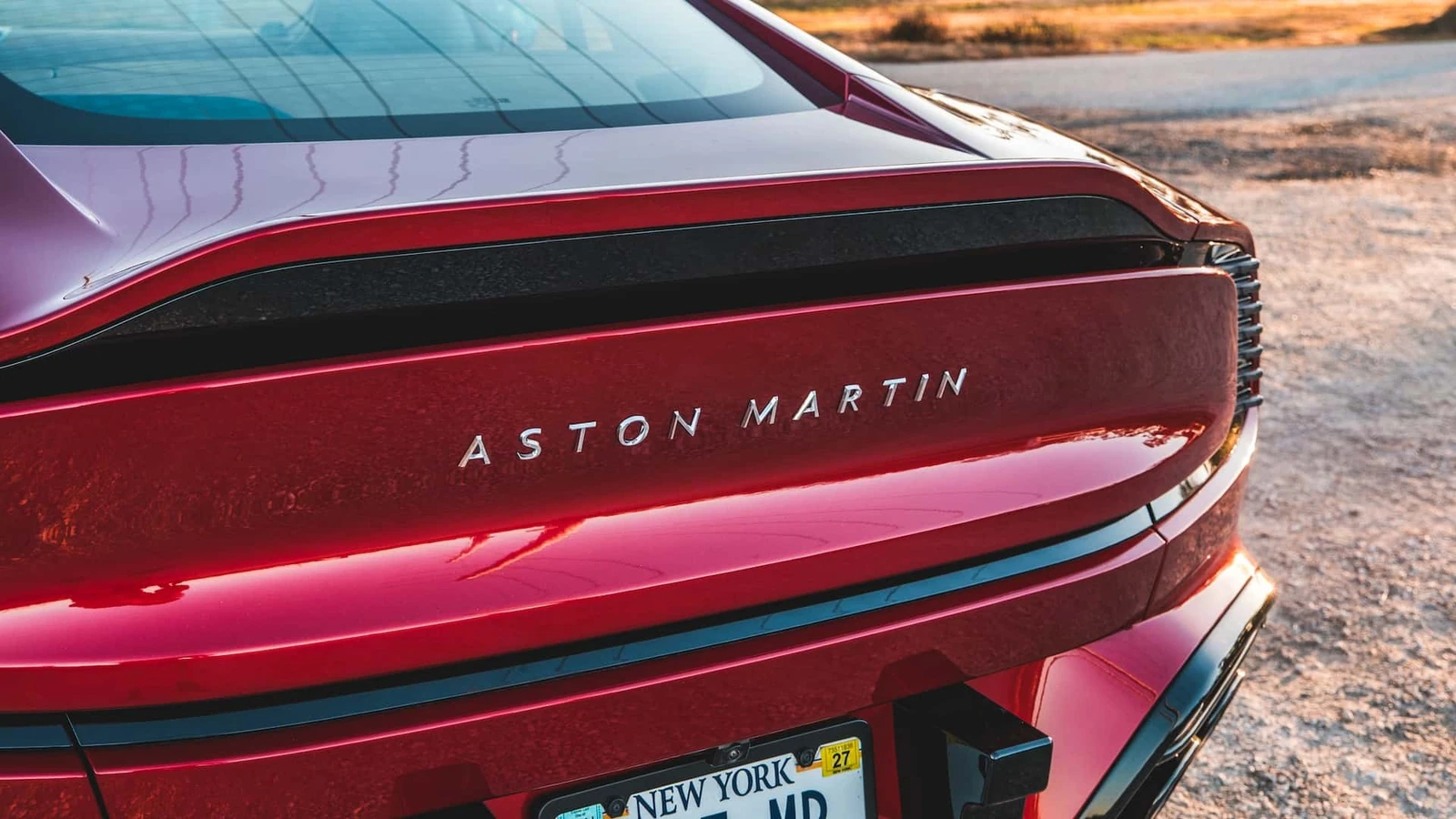
Aston Martin recorded a £77.1 million ($101 million) pretax loss in the third quarter of 2026, taking its losses for the first nine months of the year to £231.3 million ($303 million), the company's latest earnings show.
The result is an improvement on the £111.9 million pretax loss booked in the same quarter of 2025, but it leaves the British manufacturer still short of the point where it funds itself from its own operations.
Revenue and pricing climb on a richer product mix
Third-quarter revenue rose 36 percent year on year to £388.7 million ($509 million), and the nine-month total reached £1.017 billion ($1.33 billion), up 38 percent.
The gain reflects what Aston Martin shipped rather than simply how many cars it sold. Deliveries across the first nine months came to 3,762 vehicles, 12 percent more than a year earlier, and around 350 of those were Valhalla coupes from the company's Specials division.
That mix lifted the average selling price by 25 percent year to date to £243,000, and by 39 percent in the third quarter alone to £247,000. Gross profit for the nine months rose 71 percent to £358 million ($469 million), with the gross margin improving from 28.3 percent to 35.2 percent.
The Valhalla's production run is nearly exhausted, with almost all remaining cars already ordered and deliveries continuing through the first half of 2027. Aston Martin has also added the Valhalla Spider, a convertible that CFO Doug Lafferty says will cost roughly 20 percent more than the coupe.
Debt and financing costs still weigh on the balance sheet
Cash generation remains the weak point. Net debt stood at £1.57 billion ($2.06 billion) at the end of September, up from £1.38 billion ($1.81 billion) at the close of 2025, while gross debt reached almost £1.9 billion ($2.49 billion) against available liquidity of £321.6 million ($421 million).
Adjusted net financing costs climbed to £149 million ($195 million) over the nine months, more than double the £65 million ($85 million) recorded a year earlier.
Since Lawrence Stroll led the rescue of Aston Martin around six years ago, the company has accumulated roughly £2.3 billion in after-tax losses, despite repeated investment rounds and new model launches.
That history explains why a strong quarter does not settle the question of profitability. Selling more expensive cars at better margins helps, but the interest bill and the debt load mean the gains have to be large and repeated before they translate into a self-funding business. Aston Martin has not said when it expects to reach sustained profit, and its latest results give no date for that milestone.
The electric plan has been pushed back
Aston Martin's revised electrification timeline puts its first production EV no earlier than 2033, and possibly as late as 2035, according to CEO Adrian Hallmark. The company intends to keep its V8 and V12 engines in production through 2035, using hybridisation where needed to satisfy emissions rules.
Delaying EVs looks like a defensible call for a brand built on sound and mechanical character. Demand for high-end V12s, limited-run supercars and elaborate special editions suggests wealthy buyers are not yet ready to trade combustion for batteries, and a rushed electric model could have been an expensive distraction while the core business is still being repaired.