INDEPENDENT AUTOMOTIVE NEWSGLOBAL PERSPECTIVE / AUSTRALIAN EDITION
TDCNTHE DAILY
CAR NEWS.

The road ahead.
Every day.

RSS ↗
Latest/Electric

221 original articles

Electric / TDCN ORIGINAL

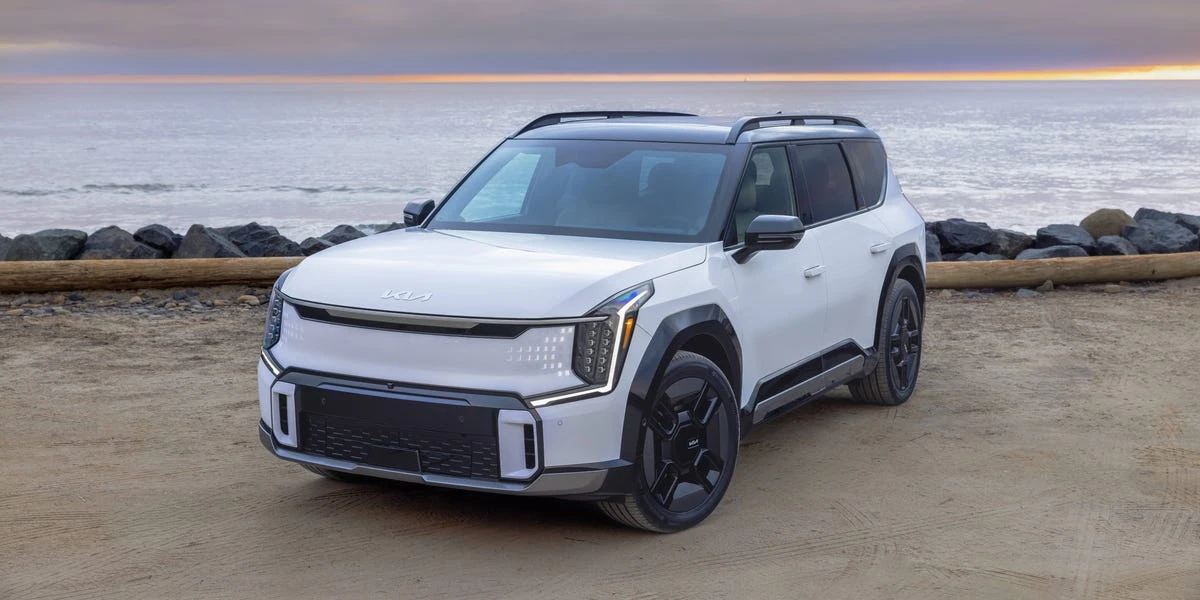
Kia adds standard kit to 2027 EV9 and raises prices by as little as $90

The three-row electric SUV gains Nightfall styling and a torque-boost function on the Land trim, with the biggest increase at $1,090.

Kia has detailed the 2027 EV9, a light update to its three-row electric SUV that brings extra standard equipment to the mid-range Wind and Land trims while holding most price rises to small amounts. The base Light Short Range now starts at $56,635, $90 more than the 2026 version.

The changes land as the EV9, on sale since the 2024 model year, faces its first real competition. Toyota and Subaru are preparing related three-row EVs, the Highlander and Getaway, for launch early next year, and Kia's response is to add content rather than chase the segment on price.

What each trim costs for 2027

The rear-wheel-drive Light Short Range opens the range at $56,635, up $90. The Light Long Range, also rear-drive but fitted with the larger 100-kWh battery, rises by the same $90 to $59,635.

The Wind moves up $190 to $65,735. For 2027 it picks up black 19-inch wheels, gloss-black exterior trim and the option of Wolf Gray paint.

The Land carries the largest increase, up $1,090 to $71,635, but it also gains the most. The Nightfall Edition offered for 2026, with gloss-black 20-inch wheels, matching exterior trim and a blacked-out interior, is now standard on the Land. Kia's maths means the 2027 Land undercuts the 2026 Land Nightfall Edition by $410.

The GT-Line stays at the top of the range at $73,635, up $90, with no equipment changes for 2027.

Torque boost becomes standard on the Land

The Nightfall package also bundled the torque-boost function that was previously an optional extra on the Land, so the feature is now standard there. It temporarily lifts torque from 443 to 516 pound-feet, cutting the zero-to-60-mph time of the roughly 6,000-pound SUV to 4.5 seconds.

That is the clearest signal of Kia's strategy here. Rather than discounting the EV9 against incoming rivals, it is folding previously optional content into the volume trims and letting the sticker drift upward slightly. Buyers who would have ticked the Nightfall box and the boost function on a 2026 Land come out ahead; buyers who wanted a plain Land pay more for kit they may not have chosen.

Timing and the competitive picture

Kia has not said exactly when the 2027 EV9 will reach dealerships.

The EV9 was the first mainstream three-row electric SUV on the market when it launched for 2024, and it has largely had the segment to itself alongside corporate cousin the Hyundai Ioniq 9. That cushion is thinning. Toyota and Subaru are readying the Highlander and Getaway EVs for early next year, which puts pressure on Kia to keep the EV9 looking fresh without pricing it out of reach.

For now the 2027 changes are cosmetic and packaging-led rather than mechanical. The powertrains, battery sizes and range figures carry over, and Kia has not announced revised range or efficiency numbers for the new model year.
Open this article ↗
Electric / TDCN ORIGINAL

UK Budget freezes fuel duty until 2027 and funds public EV charging

Chancellor John Healey held fuel duty at 52.95p per litre and committed £100m to lower-powered public charge points, but VAT on public charging stays at 20%.

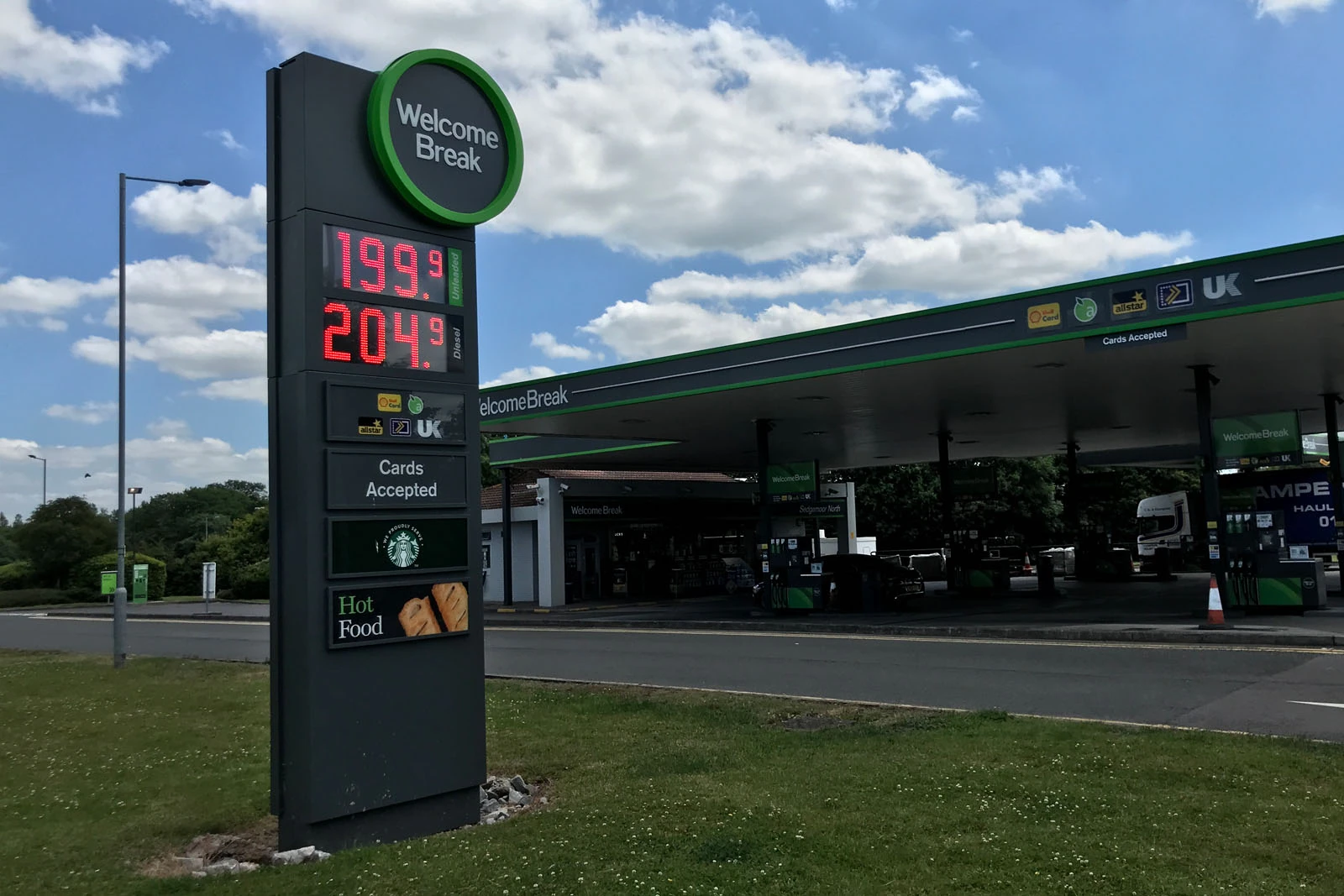
Chancellor John Healey's first Budget keeps the 5p-per-litre fuel duty cut in place until July 2027, holding total duty at 52.95p per litre, and puts £100 million toward cheaper local public EV charging. The freeze had been due to lapse on 31 December 2026.

Healey tied the decision to the Middle East war keeping fuel prices high, and the government said most of the rise in inflation from 2.6% in June to 3.5% in September came from motor fuel prices. The measures are pitched as savings for motorists rather than a cut in what they pay at the pump.

What the fuel duty freeze does and does not do

Fuel duty stays at the reduced rate rather than falling further. Opposition leader Kemi Badenoch said she was glad to see it temporarily frozen but asked why it could not hold at that level for longer, noting the Conservatives froze fuel duty for 14 years.

AA president Edmund King said the freeze only delays the price shock when duty rises, and argued the government could have gone further with an extra 5p cut, even if only for diesel, offset by extra VAT receipts from inflated prices. RAC senior policy officer Rod Dennis said a freeze only avoids making a difficult situation worse and does not make filling up cheaper, pointing out pump prices still soared this summer at the same reduced duty rate.

That is the honest reading of the announcement: it protects drivers from an increase they were due to face, but it does not lower the price of a litre. Anyone budgeting for running costs should treat it as a delay, not a saving.

Home charging stays cheaper than the public network

The temporary removal of VAT on domestic electricity is extended to July 2027, which benefits households that can charge EVs and plug-in hybrids at home. Electricity from public EV chargers continues to attract VAT at 20%.

King said that gap widens the pavement tax between those who can charge at home and those who cannot, and called it a missed chance to encourage EV uptake. Vicky Edmonds, chief executive of the Electric Vehicle Association England, welcomed the £100m but said it is disappointing that there is still no movement on cutting VAT at public chargers.

The government said it is considering letting EV drivers pay domestic VAT rates at public chargers and is taking immediate steps to establish a taskforce on the issue. No cut to public charging VAT has been announced, and no date has been given for a decision. The £100m is meant to narrow the gap another way, by reducing prices at local, lower-powered public charge points, split as £50m in 2027-28 and £50m in 2028-29.

Dennis said cutting VAT on public charging would have been an obvious way to make the switch more accessible, and that the government appears instead to be exploring an approach letting drivers use lower-powered public chargers at the same cost as charging at home. For drivers without a driveway, the detail of that scheme matters more than the headline funding figure, and it has not yet been published.

Electric Vehicle Excise Duty arrives in April 2028

Healey did not discuss the pay-per-mile tax on EVs directly, but the government has clarified its position: Electric Vehicle Excise Duty (eVED) will be introduced in April 2028. A new tool will let EV drivers estimate and declare their mileage, with proof-of-concept work under way.

The government is also working on a mechanism for drivers to opt in so their car's trip computer declares mileage automatically, and aims to automate refunds by 2030 for drivers who overestimated their mileage or have sold the car. Further guidance for large fleet operators is promised later this year.

The Office for Budget Responsibility expects eVED to add around £2 billion to VED revenues by the 2031-32 fiscal year. The automated refund route is the part that will decide whether the tax feels fair in practice; manual mileage declarations are exactly the kind of admin that breeds disputes.

Mileage rates and company car tax

Approved mileage rates for business drivers rise. The reimbursement for those covering under 10,000 miles a year was temporarily lifted from 45p to 55p per mile for the current tax year, and Healey made that increase permanent. The rate for those covering more than 10,000 miles annually goes from 25p to 35p.

Benefit-in-kind tax bands for company car users will rise by one percentage point in the 2030-31 fiscal year, which the government expects to raise an extra £310m in 2030-31 and £345m in 2031-32. Company car drivers choosing electric models still face a rising tax bill later this decade, so the BIK tables are worth checking before committing to a multi-year lease.

Open this article ↗

Keep scrolling to read the next story.

Older articles →