INDEPENDENT AUTOMOTIVE NEWSGLOBAL PERSPECTIVE / AUSTRALIAN EDITION
TDCNTHE DAILY
CAR NEWS.

The road ahead.
Every day.

RSS ↗
Latest/Electric

223 original articles

Electric / TDCN ORIGINAL

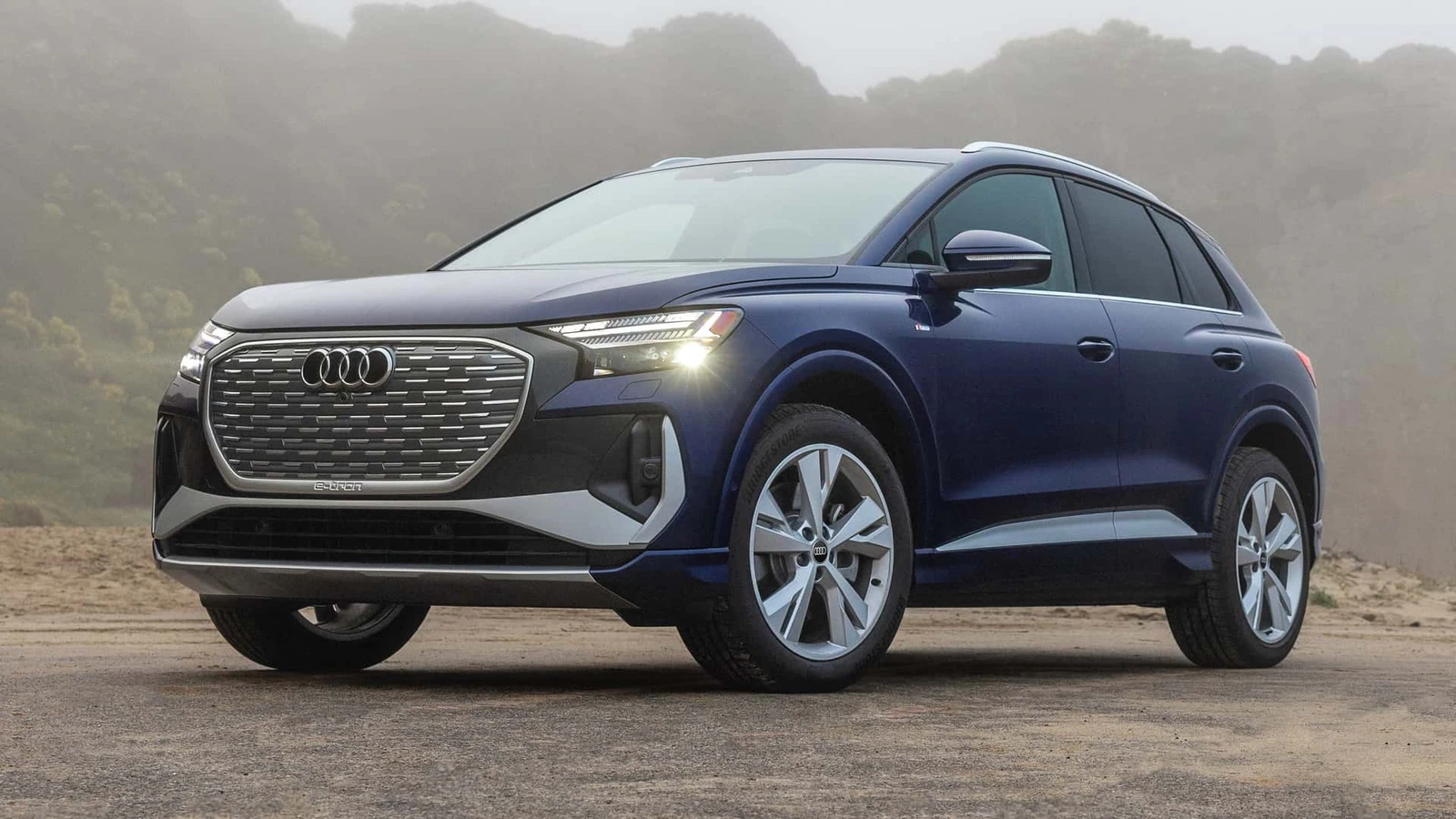
Audi recalls 9,048 Q4 E-Tron EVs in the US over battery fire risk

Owners of certain 2024 and 2025 models are told to cap charging at 80 percent while Audi investigates a cause it has not yet identified.

Image: Motor1

Volkswagen Group of America has recalled 9,048 Audi Q4 E-Tron and Q4 Sportback E-Tron vehicles in the United States because a high-voltage battery failure could lead to a fire, and it has told owners to stop charging above 80 percent until a fix is ready.

The campaign covers certain 2024 and 2025 model year cars and is listed by NHTSA as recall 26V698000. Audi says it is aware of no crashes, fires or injuries involving its own vehicles tied to the defect.

What Audi has told owners

The interim safeguard is a charging limit: owners of affected cars should charge to a maximum of 80 percent until a permanent remedy exists. The concern involves a state of charge above 80 percent in certain conditions, and the risk is linked to thermal propagation, where one overheating cell spreads heat to neighbouring cells.

Interim notification letters are expected to reach registered owners on December 18, 2026, explaining both the charging cap and the recall itself. Audi has not announced when a permanent repair will be ready, and dealers will carry out the recall work free of charge once one is.

The 80 percent cap is the only safeguard Audi has described so far, which puts the burden on owners to change their charging habits before any letter even arrives. For anyone who routinely charges to full overnight, that is a real change to daily use, not a formality.

The investigation is still open

Audi's Product Safety Committee received reports of thermal events in the high-voltage battery on September 21, 2026, and the recall was opened roughly three weeks later. Volkswagen Group of America filed its Noncompliance Information Report with NHTSA on October 21, 2026, and recall documents state that "the exact root cause remains under active investigation".

Owners can already check whether their car is affected: NHTSA added the vehicle identification numbers to its online lookup tool on October 23, 2026. Public NHTSA documents describe the affected population by model year and total volume rather than a detailed production date range.

A wider problem across the group

The Q4 E-Tron campaign sits alongside a similar issue on the Volkswagen ID.4, which affects 22,524 vehicles with the same unresolved root cause and the same instruction to limit charging to 80 percent. VINs for that ID.4 campaign became searchable on NHTSA.gov on October 6, 2026.

The parallel recalls matter because they suggest a shared engineering question rather than an isolated batch fault, though Audi has not said the two are technically linked beyond the common symptom and remedy. Until the root cause is pinned down, neither brand can tell owners how long the charging restriction will last.

What is still unanswered

Audi has not said how many cars might need battery replacement, what the permanent fix will involve, or when it will be available. The recall documents do not give a production date range, so owners outside the listed model years have no way to judge their exposure beyond the VIN lookup.

There is no Australian recall or local owner notification in the material published so far, and no indication of whether the same charging advice applies outside the US. Buyers shopping a used 2024 or 2025 Q4 E-Tron should run the VIN before agreeing a price, since the charging cap affects how the car can be used day to day.
Open this article ↗
Electric / TDCN ORIGINAL

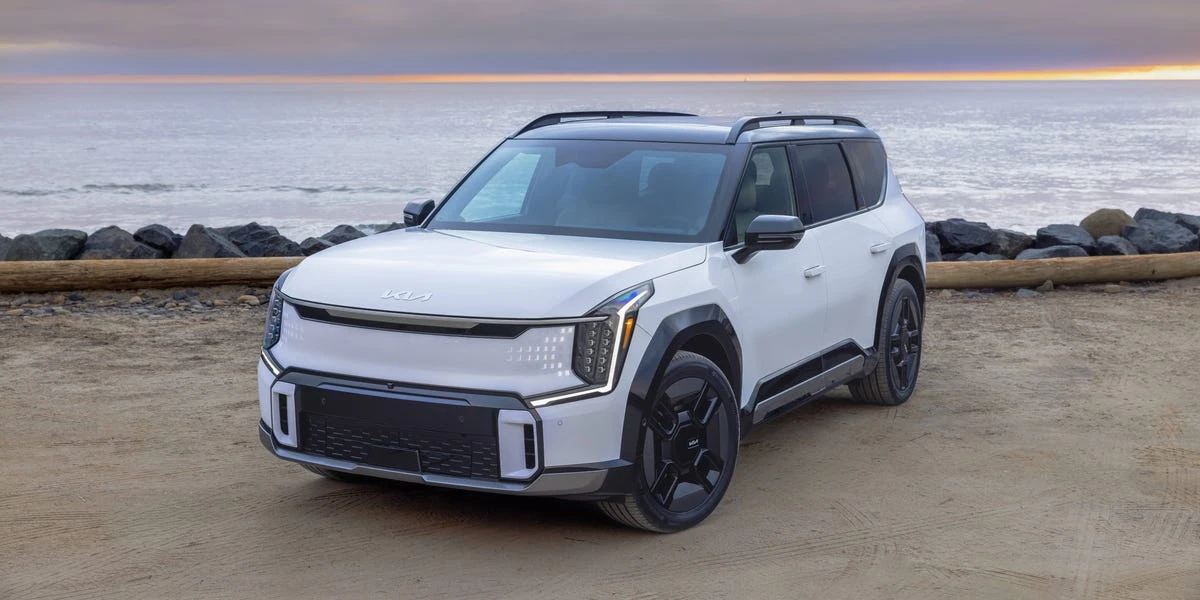
Kia adds standard kit to 2027 EV9 and raises prices by as little as $90

The three-row electric SUV gains Nightfall styling and a torque-boost function on the Land trim, with the biggest increase at $1,090.

Kia has detailed the 2027 EV9, a light update to its three-row electric SUV that brings extra standard equipment to the mid-range Wind and Land trims while holding most price rises to small amounts. The base Light Short Range now starts at $56,635, $90 more than the 2026 version.

The changes land as the EV9, on sale since the 2024 model year, faces its first real competition. Toyota and Subaru are preparing related three-row EVs, the Highlander and Getaway, for launch early next year, and Kia's response is to add content rather than chase the segment on price.

What each trim costs for 2027

The rear-wheel-drive Light Short Range opens the range at $56,635, up $90. The Light Long Range, also rear-drive but fitted with the larger 100-kWh battery, rises by the same $90 to $59,635.

The Wind moves up $190 to $65,735. For 2027 it picks up black 19-inch wheels, gloss-black exterior trim and the option of Wolf Gray paint.

The Land carries the largest increase, up $1,090 to $71,635, but it also gains the most. The Nightfall Edition offered for 2026, with gloss-black 20-inch wheels, matching exterior trim and a blacked-out interior, is now standard on the Land. Kia's maths means the 2027 Land undercuts the 2026 Land Nightfall Edition by $410.

The GT-Line stays at the top of the range at $73,635, up $90, with no equipment changes for 2027.

Torque boost becomes standard on the Land

The Nightfall package also bundled the torque-boost function that was previously an optional extra on the Land, so the feature is now standard there. It temporarily lifts torque from 443 to 516 pound-feet, cutting the zero-to-60-mph time of the roughly 6,000-pound SUV to 4.5 seconds.

That is the clearest signal of Kia's strategy here. Rather than discounting the EV9 against incoming rivals, it is folding previously optional content into the volume trims and letting the sticker drift upward slightly. Buyers who would have ticked the Nightfall box and the boost function on a 2026 Land come out ahead; buyers who wanted a plain Land pay more for kit they may not have chosen.

Timing and the competitive picture

Kia has not said exactly when the 2027 EV9 will reach dealerships.

The EV9 was the first mainstream three-row electric SUV on the market when it launched for 2024, and it has largely had the segment to itself alongside corporate cousin the Hyundai Ioniq 9. That cushion is thinning. Toyota and Subaru are readying the Highlander and Getaway EVs for early next year, which puts pressure on Kia to keep the EV9 looking fresh without pricing it out of reach.

For now the 2027 changes are cosmetic and packaging-led rather than mechanical. The powertrains, battery sizes and range figures carry over, and Kia has not announced revised range or efficiency numbers for the new model year.

Open this article ↗

Keep scrolling to read the next story.

Older articles →