INDEPENDENT AUTOMOTIVE NEWSGLOBAL PERSPECTIVE / AUSTRALIAN EDITION
TDCNTHE DAILY
CAR NEWS.

The road ahead.
Every day.

RSS ↗
Latest/Australia

209 original articles

Australia / TDCN ORIGINAL

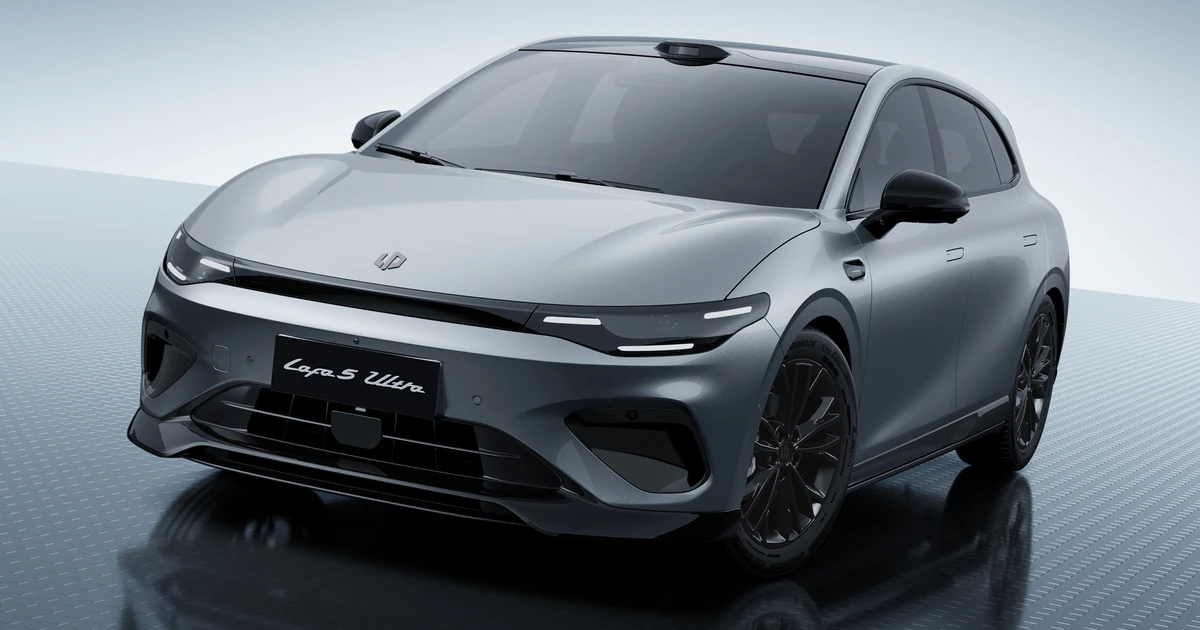
Leapmotor B05 Ultra hot hatch confirmed for New Zealand in 2027, Australia still undecided

The sporty electric hatch will reach New Zealand in the second half of 2027, but Leapmotor Australia says timing for a local launch is still under discussion.

Leapmotor will launch a sporty Ultra version of its B05 small electric hatchback in New Zealand during the second half of 2027, but Australian buyers still have no confirmed date. The Chinese brand's New Zealand distributor, Auto Distributors New Zealand, confirmed the timing to CarExpert New Zealand in August.

Leapmotor Australia boss Andy Hoang told CarExpert he is in talks with the factory about bringing the model here, but could not commit to a launch window. "We're probably not at the point where we can confirm it for Australia in terms of timing, but we're definitely in conversations to see how and when we could get it here," he said.

Australia talks ongoing, no date set

Hoang said the Ultra would sharpen the appeal of a car that is already acting as a halo model for the brand locally. "The B05 in its current form is already for us a halo product because it's different," he said. "The customers that are buying the car are those that want to make an entrance... I think the Ultra will supersize that".

He acknowledged the Ultra may be a narrower proposition than the standard EV hatch, but argued its effect on brand perception would be significant. Leapmotor Australia has not announced a launch date, price or specification for the B05 Ultra, and none of those details have been confirmed for New Zealand either.

In Australia the B05 is Leapmotor's only non-SUV model, alongside a range that elsewhere includes sedans, a people mover and a microcar.

Export Ultra will differ from Chinese Lafa 5 Ultra

The export-market B05 Ultra is based on the Chinese-market Lafa 5 Ultra but will not be identical. Leapmotor Europe product marketing manager Alexis Cieslewicz told CarExpert in June that the global version needs "some fine-tuning and needs some further development", adding that the Chinese version "maybe is not perfect for European market".

Leapmotor International's head of commercial operations for Europe, Danilo Annese, said the car is due in 2027 but not at the start of the year, because raising the performance bar takes time.

Leapmotor has not published power, torque, battery size, range or charging figures for the export B05 Ultra, and no test-cycle range figure has been released for New Zealand or Australia. The Chinese Lafa 5 Ultra's specifications are not a reliable guide to the export car, given the stated further development.

A halo model with a narrow audience

The Ultra's role is as much about showroom traffic as sales volume. A faster, more distinctive version of an already niche hatch gives dealers something to talk about, and Hoang's comments suggest Leapmotor sees that effect as worth pursuing even if volumes are small.

For buyers, the practical question is timing. New Zealand customers can plan around a second-half 2027 arrival, while Australian buyers have no date to work with. Anyone cross-shopping the B05 Ultra against other electric hot hatches will need to wait for specifications before making a comparison, since neither power nor range has been announced for the export version.
Open this article ↗
Electric / TDCN ORIGINAL

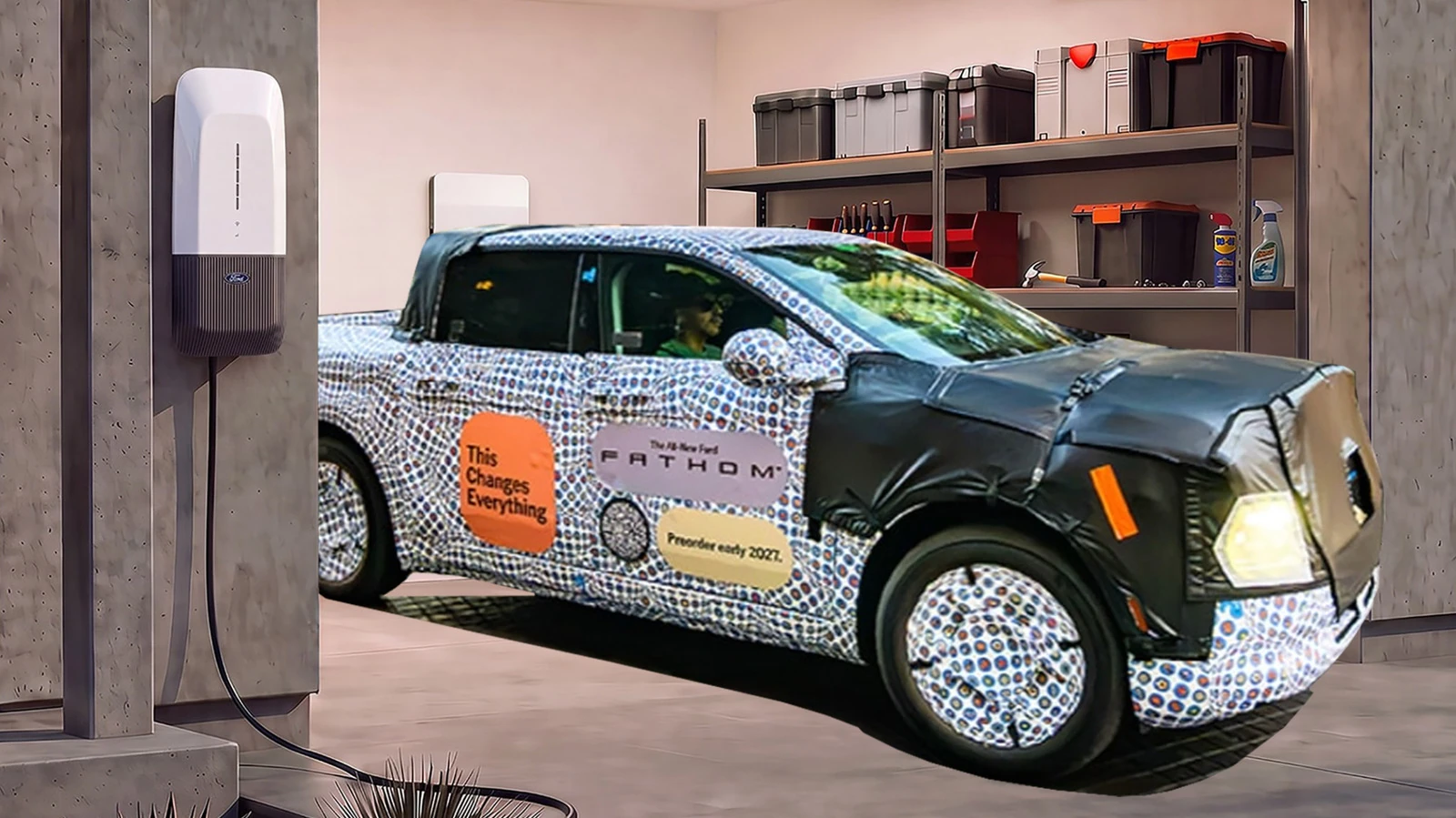
Ford Fathom electric truck to double as a home generator with a $2,255 power setup

The sub-$30,000 2028 pickup integrates a bidirectional inverter and can supply more than 10 kW of AC power, though installation and subscription costs are still unannounced.

Image: Carscoops

Ford's 2028 Fathom electric truck will be able to power a house, with an add-on home energy setup that Ford expects to cost around $2,255, according to Car and Driver. The truck itself starts at $29,945 including a $1,595 destination charge, so the combined package could come in at roughly $32,200 before installation and subscription fees.

The Fathom is due to debut in early 2027, when pre-orders open, ahead of its 2028 model year launch. Ford has positioned it as one of the cheapest vehicles on the US market capable of full home backup power, a capability that usually demands costly external hardware.

An inverter built into the truck

Ford's engineers integrated the power inverter into the Fathom itself rather than requiring an external conversion box, and the truck can supply a home with more than 10 kW of AC power. That is the key cost saving: most rivals convert the battery's direct current to household alternating current outside the vehicle.

The setup pairs the truck with the next-generation Ford Home Power Station and a Home Backup Power Panel. The power station charges the Fathom when grid electricity is cheap and pulls energy back from the battery when prices are high, while the backup panel lets the truck automatically supply the house during blackouts. Ford says the power station will cost half as much as its first-generation bidirectional charger and the backup panel at least 60 percent less than the first-gen version.

The catch is the recurring cost. The Home Power Station requires an active subscription plan, and Ford has not announced what that subscription or installation will cost. Until those figures are published, the $2,255 hardware estimate and the $32,200 package figure are best treated as a floor rather than a final price.

How it compares with rival bidirectional EVs

Bidirectional charging is not new, but it has generally been expensive to unlock. The 2027 Chevrolet Bolt starts at $28,995, yet sending power to a home requires an extra conversion kit that typically costs about $7,000. Tesla's home charging setup is somewhat cheaper, but properly equipped vehicles start at least $8,000 more than the Fathom's opening price.

Ford's own F-150 Lightning, discontinued after the 2025 model year, offered the functionality but needed extra hardware costing up to about $5,310. The Fathom undercuts other US EVs with bidirectional capability, including the Chevrolet Equinox EV and Tesla Model 3, both of which need external hardware, while the Hyundai Ioniq 5 and Kia EV6 offer only basic vehicle-to-load functionality out of the box rather than full home backup.

That matters for buyers weighing an electric truck against a standby generator. A truck that doubles as backup power removes a separate purchase, and Ford's decision to build the inverter in suggests it sees home energy as a selling point rather than a premium add-on.

Range, battery and equipment

The Fathom uses a lithium-iron-phosphate (LFP) battery pack that Ford says can deliver up to 300 miles (483 km) of range. The source material does not state which test cycle that figure is measured on, so it should not be read as a WLTP or EPA rating until Ford confirms one.

The truck is built on Ford's new Universal Electric Vehicle (UEV) architecture, developed by its skunkworks team in California, and uses large aluminium unicasting and a simplified wiring harness to cut weight and production cost. Standard equipment includes BlueCruise hands-free highway driving and Apple Maps integration.

Australian availability and open questions

Ford has confirmed US pricing and a 2027 pre-order window, but it has not announced the Fathom for Australia or any Australian pricing. Any Australian launch, specification or cost remains unconfirmed.

Also unannounced are the Home Power Station subscription rate and installation costs, and the precise test cycle behind the 300-mile range claim. Those gaps matter because the headline $2,255 hardware figure and the $32,200 package total exclude both installation and subscription.

Open this article ↗

Keep scrolling to read the next story.

Older articles →