Two-thirds of Australian drivers surveyed want physical buttons back in their cars, according to research from insurance giant Allianz that links touchscreen controls to distraction and crashes. The Allianz Centre for Technology (AZT) analysed 34,000 vehicle crashes and surveyed drivers internationally for its report, titled Swipe. Tap. Crash. Driver distraction in the digital car.
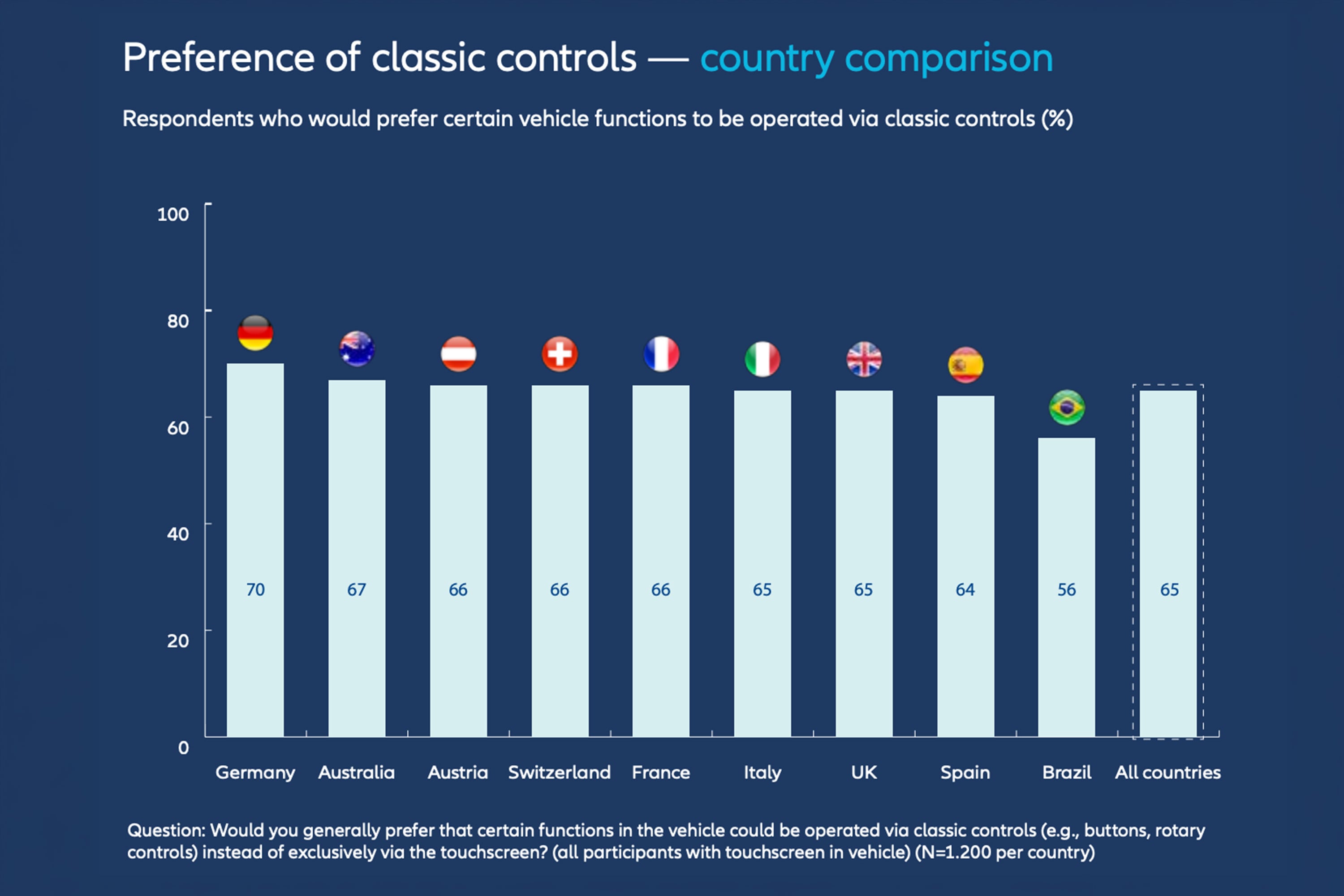
The study found 67 per cent of Australian drivers who had been in a collision identified distraction as a factor in the incident, and 29 per cent said they had experienced a critical moment while driving because of a touchscreen. The same 67 per cent figure of Australian respondents said they preferred physical buttons over digital icons.
What the Allianz study measured
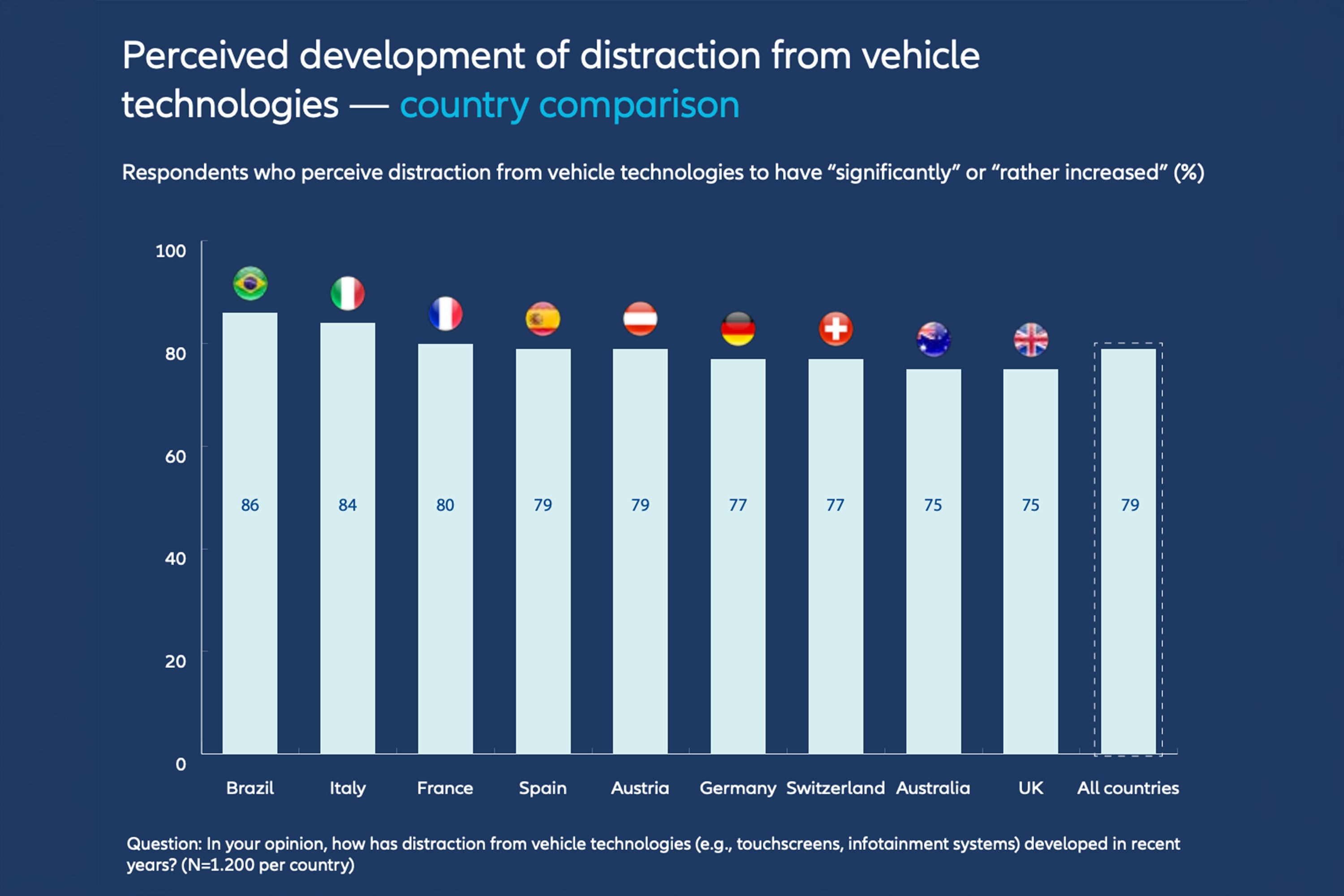
AZT surveyed motorists across several countries and found Australians near the top of the list for preferring physical controls over touchscreens. Three-quarters of Australian respondents (75 per cent) agreed that in-car distraction had increased in recent years, matching sentiment in the UK, while Germany, Austria, Spain, Italy and France recorded higher proportions and Brazil the highest at 86 per cent.
Dr Klaus-Peter Röhler, writing in the report's foreword, said distraction appears far more often in the crash record than official statistics suggest, and that the same everyday task is markedly more dangerous in one car than in another. He added that a glance of only a couple of seconds can, at the wrong moment, be as dangerous as driving over the drink-drive limit.
AZT traffic psychologist Michael Praxenthaler said not all touchscreens are equally distracting, and that well-designed in-car controls can significantly reduce the time drivers spend looking away from the road. He framed distraction as a design challenge rather than simply a driver problem.
ANCAP's push for buttons
The findings echo calls from Australian safety watchdog ANCAP for automakers to avoid burying critical vehicle functions in touchscreen menus. ANCAP CEO Carla Hoorweg said the organisation wants carmakers to bring back buttons for the functions drivers use every day, arguing that adjusting windscreen wipers, switching on headlights or clearing a fogged-up windscreen should be simple, intuitive and achievable without taking attention off the road.
Hoorweg's comments followed crash tests of the Xpeng X9 electric people mover and GAC Aion UT electric hatchback. The sources do not name any other specific models or carmakers as being affected by the distraction findings, and Allianz's report is presented as a study of driver behaviour and crash records rather than a model-by-model ranking.
No new Australian rules on in-car controls have been announced. ANCAP's position is a call to manufacturers rather than a regulatory change, and the sources do not indicate whether any government body is drafting requirements for physical controls.
That matters because ANCAP's voice carries weight with buyers and with manufacturers chasing its ratings, but a call from a safety body is not the same as a mandate. Drivers who want knobs and stalks back are, for now, reliant on carmakers choosing to reverse the touchscreen trend themselves.
Why the numbers are worth watching
The gap between the 67 per cent of collision-involved Australian drivers citing distraction and the 29 per cent who reported a touchscreen-related critical moment is a reminder that distraction has many sources, not just screens. Still, the preference figure is striking: a clear majority of Australian respondents say they would rather have buttons than icons.
For buyers, the practical takeaway is to treat control design as a purchase consideration alongside range, price and safety rating. The AZT research suggests the layout of a cabin can change how much time a driver spends looking away from the road, which is a safety variable that spec sheets rarely capture.
The sources do not give a breakdown of the survey sample size by country, a publication date for the report, or a list of which vehicles were judged better or worse for control design. Those details have not been announced.