INDEPENDENT AUTOMOTIVE NEWSGLOBAL PERSPECTIVE / AUSTRALIAN EDITION
TDCNTHE DAILY
CAR NEWS.

The road ahead.
Every day.

RSS ↗
Latest/New cars

195 original articles

New cars / TDCN ORIGINAL

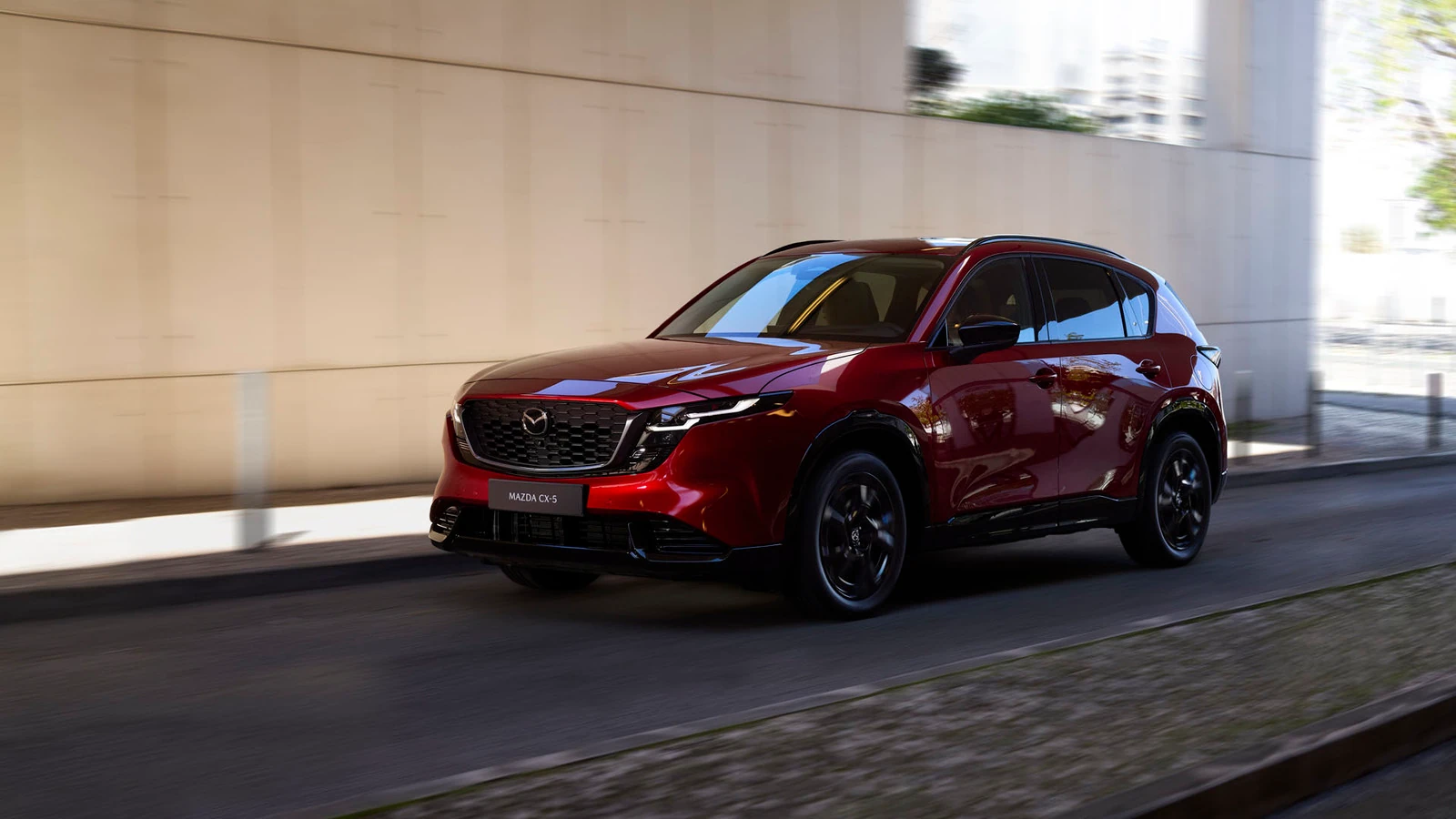
2027 Mazda CX-5 gains Google Gemini AI and standard AWD, priced from $31,485

Every 2027 CX-5 now gets Google's Gemini assistant and all-wheel drive as standard, with the range topping out at $40,935 for the S Premium Plus.

Image: Carscoops

Mazda has updated the CX-5 for the 2027 model year, adding Google's Gemini AI assistant to the infotainment system across every trim and making all-wheel drive standard throughout the range. The base 2.5 S Select starts at $31,485 including delivery, while the top S Premium Plus trim reaches $40,935.

The changes are software and equipment updates rather than a redesign: the CX-5's exterior is largely unchanged for 2027. Mazda says the Gemini integration lets drivers ask the in-car assistant to perform the same tasks they would ask a Google-enabled phone, while keeping their attention on the road.

What the Gemini update adds

The headline change for 2027 is the Gemini AI assistant, which arrives on all CX-5 versions through updated infotainment software. It is the kind of feature that may not sway every buyer, but it keeps the CX-5 competitive on cabin technology against rivals such as the Toyota RAV4 and Honda CR-V.

Standard safety equipment across the range includes radar cruise control, speed-limit and traffic-sign recognition, rear brake and cross-traffic assistance, blind-spot monitoring and a driver attention monitor.

Powertrain and trim walk

The CX-5 continues with Mazda's 2.5-litre four-cylinder engine, producing 187 horsepower and 186 lb-ft of torque, paired exclusively with a six-speed automatic transmission. It runs on regular 87-octane fuel.

Pricing starts at $31,485 with delivery for the 2.5 S Select. The S Preferred adds 19-inch wheels, while the Premium and Premium Plus trims bring luxury features including leather seats and a power liftgate. The S Premium Plus, the top trim, is priced from $40,935.
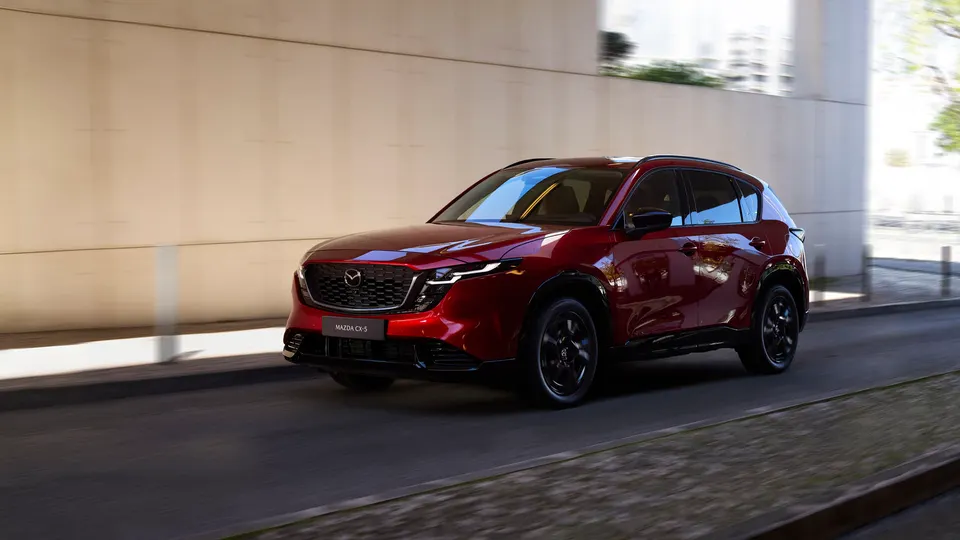
The 2027 Mazda CX-5, now with standard AWD and a starting price of $31,485, on the road.
The 2027 Mazda CX-5, now with standard AWD and a starting price of $31,485, on the road., Image: Carscoops

Availability and the hybrid question

Mazda says the updated CX-5 is available at dealers now. The sources do not specify which markets beyond the US pricing quoted will receive the 2027 update, and no Australian pricing or launch timing has been announced.

Buyers wanting a hybrid with a Mazda badge are pointed toward the CX-50, which shares its hybrid setup with the Toyota RAV4 hybrid. That matters because the RAV4 hybrid is all-new this year, giving Toyota a fresher competitor in the same size class.

The CX-5's appeal has always rested on driving manners rather than raw power or electrification, and the 2027 update does nothing to change that formula. For buyers who want a reasonably affordable crossover that is enjoyable on the school run, the CX-5 remains a straightforward choice, now with better cabin tech and all-weather traction as standard.
Open this article ↗
Safety / TDCN ORIGINAL

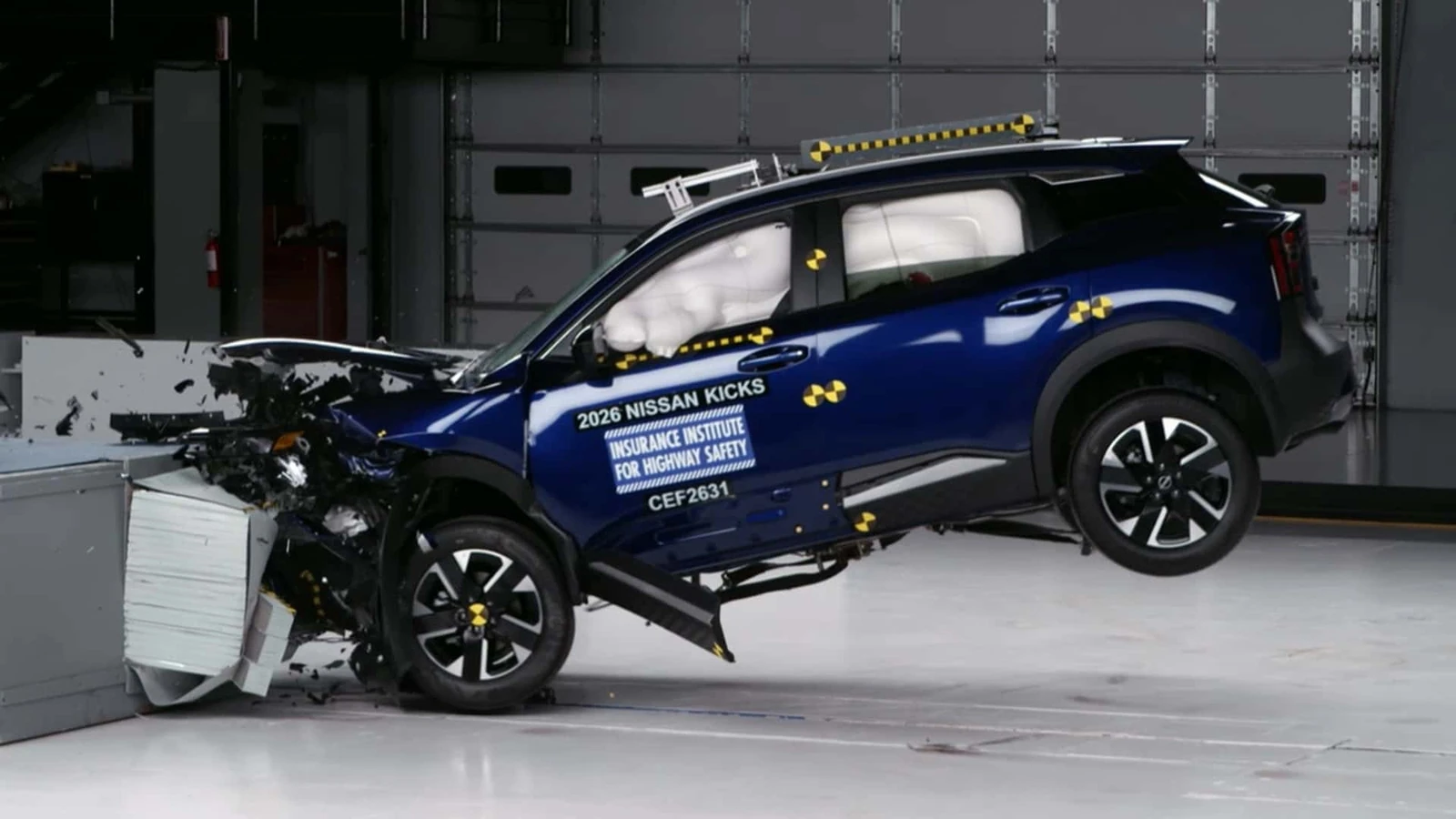
Nissan Kicks is the only small crossover to earn IIHS Top Safety Pick after rear belt fix

Kicks models built after June 2026 now score Good in the updated moderate overlap front test, while the Audi Q3, Toyota RAV4 and Chevrolet Trailblazer fall short.

Image: Motor1

The Nissan Kicks has become the only small crossover in its group to earn an IIHS Top Safety Pick award, after Nissan revised the rear seat belts on vehicles built after June 2026. The redesigned Kicks had initially been rated Poor in the institute's updated moderate overlap front test, which focuses on second-row protection.

The Audi Q3, Toyota RAV4 and Chevrolet Trailblazer went through the same updated test and none of them earned the award, with rear-seat protection the common shortfall.

A build-date split within the same badge

Nissan's fix involved additional rear seat and seat belt load limiter changes on Kicks units built after June 2026. Those later production vehicles now carry a Good rating in the same test, and the Top Safety Pick designation applies specifically to 2026 and 2027 models built from that point forward.

That creates an unusually narrow window: two Kicks crossovers with the same badge and model year can carry different crash test outcomes depending on when the factory built them. Checking a VIN or build date is the only way to know which belt hardware is actually in the car.

For used and near-new buyers, that makes the Kicks a car where the paperwork matters as much as the badge. A 2026 model built before the change and one built after it are, from a safety-rating standpoint, different vehicles.

Why the Q3, RAV4 and Trailblazer missed out

The redesigned 2026 Audi Q3 rated Poor in the updated moderate overlap front test, the same failing grade that kept the pre-fix Kicks off the list. That rating applies to 2026 and 2027 Q3 models built after May 2026, when Audi modified the rear seat belts but testing still showed the rear lap belt slipping off the pelvis.

The Chevrolet Trailblazer carries a Marginal overall rating in the updated moderate overlap front test and mixes Good and Acceptable scores elsewhere, leaving it short of the award threshold.

The Toyota RAV4 is the closest miss. Its hybrid and plug-in hybrid versions earn Acceptable and Marginal overall ratings respectively in the updated moderate overlap front test, and their other crashworthiness and crash avoidance scores are a mix of Good and Acceptable. The heavier plug-in model performed worse in the same crash than its gas-electric sibling.

The pattern is consistent: these are not failures across the board but specific weaknesses in how the back seat holds and loads a rear passenger in a frontal impact. That is precisely the area the institute has been tightening.

How the test and the award changed

The IIHS overhauled the moderate overlap front test in 2022 by adding a second crash test dummy in the rear seat behind the driver instead of using only one in front. The group then tightened the scoring rules again in 2024 to focus more on how well rear belts stay in place and how much force they put on a passenger.

That sequence explains why recent redesigns are still missing the mark in the back seat: the goalposts moved after much of the engineering work was locked in.

Under current Top Safety Pick rules, a vehicle needs Good ratings in the updated moderate overlap front and side tests, at least Acceptable headlights, and an advanced or superior front crash prevention system. That checklist is why the Kicks now stands alone in this small crossover group while the Q3, RAV4 and Trailblazer fall short.

The practical read for shoppers is that a Top Safety Pick badge in this segment now says something quite specific about rear-seat restraint performance, not just about structure or front occupant protection. Buyers who regularly carry passengers in the back should treat the award, and the build date behind it, as a genuine differentiator.

Open this article ↗

Keep scrolling to read the next story.

Older articles →