INDEPENDENT AUTOMOTIVE NEWSGLOBAL PERSPECTIVE / AUSTRALIAN EDITION
TDCNTHE DAILY
CAR NEWS.

The road ahead.
Every day.

RSS ↗
Latest/Industry

175 original articles

Industry / TDCN ORIGINAL

Subaru revives heavy-duty TY85 manual for a mass-production WRX in Japan

The gearbox from the previous-generation WRX STI returns in a permanent Japanese-market WRX variant from November 2026, with no wider availability announced yet.

Image: Carscoops

Subaru will put a manual-transmission WRX into its regular Japanese catalogue for 2027, reviving the heavy-duty TY85 six-speed from the previous-generation WRX STI rather than the TY75 fitted to US cars. The mass-produced manual variant is scheduled to debut in Japan in November 2026.

A gearbox pulled back from the brink

The TY85 had been close to extinction. Subaru engineers say manual transmission assembly lines were being scrapped one by one to speed up electrification, and the team initially believed the gearbox could no longer be built, only to find production at a partner factory still fully operational. That discovery led management to assemble a small skunkworks team in early 2025 with a fast-tracked development brief, and the project was completed in about a year using a motorsport approach.

It was not a simple retrofit. The engine control mapping is derived from Subaru race cars, which the company says gives the turbocharged 2.4-litre boxer the direct, instant throttle response of a naturally aspirated engine. Engineers who drove the sedan during development describe the combination of boxer, TY85 manual and the rigidity of the current WRX chassis as a completely different feeling from previous iterations.

Subaru has not published power or torque figures for the Japanese manual variant, so its output has not been announced. The only engine number in the material is the 271 hp (202 kW / 275 PS) output of the US-market 2027 WRX GD25, which uses the TY75 and the standard boxer.
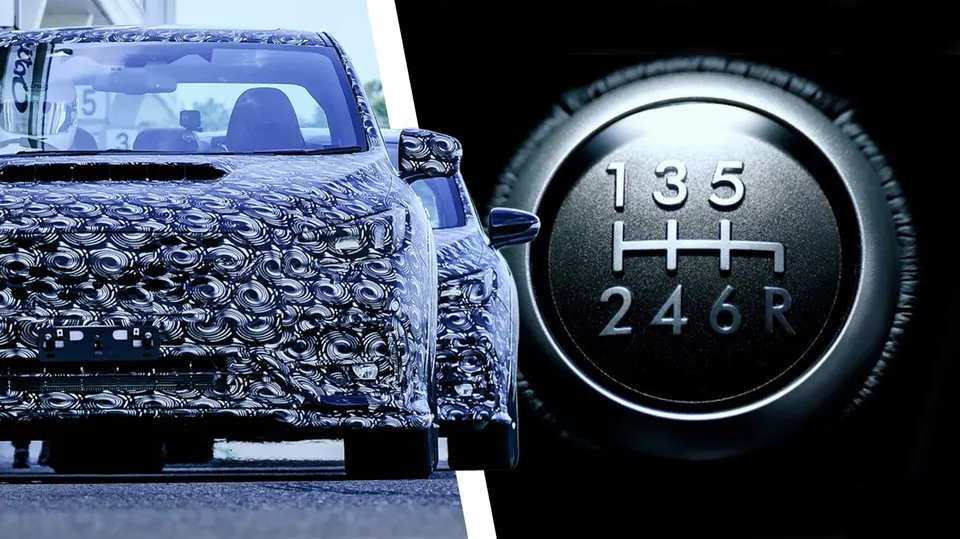
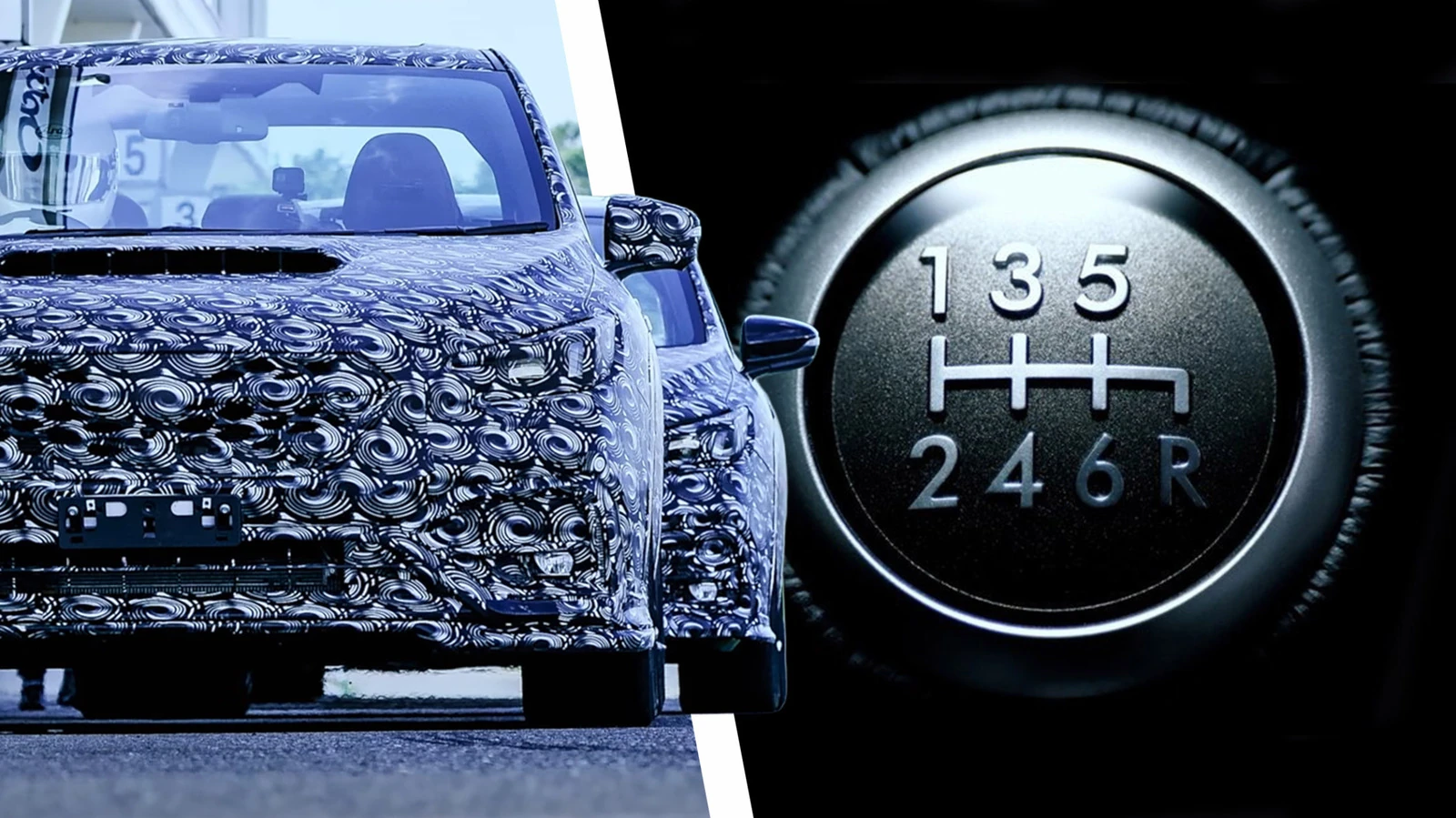
A camouflaged WRX test mule paired with the six-speed gate of the revived heavy-duty TY85 manual
A camouflaged WRX test mule paired with the six-speed gate of the revived heavy-duty TY85 manual, Image: Carscoops

What it replaces in Japan

To make room for the new variant, Subaru is ending production of the current CVT-equipped WRX S4 STI Sport grades in the local market. The manual also answers a long-standing complaint from Japanese enthusiasts, who previously had to enter a lottery for one of just 600 WRX STI Sport♯ cars to get a manual in the latest generation.

Subaru has not said whether the new gearbox will be paired with any styling or chassis upgrades. The official teaser page carries a 15-minute development documentary titled "The path to the revival of a mass-produced MT model", which confirms earlier reports of the TY85's return and explains why the decision was taken and how it was achieved.

The Japanese price of the manual WRX has not been announced.

Three manual Subarus by 2027

The WRX is one of three manual Subaru models due by 2027. It will be joined by a lightweight BRZ coupe with more aggressive aero and a yet-unnamed five-door hatchback.

Subaru has not disclosed plans to sell the STI-sourced manual WRX more widely. Carscoops suggests the variant could reach North America as part of model year 2027 or 2028 updates, but that is speculation rather than a confirmed plan.

For US buyers in the meantime, Subaru is offering the 2027 WRX GD25 special edition, limited to 350 units, with special exterior and interior touches, the simpler TY75 manual, the standard 271 hp (202 kW / 275 PS) boxer, gold-finished 19-inch alloy wheels and uprated brakes.

The revived TY85 matters beyond one variant. Building a permanent manual model is a costly engineering exercise, and spreading that gearbox across more markets would be the obvious way to earn back the investment. For drivers in Japan, the appeal is simpler: a factory-backed manual in the current WRX, without a lottery ticket.
Open this article ↗
New cars / TDCN ORIGINAL

Audi becomes first brand to run Spotify's native in-car app, starting with A6 and Q6 e-tron

The app runs on Audi's infotainment system without a phone, splits driving and parked modes, and is rolling out across 47 markets.

Image: Motor1

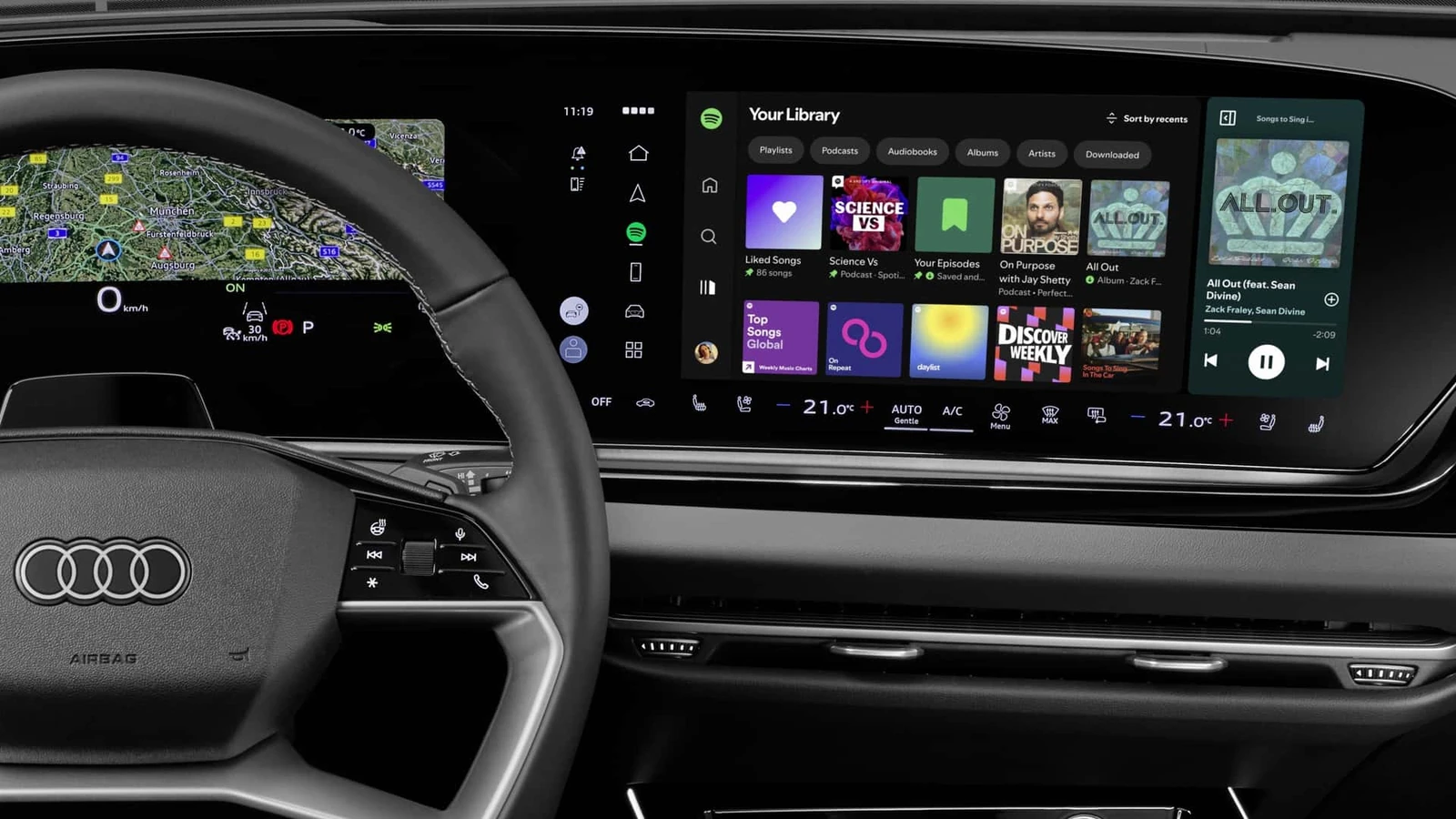
Audi is the first automaker to offer Spotify as a fully native in-car app, built directly into its infotainment system with no phone, cable or Bluetooth connection required. The app is available now in the United States on the A6 e-tron and Q6 e-tron electric models, plus the A5, Q5 and A6 combustion models from model year 2026 onwards.

It runs on vehicles built on Audi's Premium Platform Electric and Premium Platform Combustion architectures, and Audi says more current and future models on those platforms will follow, though it has not named additional nameplates yet.

What makes this Spotify app different

Spotify has offered an app for Google's Android Automotive infotainment systems before, but that version was a headless setup: Spotify supplied the data, playlists and catalogue while Google's design guidelines dictated how the interface looked. The new app is headful, meaning Spotify draws the entire interface itself rather than working inside a template or framework.

"We're drawing all the pixels," Jonathan Tarlton, Spotify's Automotive Business Development Lead, said in an interview quoted by The Verge. "We own the user experience. So we're not in a template or a framework. It's 100 percent Spotify."

That freedom lets the app use hardware that phone-projection systems cannot reach, such as passenger displays and in-car video, which is the practical reason Audi's cars can do more with Spotify than a CarPlay or Android Auto session allows.

How to install it and what it costs

Owners download the app free from the Audi Application Store on the car's infotainment system. Signing in requires a smartphone once, to scan an on-screen QR code, after which the in-car experience is decoupled from personal devices. Playback needs a Spotify Free or Premium account, the same as on a phone, and the app itself carries no charge.

Audi plans to roll the feature out across 47 markets spanning Europe, the Americas, Asia, Africa and Australia. Availability and specific features can vary by region, so the experience in Germany may not match what arrives in the US immediately.

Driving mode versus parked mode

Audi split the experience in two to stay within driver distraction rules. While the car is moving, drivers get the core Spotify menus, playback controls and voice commands through "Hey Audi" or Spotify DJ, and sign-in and settings are locked out entirely. Video waits until the vehicle is stationary, and richer visual elements such as scrolling lyrics are limited on the main screen while driving.

Park the car and the main MMI display opens up: full-screen video podcasts, music videos and live lyrics become available, including while an EV is charging. Spotify Jam lets passengers scan a QR code to join a shared session and add songs to the queue from their own phones.

Cars fitted with a separate passenger display skip most of those restrictions, because that screen sits outside the driver's view. A front passenger can browse content, read lyrics or watch video while the car is in motion. The catch is that the most distinctive features depend on hardware not every qualifying model carries, so buyers after the full experience should check whether a passenger screen is fitted before ordering.

Spotify is not abandoning phone projection

Spotify said it remains "heavily invested" in Apple CarPlay and Android Auto and wants to offer users a choice of how they access the service, whether they are tied to iOS or Android on the phone. Audi is the first automaker to ship the new app, and more manufacturers are expected to join in future, though none have been named.

For drivers, the appeal is convenience rather than new content: the same account and catalogue, minus the pairing routine at the start of every journey. The bigger shift is architectural. A carmaker handing a third party full control of its on-screen interface is a departure from the template-bound approach that has defined in-car apps so far, and it gives Spotify a template for deals with other brands.

Open this article ↗

Keep scrolling to read the next story.

Older articles →