INDEPENDENT AUTOMOTIVE NEWSGLOBAL PERSPECTIVE / AUSTRALIAN EDITION
TDCNTHE DAILY
CAR NEWS.

The road ahead.
Every day.

RSS ↗
Latest/New cars

229 original articles

New cars / TDCN ORIGINAL

Alpina's first BMW-owned model spied testing as a modified 7-Series

Prototype near the Nürburgring shows amber daytime running lights, a three-slat kidney grille and oval tailpipes, with a fettled twin-turbo V8 expected under the bonnet.

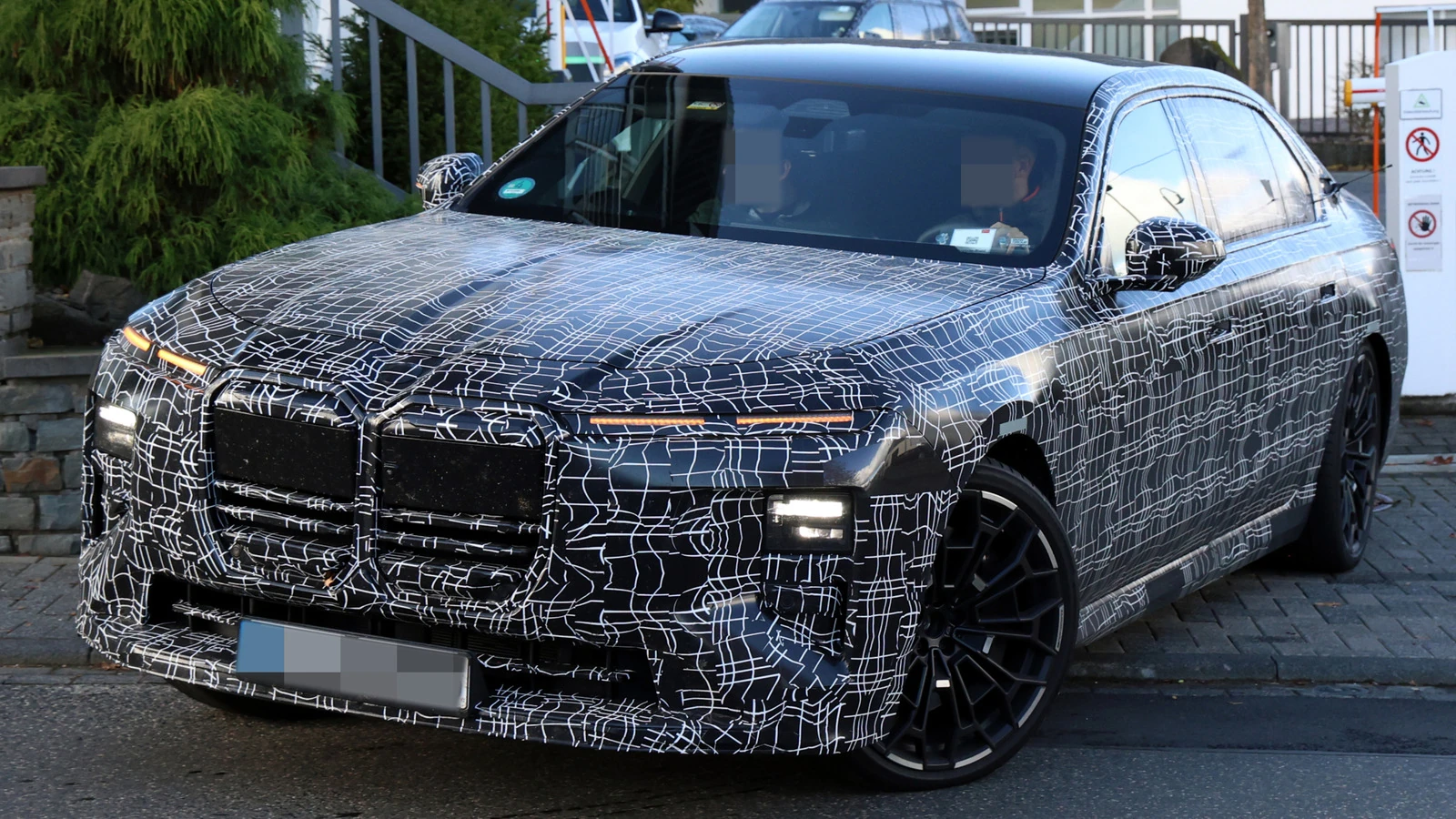
Image: Carscoops

Alpina's first model under full BMW ownership has been photographed testing near BMW's Nürburgring test centre, wearing styling cues that separate it from the standard 7-Series it is based on. The prototype carries amber LED daytime running lights, a kidney grille with three horizontal slats instead of the standard car's seven, a unique lower bumper and air intake, black wheels with silver accents, and Alpina's familiar oval tailpipes.

BMW has not confirmed a launch date for the car, and no price has been announced. The smart money, based on the pace of the development programme, points to a reveal next year.

What the spy shots show

The front-end changes are the most obvious tell. The amber daytime running lights echo the Vision Alpina concept shown in May, suggesting the colour could become a signature for future Alpina models, though the lights may not carry over to production. The three-slat grille, revised lower bumper and intake, and the black-and-silver wheels all mark the car out from a regular 7-Series. Rear modifications look more limited, centred on the oval tailpipes, with a new rear bumper possible on the production version.

The wheels on the prototype may not survive into showrooms. Alpina's traditional tightly spoked design is the more likely choice for the finished car.
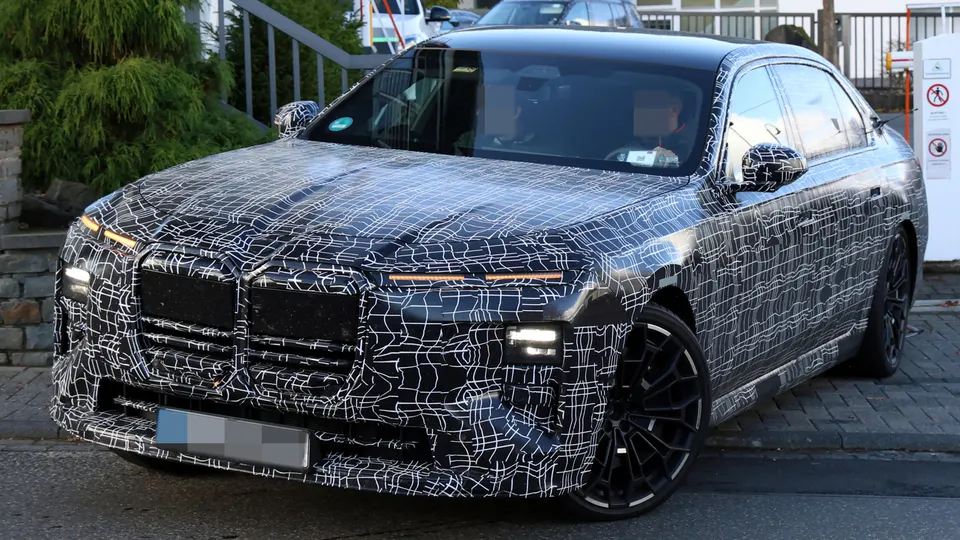
Spy shots capture Alpina's first BMW-owned model testing in modified 7-Series form, wrapped in camouflage up front.
Spy shots capture Alpina's first BMW-owned model testing in modified 7-Series form, wrapped in camouflage up front., Image: Carscoops

A V8 powertrain, fettled in typical Alpina style

Alpina's previous 7-Series-based B7 was built from 2016 to 2022 and used a twin-turbocharged 4.4-litre V8 from the 750Li, upgraded to 600 horsepower. Earlier this month BMW unveiled the M760 xDrive in the U.S. with the latest version of that twin-turbo 4.4-litre V8, producing around 570 hp and driving all four wheels as standard.

The new Alpina is expected to be based on that model and to use the same basic engine, lightly reworked to lift horsepower and torque. Alpina's history suggests the work will go beyond the engine bay: the brand has long combined sporty handling with comfort and composure, and the new 7-Series model is expected to follow that formula.

That matters because the M760's 570 hp is the starting point, not the target. Alpina's role under BMW ownership is to occupy the space between a standard 7-Series and a full M car, so buyers who want more than a 750 but who find an M7 unnecessary are the obvious audience.

An X7-based Alpina is also coming

The 7-Series is not the only Alpina in the pipeline. BMW confirmed earlier this year that Alpina will also launch its own version of the next-generation X7, tipped to arrive in 2027.

For now, the 7-Series-based car remains a prototype, and BMW has yet to publish output, torque, range or pricing figures. Buyers in markets outside the U.S. and Europe will also want to know which countries get the car, since that has not been announced either.
Open this article ↗
Electric / TDCN ORIGINAL

Facelifted Hyundai Ioniq 6 goes on sale in the UK from £33,240

Hyundai's updated electric saloon qualifies for the £3,750 Electric Car Grant after a lengthy approval process, cutting its price by thousands.

The facelifted Hyundai Ioniq 6 is now on sale in the UK, priced from £33,240 for the entry-level Premium trim with the 84kWh battery and a WLTP range of 423 miles. That figure undercuts the Mercedes-Benz CLA 200 Electric, which starts at £39,150 for the smaller-battery, 328-mile version.

Hyundai has reshuffled the Ioniq 6's trim levels so that the entry car falls below the £37,000 threshold for the UK's Electric Car Grant, and convinced British authorities that the Korean-built car is produced sustainably enough to qualify for the full £3,750 discount. The process was lengthy, which is why it has taken a while for the facelifted Ioniq 6 to reach UK showrooms, but it is available now.

Pricing across the range

The one-up N Line trim, which gets sportier styling, is priced at £36,240 and also qualifies for the grant. The top-tier N Line Evo and the 320bhp dual-motor versions do not get the grant and are therefore considerably more expensive, at £43,270 and £46,770 respectively.

For context, when the original Ioniq 6 launched it cost £47,000. The combination of generally falling EV prices, the grant support and some well-judged upgrades has transformed the car's value proposition.

What the facelift changes

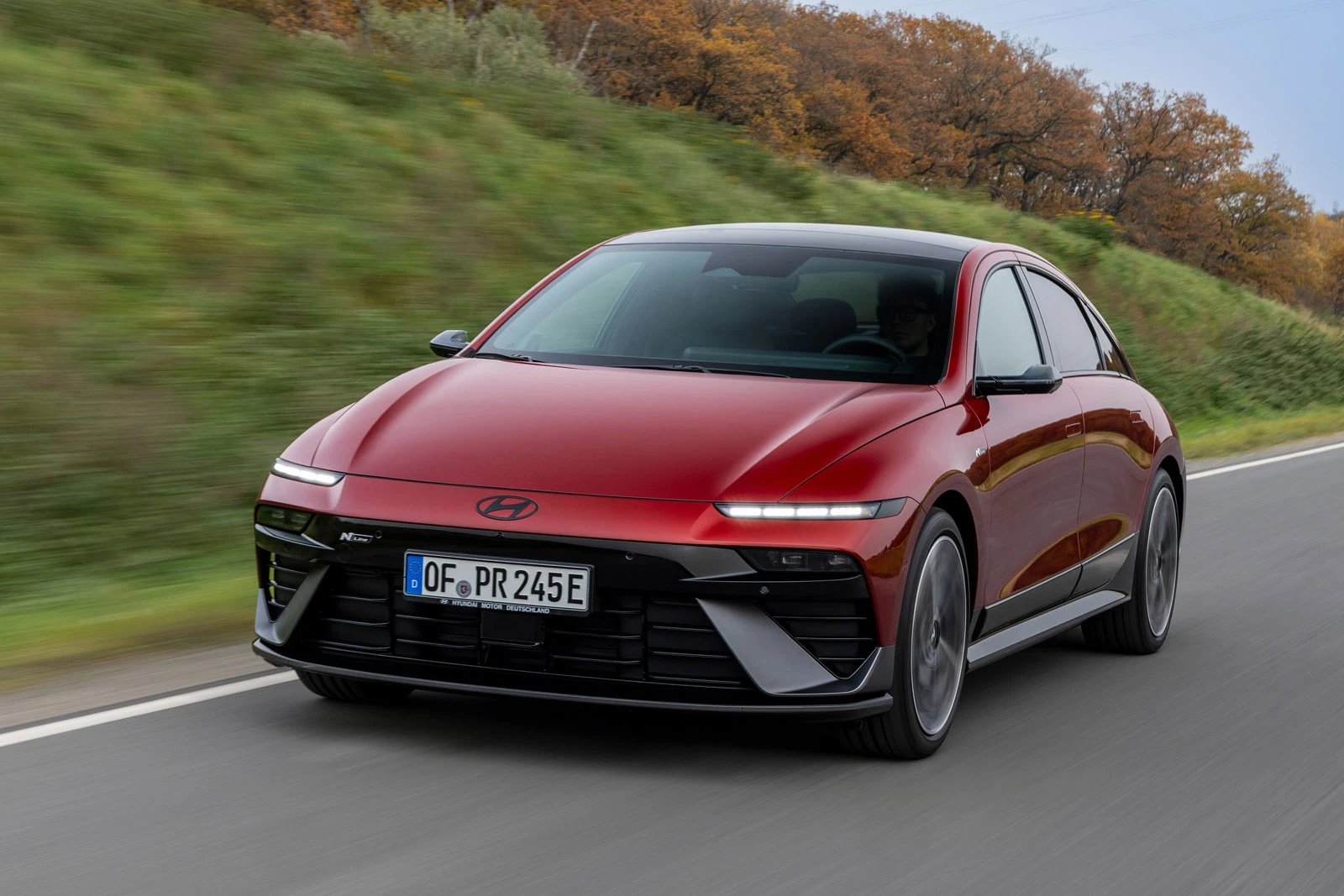
The visual updates are extensive: slimmer headlights, new wheel designs and the removal of the distinctive rear wing. Inside, materials have been upgraded with fewer hard, scratchy plastics, and N Line models get the three-spoke steering wheel from the Ioniq 6 N instead of the previous two-spoke design. The centre console retains its button-heavy layout but is more logically organised, and the digital screens work well without dominating the cabin.

The facelifted car uses the same upgraded 84kWh battery as the Ioniq 5 SUV. Choosing the smaller 18-inch wheels rather than the 20s adds 59 miles of WLTP range, though the difference will be smaller in practice. With efficiency in the high three miles per kWh, a 300-mile real-world range is very doable.

What it is like to drive

The regular rear-wheel-drive Ioniq 6 is a surprisingly decent steer, with good body control and faithful steering, and it can be made to yaw gently on the power in wet conditions. The ride is only okay, feeling a little short on suspension travel on challenging roads, and Hyundai still struggles with isolating fine vibrations and sharp intrusions.

The front seating position remains a weak point: the seat feels stuck in a medium-high position, perching the driver over the controls, whereas the CLA and Tesla Model 3 offer a more authentic saloon driving position. Rear leg room is immense, so the high floor is not a problem for passengers in the back.

The competitive picture

At £33,240, the Ioniq 6 undercuts not only the CLA 200 Electric but also the Tesla Model 3. The top-spec dual-motor versions at £46,770 remain competitive with the CLA range despite losing grant eligibility.

The smarter move for buyers who want something distinctive that is not an SUV is the entry Premium or N Line trim, where the grant does the most work. The higher-performance variants ask a significant premium partly because they fall outside the subsidy, which makes the value case for the 320bhp car harder to justify on price alone.

Open this article ↗

Keep scrolling to read the next story.

Older articles →