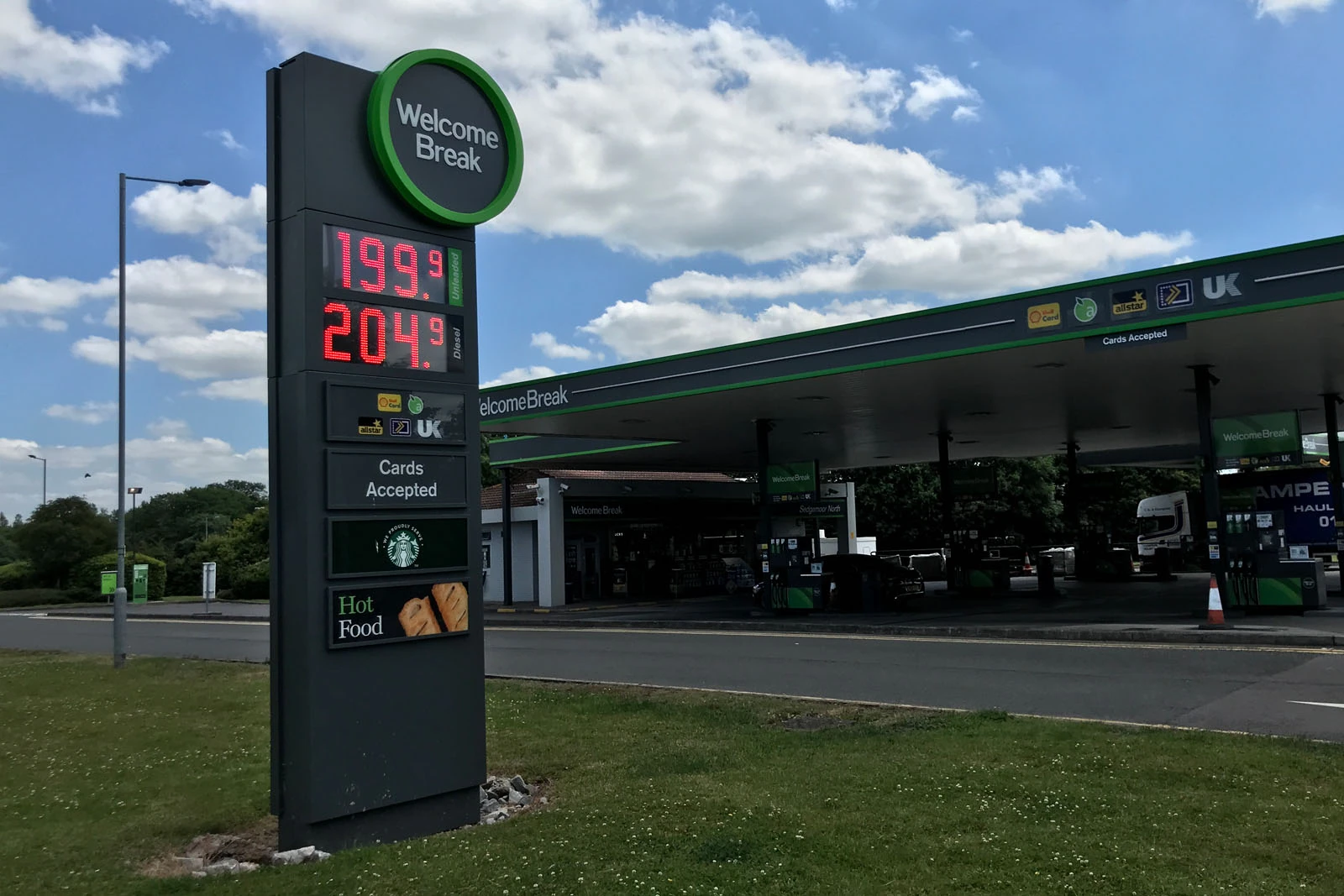
Chancellor John Healey's first Budget keeps the 5p-per-litre fuel duty cut in place until July 2027, holding total duty at 52.95p per litre, and puts £100 million toward cheaper local public EV charging. The freeze had been due to lapse on 31 December 2026.
Healey tied the decision to the Middle East war keeping fuel prices high, and the government said most of the rise in inflation from 2.6% in June to 3.5% in September came from motor fuel prices. The measures are pitched as savings for motorists rather than a cut in what they pay at the pump.
What the fuel duty freeze does and does not do
Fuel duty stays at the reduced rate rather than falling further. Opposition leader Kemi Badenoch said she was glad to see it temporarily frozen but asked why it could not hold at that level for longer, noting the Conservatives froze fuel duty for 14 years.
AA president Edmund King said the freeze only delays the price shock when duty rises, and argued the government could have gone further with an extra 5p cut, even if only for diesel, offset by extra VAT receipts from inflated prices. RAC senior policy officer Rod Dennis said a freeze only avoids making a difficult situation worse and does not make filling up cheaper, pointing out pump prices still soared this summer at the same reduced duty rate.
That is the honest reading of the announcement: it protects drivers from an increase they were due to face, but it does not lower the price of a litre. Anyone budgeting for running costs should treat it as a delay, not a saving.
Home charging stays cheaper than the public network
The temporary removal of VAT on domestic electricity is extended to July 2027, which benefits households that can charge EVs and plug-in hybrids at home. Electricity from public EV chargers continues to attract VAT at 20%.
King said that gap widens the pavement tax between those who can charge at home and those who cannot, and called it a missed chance to encourage EV uptake. Vicky Edmonds, chief executive of the Electric Vehicle Association England, welcomed the £100m but said it is disappointing that there is still no movement on cutting VAT at public chargers.
The government said it is considering letting EV drivers pay domestic VAT rates at public chargers and is taking immediate steps to establish a taskforce on the issue. No cut to public charging VAT has been announced, and no date has been given for a decision. The £100m is meant to narrow the gap another way, by reducing prices at local, lower-powered public charge points, split as £50m in 2027-28 and £50m in 2028-29.
Dennis said cutting VAT on public charging would have been an obvious way to make the switch more accessible, and that the government appears instead to be exploring an approach letting drivers use lower-powered public chargers at the same cost as charging at home. For drivers without a driveway, the detail of that scheme matters more than the headline funding figure, and it has not yet been published.
Electric Vehicle Excise Duty arrives in April 2028
Healey did not discuss the pay-per-mile tax on EVs directly, but the government has clarified its position: Electric Vehicle Excise Duty (eVED) will be introduced in April 2028. A new tool will let EV drivers estimate and declare their mileage, with proof-of-concept work under way.
The government is also working on a mechanism for drivers to opt in so their car's trip computer declares mileage automatically, and aims to automate refunds by 2030 for drivers who overestimated their mileage or have sold the car. Further guidance for large fleet operators is promised later this year.
The Office for Budget Responsibility expects eVED to add around £2 billion to VED revenues by the 2031-32 fiscal year. The automated refund route is the part that will decide whether the tax feels fair in practice; manual mileage declarations are exactly the kind of admin that breeds disputes.
Mileage rates and company car tax
Approved mileage rates for business drivers rise. The reimbursement for those covering under 10,000 miles a year was temporarily lifted from 45p to 55p per mile for the current tax year, and Healey made that increase permanent. The rate for those covering more than 10,000 miles annually goes from 25p to 35p.
Benefit-in-kind tax bands for company car users will rise by one percentage point in the 2030-31 fiscal year, which the government expects to raise an extra £310m in 2030-31 and £345m in 2031-32. Company car drivers choosing electric models still face a rising tax bill later this decade, so the BIK tables are worth checking before committing to a multi-year lease.