INDEPENDENT AUTOMOTIVE NEWSGLOBAL PERSPECTIVE / AUSTRALIAN EDITION
TDCNTHE DAILY
CAR NEWS.

The road ahead.
Every day.

RSS ↗
Latest/Australia

181 original articles

Australia / TDCN ORIGINAL

Denza N9 plug-in hybrid SUV gains Australian certification, launch timing unconfirmed

The 545kW three-row PHEV has cleared ADR approval, but Denza Australia has not announced an on-sale date or local pricing.

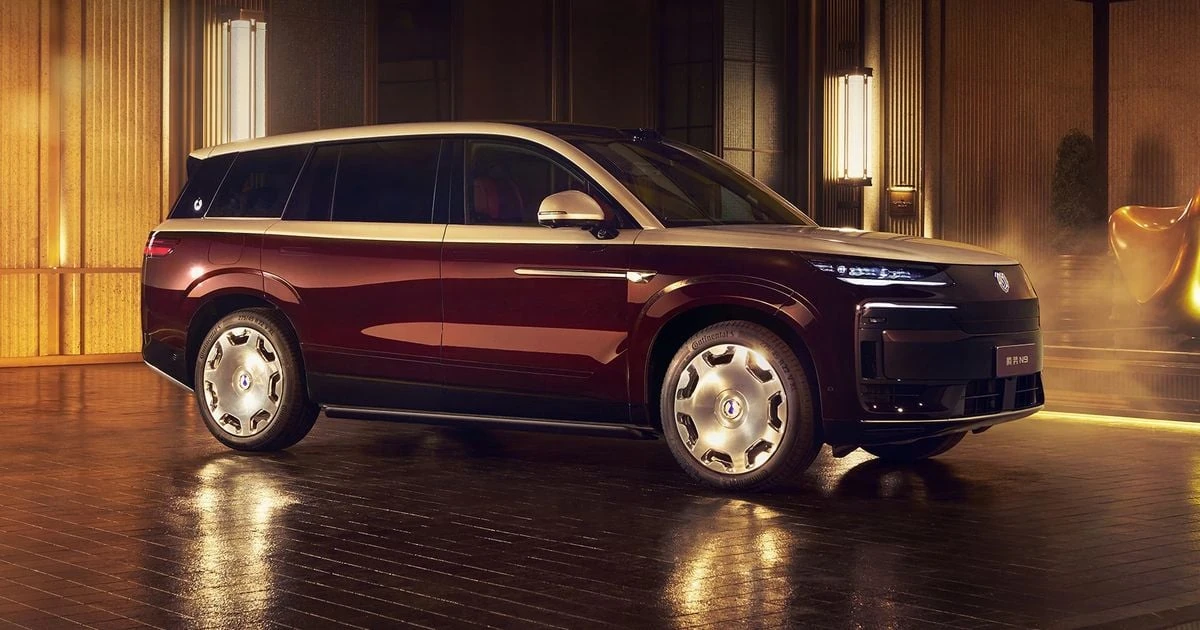
The Denza N9, a large three-row plug-in hybrid SUV from BYD's premium brand, has received Australian Design Rule (ADR) certification, a step toward a local launch. Denza Australia has not announced when the N9 will go on sale in Australia, and no local pricing has been released.

What the certification documents show

The approval documents list a turbocharged 2.0-litre four-cylinder tri-motor plug-in hybrid powertrain with a total system output of 545kW. The engine produces 150kW, the front electric motor 200kW and each of the two rear motors 220kW.

Tare mass is listed at 3320kg with a gross vehicle mass of 3894kg, indicating a payload of 574kg, and the N9 is rated to tow 2500kg on 22-inch alloy wheels. The documents list a choice of six- or seven-seat layouts.

The N9 measures 5258mm long, 2030mm wide and 1830mm tall on a 3125mm wheelbase, with car-like unibody construction rather than the ladder frames of Denza's existing Australian models.

Chinese-market specifications

No battery capacity appears in the Australian documents, but the N9 was recently upgraded in China from a 46.9kWh lithium iron phosphate battery to a 75.3kWh pack supporting BYD's Flash Charging, which allows a 10-70 per cent DC fast-charge in as little as five minutes and a 10-97 per cent charge in nine.

The Chinese-market N9 has an AC charge rate of 6.6kW, a claimed 420km of electric range on the CLTC cycle and 1520km of combined range. With a depleted battery it consumes fuel at a claimed 5.9L/100km on the NEDC cycle. Denza claims a 0-100km/h time of 3.7 seconds and total system torque of 1035Nm.

Suspension is four-wheel independent, with double wishbones up front and a five-link setup at the rear, plus dual-chamber air suspension and adaptive dampers. Those figures are Chinese-market claims on Chinese test cycles; Australian specifications and range ratings have not been confirmed.

Where it fits in Denza's Australian range

Denza customer deliveries began in Australia early this year, with the large B5 and B8 off-road SUVs followed shortly afterwards by the D9 people mover. Denza has also confirmed the Z9 GT electric shooting brake for a local launch before the end of 2026.

The N9 would sit apart from those models as a luxury unibody SUV. Plug-in hybrid SUVs of this size are common in China, but the N9 would effectively have no direct competitor in Australia. It is larger and more luxurious than PHEV versions of the Kia Sorento and Mazda CX-80, and larger than BYD's own Sealion 8. The closest comparison is the Volvo XC90, which offers PHEV power and a third row but is significantly shorter at 4953mm.

That gap in the market is the reason the N9 matters locally. Buyers wanting a three-row plug-in hybrid currently choose between smaller, less premium models or the ageing XC90, so a 5.2-metre SUV with this much power would occupy a category of one. The catch is that size and complexity rarely come cheap, and without local pricing there is no way to judge whether Denza can convert that empty space into sales.

What remains unconfirmed

Denza Australia has been contacted to confirm local launch timing. Until pricing and a date are announced, the N9's Australian position is set by certification alone, and buyers should treat the Chinese range, charging and performance figures as indicative rather than final.
Open this article ↗
Safety / TDCN ORIGINAL

Porsche adds 548 sports cars to centre-lock wheel recall with stop-driving warning

The expanded US recall covers 2024 911 and 718 models whose centre-lock wheel components may have been made from out-of-specification material.

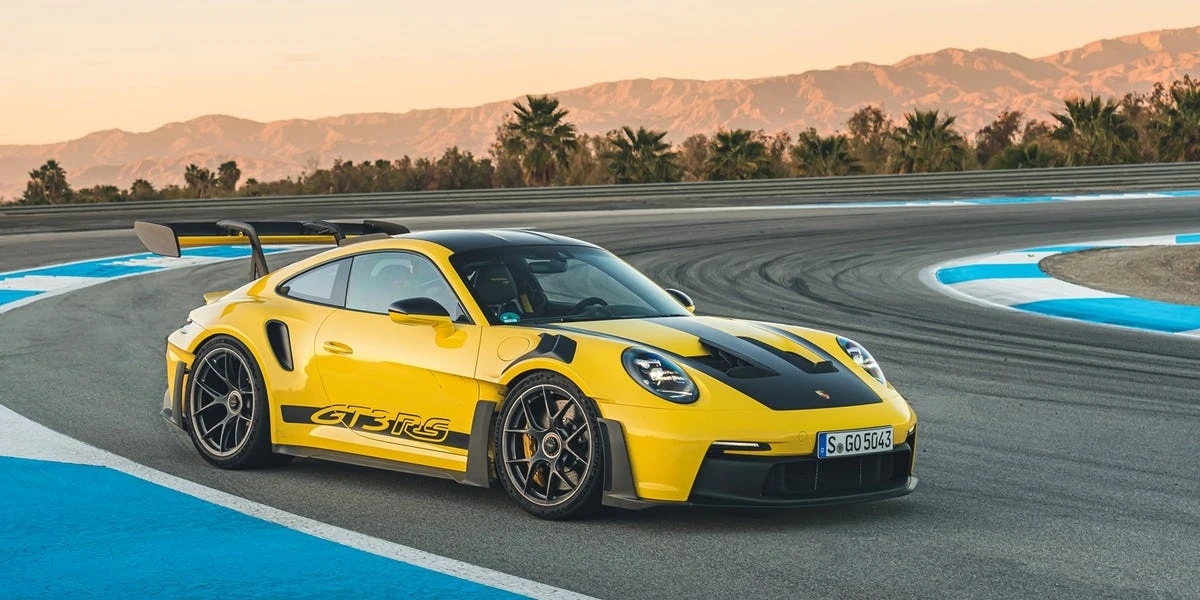
Porsche has widened a US safety recall to cover a further 548 vehicles from the 2024 model year, all fitted with centre-lock wheels that could fracture and let a wheel come loose. Affected owners are being told not to drive their cars until dealers have inspected and, where necessary, replaced the suspect components.

The expansion adds to an original recall issued in October 2024 covering 2,251 vehicles, which also carried a do-not-drive warning. The latest round carries the same instruction.

Which models are affected

The additional vehicles include the 911 GT3, 911 GT3 RS, 911 Turbo, 911 Turbo S, 911 S/T, 911 Carrera GTS, 718 Cayman GT4 RS and 718 Spyder RS. These are the models on which Porsche reserves centre-lock wheels, typically its fastest and grippiest cars.

The recall is being administered by the National Highway Traffic Safety Administration, and vehicle identification numbers became searchable on the agency's website on October 20. Owners are urged to check their VIN promptly and, if their car is covered, to leave it parked until repairs are completed.

Why the recall grew

The expansion follows two further reports of fractured centre-lock components, one in May and one in August of this year. Porsche investigated with its parts supplier and found that the original process for identifying defective parts had missed some potentially affected components. A deeper investigation showed that additional vehicles could have received parts from the same out-of-specification material batch.

What owners should do

Porsche plans to contact owners by phone, email and the My Porsche app, advising them not to drive their vehicles. Authorised dealers will inspect the centre-lock wheel fastening systems and replace any improperly manufactured components at no charge.

The sources do not say how long inspections or replacements will take, nor whether the recall extends beyond the United States. Neither point has been announced.

Why a loose wheel matters more on these cars

A wheel detaching is dangerous on any vehicle, but on a high-performance Porsche built for track use and high cornering loads the consequences are more severe. The do-not-drive instruction is unusually blunt for a manufacturer, and it reflects the fact that the failure mode can appear without warning.

For owners, the practical effect is that some of Porsche's most expensive and specialised sports cars are grounded until parts are checked. The recall also shows how a supplier batch problem can escape an initial screening process, which is why the scope was widened rather than closed.

Open this article ↗

Keep scrolling to read the next story.

Older articles →