INDEPENDENT AUTOMOTIVE NEWSGLOBAL PERSPECTIVE / AUSTRALIAN EDITION
TDCNTHE DAILY
CAR NEWS.

The road ahead.
Every day.

RSS ↗
Latest/New cars

184 original articles

New cars / TDCN ORIGINAL

Honda updates the Japan-market Vezel for 2027 with a Black Sport Style pack

The subcompact crossover gains darkened headlight housings, standard rear vents and USB-C ports, and a dealer-fitted styling kit, with prices starting at ¥2,777,500.

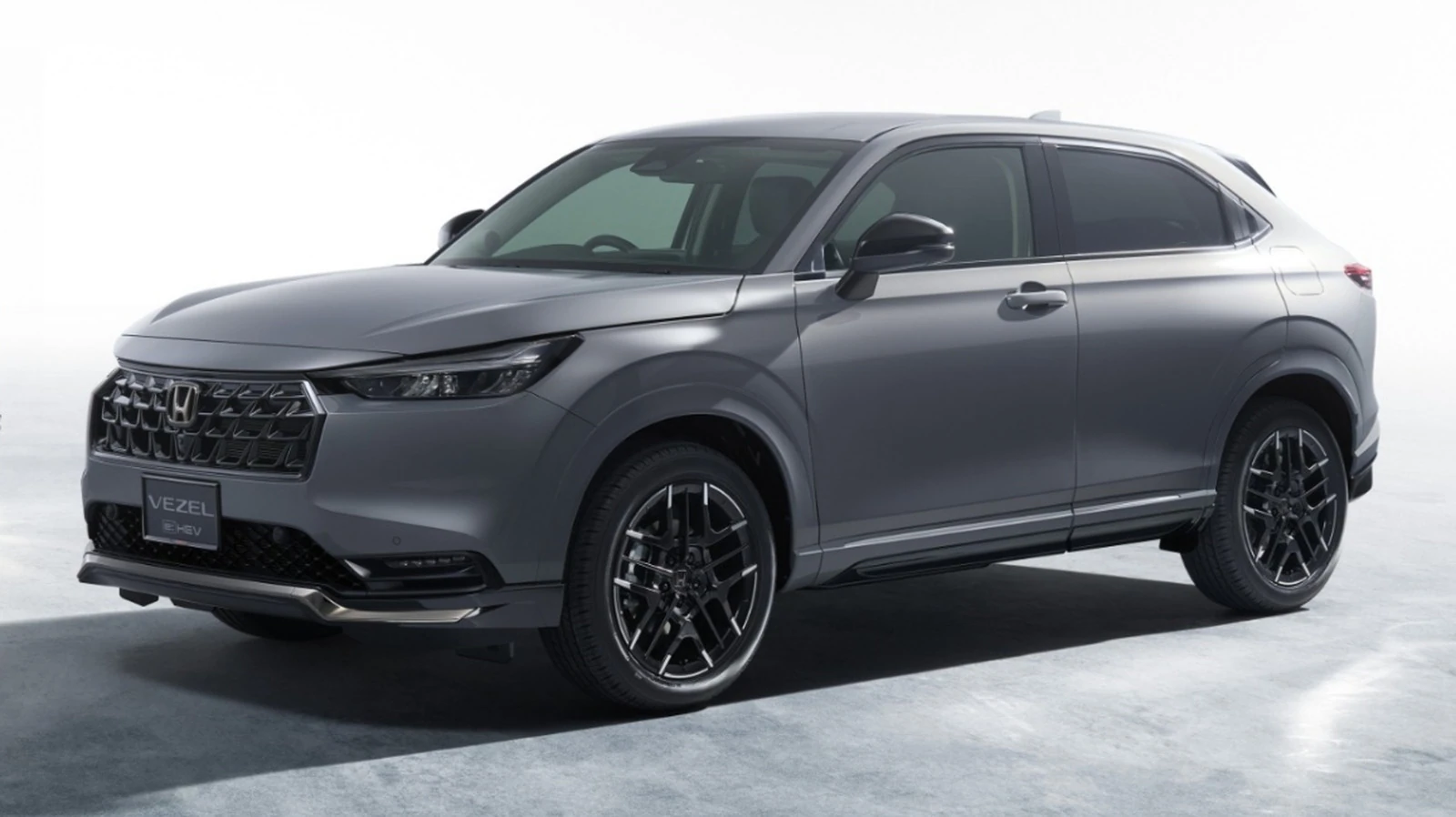
Image: Carscoops

Honda has given the Japan-market Vezel a round of model-year updates for 2027, adding a dealer-installed Black Sport Style package and more equipment for rear passengers while leaving the exterior design largely as it was after the 2024 facelift.

The subcompact crossover, which shares its platform with the Honda Fit and is sold as the HR-V in global markets, keeps its existing 1.5-litre petrol and 1.5-litre self-charging hybrid powertrains, and Japanese pricing runs from ¥2,777,500 to ¥3,885,200.

What changes on the outside

Every Vezel in the 2027 lineup now gets darkened inner headlight housings, a small change that gives the front end a sharper look. The e:HEV Z and Play Package grades also swap the black plastic cladding on the bumpers and around the wheel arches for a body-coloured finish.

Buyers wanting something more distinctive can add the Black Sport Style package, which replaces the previous Urban, Sports, Casual and Active Styles. The kit brings a blacked-out grille with a new pattern, front and rear bumper extensions with black chrome inserts, black mirrors and a black rear spoiler, plus a set of 18-inch diamond-cut alloy wheels.
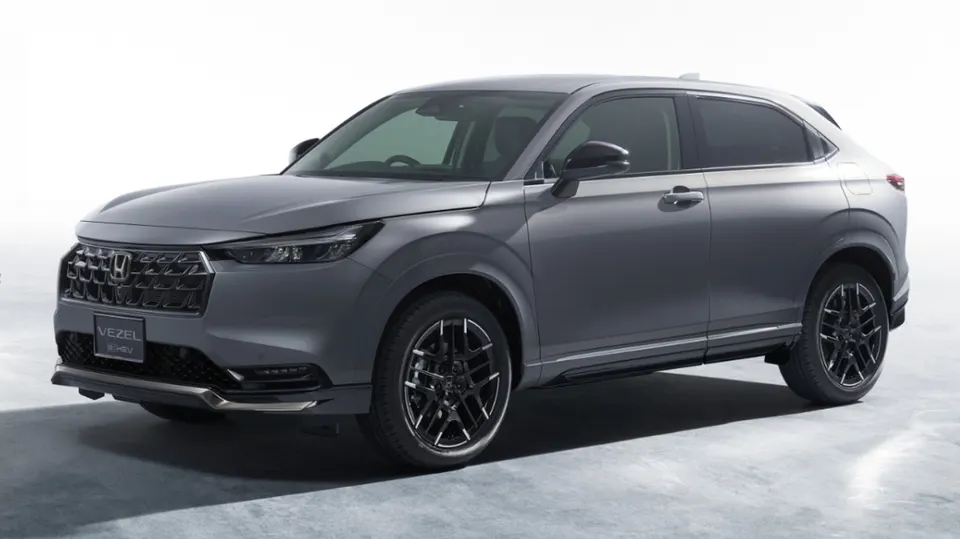
The 2027 Japan-market Vezel gains a Black Sport Style pack, visible here in its darkened grille and alloy wheels.
The 2027 Japan-market Vezel gains a Black Sport Style pack, visible here in its darkened grille and alloy wheels., Image: Carscoops

More kit for the back seats

The cabin keeps its 7-inch digital instrument cluster and 9-inch infotainment screen, but rear climate vents and dual USB-C charging ports are now standard across the range. The e:HEV X trim picks up heated front seats.

The flagship Play Package can be specified with a dual-pane panoramic roof, a multi-view camera system and a 10-speaker audio setup.

Powertrains and grades

Honda has not announced power or torque figures for either engine in this update, and the mechanical package carries over unchanged from the previous model year. The range comprises the petrol Vezel G, the e:HEV X, the e:HEV Z and the Play Package.

The petrol version is offered only with all-wheel drive and a CVT gearbox, while the e:HEV hybrid can also be ordered with front-wheel drive.

The Vezel RS, the trim with a sharper suspension setup and sportier styling, is expected to rejoin the lineup later this year. Until it does, the four grades above are the only choices for Japanese buyers.

Pricing holds steady

The entry-level petrol Vezel G with all-wheel drive starts at ¥2,777,500, which Carscoops converts to about $17,700. At the other end, the Vezel e:HEV Z Play Package with all-wheel drive reaches ¥3,885,200, or roughly $24,700.

Holding the starting price where it was matters in a segment where added equipment usually brings a higher sticker. Honda has bundled extra standard features, notably the rear vents and charging ports, without moving the entry point, which keeps the Vezel competitive against newer subcompact rivals in its home market.

What is still open

Whether Honda will apply similar updates to the global HR-V sold in European and Asian markets has not been confirmed. For North America, where the Civic-based HR-V sits at the bottom of the Honda SUV range, no smaller model is expected soon.
Open this article ↗
Industry / TDCN ORIGINAL

Audi Q9 brings curved OLED taillights with 512 segments to production

The flagship SUV's rear lights bend around the quarter panels using 0.1mm glass, a setup Audi calls a world first.

Image: Motor1

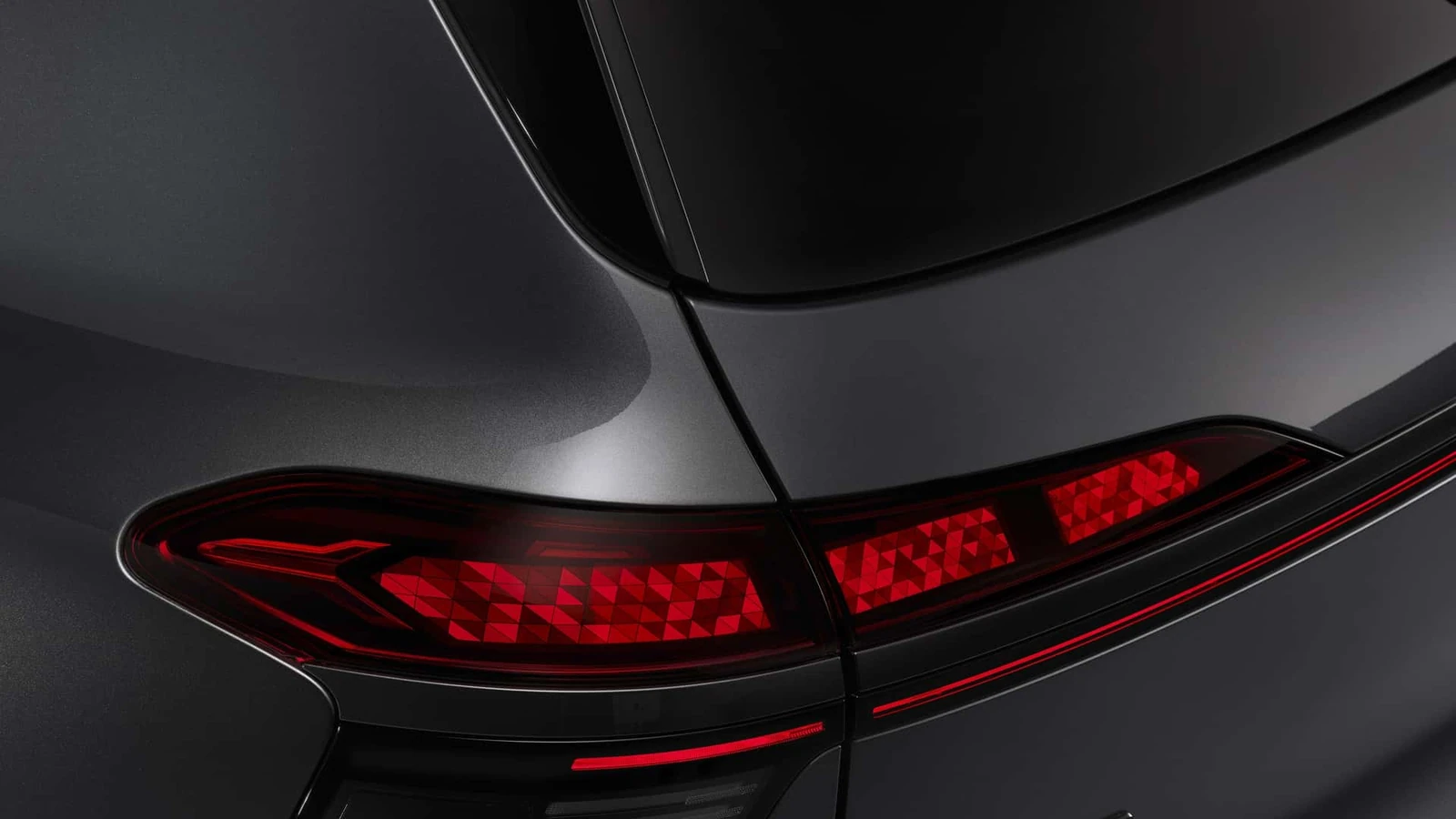
The Audi Q9 is the first production vehicle with curved digital OLED taillights, using six glass panels just 0.1 millimetres thick that wrap around the rear quarter panels rather than sitting flat behind a lens. Audi calls the setup a world first and previewed it when the Q9 debuted in July.

How the curved panels work

Conventional LED taillights sit behind flat lenses, which limits how far the light can wrap around a car's body. Audi shapes the glass substrate itself to follow the curve of the rear quarter panel, and the 0.1-millimetre glass is thin enough to bend without cracking the OLED layer bonded to it. The resulting light element measures about one millimetre thick overall, built on technology the brand has spent a decade developing for production cars.

Audi was the first automaker to put segmented OLED lighting into a production vehicle, and the Q9's digital version pushes that further. Each rear light connects to the car's electrical system control unit through a bus system, letting hundreds of segments be controlled individually instead of lighting up as one block. That fine control keeps the curved panels legible from the side, not just straight on, so a driver approaching at an angle in a parking lot or at an intersection gets a clearer view of brake and turn signals than a flat-panel light usually gives.

The six-panel layout

The lighting is split across the width of the tailgate and rear quarter panels. Audi says the outer curved panel on each side is the largest rear-light panel it has built. The breakdown is 99 segments for each outer panel, 84 for each central panel and 73 for each inner panel, adding up to the 512 total segments across all six pieces.

Up front, the Q9 pairs the OLED rear lights with digital Matrix LED headlights, and the two systems work together at night. The SUV can project a stylised turn-signal pattern onto the pavement ahead, in sync with the dynamic indicators front and rear, a feature Audi previewed on the smaller Q7 before bringing it to the new flagship. Audi's digital Matrix LED headlight technology already appears on some US models.

What Audi has not announced

Audi has shared the panel count, the segment total and the glass thickness as production specifications tied to the Q9's unveiling, but it has not detailed how much of the 512-segment system drivers can customise through onboard settings. Nor has it said whether every market gets the same signature lighting sequence at startup and shutdown. US pricing has not been announced either; those specifics are expected to become clearer as the Q9 gets closer to its on-sale date.

The gap matters for buyers weighing the Q9 against other flagship SUVs. The hardware is confirmed and shipping on the car, but the parts that owners actually interact with, the customisation options and the market-by-market light signatures, are still open questions. Until Audi publishes those details, the Q9's lighting story is a demonstration of capability rather than a full picture of what owners will get.

Why it stands out

Curved OLED lighting is rare because bending the glass without damaging the OLED layer is difficult, and Audi is claiming the first production application of it here. For drivers following a Q9, the practical benefit is a brake and indicator signal that stays readable from wider angles, which is the kind of change that shows up in everyday traffic rather than on a spec sheet. The Q9's debut came in July, and its on-sale date and pricing remain to be confirmed.

Open this article ↗

Keep scrolling to read the next story.

Older articles →