INDEPENDENT AUTOMOTIVE NEWSGLOBAL PERSPECTIVE / AUSTRALIAN EDITION
TDCNTHE DAILY
CAR NEWS.

The road ahead.
Every day.

RSS ↗
Latest/New cars

221 original articles

New cars / TDCN ORIGINAL

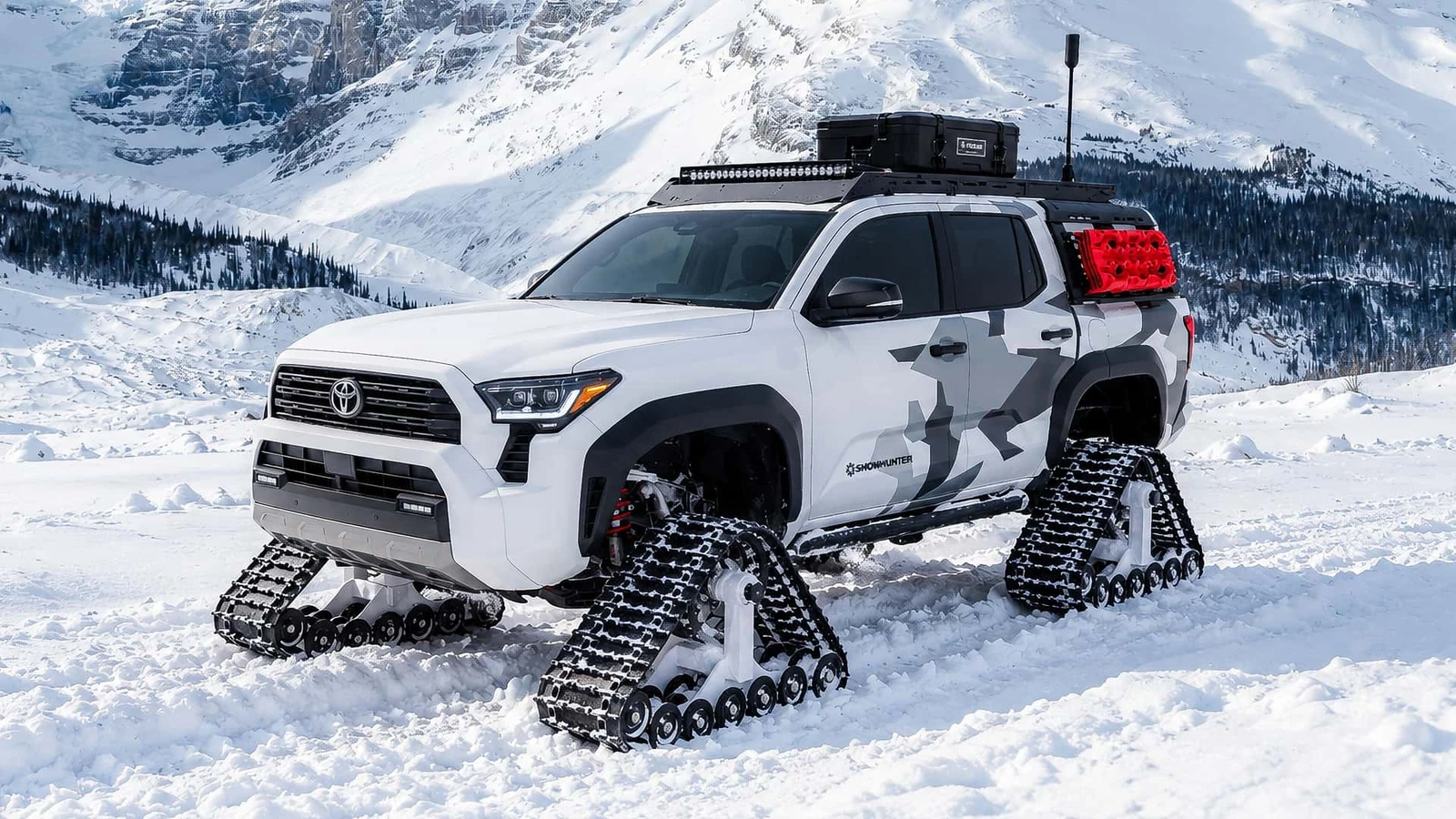
Toyota fits snow tracks to five trucks and SUVs for 2026 SEMA Show

The Snowhunter concepts, based on the Tacoma, Tundra, 4Runner, Land Cruiser and Sequoia, wear camo livery, white powder-coated tracks and lifted suspensions.

Image: Motor1

Toyota has built five winter-prepared concept vehicles, badged Snowhunter, based on the Tacoma, Tundra, 4Runner, Land Cruiser and Sequoia, and will debut them at the 2026 SEMA Show. Each wears Snowhunter camouflage livery, white powder-coated snow tracks, gloss black trim, Rigid auxiliary lights and a suspension lift that clears the snow and keeps the tracks away from the bodywork.

What each Snowhunter concept carries

The Tundra Snowhunter Concept is pitched as a mobile base camp. Its bed carries the TrailLift Pro Rack System, a heavy-duty frame with a range of storage options whose upper section can articulate to make loading and unloading heavy gear easier, and there is extra lighting mounted up top.

The Tacoma Snowhunter is aimed at exploration, its smaller footprint giving better access to more places. A large WeBoost antenna is mounted high to keep occupants in contact with the outside world, the roof rack carries storage and an awning, and the bed rack gets MOLLE panels and recovery boards.

The 4Runner Snowhunter follows the Tacoma's idea and adds a Thule cargo box for more storage, plus extra protective elements underneath so it does not get hung up on snow-hidden obstacles in the backcountry.

The Land Cruiser Snowhunter drops the 4Runner's Thule cargo box in favour of a Thule ski rack, and Toyota bolts up its rock sliders and skid plates.

The Sequoia Snowhunter, the largest of the group, mixes upgrades from across the family: a heavy-duty TRD front skid plate protects the vitals in the nose, and a Thule cargo box adds storage without taking up passenger room.

Power and tracks: what Toyota has not said

Toyota has not published power or torque figures for any of the five concepts, and it has not named the supplier or specification of the snow tracks beyond describing them as white powder-coated. Nothing has been announced about production versions, pricing or which markets, if any, would receive them.

Why concepts like these matter

The Snowhunter family follows a path Toyota has walked before. At the 2022 SEMA Show the company showed a Tundra modified for overland duty, and that vehicle led to the Trailhunter trim now offered in showrooms.

That precedent is the reason to watch this batch rather than dismiss it as show-floor theatre: SEMA concepts have already seeded a production trim at Toyota, so individual parts such as skid plates, racks and sliders could plausibly filter into accessories or future variants. The tracks themselves are the least likely element to reach customers, since they are a specialised conversion rather than a bolt-on trim item.

For buyers, the practical read is that Toyota is testing demand for winter-focused accessories across its body-on-frame lineup, from the mid-size Tacoma to the full-size Sequoia. The concepts also underline how much of the current off-road market is built around racks, lighting and armour rather than powertrain changes.
Open this article ↗
Industry / TDCN ORIGINAL

Nissan unveils SCCA-spec Z concept and Chris Forsberg Datsun restomod at SEMA

Both are one-offs built for the Las Vegas show, and Nissan says some of their parts could influence future production models.

Image: Carscoops

Nissan has revealed two one-off builds at this year's SEMA Show in Las Vegas: a track-focused concept based on the current Z, engineered to SCCA Touring 2 rules, and a Datsun S30 restomod developed with Formula Drift champion Chris Forsberg. The company framed the pair as a celebration of 60 years of the Z and a signal of its ties to the enthusiast community.

Project NAT2 SCCA Touring 2

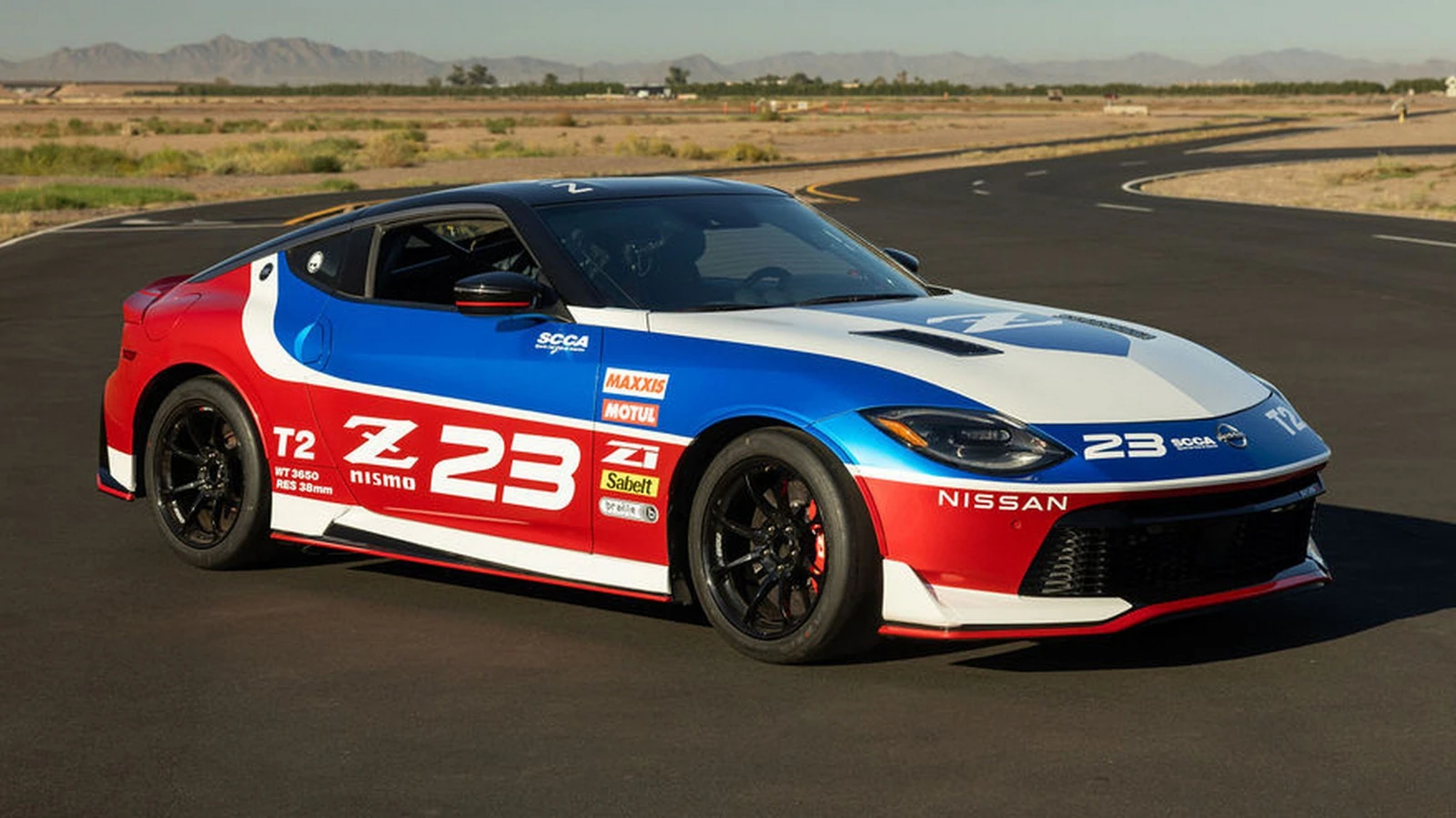
The Z concept, called Project NAT2 SCCA Touring 2, was designed and engineered by the Nissan Acceleration Team, whose members include staff who race. It is built to SCCA Touring 2 specifications, and Nissan presents it as a car that should outperform even the Z Nismo.

Engine work includes a Nismo cold air intake, a Nismo stainless steel exhaust, a custom ECU tune and an aluminum coolant expansion tank. The 3.0-litre twin-turbo V6's two turbochargers carry 38 mm restrictors to keep the car within racing regulations, but how much power the restrictors take away has not been announced. Supporting hardware runs to a Nismo heat exchanger, an aluminum oil pan, an upgraded engine oil cooler and a differential cooler, filled with race-ready fluids.

Chassis changes are just as extensive: Nismo coilovers, new front upper control arms, Nismo front and rear sway bars with adjustable links, polyurethane suspension and differential bushings, aluminum subframe bushings, and new engine and transmission mounts. A Z1 Motorsports brake package brings six-piston front calipers with 380 mm two-piece rotors, while the rear calipers and discs stay stock to comply with class rules, with Hawk DTC-60 pads and braided stainless steel lines added.

Outside, the car runs 18-inch forged wheels and a white, blue and red paint scheme. The cabin is stripped out and fitted with a roll cage, a Sabelt steering wheel, new paddle shifters, a custom dashboard and Sabelt racing seats.

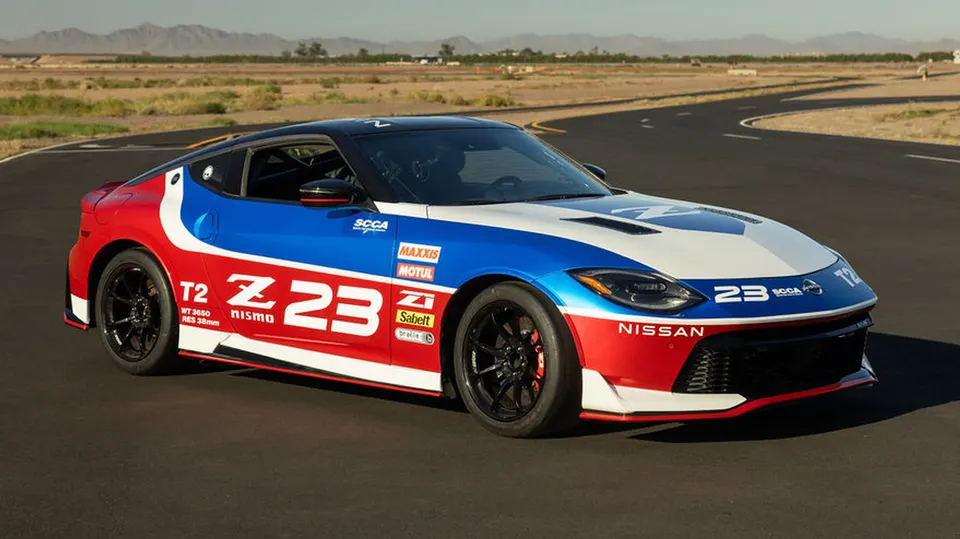
The Project NAT2 SCCA Touring 2 Z concept wears a bold red, white and blue competition livery.
The Project NAT2 SCCA Touring 2 Z concept wears a bold red, white and blue competition livery., Image: Carscoops

Datsun S30 Concept with Chris Forsberg

The second build, the Datsun S30 Concept, was made with Formula Drift champion Chris Forsberg and puts modern running gear into a classic shell. The original powertrain is replaced by the same twin-turbocharged 3.0-litre V6 used in the current Z, upgraded here with Garrett turbochargers, cold air intakes and a new heat exchanger, and paired with a six-speed manual transmission. Nissan also fitted a twin-disc clutch and flywheel, a Nismo limited-slip differential, a 10-gallon fuel cell and a new fuel pump.

Braking comes from Wilwood six-piston front calipers with 11.8-inch (300 mm) discs and four-piston rear calipers with 11-inch (280 mm) discs. The suspension uses aftermarket coilovers at all four corners, a new steering rack, billet tie rods, upgraded front and rear control arms, and new front and rear sway bars.

The body keeps most of the original design, with carbon fibre front fenders and bumpers and a Seiran Blue paint scheme. Inside are OMP racing seats, a black aluminum shift knob, a Grip Royal steering wheel and a harness bar.

Production plans and pricing

Both cars are one-offs, and Nissan has not said whether any of their parts will reach a production model, which ones might, or what they would cost. The company has only said that the builds contain parts that could influence future production models.

That leaves the SEMA cars as show pieces rather than previews of a confirmed model. For buyers, the more concrete takeaway is the direction of travel: Nissan is signalling continued investment in track and drift-oriented hardware for the Z, without committing to a price, a date or a market for any of it.

Open this article ↗

Keep scrolling to read the next story.

Older articles →