INDEPENDENT AUTOMOTIVE NEWSGLOBAL PERSPECTIVE / AUSTRALIAN EDITION
TDCNTHE DAILY
CAR NEWS.

The road ahead.
Every day.

RSS ↗
Latest/New cars

140 original articles

New cars / TDCN ORIGINAL

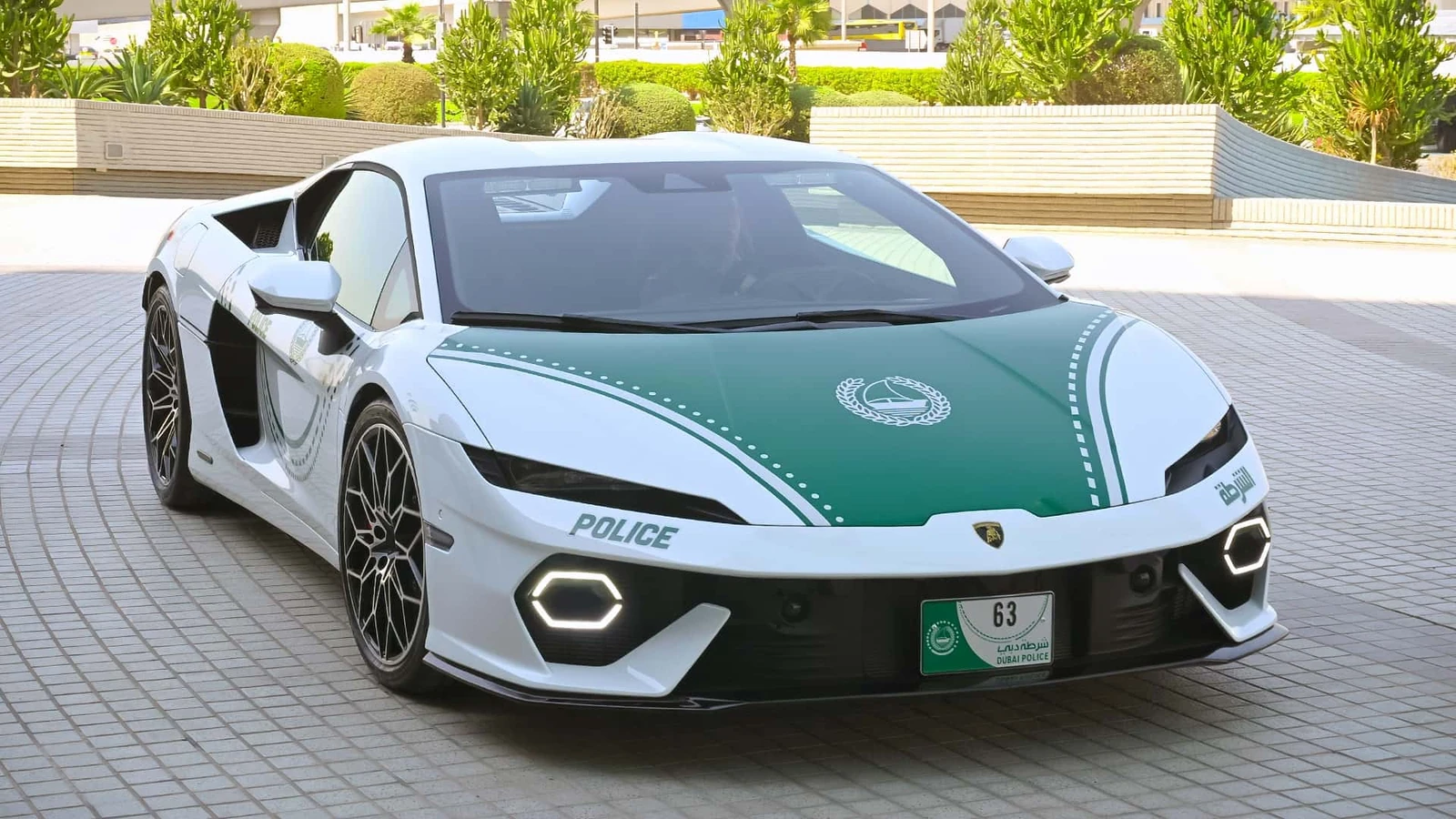
Dubai Police adds 907-hp Lamborghini Temerario hybrid to patrol fleet

The twin-turbo V8 hybrid joins a tourist-facing fleet meant to raise police visibility, with Lamborghini's local dealer handling the handover.

Image: Motor1

Dubai Police has taken delivery of a Lamborghini Temerario, a 907-horsepower hybrid supercar that will patrol busy tourist areas rather than chase down supercars. The car entered service in partnership with Lamborghini Abu Dhabi and Dubai.

It is the latest addition to a fleet that has become a tourist attraction in its own right, and Italy's Polizia already runs a Temerario of its own.

A 907-hp hybrid powertrain

The Temerario pairs a newly developed 4.0-litre twin-turbocharged V8 with three electric motors, producing a combined 907 horsepower. Lamborghini quotes a 0 to 62 mph time of 2.7 seconds.

Those figures put the patrol car in the same performance bracket as the exotics Dubai Police has collected over the years, and the hybrid layout means it can move quietly through crowded districts when officers need to be seen rather than heard. That is a practical fit for a fleet whose job is public contact, not pursuit.

Police visibility, not pursuit

Brigadier Saeed Al Hajri, director of Dubai's Criminal Investigation Department, said the addition reflects efforts to balance a visible security presence with community outreach, helping visitors feel safe and raising awareness of police services.

Colonel Mohammad Abdulrahman Abdulwahid, head of the Tourist Police Department, highlighted the importance of advanced vehicles and private-sector partnerships. The fleet operates mainly in busy areas and popular tourist destinations, where officers act as an approachable point of contact for questions.

That framing matters: the Temerario is a marketing and public-relations asset as much as a patrol vehicle. For Dubai, the fleet projects an image of innovation, safety and luxury, and the cars themselves draw crowds that officers can then engage with.

A dealer-level handover

Martino Picotti, general manager of Lamborghini Abu Dhabi and Dubai, described the handover as a natural continuation of the close relationship between the Italian automaker and the United Arab Emirates.

The sources do not say how many Temerarios Dubai Police will run, what the cars cost, or whether they carry police livery and equipment. Lamborghini has not announced any Australian availability or pricing for a police-specification Temerario, and none should be inferred from the Dubai handover.

Open this article ↗
New cars / TDCN ORIGINAL

Rivian opens invite-only Point to Point self-driving beta to R1 and R2 owners in two states

The supervised Level 2 feature follows a full navigation route rather than just holding a lane, and Rivian says wider availability comes in 2027.

Image: Motor1

Rivian has begun an invite-only early access programme for Point to Point, a supervised driver-assistance feature that lets its vehicles handle turns, highway merges and surface streets along a planned route. The Autonomy Early Access Program opened in October, and Rivian is targeting a year-end launch for this first public preview ahead of a wider rollout in 2027.

The first cohort is limited to Gen 2 R1 and R2 owners in California and Florida, and participation is free for anyone with an active paid Autonomy+ subscription.

How Point to Point differs from Universal Hands-Free

Point to Point builds on Rivian's existing Universal Hands-Free system by wiring it directly into turn-by-turn navigation. Where the earlier system holds a lane hands-free, the new feature follows an entire route, managing merging and street-level turns with the driver supervising throughout.

It runs on a 360-degree sensor suite paired with Rivian's own Large Driving Model, the software that interprets camera and sensor input and decides how the vehicle should respond. Despite the autonomy branding, this remains Level 2 driver assistance: the driver must stay attentive and ready to take over at any moment.

That distinction matters for buyers. Level 2 means the human remains legally and practically in charge, so Point to Point is a convenience feature rather than a hands-off system. Rivian's decision to recruit beta testers instead of shipping to everyone reflects how much refinement supervised driving software still needs in real-world conditions.

Who can apply, and what testers must give up

Owners register interest through an Autonomy Early Access tile on their Rivian.com account. The tile appears only for the primary account holder, which could trip up households where someone else drives the R2 day to day.

An invite is not simply a matter of owning the right vehicle in the right state. Rivian says it weighs how often an owner already uses Autonomy features, the owner's recent safety record including forward-collision warnings, and it keeps a mix of regions and vehicle models in the test group.

Selected participants take on real obligations. Rivian requires weekly use of the preview features, issue reports logged through the vehicle's own interface, and a monthly survey on the experience. Testers also agree to share location and camera data under a non-disclosure agreement, and Rivian can reassess who stays in the programme every 30 days and drop participants without warning. None of this comes with compensation.

The data-sharing terms are the sharpest trade-off. Handing over continuous location and camera footage is a lot to ask for software that is still being refined, and it is the kind of condition most owners would refuse outside a beta programme.

Which states come next

Rivian has not named the states that will follow California and Florida, nor how large future cohorts will be. The company says interest expressed from outside those two states will help decide where Point to Point rollout details go next, and owners can leave their interest on file rather than reapplying later.

James Philbin, Rivian's senior vice president of Autonomy and AI, said the company was tracking toward the year-end launch for this first public preview, with the broader rollout set for 2027.

The wider context

Rivian is not alone in pushing supervised driving features onto public roads through staged programmes, but its approach is unusually demanding of testers: weekly usage, logged reports, monthly surveys and continuous data sharing, all unpaid.

For drivers, the practical effect is that Point to Point remains a limited, experimental feature for now. Buyers outside California and Florida cannot get it in this first wave regardless of subscription status, and even eligible owners face a selection process based on usage habits and safety records rather than order of application.

Open this article ↗

Keep scrolling to read the next story.

Older articles →