INDEPENDENT AUTOMOTIVE NEWSGLOBAL PERSPECTIVE / AUSTRALIAN EDITION
TDCNTHE DAILY
CAR NEWS.

The road ahead.
Every day.

RSS ↗
Latest/Electric

117 original articles

Electric / TDCN ORIGINAL

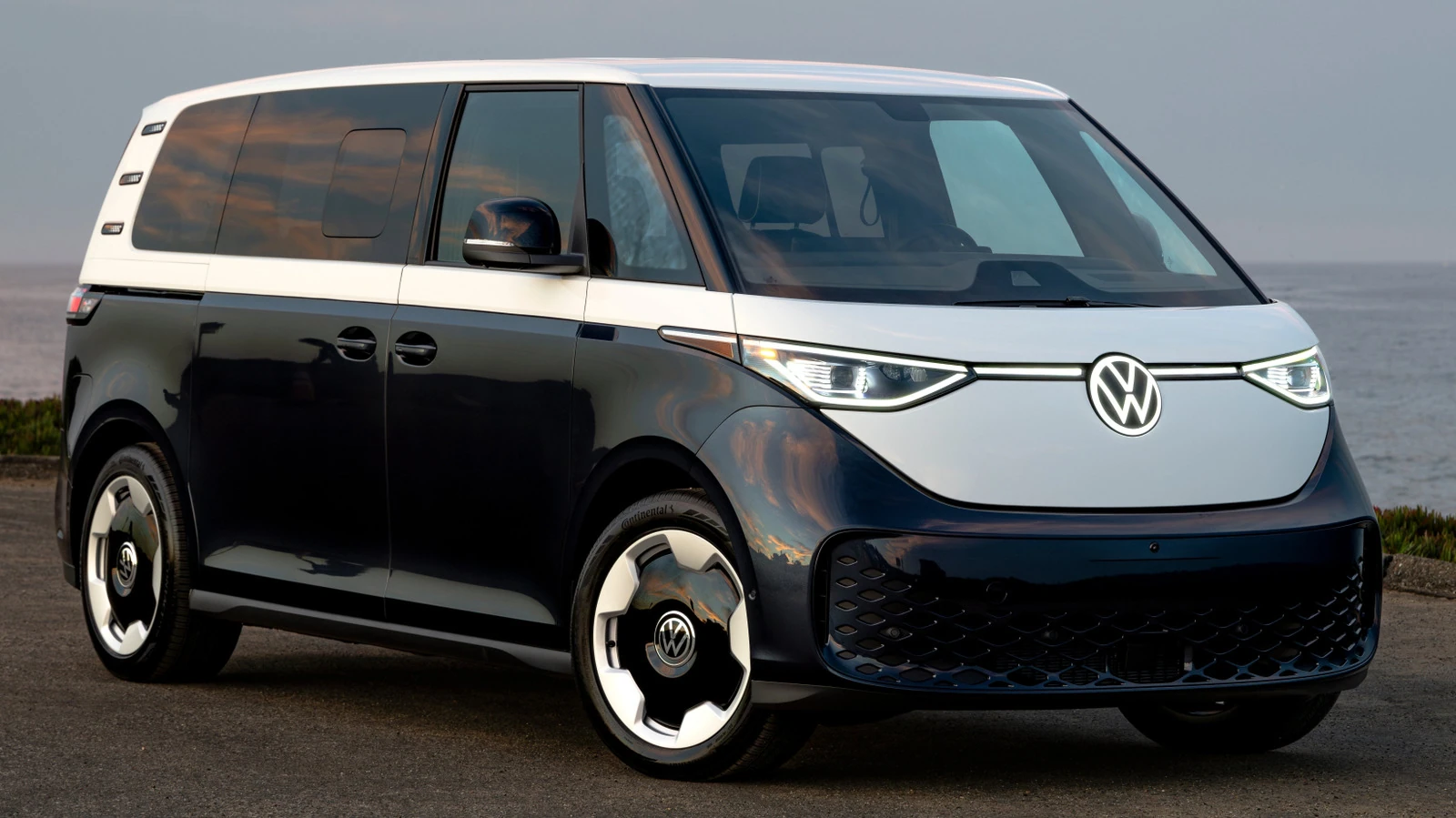
VW confirms a second-generation ID Buzz on the SSP platform, aimed at cutting costs

CEO Thomas Schäfer says the next electric van will get cheaper lithium iron phosphate batteries and longer range, with a debut likely after 2030.

Image: Carscoops

Volkswagen has confirmed that a second-generation ID Buzz is in development, with the next electric van set to move from the current MEB architecture to the group's Scalable Systems Platform. VW CEO Thomas Schäfer revealed the plan in an interview with Auto Express at the 2026 Paris Motor Show, adding that cutting the price will be a priority because the current model sits on what he called the wrong cost base.

The admission matters because the ID Buzz has struggled to meet VW's initial sales expectations, particularly in the United States, even though Schäfer says Americans love the retro-styled van.

Schäfer was blunt about the commercial problem. He said the electric minivan's current pricing makes it "difficult to really be successful and get into volume in the market". The fix, he indicated, starts with the battery: lithium iron phosphate packs and other cost-saving measures would be gradually applied to bring the price down.
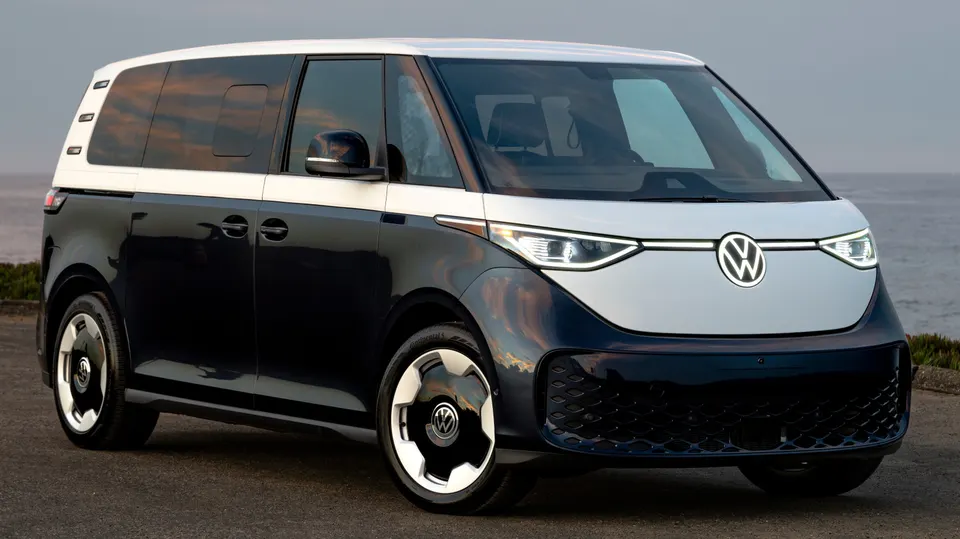
The current ID Buzz: the model VW will carry into a second generation on the SSP platform
The current ID Buzz: the model VW will carry into a second generation on the SSP platform, Image: Carscoops

SSP platform brings longer range and faster charging

The switch to the Scalable Systems Platform is the technical heart of the next generation. The modular SSP underpinnings are expected to debut in the ID Touareg before the end of the decade and are set to deliver longer range and faster charging across the VW lineup. For the Buzz, that would address one of the current van's clearest weaknesses: the long-wheelbase variant manages up to 234 miles of EPA range from its 86-kWh battery.

A cheaper battery chemistry plus a more efficient platform is the combination that could finally make the Buzz a volume seller rather than a niche halo car. The catch is timing, because a debut is likely to come after 2030.

A new look, but not another retro rerun

VW Group design chief Andreas Mindt hinted the next Buzz may not simply evolve the current retro theme. "I don't want to repeat a design over and over again, I think there's a dead end to it," he said, citing the new Beetle as a cautionary tale about iterating a nostalgic shape until audiences tire of it.

That said, Mindt promised any future van bearing the Buzz name would keep its character. "The ID Buzz is one of the interesting ones and when I do a van, I want to make an interesting one," he said.

What happens to the current car meanwhile

The existing ID Buzz arrived in production form in 2022, following the 2017 concept, and reached North America in mid-2023 as a 2025 model year vehicle. VW then skipped the 2026 and 2027 model years in North America, promising a comeback for 2028 with the European updates and a NACS charging port.

Those European updates, announced in April 2026, brought a new infotainment system, vehicle-to-load functionality and physical buttons on the steering wheel, though the divisive touch sliders survived. VW also unveiled the ID Buzz California camper in August 2026.

The current GTX flagship, with dual motors making 335 horsepower, could be replaced by a GTI-badged version, and VW's recent naming push, seen in the ID Polo, ID Cross, ID Tiguan and upcoming ID Golf, suggests the next van will lean on familiar monikers too. Schäfer said VW needs to lean on its icons, a pointed contrast with new brands that have no history.

No pricing for the next-generation ID Buzz has been announced, and VW has not given a confirmed on-sale date beyond indicating it is several years away.
Open this article ↗
Industry / TDCN ORIGINAL

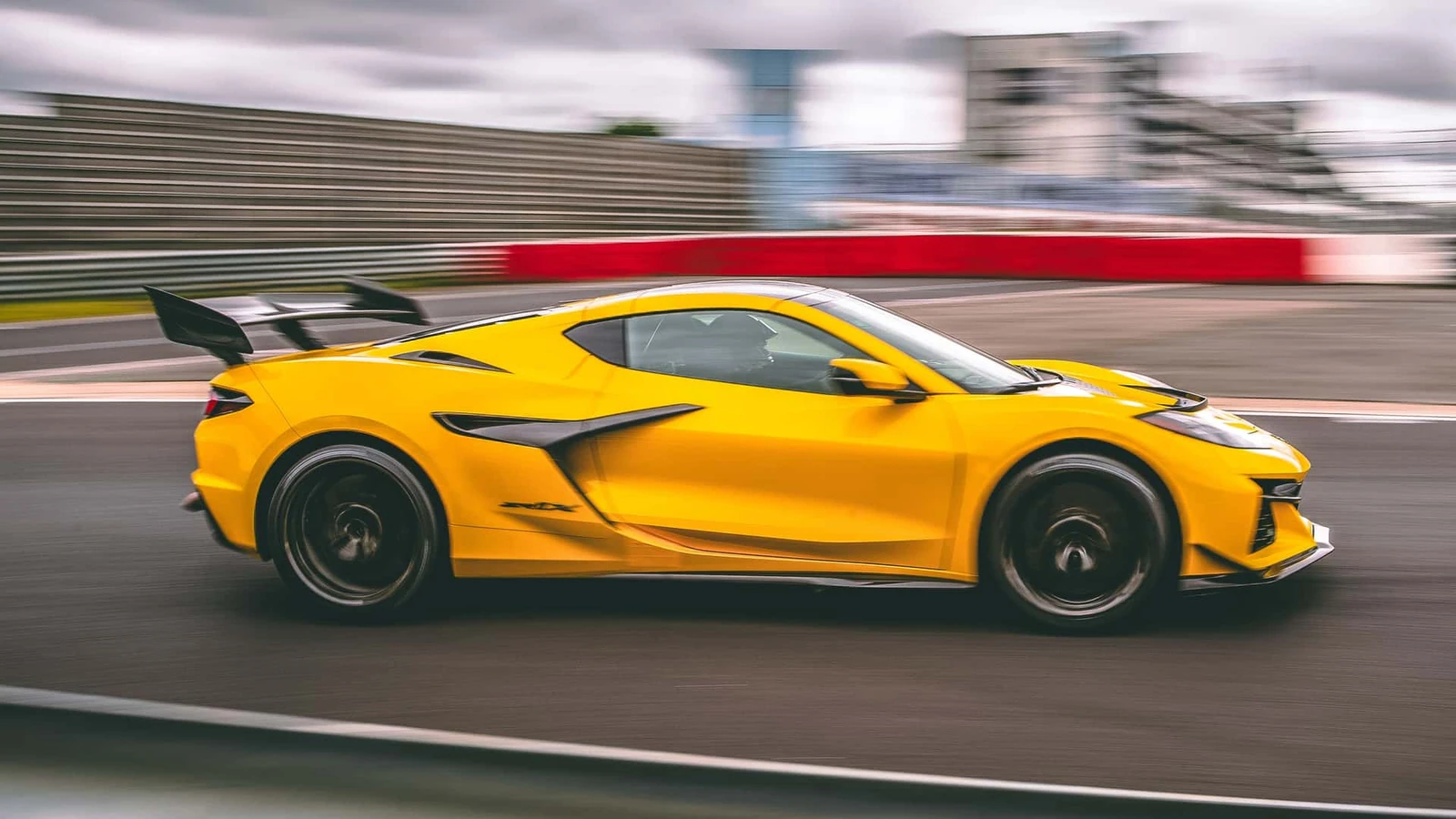
Chevrolet won't chase Ford's Mustang GTD Competition Nürburgring time, says Corvette boss Tony Roma

The Corvette chief says the ZR1X's 6:49.275 production-car lap stands on its own, with Chevrolet's next showcase already set for Pikes Peak rather than Germany.

Image: Motor1

Chevrolet has no plans to answer Ford's Mustang GTD Competition lap record at the Nürburgring, according to Tony Roma, General Motors' executive chief engineer for Corvette and performance cars. Instead, the brand's attention has shifted to Pikes Peak, where the Corvette ZR1X already ran the 2026 hill climb in 9:30.104 with driver JR Hildebrand.

Ford's Mustang GTD Competition lapped the Nordschleife in 6:40.835 with factory driver Dirk Müller, a time about eight and a half seconds quicker than the 6:49.275 the Corvette ZR1X recorded earlier. Roma says the two runs sit in different categories and that his team feels no obligation to trade lap times with Ford.

Two records, two categories

The two headline times are not directly comparable. The Mustang GTD Competition's 6:40.835 appears in the Nürburgring's prototypes and pre-production vehicles table, while the Corvette ZR1X's 6:49.275 sits among the production and sports car records. The GTD Competition time comes from a pre-production development car; the Corvette's lap represents the fastest American production car around the circuit.

The picture is muddier still because Chevrolet says its cars ran in US production spec with added safety equipment required for the attempt. The GTD Competition was also a step beyond the regular car: it carried additional aerodynamic aids, new tires, magnesium wheels, carbon bucket seats and engine upgrades targeting more power than the standard $325,000 Mustang GTD.

Chevrolet's 2025 Nordschleife program produced three times: 6:49.275 for the ZR1X with vehicle dynamics engineer Drew Cattell, 6:50.763 for the ZR1 with Brian Wallace, and 7:11.826 for the Z06 with Aaron Link. Both turbocharged Corvettes beat the Mustang GTD's earlier 6:52.072 benchmark, set with Müller driving before Ford returned with the sharper Competition build.

The Corvette program carried real weight inside Chevrolet. Roma noted the company had not posted an official Nürburgring lap in 13 years before the ZR1X attempt, and treated the run like a full race weekend, with Michelin engineers and battery-analysis specialists on site. All three drivers were Chevrolet engineers who helped develop the cars, each with at least 400 laps of the track, and Link had roughly 800 runs under his belt.

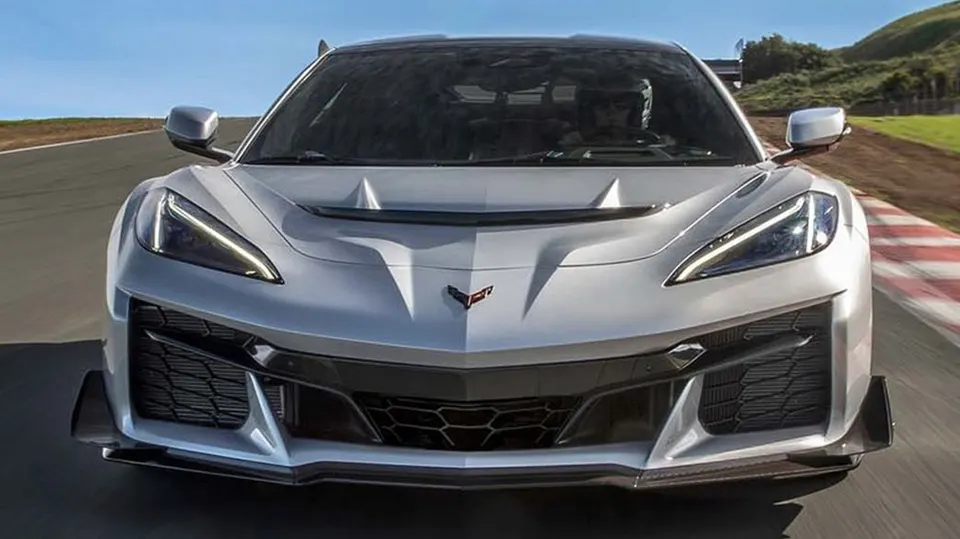
The Corvette ZR1: the weapon Chevrolet could have sent back to the Nürburgring
The Corvette ZR1: the weapon Chevrolet could have sent back to the Nürburgring, Image: Carscoops

Roma: no tit-for-tat rematch

Roma addressed the obvious question directly. "I'm not planning on running back and tit-for-tat 'look at what we can do' to answer what they did," he said. "I don't view it as a 'I have to run back to the Nürburgring and answer what Ford did.'" Speaking on The Drivecast, he added that he knows the stance will disappoint some fans.

He does not dispute Ford's achievement. "The lap time was amazing, and at the time it was the fastest American car around the Ring, and look, I think it's a time we're super proud of," he said of the Corvette's own sub-seven-minute run. He also gave Ford credit for the response and the rivalry it fueled.

"We're going to do something that makes sense for us," Roma said, making clear the brand will not let Ford's pace dictate its schedule. Chevrolet has not ruled out another Nordschleife attempt further down the line.

Pikes Peak instead, with a Ford twist

Chevrolet had already chosen Pikes Peak as the ZR1X's next showcase before anyone at the company knew what Ford's Nürburgring time would be, according to Roma. The ZR1X completed the 2026 Pikes Peak International Hill Climb in 9:30.104 with JR Hildebrand driving. Roma framed the hill climb as a chance to demonstrate the car at one of America's own motorsport landmarks rather than trading lap times at a circuit overseas.

Ford showed up in Colorado too. Its electric SuperVan 4.2 prototype, a Transit-based Ford Performance project, took the overall win in 8:18.202 and reset the event's electric benchmark.

A Ford engineer nearly matched the Corvette

One further detail from Ford's latest runs: engineer Steve Thompson lapped the Nordschleife in 6:49.337, just 0.062 seconds slower than Cattell's ZR1X time. Both companies, it turns out, have engineers who are hard to catch.

Ford's record hunting spans multiple vehicles over the past decade, including high-profile Ford GT development runs in the late 2010s and early 2020s, so the rivalry is unlikely to end here even if Chevrolet is in no hurry.

Open this article ↗

Keep scrolling to read the next story.

Older articles →