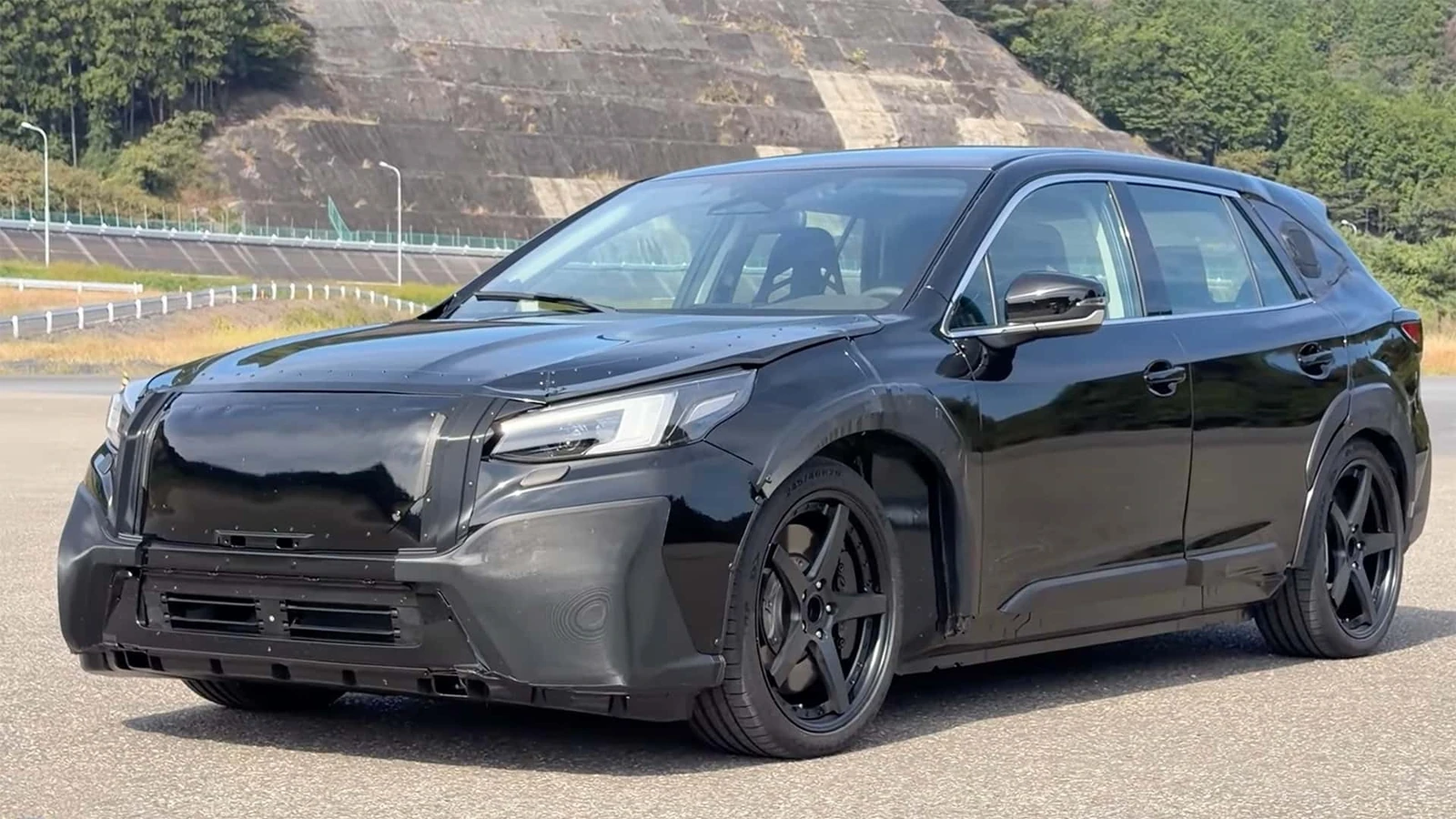
Subaru is developing its own electric vehicle platform, battery technology and electronics to reduce its reliance on Toyota, and showed the work at its proving ground north of Tokyo on October 18 in the form of a 510-horsepower all-wheel-drive prototype.
The mule, which looks like a modified Outback, accelerates from 0 to 62 mph (100 km/h) in under four seconds, and some of its technology could reach production around 2029, though Subaru has not confirmed a vehicle or a firm launch date.
What the prototype is, and what it is not
The car is a development tool rather than a preview of a specific showroom model, so its shape and output should not be read as a commitment for Subaru's next production EV. Engineering executive Takatomo Watamori said controlling the underlying technology would help preserve the safety and driving character that distinguish the brand, according to Automotive News.
That matters because Subaru's current electric lineup, the Solterra, Trailseeker, Uncharted and three-row Getaway, is built on Toyota underpinnings. Subaru says its engineers contributed extensively to the Trailseeker's all-wheel-drive development and motor tuning, but owning the platform would let it shape the complete vehicle rather than work within shared architecture.
Battery, motors and crash structure
The battery pack contains 4,000 cylindrical cells. Subaru says it is 25 percent lighter than its previous battery and targets an energy density 20 percent above the industry average.
Subaru has not disclosed the pack's capacity, the prototype's driving range or its charging performance, so no range figure can be attached to this car yet.
The motors are smaller and lighter than those in Subaru's current EVs, and engineers claimed a 30 percent efficiency improvement against an unspecified benchmark, a comparison the report does not detail well enough to translate into a range advantage.
The architecture targets a 100-kilogram (220-pound) weight reduction compared with the EVs Subaru currently produces, and the front structure has been redesigned to protect passengers and the battery in a collision, with supports that curve over the front wheels to spread crash forces and a front motor designed to rotate on impact to dissipate energy.
Subaru is not building everything itself. Aisin, a Toyota Group supplier, developed the prototype's drive units and Panasonic Energy is the battery partner, both collaborations dating to 2024.
Software, chips and development speed
Subaru is developing an integrated electronic control unit to manage driver assistance, chassis, powertrain and infotainment, built around a custom chip developed with AMD. A future version will support AI functions in Subaru's EyeSight advanced driver assistance suite, and the system will allow over-the-air updates, a first for a vehicle independently developed by Subaru. The company plans to manufacture the control unit itself and use it across its lineup to cut costs.
Subaru says it created the prototype's technologies in roughly half the usual time as it tries to keep pace with Chinese competitors, and believes the same methods can speed up work on future gasoline and hybrid vehicles.
Early impressions and the STI question
A reviewer from LOVECARS!TV! described the prototype as combining BRZ-like eagerness to turn with all-wheel-drive traction, and reported double-wishbone front suspension and a five-link rear setup. The drive was limited to two laps under speed restrictions, so it is an early impression rather than a full assessment.
The same video draws a link between the prototype and the Subaru Performance-E STI concept shown at the 2025 Japan Mobility Show, describing the mule as a development vehicle for that concept's hardware. That is not confirmation of a production electric STI or WRX, and Subaru has not said the platform will underpin a production version of the concept or that such a car would wear either badge.
Why independence is a financial balancing act
Subaru sold about 924,000 vehicles worldwide in 2025 against more than 11 million for Toyota, and aims for 1.2 million annual deliveries in the early 2030s supported by 10 new vehicles launched by then. Funding an in-house platform, battery and electronics programme on that scale requires careful planning, which is why the company is outsourcing drive units and cells to specialists rather than making every component itself.
There is no indication Subaru plans to end its Toyota partnership. The brand built its reputation on mechanical engineering, safety and an outdoor-lifestyle identity, and the task now is to carry those priorities into electric cars without a boxer engine under the hood.
Subaru's electric history predates the Toyota tie-up: it developed the R1e with Tokyo Electric Power Company in the 2000s and announced the fully electric Plug-in Stella for Japan in 2009, which reached limited-series production with around 170 examples reportedly built.