INDEPENDENT AUTOMOTIVE NEWSGLOBAL PERSPECTIVE / AUSTRALIAN EDITION
TDCNTHE DAILY
CAR NEWS.

The road ahead.
Every day.

RSS ↗
Latest/Industry

117 original articles

Industry / TDCN ORIGINAL

Chevrolet won't chase Ford's Mustang GTD Competition Nürburgring time, says Corvette boss Tony Roma

The Corvette chief says the ZR1X's 6:49.275 production-car lap stands on its own, with Chevrolet's next showcase already set for Pikes Peak rather than Germany.

Image: Motor1

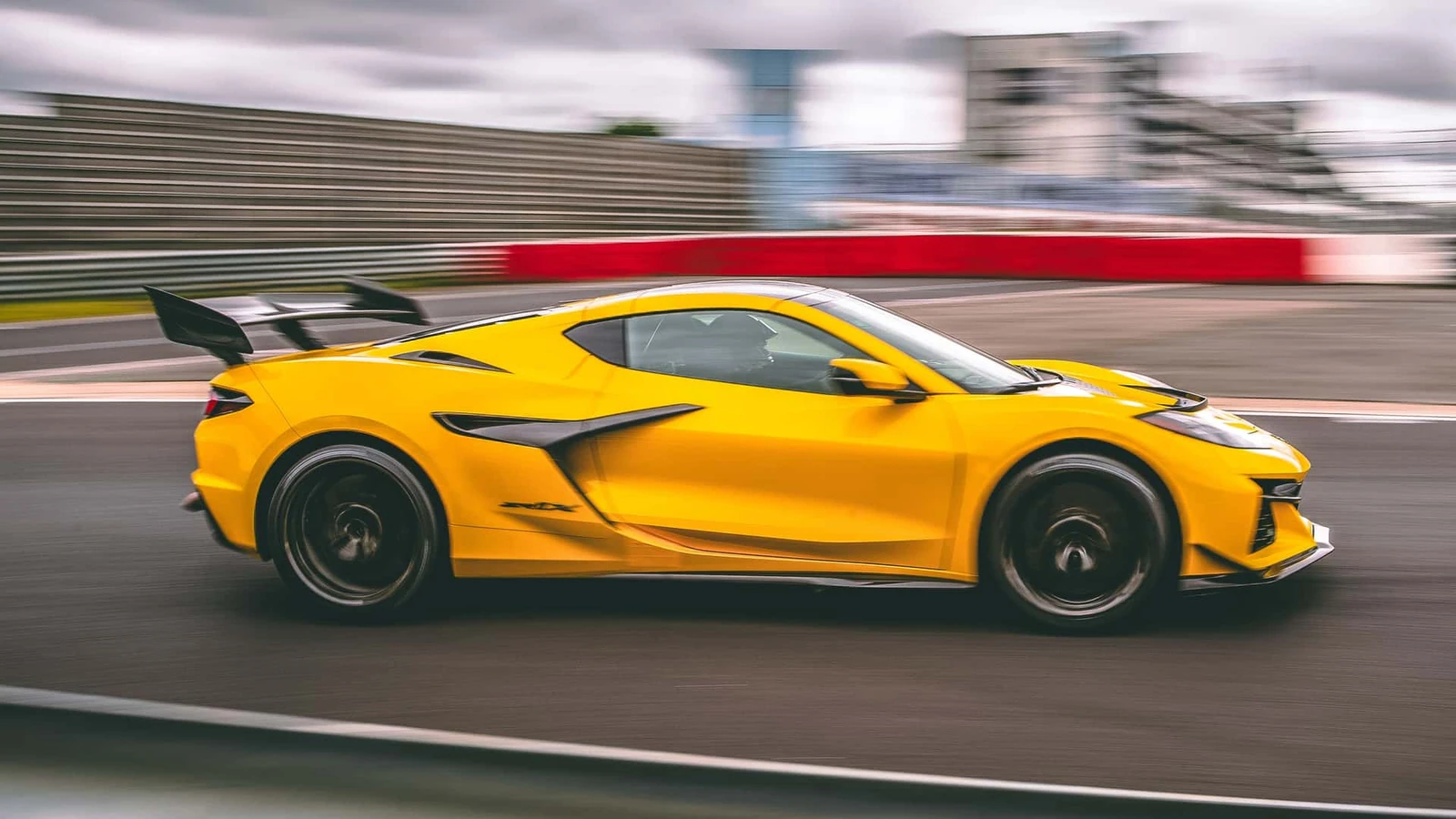
Chevrolet has no plans to answer Ford's Mustang GTD Competition lap record at the Nürburgring, according to Tony Roma, General Motors' executive chief engineer for Corvette and performance cars. Instead, the brand's attention has shifted to Pikes Peak, where the Corvette ZR1X already ran the 2026 hill climb in 9:30.104 with driver JR Hildebrand.

Ford's Mustang GTD Competition lapped the Nordschleife in 6:40.835 with factory driver Dirk Müller, a time about eight and a half seconds quicker than the 6:49.275 the Corvette ZR1X recorded earlier. Roma says the two runs sit in different categories and that his team feels no obligation to trade lap times with Ford.

Two records, two categories

The two headline times are not directly comparable. The Mustang GTD Competition's 6:40.835 appears in the Nürburgring's prototypes and pre-production vehicles table, while the Corvette ZR1X's 6:49.275 sits among the production and sports car records. The GTD Competition time comes from a pre-production development car; the Corvette's lap represents the fastest American production car around the circuit.

The picture is muddier still because Chevrolet says its cars ran in US production spec with added safety equipment required for the attempt. The GTD Competition was also a step beyond the regular car: it carried additional aerodynamic aids, new tires, magnesium wheels, carbon bucket seats and engine upgrades targeting more power than the standard $325,000 Mustang GTD.

Chevrolet's 2025 Nordschleife program produced three times: 6:49.275 for the ZR1X with vehicle dynamics engineer Drew Cattell, 6:50.763 for the ZR1 with Brian Wallace, and 7:11.826 for the Z06 with Aaron Link. Both turbocharged Corvettes beat the Mustang GTD's earlier 6:52.072 benchmark, set with Müller driving before Ford returned with the sharper Competition build.

The Corvette program carried real weight inside Chevrolet. Roma noted the company had not posted an official Nürburgring lap in 13 years before the ZR1X attempt, and treated the run like a full race weekend, with Michelin engineers and battery-analysis specialists on site. All three drivers were Chevrolet engineers who helped develop the cars, each with at least 400 laps of the track, and Link had roughly 800 runs under his belt.
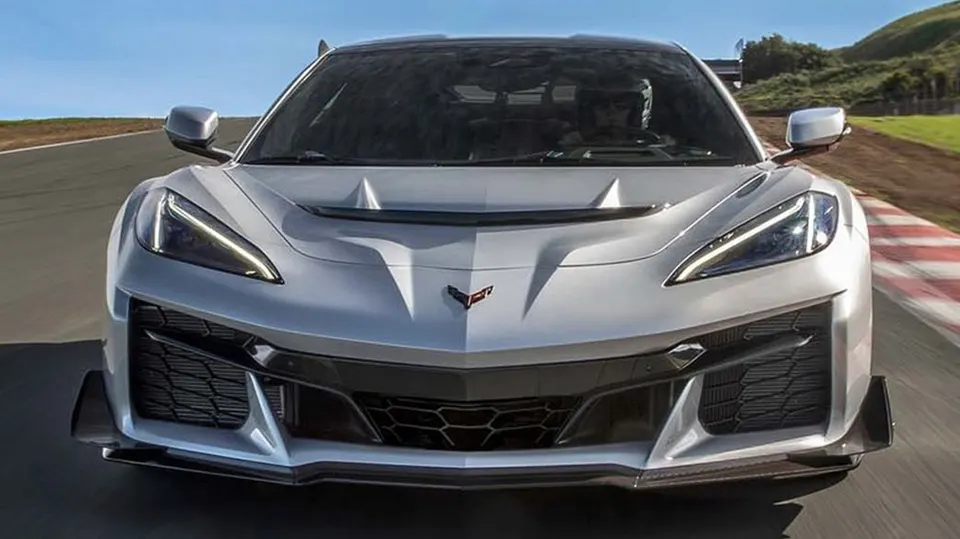
The Corvette ZR1: the weapon Chevrolet could have sent back to the Nürburgring
The Corvette ZR1: the weapon Chevrolet could have sent back to the Nürburgring, Image: Carscoops

Roma: no tit-for-tat rematch

Roma addressed the obvious question directly. "I'm not planning on running back and tit-for-tat 'look at what we can do' to answer what they did," he said. "I don't view it as a 'I have to run back to the Nürburgring and answer what Ford did.'" Speaking on The Drivecast, he added that he knows the stance will disappoint some fans.

He does not dispute Ford's achievement. "The lap time was amazing, and at the time it was the fastest American car around the Ring, and look, I think it's a time we're super proud of," he said of the Corvette's own sub-seven-minute run. He also gave Ford credit for the response and the rivalry it fueled.

"We're going to do something that makes sense for us," Roma said, making clear the brand will not let Ford's pace dictate its schedule. Chevrolet has not ruled out another Nordschleife attempt further down the line.

Pikes Peak instead, with a Ford twist

Chevrolet had already chosen Pikes Peak as the ZR1X's next showcase before anyone at the company knew what Ford's Nürburgring time would be, according to Roma. The ZR1X completed the 2026 Pikes Peak International Hill Climb in 9:30.104 with JR Hildebrand driving. Roma framed the hill climb as a chance to demonstrate the car at one of America's own motorsport landmarks rather than trading lap times at a circuit overseas.

Ford showed up in Colorado too. Its electric SuperVan 4.2 prototype, a Transit-based Ford Performance project, took the overall win in 8:18.202 and reset the event's electric benchmark.

A Ford engineer nearly matched the Corvette

One further detail from Ford's latest runs: engineer Steve Thompson lapped the Nordschleife in 6:49.337, just 0.062 seconds slower than Cattell's ZR1X time. Both companies, it turns out, have engineers who are hard to catch.

Ford's record hunting spans multiple vehicles over the past decade, including high-profile Ford GT development runs in the late 2010s and early 2020s, so the rivalry is unlikely to end here even if Chevrolet is in no hurry.
Open this article ↗
New cars / TDCN ORIGINAL

Skoda design chief says AI sketches now rival human renderings, warns entry-level jobs are at risk

Karl Neuhold told Autoweek he was shocked by AI's speed but still wants applicants to bring hand-drawn sketches to interviews.

Image: Motor1

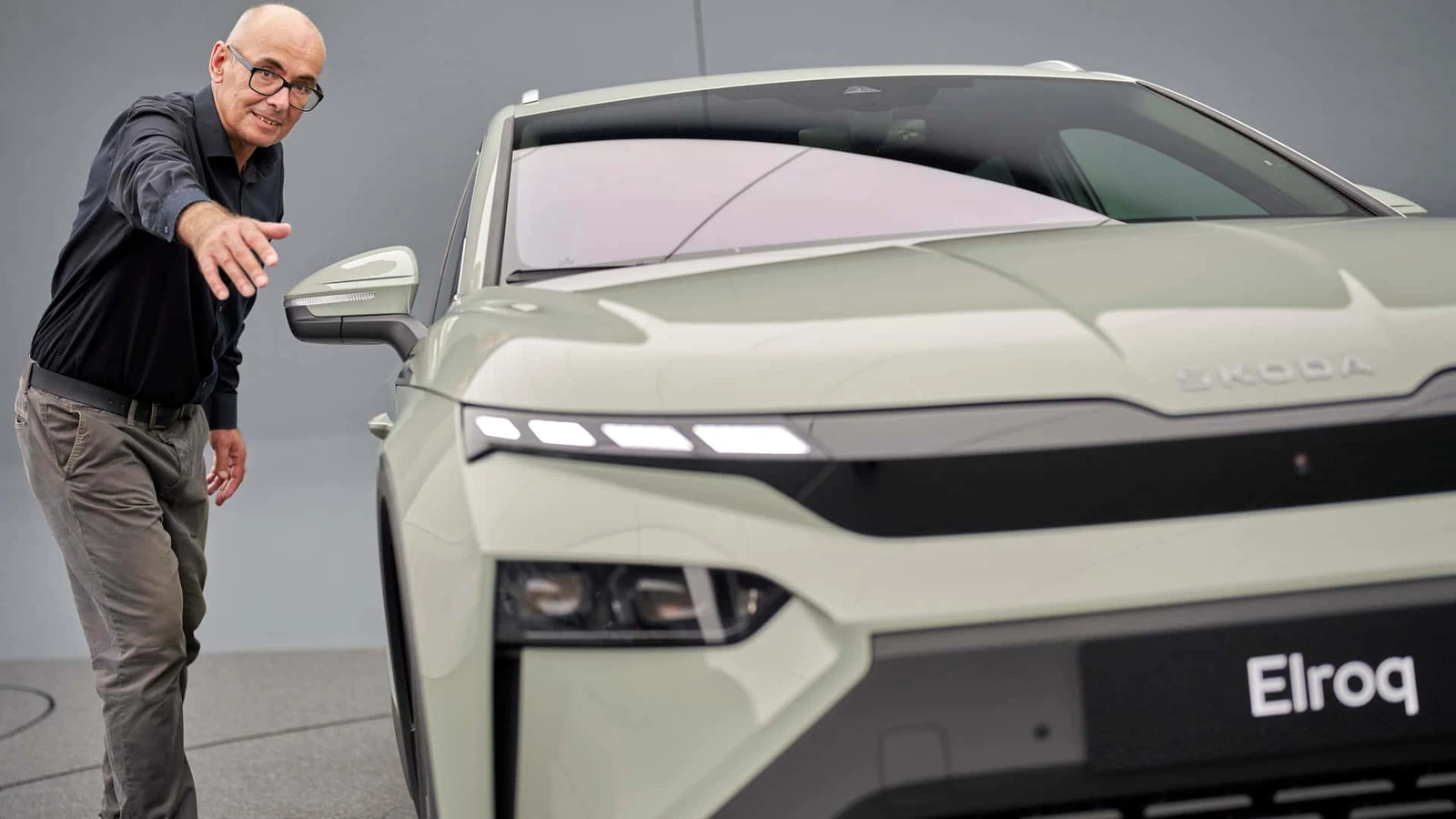
Skoda's head of exterior design, Karl Neuhold, says AI image generators have reached a quality that left him genuinely surprised, and he is warning that the technology could shrink entry-level opportunities in car design studios. Speaking to Dutch publication Autoweek, Neuhold described producing polished renderings from a rough sketch in seconds.

His concern is not that AI will replace senior designers outright. It is that if small teams can generate professional-quality images almost instantly, junior staff may never get the chance to learn the craft on the job.

Neuhold has experimented with the tools himself and came away impressed by how little input they need. "I'm shocked by how good it is. I use it myself, and I'm so surprised by a simple sketch that, in seconds, gives you versions you couldn't have rendered better yourself," he told Autoweek.

His message to fellow designers is blunt: adapt or fall behind. In his view, sketching alone will no longer be enough to stay competitive, and designers need to build AI into their workflows rather than ignore it.

The productivity gain, and the catch

The upside is speed. A rough sketch can now spawn several finished renderings within seconds, letting teams visualise and communicate ideas that would once have taken far longer to produce.

The catch is headcount. Neuhold acknowledges that if a smaller team can produce more designs in less time, automakers may eventually need fewer people in their studios. "Do we even need that many people anymore? Unfortunately, yes. That's really tough for young designers right now; how are they supposed to become professionals? The quality [of AI] is astonishing, unbelievable," he said.

The risk is a talent pipeline problem: experienced designers become more productive, but if junior designers never get hired, the industry could struggle to develop its next generation of seniors.

Hand sketches still matter at interview

Despite his enthusiasm, Neuhold has not told aspiring designers to abandon traditional skills. When he evaluates job applicants, he still encourages them to bring hand-drawn sketches that demonstrate their creativity.

That distinction matters because generating a convincing image is not the same as originating one. Automotive design involves far more than an attractive picture: proportions, sensors, lighting systems and a multitude of technical regulations all shape what a car can look like.

Neuhold's position is that someone still has to decide what the car should be in the first place. AI may collapse the time between sketch and rendering, but designers must still understand what customers want from a car and find ways to surprise them.

The identity question

There is also a commercial wrinkle. If every studio can generate dozens of concepts from a few prompts, and rival brands have access to the same tools, protecting intellectual property and keeping a distinctive design language could get harder. Neuhold's warning points to a market where cars risk looking increasingly alike.

For now, his advice splits by seniority: designers who learn to use AI gain a real advantage over those who don't, while the harder challenge for newcomers is simply finding a studio willing to give them their first job.

Skoda has not announced any changes to its design process, staffing or hiring approach as a result of AI; Neuhold's comments describe his personal outlook rather than a company policy.

Open this article ↗

Keep scrolling to read the next story.

Older articles →