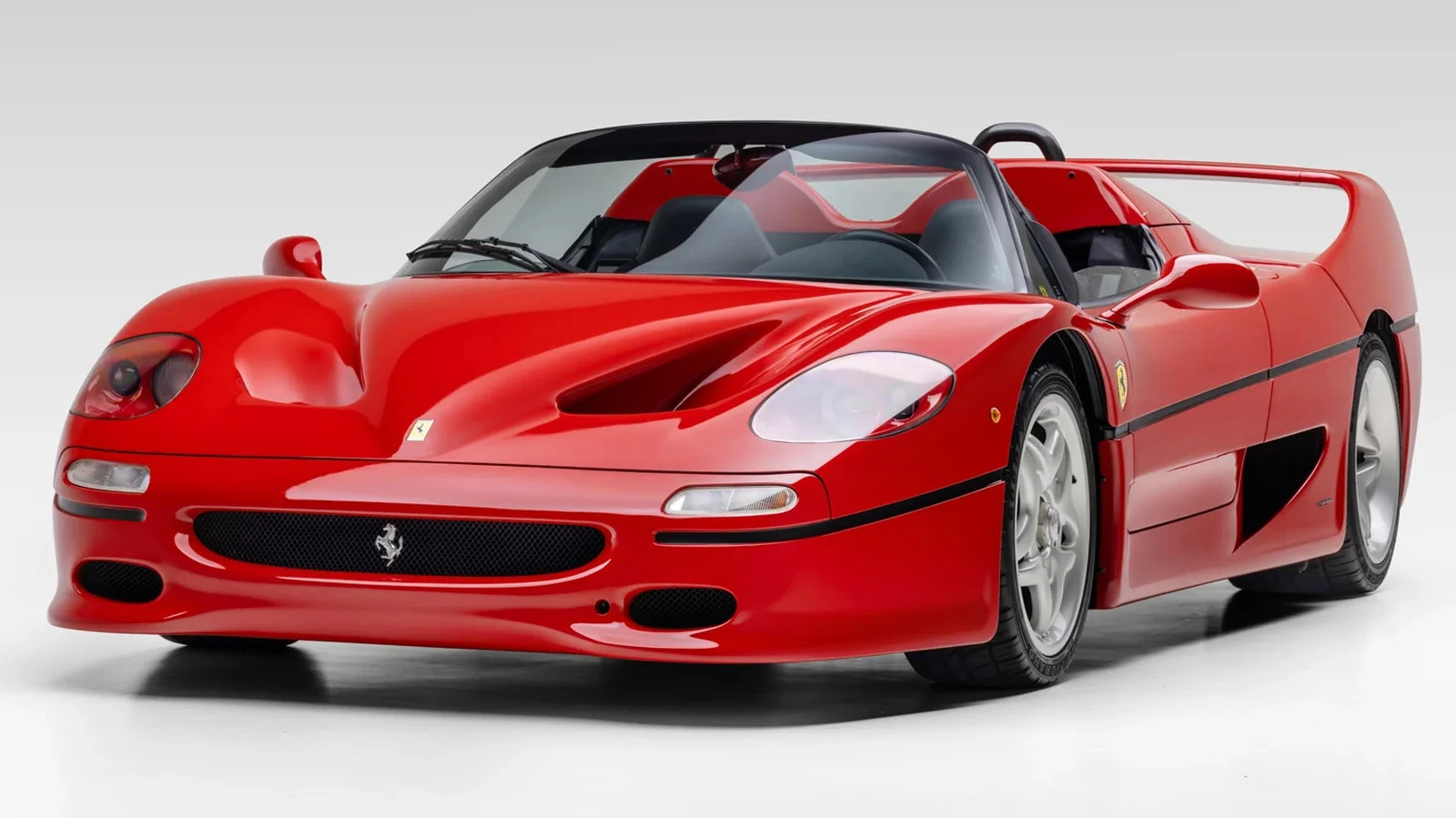
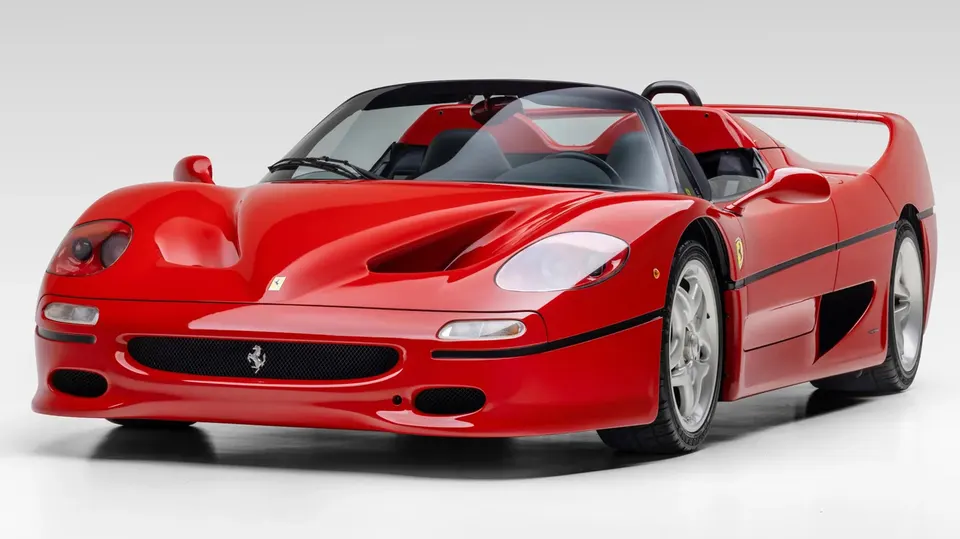
A 1997 Ferrari F50 with just 106 miles on the odometer is expected to sell for more than $20 million at a Broad Arrow Auctions sale on October 31. If it reaches that figure, it would set a new auction record for the model and roughly quadruple the going rate for pristine examples as recently as three years ago.
The car is build number 334 of the 349 F50s Ferrari built between 1995 and 1997, carrying chassis number 107165. It was delivered new in the UK and has been parked for almost 30 years, making it one of the lowest-mileage F50s in existence.
The F50 is finished in Rosso Corsa over a black Nero interior with Rosso seat inserts, and it retains its original removable hardtop, a three-piece Schedoni luggage set, driving shoes and all original tools and covers for the seats, steering wheel and car. With barely any use, the paint, leather and chrome exhaust tips all present as new, which should draw strong interest from collectors.
A record within reach
The current auction benchmark for the F50 stands at $14.575 million, set in August by a Giallo Modena example, one of just 31 painted that colour, though that car had 7,253 km on the clock. A red F50 formerly owned by Mike Tyson fetched $12.1 million in the US in August with 6,196 miles, and an example previously owned by golfer Ian Poulter and driven 252 miles sold for $12.2 million in January.
The market has moved sharply. As recently as 2024, most F50s at public auction made between $4 million and $5 million. In August 2025, a Giallo Modena car once owned by Ralph Lauren and driven 5,400 miles sold for $9.2 million, a sale that appears to have reset the model's value.
The catch for buyers is that the $20 million figure is an expectation, not a result. Auction estimates can miss, and the car's value rests heavily on its near-unused condition. Still, if it clears the mark, the F50 would sit alongside the McLaren F1 in the rarefied tier of eight-figure collector cars.
Why collectors are paying up
Ferrari built just 349 F50s, fewer than its predecessor the F40, and the model pairs a naturally aspirated 4.7-litre V12 derived from the marque's Formula 1 engine with none of the hybrid hardware common on modern supercars. That back-to-basics formula appears to be exactly what collectors are now willing to pay extraordinary sums for.
For buyers, the message from recent sales is that condition and provenance are widening the gap between ordinary cars and the best examples. A near-new, fully documented F50 is no longer trading in the same market as a driven one, and the October 31 result will show how far that gap now runs.