INDEPENDENT AUTOMOTIVE NEWSGLOBAL PERSPECTIVE / AUSTRALIAN EDITION
TDCNTHE DAILY
CAR NEWS.

The road ahead.
Every day.

RSS ↗
Latest/Australia

153 original articles

Australia / TDCN ORIGINAL

Ford Ranger reportedly swaps 2.7-litre V6 for detuned Raptor 3.0-litre for 2027

An alleged 2027 order guide lists the 2.7-litre EcoBoost as deleted and a 3.0-litre EcoBoost as new, though Ford has confirmed nothing and prices, power and Australian timing are unannounced.

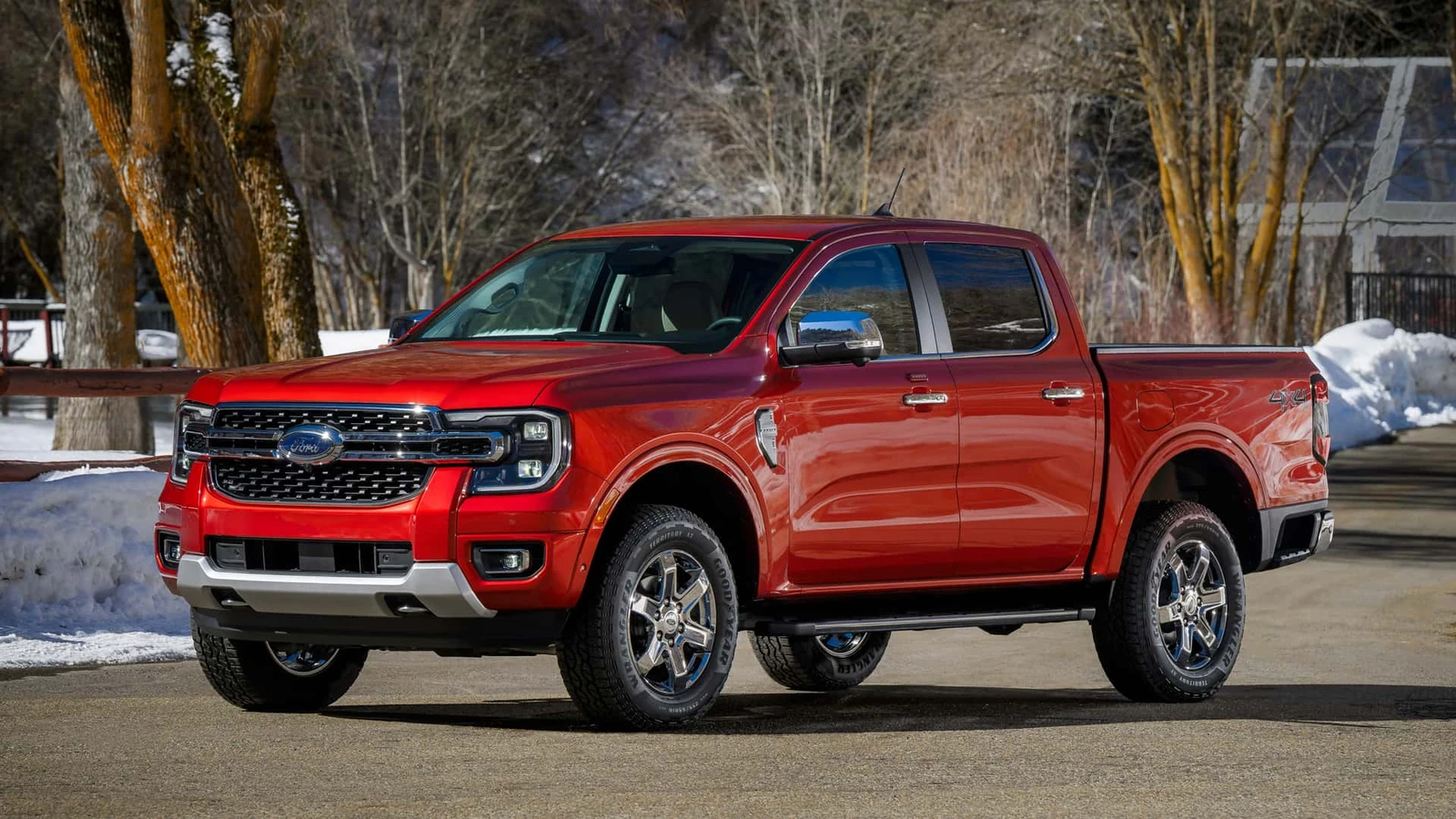
Image: Motor1

The Ford Ranger is reportedly set to drop its 2.7-litre EcoBoost V6 in favour of a detuned version of the twin-turbo 3.0-litre V6 used in the Ranger Raptor, for the 2027 model year. The claim rests on an alleged 2027 Ranger order guide uncovered by Autoevolution, which lists the 2.7-litre V6 as "Deleted" directly beneath a "New/Changed" 3.0-litre EcoBoost entry.

Ford has not announced the change, and the guide itself carries no output or pricing figures. Treat the engine swap as unconfirmed until the manufacturer publishes 2027 Ranger specifications.

What the order guide shows

The document points to a broader 2027 refresh rather than an engine change alone. The XLT and Lariat trims are listed with new grille finishes, and Ford will offer a range of new wheel designs across the lineup. Neptune Blue replaces Velocity Blue in the palette, while Carbonized Gray is dropped.

Inside, the base XL swaps its 10.1-inch infotainment screen for a larger 12.0-inch unit, and dual-zone climate control becomes standard on that base trim. A new Bronze Graphics package joins the options list, and a new Luxury Package for the Lariat and Raptor bundles ambient lighting, rain-sensing wipers, power-folding mirrors, a memory driver's seat and a 10-speaker B&O sound system. Lariat buyers also get a heated steering wheel.

Power and torque remain unannounced

Ford has not published power or torque figures for the 2027 Ranger's 3.0-litre engine, so any number at this stage is inference rather than fact. The closest reference point is the 2027 Bronco, whose twin-turbo 3.0-litre V6 produces 380 horsepower and 440 pound-feet of torque, and the Ranger unit is expected to land near that output.

There is a wrinkle worth watching. The 3.0-litre EcoBoost in the 2026 Ranger Raptor makes 405 hp and 430 lb-ft, which is 10 lb-ft less than the non-Raptor Bronco figure, and Ford is unlikely to leave its flagship Ranger trailing a lesser variant on torque. That suggests the detuned engine could end up rated at or near the Raptor's torque number, but nothing is confirmed.

The turbocharged 2.3-litre four-cylinder stays as the standard engine on the XL, XLT and Lariat, at 270 hp and 310 lb-ft. Choosing the V6 requires four-wheel drive.

Price and Australian availability

Ford has not announced pricing for the 2027 Ranger. For context, the 2026 Ranger XL starts at $35,445 in the United States including a $1,896 destination charge, and a modest increase is expected rather than a large one. On the 2026 Ranger, the 2.7-litre V6 and four-wheel drive add $7,545 to an XLT and $5,794 to a Lariat, and similar figures are anticipated for 2027.

Australian availability and pricing for the 2027 Ranger have not been announced, and the figures above are US market numbers that cannot be read across to local showrooms. Ford's Australian arm has said nothing publicly about the reported engine change, so buyers here have no confirmed timing, specification or cost to work from.

Why the swap matters

Moving from 2.7 to 3.0 litres is a meaningful step for anyone who tows or loads a Ranger. A larger displacement version of the Raptor's twin-turbo V6 should bring stronger low-rev pull than the engine it replaces, which is the kind of gain that shows up in daily driving rather than on a spec sheet.

The catch is that a detuned engine is a deliberate compromise. Ford gets a cheaper, less stressed tune than the full Raptor unit, and buyers get Raptor-derived hardware without Raptor running costs or positioning. The risk is a torque rating that undercuts the Raptor, which would be an odd look for the flagship, so expect Ford to manage those numbers carefully when it finally publishes them.

For now the practical advice for Australian buyers is to wait for Ford's own announcement. An order guide is a dealer planning document, not a specification sheet, and it tells you nothing about local tuning, pricing or launch timing.
Open this article ↗
New cars / TDCN ORIGINAL

Mazda drops CX-70 for 2027 and adds a two-row CX-90 to the US range

The 2027 CX-90 line-up grows to nine trims, two of them two-row, with prices starting at $41,345 and a plug-in hybrid from $52,340.

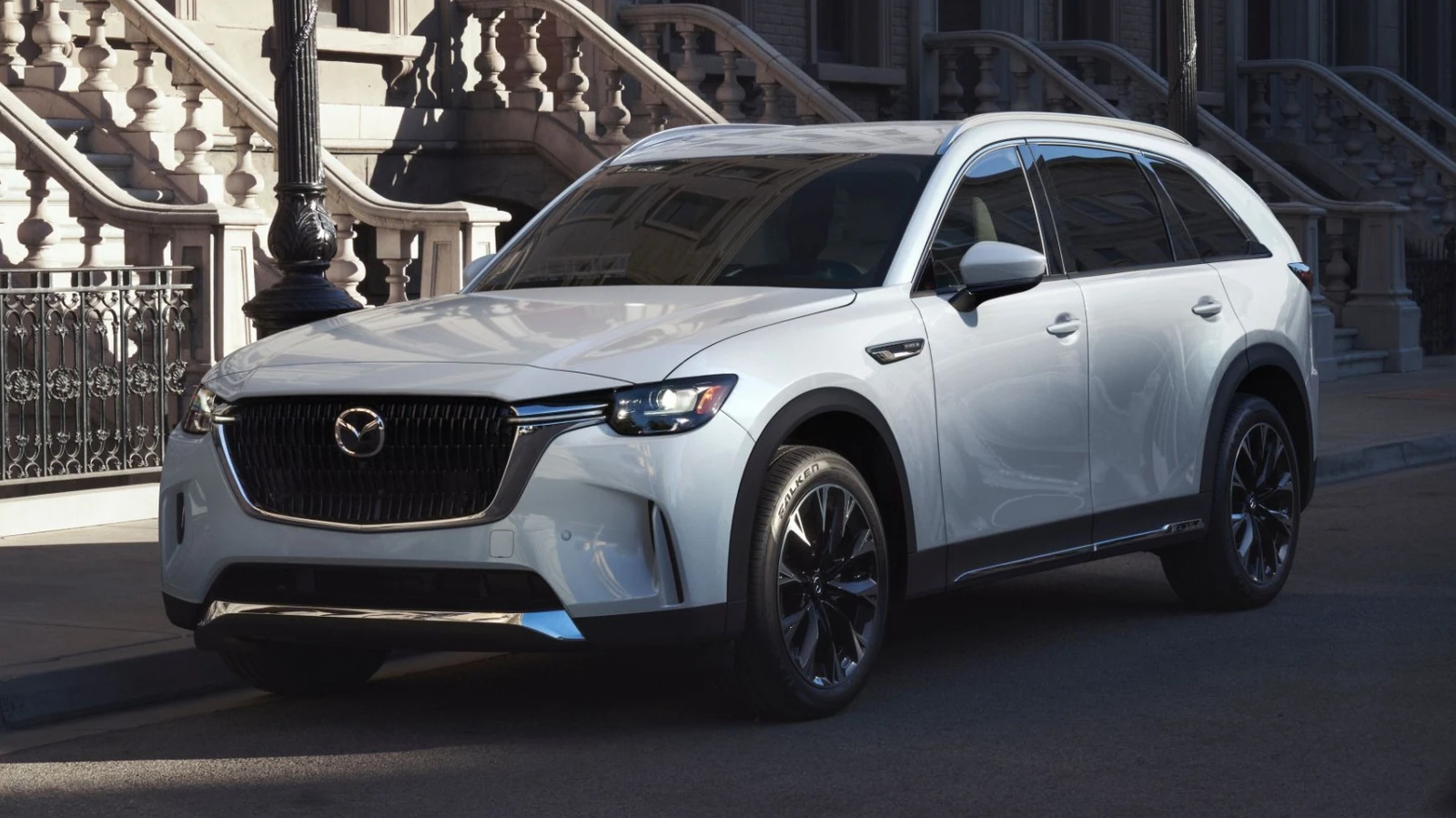
Image: Carscoops

Mazda will stop selling the CX-70 in the United States and replace it with a two-row version of the CX-90 for the 2027 model year, the company has confirmed. The two-row CX-90 will be sold alongside the existing three-row model, simplifying a US SUV range that currently spans the CX-30, CX-50, CX-5, CX-70 and CX-90.

The 2027 CX-90 range runs to nine trim levels, only two of which are offered with two rows; the rest keep the three-row layout. Pricing starts at $41,345 for the base 3.3 Turbo Select, including a $1,645 destination and handling fee, which is $400 more than the 2026 model.

What changes for 2027

Every 2027 CX-90 gets a revised rear suspension crossmember, a change Mazda says is aimed at improving passenger comfort and addressing one of the most common complaints about the SUV. Four new colours join the palette: Navy Blue Mica, Aero Grey Metallic, Melting Copper Metallic and Zircon Sand Metallic.

The trim walk is built around two versions of Mazda's turbocharged 3.3-litre inline-six with a 48-volt mild-hybrid system, plus a plug-in hybrid using a naturally aspirated 2.5-litre four-cylinder. The base engine makes 280 horsepower and 332 pound-feet of torque and drives through an eight-speed automatic. The upgraded version, badged Turbo S, produces 340 hp and 369 lb-ft on 91-octane fuel.

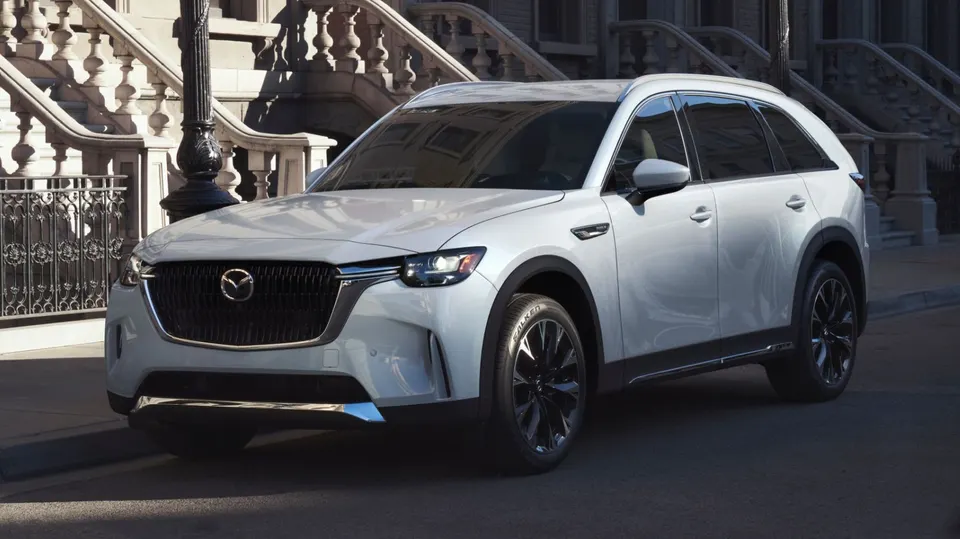
The 2027 CX-90 arrives with a new two-row option as Mazda reshuffles its US lineup.
The 2027 CX-90 arrives with a new two-row option as Mazda reshuffles its US lineup., Image: Carscoops

Turbo trims and the two-row option

The entry 3.3 Turbo Select at $41,345 has leatherette seats, a seven-inch digital gauge cluster, a 10.25-inch infotainment system with Apple CarPlay and Android Auto, and seating for eight. The 3.3 Turbo Preferred at $45,495 adds 21-inch silver metallic wheels, piano black trim, a different grille, heated and ventilated front seats, heated second-row seats and a 12.3-inch centre display.

The 3.3 Turbo Premium Sport is the trim that carries the new two-row option: it is available with eight seats, or seven with captain's chairs in the second row, and the two-row version starts at $48,525 against $49,675 for the three-row. Above it sit the 3.3 Turbo Premium Plus at $52,315, the 3.3 Turbo S Premium Sport at $55,185 and the 3.3 Turbo S Premium Plus at $59,616. The Premium Plus adds adaptive headlights, black or white Nappa leather, a heated steering wheel and a 360-degree monitor.

The Turbo S Premium Sport brings Sport, Off-Road and Towing modes, a black exterior theme with black grille, badging and 21-inch wheels, a Bose 12-speaker audio system, a power liftgate, a panoramic moonroof and the full i-Activsense safety suite. It is the second of the two trims offered with either two or three rows. The Turbo S Premium Plus is seven-seat only and adds Maple Wood interior trim, ventilated second-row seats and a two-tone leather-wrapped steering wheel.

Plug-in hybrid pricing and equipment

Three plug-in hybrid trims share a 2.5-litre four-cylinder, an electric motor and a 17.8-kWh battery, for a combined 323 hp and 369 lb-ft. The PHEV Preferred starts at $52,340 with twin 12.3-inch displays, heated and ventilated front seats and a heated steering wheel. The PHEV Premium Sport at $57,145 adds blacked-out exterior elements, the option of second-row captain's chairs, a head-up display, Bose audio, SiriusXM satellite radio and Alexa Built-In. The PHEV Premium Plus at $60,345 brings 21-inch alloy wheels, upgraded headlights and taillights, Mazda's Driver Personalization System, Nappa leather and the full safety and driver assistance package.

Mazda has not published an electric-only range figure or a charging time for the CX-90 plug-in hybrid in this announcement, so neither can be quoted for the 2027 model yet. Buyers weighing the PHEV against the mild-hybrid six-cylinder will have to wait for those numbers before they can judge whether the $11,000 premium over the base car pays off in daily electric running.

Availability

Mazda has confirmed the 2027 CX-90 line-up and its pricing but has not announced an on-sale date for the updated model. The CX-70's departure leaves the two-row CX-90 as the sole five-seat option in the larger end of Mazda's US range.

Fewer nameplates but nine CX-90 trims is a trade Mazda is making deliberately: the CX-70 overlapped closely with the CX-90 in size and powertrains, and folding it into the CX-90 range cuts duplication for dealers and shoppers alike. The cost is choice at the entry end, where the two-row CX-90 now starts at $48,525 rather than at a lower price point of its own.

Open this article ↗

Keep scrolling to read the next story.

Older articles →