INDEPENDENT AUTOMOTIVE NEWSGLOBAL PERSPECTIVE / AUSTRALIAN EDITION
TDCNTHE DAILY
CAR NEWS.

The road ahead.
Every day.

RSS ↗
Latest/Electric

154 original articles

Electric / TDCN ORIGINAL

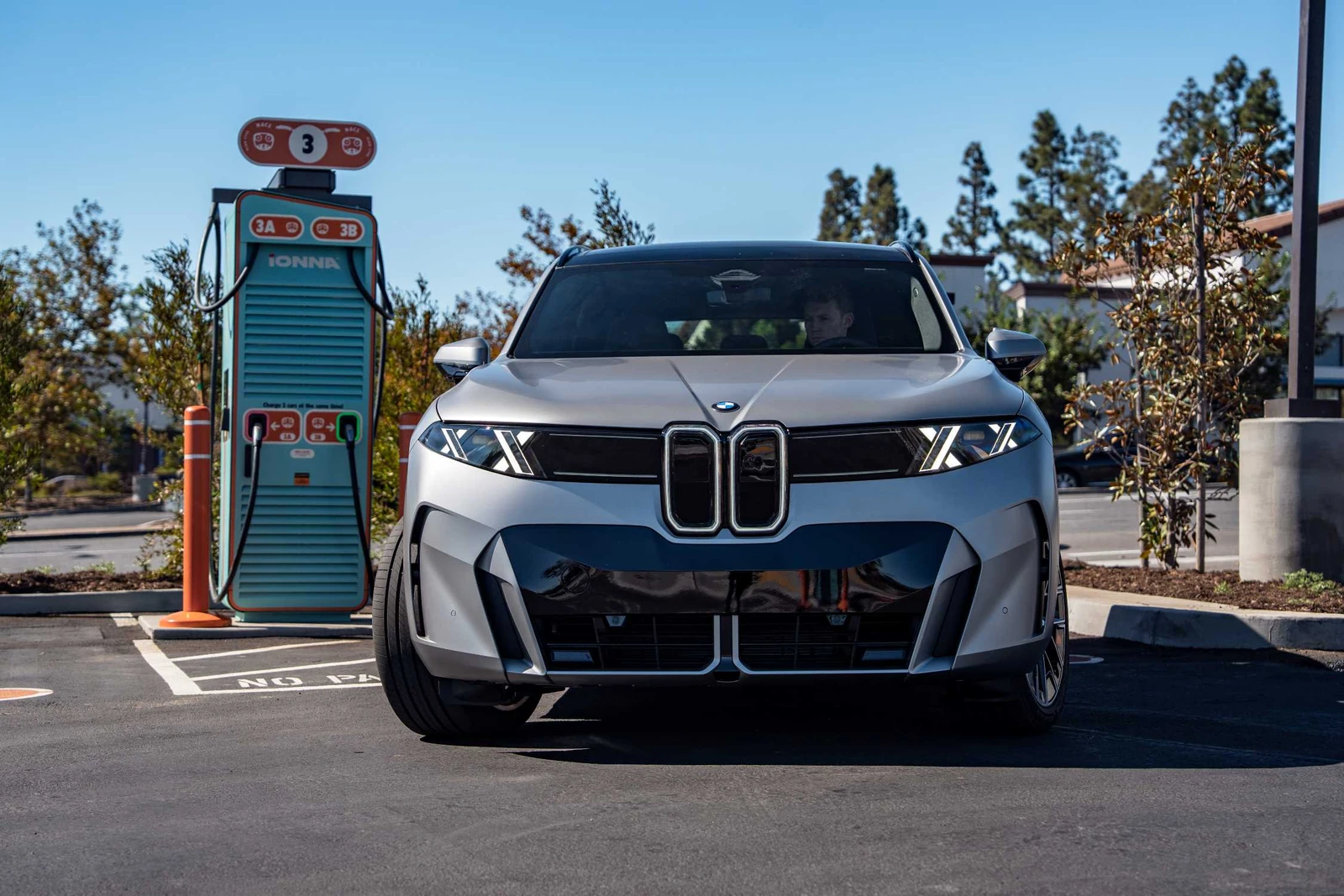
BMW demonstrates 460 kW charging on new iX5 60 xDrive with IONNA and Alpitronic

The first electric BMW X5 adds up to 217 miles of WLTP range in 10 minutes in a Southern California demo, though the 460 kW hardware is not commercially available in the US today.

Image: BMW PressClub

BMW has staged the first public demonstration of the new iX5's high-power charging capability, reaching up to 460 kW peak DC power in front of global media in Laguna Hills, Southern California, with partners IONNA and Alpitronic. The car is the first battery-electric BMW X5 and the second model to use BMW's Gen6 eDrive technology after the iX3.

In the demonstration, the iX5 60 xDrive added up to 217 miles of WLTP range in 10 minutes, and charging its 141 kWh net battery from 10 to 80 per cent took 22 minutes. BMW is explicit that the 460 kW figure is a technology demonstration and does not represent charging hardware commercially available in the US today.

What Gen6 brings to the iX5

The iX5 debuts BMW's sixth-generation eDrive, known as Gen6, which uses 800V architecture and new high-voltage batteries with cylindrical cells. BMW says the new cells deliver 20 per cent more volumetric energy density than the Gen5 prismatic cells they replace, alongside updated, highly efficient electric motors and bidirectional charging.

BMW quotes combined WLTP power consumption of 23.9 to 20.1 kWh/100 km for the iX5 60 xDrive. The 800V system is the enabler for the charging speeds shown: higher voltage means lower current for the same power, which is why BMW can quote a 10-to-80 per cent time of 22 minutes on a 141 kWh net pack.

Why the 460 kW figure needs context

The 460 kW peak is not a number buyers should expect at their local charger. BMW states plainly that the demonstration does not represent charging hardware commercially available in the US today. Alpitronic supplied the high-power hardware for the event, building on its long-term partnership with BMW, and IONNA provided the network setting.

That matters because the iX5's real-world charging experience will depend on what public hardware can actually deliver. The 217 miles in 10 minutes is a best-case demonstration on purpose-built equipment, not a promise for every stop. The practical takeaway for drivers is the 800V architecture and the 22-minute 10-to-80 per cent figure, which are properties of the car rather than the demo charger.

The partners and their pitch

Dr Thomas Engelhardt, BMW Group senior vice president for high-voltage battery and charging, said the Southern California event showed the full high-power charging potential of the new iX5 for the first time in front of global media, and credited IONNA and Alpitronic for making the demonstration possible.

IONNA CEO Seth Cutler framed the collaboration as translating next-generation charging technology into an experience drivers can trust, while Alpitronic CEO and co-founder Philipp Senoner said vehicle innovation and charging infrastructure must advance together. IONNA is positioning its network around reliability, affordability including charging discounts for eligible BMW drivers, and convenience through digital integrations.

What BMW has not announced

BMW's release covers the technology demonstration, not the commercial launch. It gives no on-sale date, no market-by-market rollout and no pricing for the iX5 60 xDrive. Nothing in the material addresses Australian availability or Australian pricing, so neither has been announced.

The absence of those details is itself worth noting. A 460 kW demonstration is a technology story; the buying decision will hinge on figures BMW has not yet published, including local pricing, trim line-up and how much of the Gen6 charging capability survives into production specifications in each market.
Open this article ↗
Performance / TDCN ORIGINAL

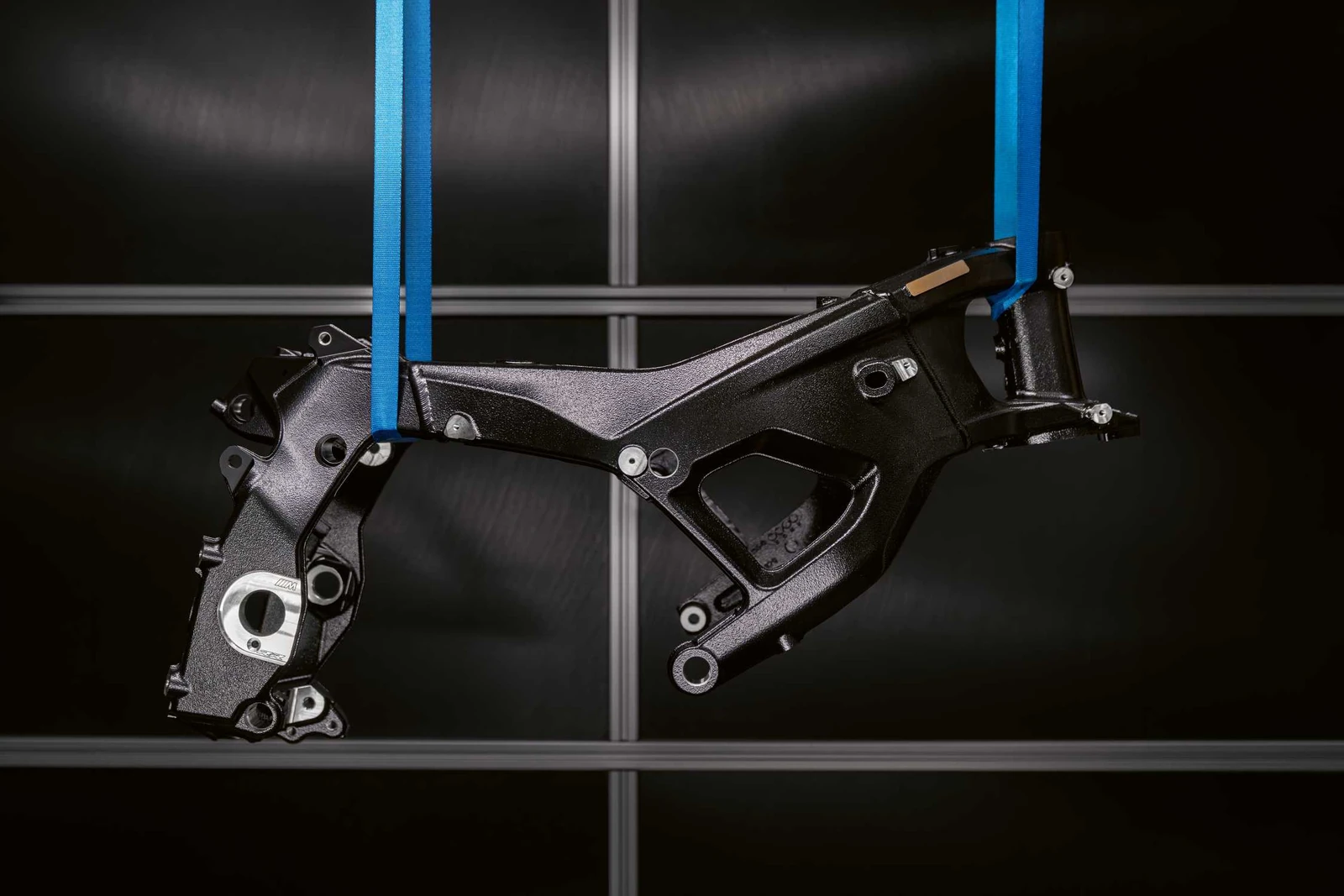
BMW fits lighter M Motorsport frame to M 1000 RR from model year 2027

The third-generation aluminium chassis is around 1.3 kg lighter and uses wall thicknesses cut by up to 30 per cent, BMW says.

Image: BMW PressClub

BMW Motorrad will fit a new third-generation M Motorsport frame as standard to the BMW M 1000 RR from model year 2027, the company has announced. The aluminium chassis is around 1.3 kg lighter than the version it replaces and is claimed to bring more precise handling, clearer feedback and more consistent tyre contact.

BMW says the frame draws directly on lessons from international racing and was developed through a fully digital process spanning three German sites: chassis development, simulation and testing in Munich, light-alloy casting in Landshut, and welding, coating and final machining in Berlin.

What changes on the bike

The headline number is weight: roughly 1.3 kg saved compared with the previous frame. BMW says the reduction sharpens agility and makes rapid direction changes easier. Wall thicknesses have been cut by up to 30 per cent, which lets engineers tune stiffness and flex more precisely rather than simply making the part stiffer.

The behaviour BMW describes is a split personality by design. At lean, the frame can flex laterally to a defined degree, working alongside the suspension to absorb road-surface inputs, which BMW says supports more consistent tyre contact, better feedback and more even wear. Longitudinally it stays stiff so braking and drive forces are transmitted precisely and the bike responds predictably under high load.

Sven Blusch, Head of BMW Motorrad Motorsport, said the frame combines consistent lightweight construction with precisely tuned stiffness and flex characteristics, providing the basis for precise chassis performance and maximum grip, and that the Munich, Landshut and Berlin sites are seamlessly integrated from digital design through to series production.

How it is made

The frame is built from four thin-walled aluminium castings: the steering head, left and right side sections, and the rear section. These are produced at BMW Group Plant Landshut using low-pressure casting, a process that fills the mould in a controlled way to reduce turbulence and air inclusions. Temporary quartz sand cores form the internal cavities, and a core-shooting simulation maps flow behaviour, packing density and curing before tooling is even manufactured.

Quality control before the parts leave Landshut includes X-ray inspection, wall-thickness measurement and coordinate measurement. In Berlin, the lead plant for BMW Motorrad production, the four castings are positioned and joined by TIG welding, then given cathodic dip coating for uniform corrosion protection including enclosed cavities. Final milling brings functional surfaces and mounting points to dimension, and a further coordinate measurement signs off the complete frame before it is approved for assembly.

What BMW has not announced

BMW has not published a price for the updated M 1000 RR, nor said which markets will receive it or when outside the model-year 2027 changeover. The announcement covers the frame itself and its production, not the full specification, pricing or launch schedule of the 2027 bike.

It is also unclear whether owners of earlier M 1000 RR models will be able to buy the new frame as a retrofit or accessory. BMW's material presents it as a standard-fit component for the 2027 model year and does not discuss backwards compatibility.

Why a frame matters more than a spec-sheet line

Frame changes rarely make headlines the way power figures do, but they are where a superbike's character is decided. A lighter chassis with deliberately tuned flex is the difference between a bike that feels nervous at full lean and one that holds a line with the tyre loaded. BMW's claim of more even tyre wear is the practical payoff: on track days and long fast road rides, a chassis that keeps the contact patch consistent asks less of the rubber.

The manufacturing story is the quieter part of the announcement. Casting in Landshut, welding and machining in Berlin and simulation in Munich is a deliberately integrated chain, and BMW is presenting reproducibility, not just performance, as the goal. For buyers, that should mean the 2027 bike's handling is consistent from one example to the next, which is not something every low-volume performance component can promise.

Open this article ↗

Keep scrolling to read the next story.

Older articles →