INDEPENDENT AUTOMOTIVE NEWSGLOBAL PERSPECTIVE / AUSTRALIAN EDITION
TDCNTHE DAILY
CAR NEWS.

The road ahead.
Every day.

RSS ↗
Latest/Performance

153 original articles

Performance / TDCN ORIGINAL

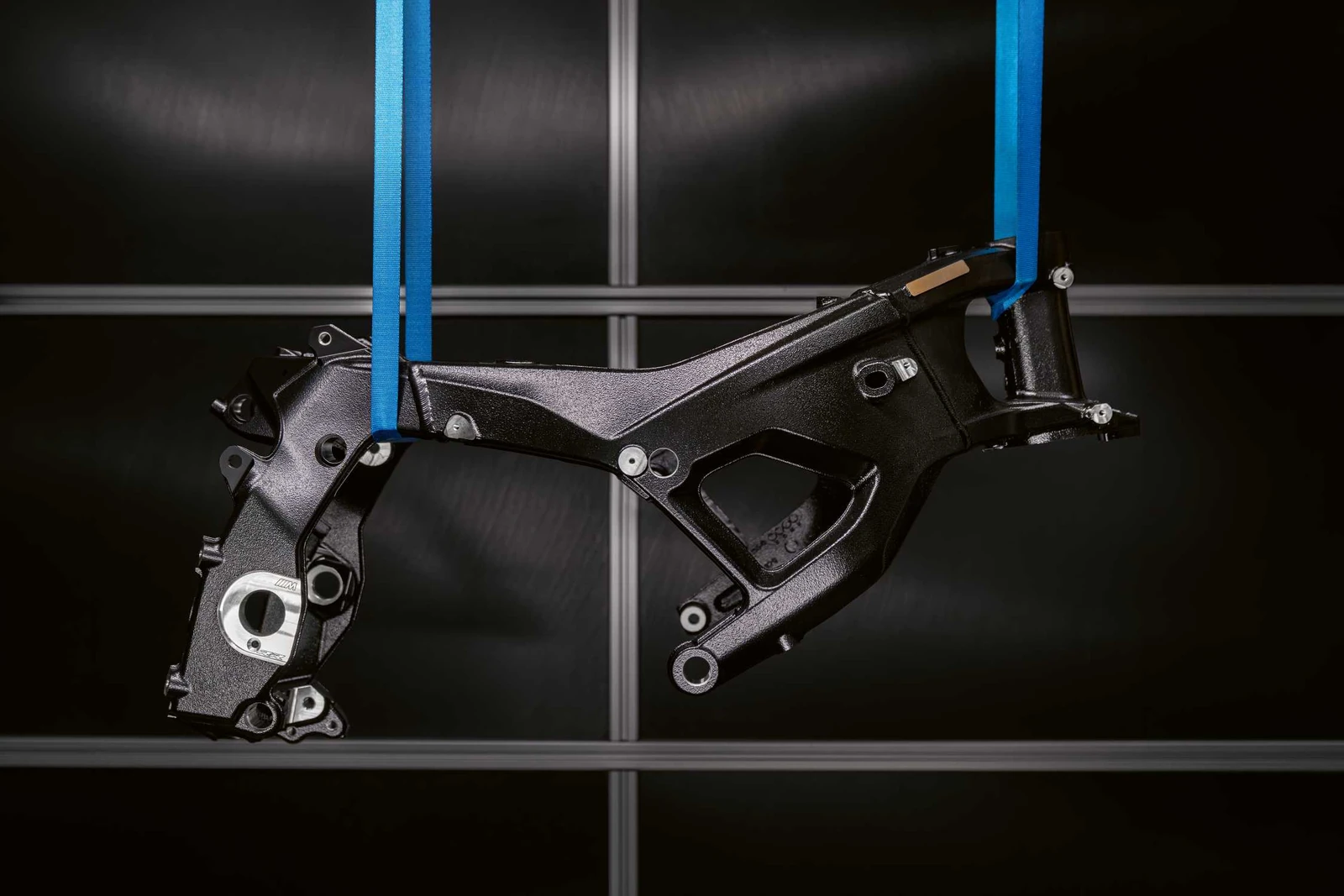
BMW fits lighter M Motorsport frame to M 1000 RR from model year 2027

The third-generation aluminium chassis is around 1.3 kg lighter and uses wall thicknesses cut by up to 30 per cent, BMW says.

Image: BMW PressClub

BMW Motorrad will fit a new third-generation M Motorsport frame as standard to the BMW M 1000 RR from model year 2027, the company has announced. The aluminium chassis is around 1.3 kg lighter than the version it replaces and is claimed to bring more precise handling, clearer feedback and more consistent tyre contact.

BMW says the frame draws directly on lessons from international racing and was developed through a fully digital process spanning three German sites: chassis development, simulation and testing in Munich, light-alloy casting in Landshut, and welding, coating and final machining in Berlin.

What changes on the bike

The headline number is weight: roughly 1.3 kg saved compared with the previous frame. BMW says the reduction sharpens agility and makes rapid direction changes easier. Wall thicknesses have been cut by up to 30 per cent, which lets engineers tune stiffness and flex more precisely rather than simply making the part stiffer.

The behaviour BMW describes is a split personality by design. At lean, the frame can flex laterally to a defined degree, working alongside the suspension to absorb road-surface inputs, which BMW says supports more consistent tyre contact, better feedback and more even wear. Longitudinally it stays stiff so braking and drive forces are transmitted precisely and the bike responds predictably under high load.

Sven Blusch, Head of BMW Motorrad Motorsport, said the frame combines consistent lightweight construction with precisely tuned stiffness and flex characteristics, providing the basis for precise chassis performance and maximum grip, and that the Munich, Landshut and Berlin sites are seamlessly integrated from digital design through to series production.

How it is made

The frame is built from four thin-walled aluminium castings: the steering head, left and right side sections, and the rear section. These are produced at BMW Group Plant Landshut using low-pressure casting, a process that fills the mould in a controlled way to reduce turbulence and air inclusions. Temporary quartz sand cores form the internal cavities, and a core-shooting simulation maps flow behaviour, packing density and curing before tooling is even manufactured.

Quality control before the parts leave Landshut includes X-ray inspection, wall-thickness measurement and coordinate measurement. In Berlin, the lead plant for BMW Motorrad production, the four castings are positioned and joined by TIG welding, then given cathodic dip coating for uniform corrosion protection including enclosed cavities. Final milling brings functional surfaces and mounting points to dimension, and a further coordinate measurement signs off the complete frame before it is approved for assembly.

What BMW has not announced

BMW has not published a price for the updated M 1000 RR, nor said which markets will receive it or when outside the model-year 2027 changeover. The announcement covers the frame itself and its production, not the full specification, pricing or launch schedule of the 2027 bike.

It is also unclear whether owners of earlier M 1000 RR models will be able to buy the new frame as a retrofit or accessory. BMW's material presents it as a standard-fit component for the 2027 model year and does not discuss backwards compatibility.

Why a frame matters more than a spec-sheet line

Frame changes rarely make headlines the way power figures do, but they are where a superbike's character is decided. A lighter chassis with deliberately tuned flex is the difference between a bike that feels nervous at full lean and one that holds a line with the tyre loaded. BMW's claim of more even tyre wear is the practical payoff: on track days and long fast road rides, a chassis that keeps the contact patch consistent asks less of the rubber.

The manufacturing story is the quieter part of the announcement. Casting in Landshut, welding and machining in Berlin and simulation in Munich is a deliberately integrated chain, and BMW is presenting reproducibility, not just performance, as the goal. For buyers, that should mean the 2027 bike's handling is consistent from one example to the next, which is not something every low-volume performance component can promise.
Open this article ↗
Australia / TDCN ORIGINAL

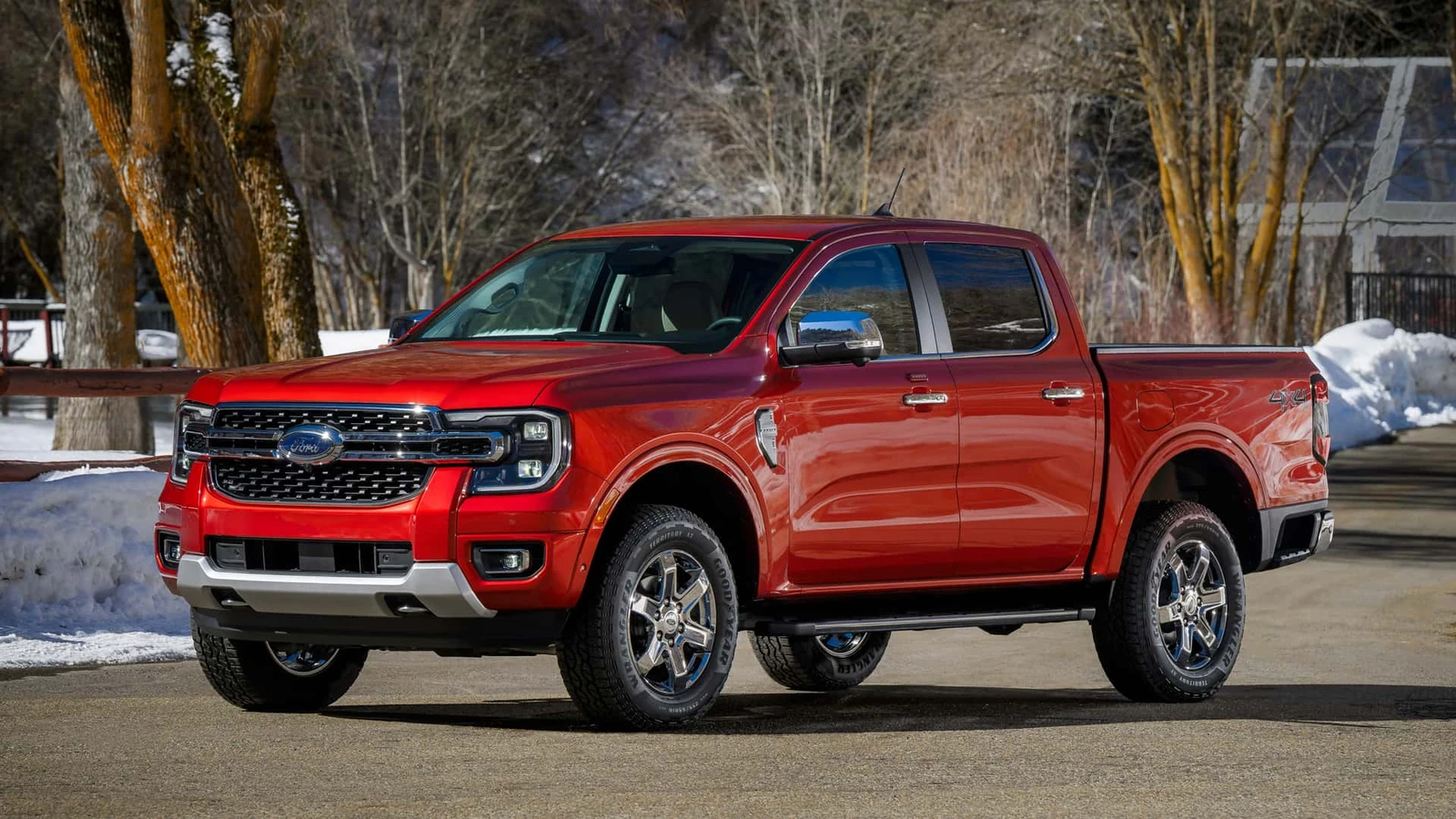
Ford Ranger reportedly swaps 2.7-litre V6 for detuned Raptor 3.0-litre for 2027

An alleged 2027 order guide lists the 2.7-litre EcoBoost as deleted and a 3.0-litre EcoBoost as new, though Ford has confirmed nothing and prices, power and Australian timing are unannounced.

Image: Motor1

The Ford Ranger is reportedly set to drop its 2.7-litre EcoBoost V6 in favour of a detuned version of the twin-turbo 3.0-litre V6 used in the Ranger Raptor, for the 2027 model year. The claim rests on an alleged 2027 Ranger order guide uncovered by Autoevolution, which lists the 2.7-litre V6 as "Deleted" directly beneath a "New/Changed" 3.0-litre EcoBoost entry.

Ford has not announced the change, and the guide itself carries no output or pricing figures. Treat the engine swap as unconfirmed until the manufacturer publishes 2027 Ranger specifications.

What the order guide shows

The document points to a broader 2027 refresh rather than an engine change alone. The XLT and Lariat trims are listed with new grille finishes, and Ford will offer a range of new wheel designs across the lineup. Neptune Blue replaces Velocity Blue in the palette, while Carbonized Gray is dropped.

Inside, the base XL swaps its 10.1-inch infotainment screen for a larger 12.0-inch unit, and dual-zone climate control becomes standard on that base trim. A new Bronze Graphics package joins the options list, and a new Luxury Package for the Lariat and Raptor bundles ambient lighting, rain-sensing wipers, power-folding mirrors, a memory driver's seat and a 10-speaker B&O sound system. Lariat buyers also get a heated steering wheel.

Power and torque remain unannounced

Ford has not published power or torque figures for the 2027 Ranger's 3.0-litre engine, so any number at this stage is inference rather than fact. The closest reference point is the 2027 Bronco, whose twin-turbo 3.0-litre V6 produces 380 horsepower and 440 pound-feet of torque, and the Ranger unit is expected to land near that output.

There is a wrinkle worth watching. The 3.0-litre EcoBoost in the 2026 Ranger Raptor makes 405 hp and 430 lb-ft, which is 10 lb-ft less than the non-Raptor Bronco figure, and Ford is unlikely to leave its flagship Ranger trailing a lesser variant on torque. That suggests the detuned engine could end up rated at or near the Raptor's torque number, but nothing is confirmed.

The turbocharged 2.3-litre four-cylinder stays as the standard engine on the XL, XLT and Lariat, at 270 hp and 310 lb-ft. Choosing the V6 requires four-wheel drive.

Price and Australian availability

Ford has not announced pricing for the 2027 Ranger. For context, the 2026 Ranger XL starts at $35,445 in the United States including a $1,896 destination charge, and a modest increase is expected rather than a large one. On the 2026 Ranger, the 2.7-litre V6 and four-wheel drive add $7,545 to an XLT and $5,794 to a Lariat, and similar figures are anticipated for 2027.

Australian availability and pricing for the 2027 Ranger have not been announced, and the figures above are US market numbers that cannot be read across to local showrooms. Ford's Australian arm has said nothing publicly about the reported engine change, so buyers here have no confirmed timing, specification or cost to work from.

Why the swap matters

Moving from 2.7 to 3.0 litres is a meaningful step for anyone who tows or loads a Ranger. A larger displacement version of the Raptor's twin-turbo V6 should bring stronger low-rev pull than the engine it replaces, which is the kind of gain that shows up in daily driving rather than on a spec sheet.

The catch is that a detuned engine is a deliberate compromise. Ford gets a cheaper, less stressed tune than the full Raptor unit, and buyers get Raptor-derived hardware without Raptor running costs or positioning. The risk is a torque rating that undercuts the Raptor, which would be an odd look for the flagship, so expect Ford to manage those numbers carefully when it finally publishes them.

For now the practical advice for Australian buyers is to wait for Ford's own announcement. An order guide is a dealer planning document, not a specification sheet, and it tells you nothing about local tuning, pricing or launch timing.

Open this article ↗

Keep scrolling to read the next story.

Older articles →