INDEPENDENT AUTOMOTIVE NEWSGLOBAL PERSPECTIVE / AUSTRALIAN EDITION
TDCNTHE DAILY
CAR NEWS.

The road ahead.
Every day.

RSS ↗
Latest/New cars

143 original articles

New cars / TDCN ORIGINAL

RTR launches 870hp supercharged Mustang Spec 5, limited to 50 cars at $159,999

The tuner's most extreme Mustang yet pairs a supercharged 5.0-litre V8 with a composite widebody kit, adjustable suspension and a $15,000 paint-to-sample option.

Image: Motor1

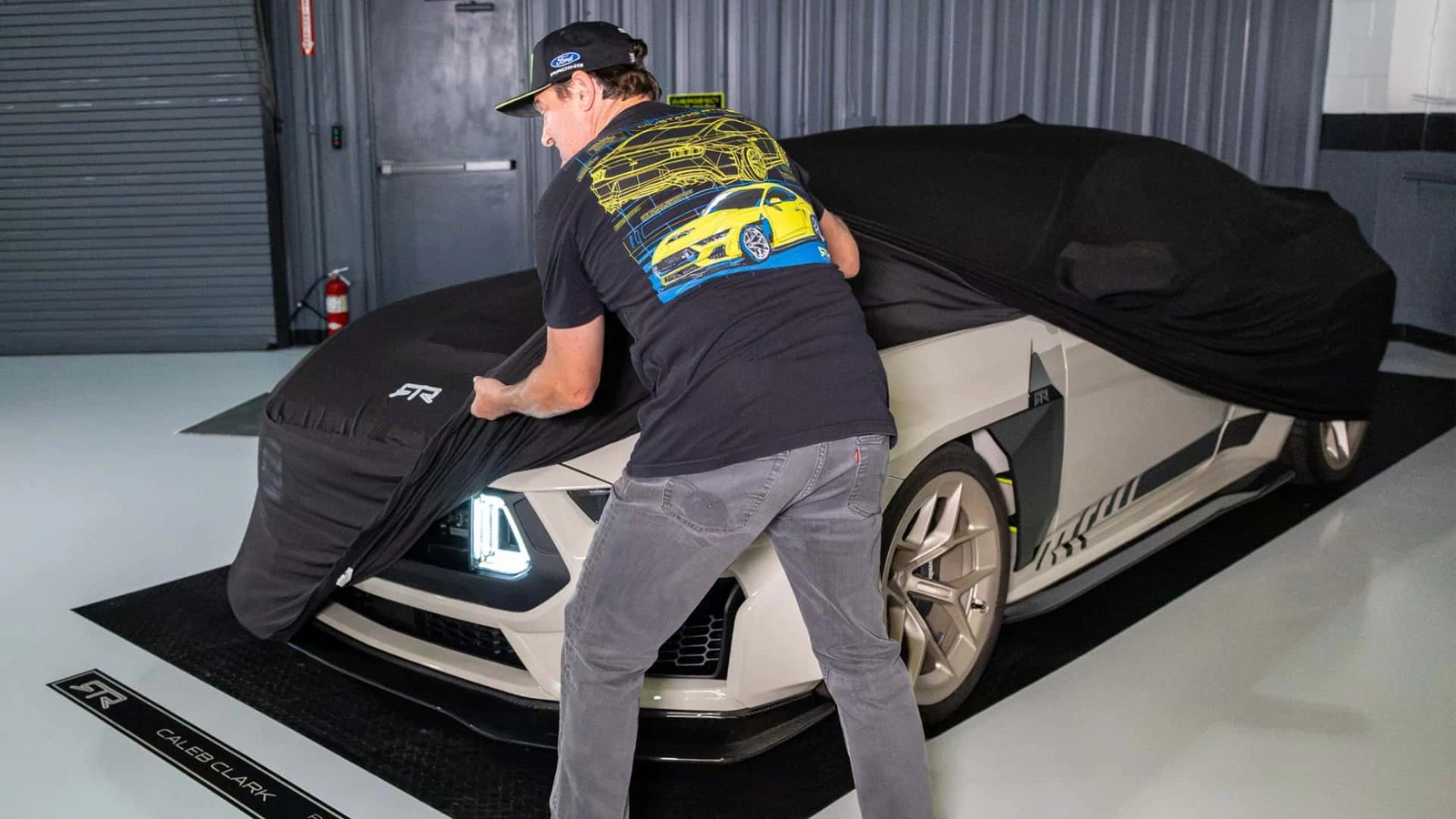
RTR Vehicles has revealed the Mustang RTR Spec 5, a supercharged 870hp version of the 2026 Ford Mustang that will be capped at 50 examples, each starting at $159,999. Three cars have already been built and customer deliveries are underway, with the first handed over personally by RTR founder Vaughn Gittin Jr. to artist Caleb Clark, who commissioned the build.

What the Spec 5 changes under the skin

Every Spec 5 begins life as a standard V8-powered Mustang before RTR adds a supercharger to the 5.0-litre engine, lifting output to 870 horsepower. RTR also fits its Tactical Performance suspension system, which brings 30-way-adjustable front coilovers and adjustable front and rear sway bars, letting owners change ride height, stiffness and how neutral or tail-happy the car behaves.

Each car rides on 20-inch RTR forged wheels wrapped in Michelin Pilot Sport 4 S tyres, and the soundtrack comes from a Borla exhaust developed jointly with RTR to produce a signature tone. The first car wears a colour called Terrain and a composite widebody kit.

The $159,999 starting price buys more than the hardware: every build includes a 3-year, 36,000-mile Ford factory warranty, and cars can be ordered directly through RTR's North Carolina facility or via RTR-authorised dealers. That warranty matters for buyers weighing a tuner car against a factory special, since it keeps the Ford backing intact rather than leaving owners to sort powertrain problems themselves.

Paint and personalisation push the price higher

RTR works with each buyer to personalise their car, starting from a run of standard colours. Premium colour choices add $7,500, while unique finishes such as Mystichrome cost $15,000, and that top tier also opens access to RTR's paint-to-sample programme.

The personalisation is where the real cost spread sits. A buyer who wants a one-off finish can add roughly ten per cent to the base price before any other options, which puts the Spec 5 in the territory of low-volume factory specials rather than ordinary tuner packages.

Spec 5 could spread to other Fords

RTR marketing and sales director Josh Hipp called the Mustang Spec 5 the company's "apex product" and said there is a strong likelihood the Spec 5 name will reach other Ford models. Asked directly about a Baja-ready Bronco Spec 5, Hipp said it "would be fair to assume that RTR could eventually release a Spec 5-level Bronco-type vehicle," while adding there was no information to share at this time.

Hipp framed RTR's push to stand alongside Ford as a performance division on 20 years of work on design, engineering and track capability, and on attracting a younger audience into both the Blue Oval and RTR. Nothing has been confirmed for a Bronco or any other model, so treat the wider Spec 5 range as a stated ambition rather than a product plan.

A tuner car priced like a factory special

At $159,999 the Spec 5 sits well above a standard V8 Mustang, and the 50-car cap means most buyers will never see one on a dealer forecourt. The proposition is straightforward: near-supercar power, a widebody stance and a factory warranty in a package that can be specified down to the paint. For drivers who want a Mustang that stands apart from the regular production line without giving up Ford's backing, that combination is the draw. The trade-off is that the car's value and character rest on RTR's engineering rather than Ford's own performance division, and the options list can add tens of thousands to the sticker.
Open this article ↗
Safety / TDCN ORIGINAL

Subaru develops its own EV platform with a 510-hp prototype and lighter battery

The all-wheel-drive development mule previews in-house motors, electronics and crash structures, but Subaru has not disclosed range, battery capacity or charging figures.

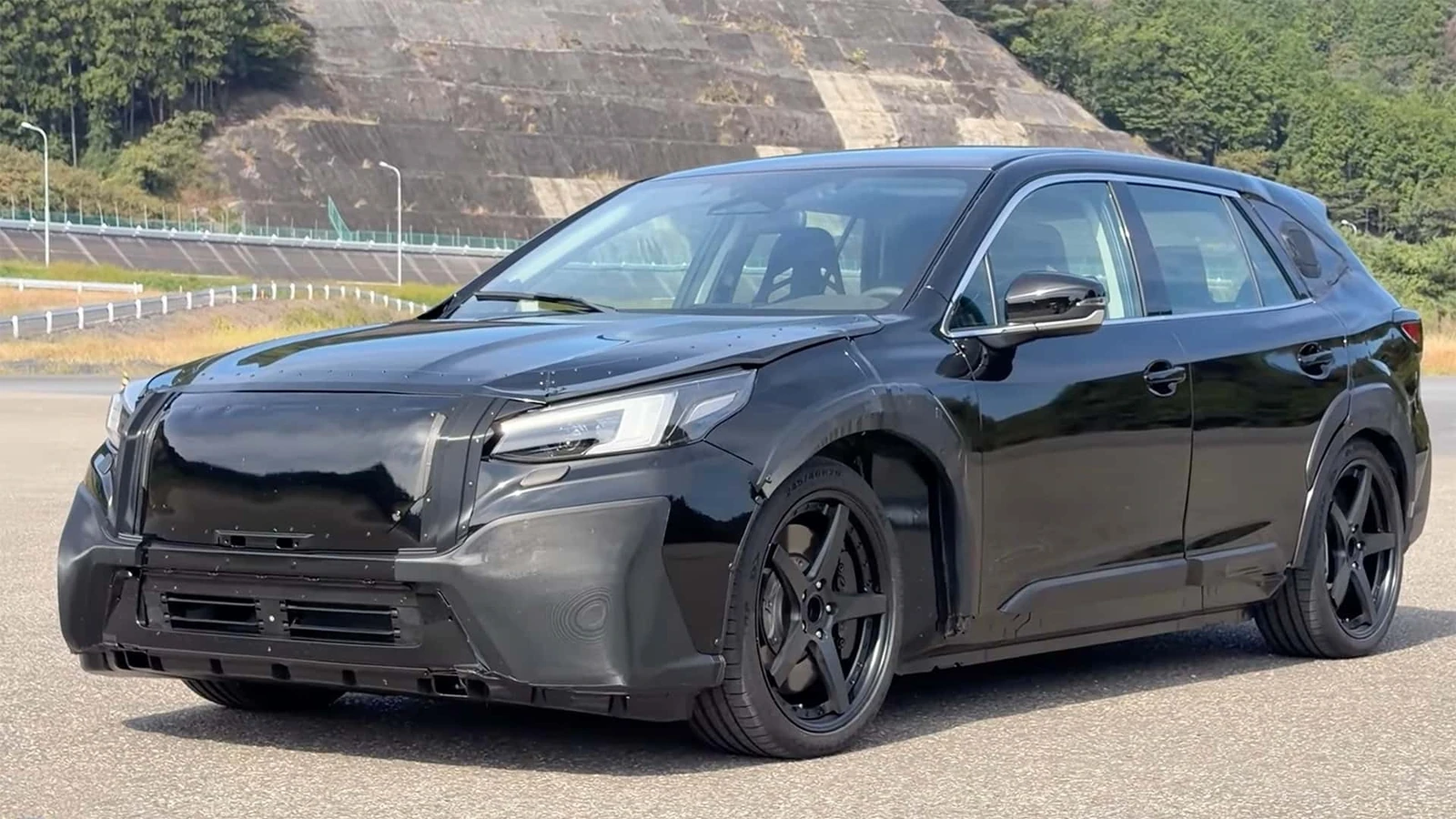
Subaru is developing its own electric vehicle platform, battery technology and electronics to reduce its reliance on Toyota, and showed the work at its proving ground north of Tokyo on October 18 in the form of a 510-horsepower all-wheel-drive prototype.

The mule, which looks like a modified Outback, accelerates from 0 to 62 mph (100 km/h) in under four seconds, and some of its technology could reach production around 2029, though Subaru has not confirmed a vehicle or a firm launch date.

What the prototype is, and what it is not

The car is a development tool rather than a preview of a specific showroom model, so its shape and output should not be read as a commitment for Subaru's next production EV. Engineering executive Takatomo Watamori said controlling the underlying technology would help preserve the safety and driving character that distinguish the brand, according to Automotive News.

That matters because Subaru's current electric lineup, the Solterra, Trailseeker, Uncharted and three-row Getaway, is built on Toyota underpinnings. Subaru says its engineers contributed extensively to the Trailseeker's all-wheel-drive development and motor tuning, but owning the platform would let it shape the complete vehicle rather than work within shared architecture.

Battery, motors and crash structure

The battery pack contains 4,000 cylindrical cells. Subaru says it is 25 percent lighter than its previous battery and targets an energy density 20 percent above the industry average.

Subaru has not disclosed the pack's capacity, the prototype's driving range or its charging performance, so no range figure can be attached to this car yet.

The motors are smaller and lighter than those in Subaru's current EVs, and engineers claimed a 30 percent efficiency improvement against an unspecified benchmark, a comparison the report does not detail well enough to translate into a range advantage.

The architecture targets a 100-kilogram (220-pound) weight reduction compared with the EVs Subaru currently produces, and the front structure has been redesigned to protect passengers and the battery in a collision, with supports that curve over the front wheels to spread crash forces and a front motor designed to rotate on impact to dissipate energy.

Subaru is not building everything itself. Aisin, a Toyota Group supplier, developed the prototype's drive units and Panasonic Energy is the battery partner, both collaborations dating to 2024.

Software, chips and development speed

Subaru is developing an integrated electronic control unit to manage driver assistance, chassis, powertrain and infotainment, built around a custom chip developed with AMD. A future version will support AI functions in Subaru's EyeSight advanced driver assistance suite, and the system will allow over-the-air updates, a first for a vehicle independently developed by Subaru. The company plans to manufacture the control unit itself and use it across its lineup to cut costs.

Subaru says it created the prototype's technologies in roughly half the usual time as it tries to keep pace with Chinese competitors, and believes the same methods can speed up work on future gasoline and hybrid vehicles.

Early impressions and the STI question

A reviewer from LOVECARS!TV! described the prototype as combining BRZ-like eagerness to turn with all-wheel-drive traction, and reported double-wishbone front suspension and a five-link rear setup. The drive was limited to two laps under speed restrictions, so it is an early impression rather than a full assessment.

The same video draws a link between the prototype and the Subaru Performance-E STI concept shown at the 2025 Japan Mobility Show, describing the mule as a development vehicle for that concept's hardware. That is not confirmation of a production electric STI or WRX, and Subaru has not said the platform will underpin a production version of the concept or that such a car would wear either badge.

Why independence is a financial balancing act

Subaru sold about 924,000 vehicles worldwide in 2025 against more than 11 million for Toyota, and aims for 1.2 million annual deliveries in the early 2030s supported by 10 new vehicles launched by then. Funding an in-house platform, battery and electronics programme on that scale requires careful planning, which is why the company is outsourcing drive units and cells to specialists rather than making every component itself.

There is no indication Subaru plans to end its Toyota partnership. The brand built its reputation on mechanical engineering, safety and an outdoor-lifestyle identity, and the task now is to carry those priorities into electric cars without a boxer engine under the hood.

Subaru's electric history predates the Toyota tie-up: it developed the R1e with Tokyo Electric Power Company in the 2000s and announced the fully electric Plug-in Stella for Japan in 2009, which reached limited-series production with around 170 examples reportedly built.

Open this article ↗

Keep scrolling to read the next story.

Older articles →