INDEPENDENT AUTOMOTIVE NEWSGLOBAL PERSPECTIVE / AUSTRALIAN EDITION
TDCNTHE DAILY
CAR NEWS.

The road ahead.
Every day.

RSS ↗
Latest/Electric

154 original articles

Electric / TDCN ORIGINAL

Honda sets 2 December debut for 0 Alpha electric SUV, built in India and kept out of the US

The production version of the 0 Alpha concept will be made at Tapukara in Rajasthan and sold mainly in India and Japan, with U.S. buyers excluded.

Image: Carscoops

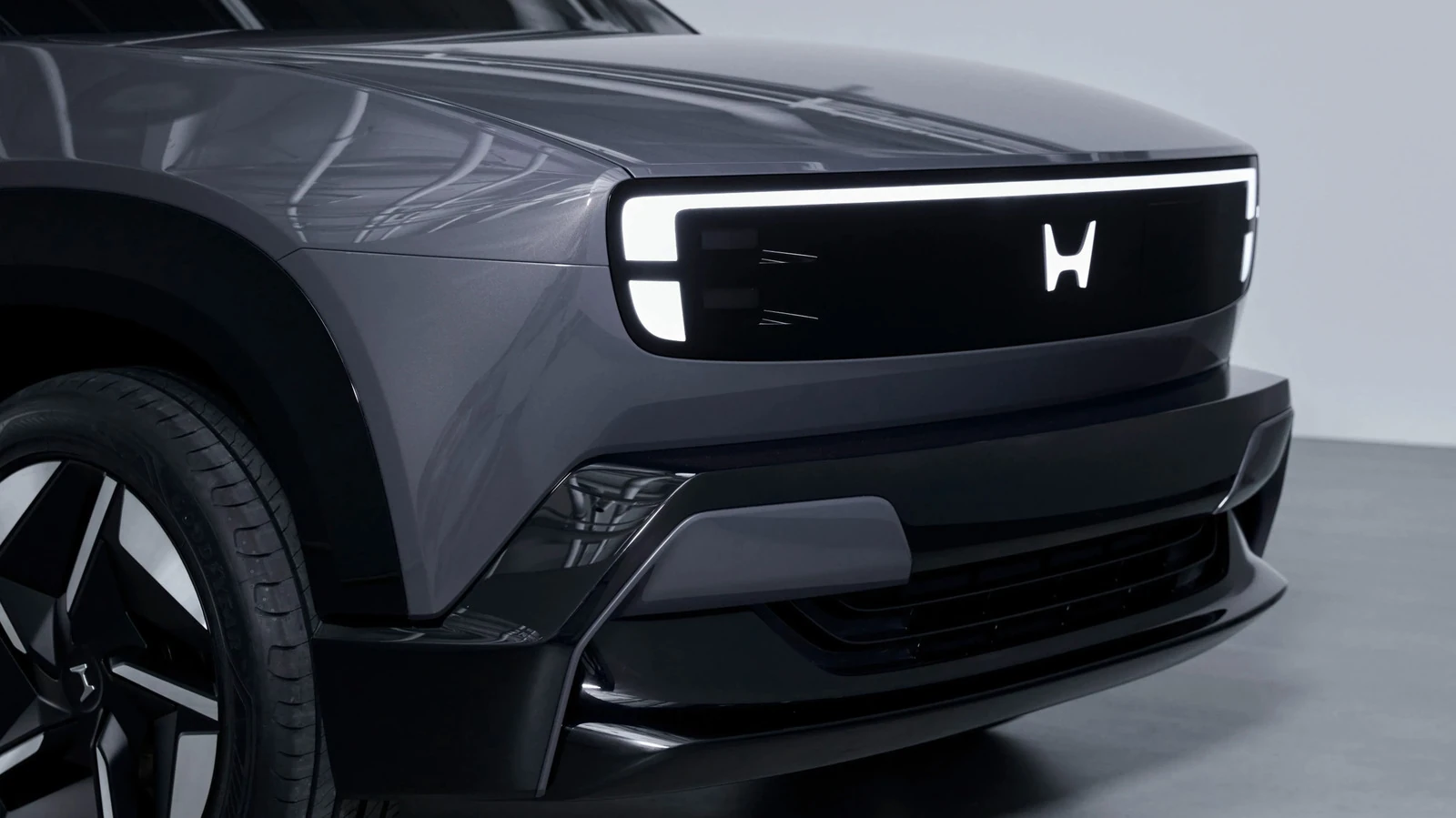
Honda will unveil the production version of its 0 Alpha electric SUV on 2 December, the company has confirmed, with the car aimed chiefly at India and Japan and not offered to U.S. buyers. It becomes India's first fully electric Honda, built at the Tapukara plant in Rajasthan.

The 0 Alpha began as a concept at the Japan Mobility Show in October 2025, and Honda showed a slightly evolved prototype in March 2026 while starting public road verification testing in India. Prototypes have since been spotted testing in both India and Japan.

What survives of the 0 Series

Honda cancelled the U.S.-bound 0 Series sedan and SUV, along with the Acura RSX, earlier this year, but the 0 Alpha carries the electric programme forward in a smaller, market-specific form. The production car is expected to look like a shrunken version of the now-cancelled 0 SUV.

Camouflaged prototypes keep the concept's silhouette largely intact: LEDs set into a covered grille, pronounced front and rear bumpers, cladding around the wheel arches, thick C-pillars above muscular rear fenders and an upright tail with vertical or U-shaped lights. Spy shots have also shown a minimalist cabin with a large infotainment screen, a digital instrument cluster, a flat-bottomed three-spoke steering wheel and climate controls on the centre console.

Honda says the SUV was developed around Indian conditions, accounting for rough roads and tough weather. It has promised a refined design and a spacious cabin with occupant comfort, built to its "Thin, Light, and Wise" philosophy.
The production 0 Alpha keeps the 0 Series' clean nose and illuminated H-mark, as previewed here.
The production 0 Alpha keeps the 0 Series' clean nose and illuminated H-mark, as previewed here., Image: Carscoops

Powertrain details still unconfirmed

The 0 Alpha rides on an EV-dedicated architecture and is expected to use a front-wheel-drive layout with a single electric motor and two lithium iron phosphate (LFP) battery options. Honda has not announced power, torque, battery capacity or charging figures for the production car.

Indian media speculate that the larger of the two batteries could deliver up to 500 km (311 miles) of range between charges, but that figure is unconfirmed and no test cycle has been stated. Treat it as an estimate rather than a homologated number until Honda publishes official figures.

The gap matters for buyers weighing the 0 Alpha against established rivals. Without confirmed power and charging numbers, it is not yet possible to judge how the car compares on the two measures that decide most Indian EV purchases.

Built in Rajasthan, exported later

Production will take place at Tapukara in Rajasthan, using lower labour costs in India. Honda eventually intends to export the car to other markets including Japan, following the path of the Indian-built Elevate.

In India the 0 Alpha will face the Tata Sierra EV, the Suzuki e Vitara and its Toyota Ebella twin, the Mahindra BE 6, the MG ZS EV and the electric Hyundai Creta. Pricing has not been announced; Autocar India speculates a range of ₹16.00 lakh ($16,900) to ₹25.00 lakh ($26,400).

That price band would put the Honda in the thick of India's fast-growing electric SUV segment, where it will compete against models already on sale. Honda's decision to build locally and export later mirrors its approach with the Elevate, and keeps the 0 Series investment working in markets where electric demand is rising rather than stalling.
Open this article ↗
Electric / TDCN ORIGINAL

BMW demonstrates 460 kW charging on new iX5 60 xDrive with IONNA and Alpitronic

The first electric BMW X5 adds up to 217 miles of WLTP range in 10 minutes in a Southern California demo, though the 460 kW hardware is not commercially available in the US today.

Image: BMW PressClub

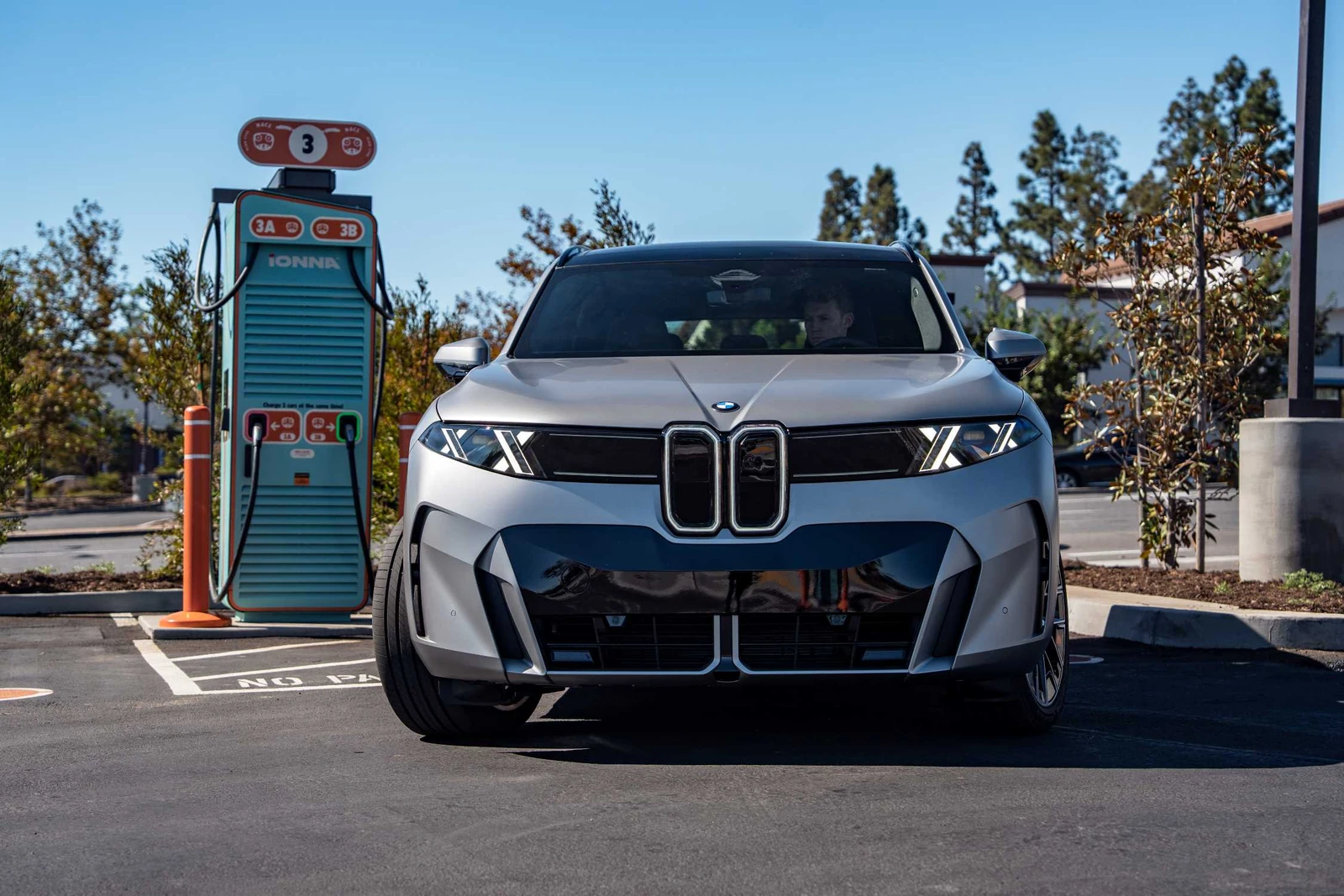
BMW has staged the first public demonstration of the new iX5's high-power charging capability, reaching up to 460 kW peak DC power in front of global media in Laguna Hills, Southern California, with partners IONNA and Alpitronic. The car is the first battery-electric BMW X5 and the second model to use BMW's Gen6 eDrive technology after the iX3.

In the demonstration, the iX5 60 xDrive added up to 217 miles of WLTP range in 10 minutes, and charging its 141 kWh net battery from 10 to 80 per cent took 22 minutes. BMW is explicit that the 460 kW figure is a technology demonstration and does not represent charging hardware commercially available in the US today.

What Gen6 brings to the iX5

The iX5 debuts BMW's sixth-generation eDrive, known as Gen6, which uses 800V architecture and new high-voltage batteries with cylindrical cells. BMW says the new cells deliver 20 per cent more volumetric energy density than the Gen5 prismatic cells they replace, alongside updated, highly efficient electric motors and bidirectional charging.

BMW quotes combined WLTP power consumption of 23.9 to 20.1 kWh/100 km for the iX5 60 xDrive. The 800V system is the enabler for the charging speeds shown: higher voltage means lower current for the same power, which is why BMW can quote a 10-to-80 per cent time of 22 minutes on a 141 kWh net pack.

Why the 460 kW figure needs context

The 460 kW peak is not a number buyers should expect at their local charger. BMW states plainly that the demonstration does not represent charging hardware commercially available in the US today. Alpitronic supplied the high-power hardware for the event, building on its long-term partnership with BMW, and IONNA provided the network setting.

That matters because the iX5's real-world charging experience will depend on what public hardware can actually deliver. The 217 miles in 10 minutes is a best-case demonstration on purpose-built equipment, not a promise for every stop. The practical takeaway for drivers is the 800V architecture and the 22-minute 10-to-80 per cent figure, which are properties of the car rather than the demo charger.

The partners and their pitch

Dr Thomas Engelhardt, BMW Group senior vice president for high-voltage battery and charging, said the Southern California event showed the full high-power charging potential of the new iX5 for the first time in front of global media, and credited IONNA and Alpitronic for making the demonstration possible.

IONNA CEO Seth Cutler framed the collaboration as translating next-generation charging technology into an experience drivers can trust, while Alpitronic CEO and co-founder Philipp Senoner said vehicle innovation and charging infrastructure must advance together. IONNA is positioning its network around reliability, affordability including charging discounts for eligible BMW drivers, and convenience through digital integrations.

What BMW has not announced

BMW's release covers the technology demonstration, not the commercial launch. It gives no on-sale date, no market-by-market rollout and no pricing for the iX5 60 xDrive. Nothing in the material addresses Australian availability or Australian pricing, so neither has been announced.

The absence of those details is itself worth noting. A 460 kW demonstration is a technology story; the buying decision will hinge on figures BMW has not yet published, including local pricing, trim line-up and how much of the Gen6 charging capability survives into production specifications in each market.

Open this article ↗

Keep scrolling to read the next story.

Older articles →