INDEPENDENT AUTOMOTIVE NEWSGLOBAL PERSPECTIVE / AUSTRALIAN EDITION
TDCNTHE DAILY
CAR NEWS.

The road ahead.
Every day.

RSS ↗
Latest/Electric

119 original articles

Electric / TDCN ORIGINAL

2028 Chrysler Airflow SUV arrives late 2027 from about $31,000

Chrysler's first SUV since the Aspen died in 2009 will launch with gas and hybrid power on a new Stellantis platform, with an electric version held back.

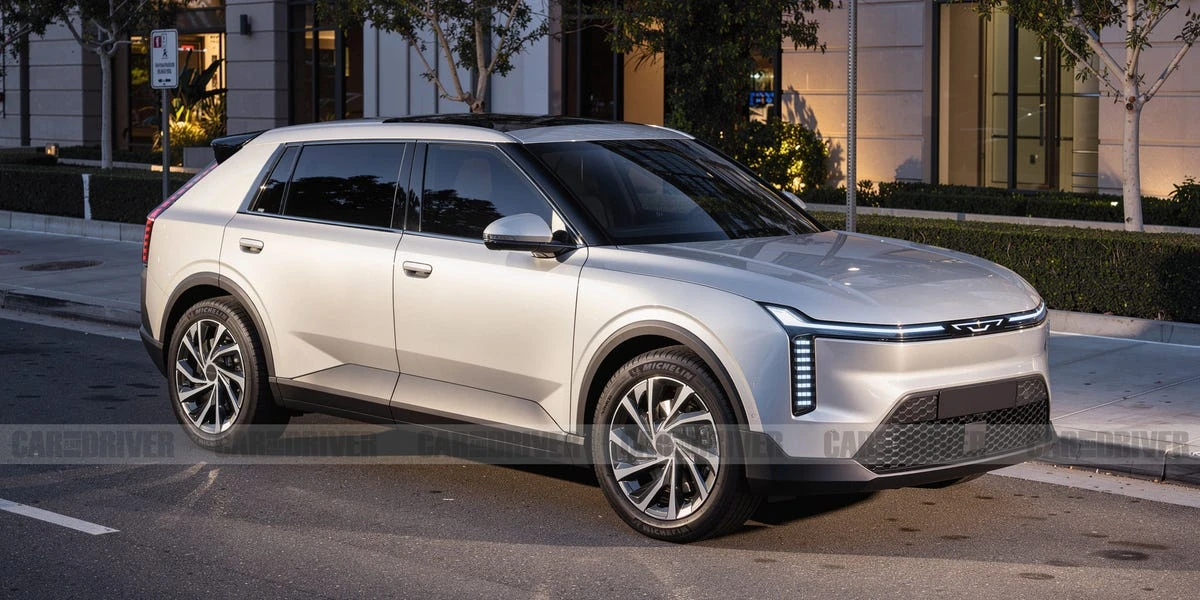
Chrysler will return to the SUV market in late 2027 with the Airflow, a compact crossover arriving for the 2028 model year with a starting price targeted below $40,000 and a base model that could open as low as $31,000, according to Car and Driver's outlook on the model.

It will be the brand's first SUV since the full-size Aspen was discontinued after 2009, and it lands in a segment crowded with the Toyota RAV4, Honda CR-V and Nissan Rogue.

A boxier take on the 2022 concept

The production Airflow abandons the sleek, seaglass-smooth styling of the Airflow concept shown in 2022 in favour of a boxier body with pronounced creases.

Chrysler's lineup has shrunk to the Pacifica minivan alone since the 300 sedan ended after the 2023 model year, so the Airflow carries the weight of rebuilding a brand that has been largely dormant for over a decade.

Two smaller crossovers, the Arrow and Arrow Cross, will follow with starting prices under $30,000. Both are essentially rebadged versions of the Fiat Grizzly that launches soon in Europe.
The production Airflow keeps the concept's lighting signature in a boxier package
The production Airflow keeps the concept's lighting signature in a boxier package, Image: Car and Driver

STLA One platform with gas, hybrid and eventual EV capability

The Airflow rides on the new STLA One platform, a modular architecture also set to underpin the Dodge GLH and a range of vehicles in Europe.

STLA One accommodates pure petrol powertrains, hybrids, plug-in hybrids and EVs with 800-volt architecture, and it incorporates the STLA Brain central compute and software stack plus a new STLA SmartCockpit infotainment setup.

Electric versions will use lithium-iron-phosphate batteries to keep costs down, though an electric Airflow is not expected until well after the petrol and hybrid versions launch.

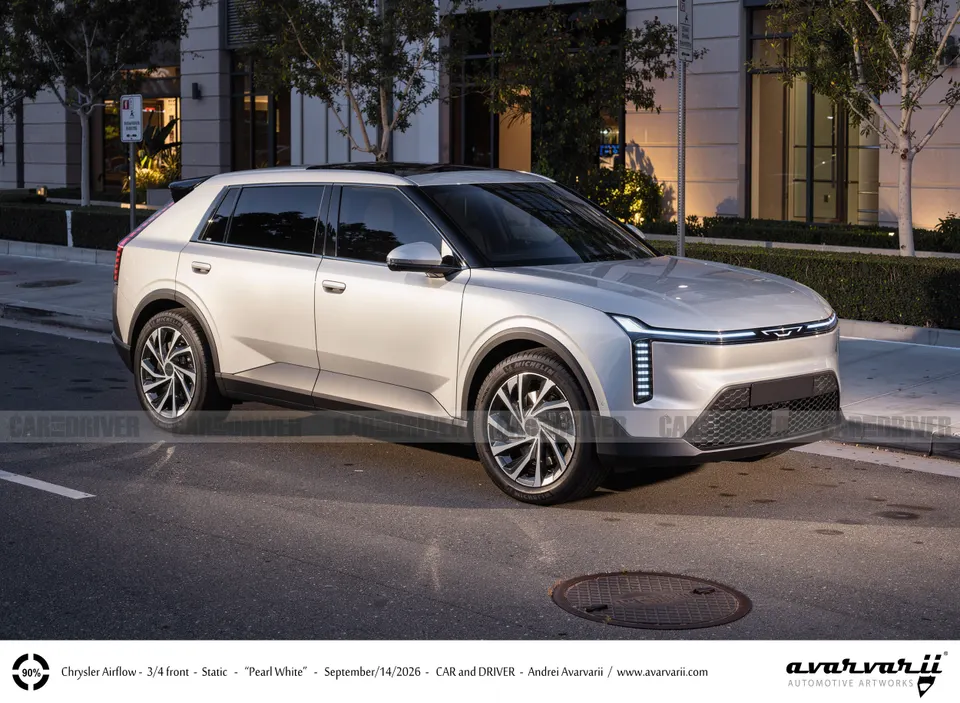
Chunky rear haunches and vertical tail lamps define the Airflow's boxy stance
Chunky rear haunches and vertical tail lamps define the Airflow's boxy stance, Image: Car and Driver

Hybrid first, with the Jeep Cherokee's powertrain the likely pick

The Airflow will almost certainly debut as a hybrid, and the most likely candidate is the setup from the Jeep Cherokee: a turbocharged 1.6-litre four-cylinder paired with two electric motors for a combined 210 hp.

A gas-only version is also probable. The same 1.6-litre on its own makes 177 hp, which would place the Airflow among the least powerful non-hybrid compact SUVs on sale.

Both hybrid and non-hybrid versions would likely drive the front wheels as standard, with all-wheel drive optional.

Stellantis could fit the 324-hp Hurricane 4 turbo, but the expectation is that engine stays exclusive to the performance-focused Dodge GLH, or arrives detuned and possibly paired with electric motors. A plug-in hybrid is possible too, though those have proven less popular than conventional hybrids in this class.

Taking on the RAV4, CR-V and Rogue

The Airflow will be tuned for road comfort to set it apart from the off-road-leaning Jeep Cherokee, and it will face established bestsellers including the hybrid-only Toyota RAV4, the Honda CR-V and the Nissan Rogue.

The challenge is real: years of neglect have made the brand easy to forget, and winning buyers back will take a committed marketing push plus competitive pricing and comfort features.

For shoppers, the realistic pitch is a comfort-focused compact SUV from about $31,000 to the low-$40,000 range, which would undercut or match most established rivals on price if Chrysler delivers.
Open this article ↗
Electric / TDCN ORIGINAL

Porsche's next combustion Macan arrives in 2028 with a lower, wider body than the Audi Q5

The petrol SUV returns under the Sportswagenschmeide 35 plan and will be sold alongside the Macan Electric, with a design chief promising torpedo fenders.

Porsche has confirmed that a combustion-engined replacement for the Macan will arrive in 2028, sold in parallel with the Macan Electric as part of its new Sportswagenschmeide 35 strategy.

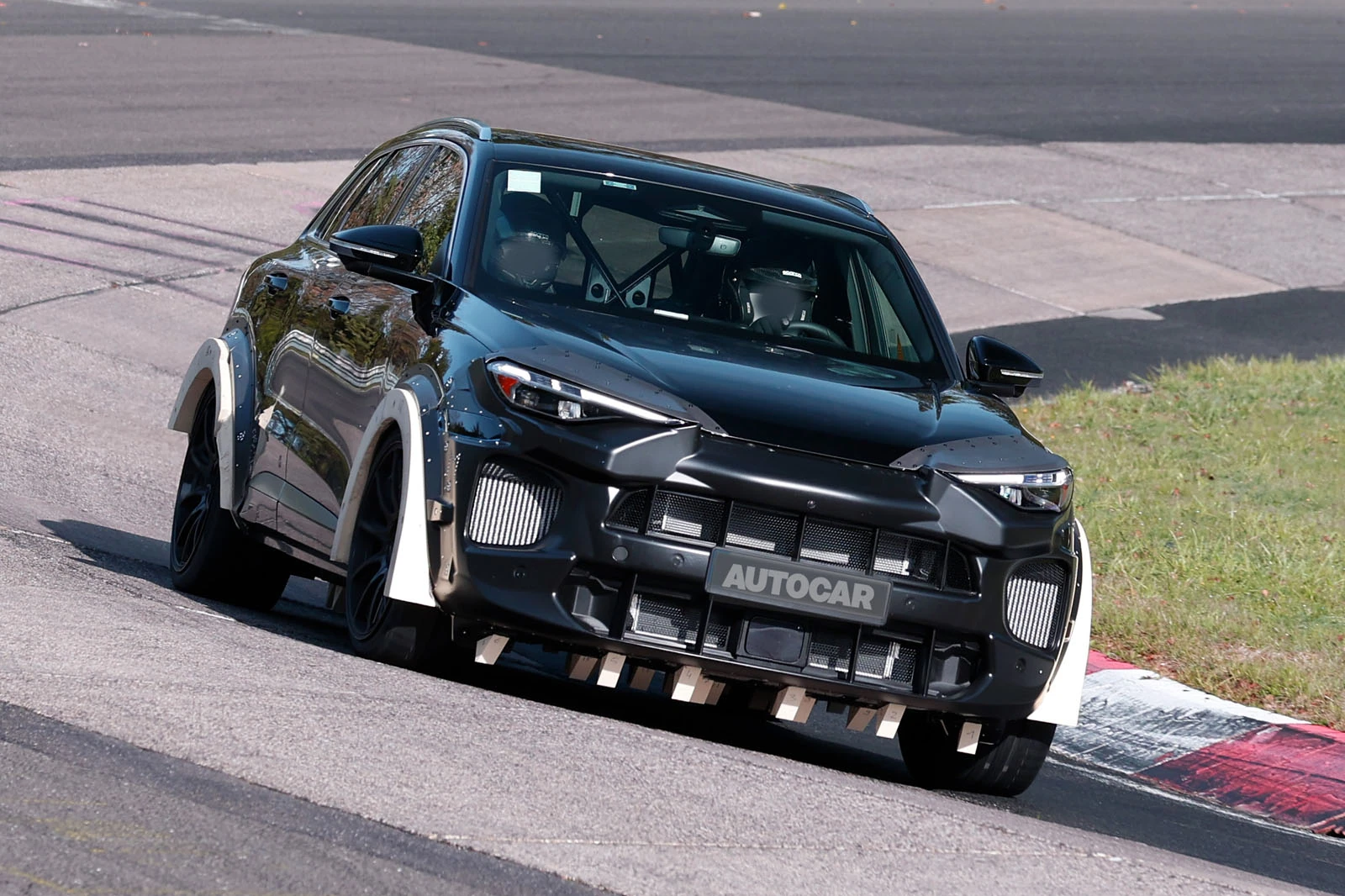
A test mule photographed wearing Porsche's usual black prototype paint shows the new SUV will share the Audi Q5's Premium Platform Combustion underpinnings but sit lower and wider, with wider wheel arches and a larger front grille than the Q5.

A Porsche shape on Q5 bones

The mule's wider arches and bigger grille mark it out from previous prototypes of new Q5 derivatives, and foam blocks around the arches and undertray are used to check ground clearance in real-world conditions. Those blocks are what suggest the production car will sit significantly lower and wider than the Q5, which should give it greater dynamic ability than its Audi sibling.

Porsche declined to comment on the images, but the brand's black prototype paint is a reliable tell: the company uses it on all its test cars, including the 718 Boxster Electric, Cayenne Electric and current Macan Electric.

Design chief: it must look like a Porsche

Little is known about the final styling, but new design chief Tobias Suhlmann has hinted it will look distinct from the Macan Electric.

"First of all, it should look like a Porsche. That is for me the overall target," Suhlmann said. "We've talked about torpedo fenders; you should see them also in an SUV. There are technical needs that are different in an EV and ICE, so you always need to design it in comparison to the technical bits that sit underneath the shape".

That last point matters for buyers weighing the two Macans: because the petrol car rides on a combustion platform rather than the EV's dedicated architecture, its proportions and details will necessarily differ, not just its grille.

Why Porsche is bringing petrol back

CEO Michael Leiters has called the new combustion Macan one of the company's "immediate priorities". The commercial logic is visible in the sales figures: production of the old petrol Macan ended in July, yet it still outsold the EV in the third quarter of this year, with 27,996 examples against 23,029.

Combined Macan sales of 51,025 were down 21% against the third quarter of 2025. Against that backdrop, a parallel-run petrol and electric pair gives Porsche two shots at the segment rather than one, at the cost of running two architectures side by side.

Value over volume

The new Macan forms part of a broader strategic overhaul in which Porsche is targeting profit over volume, making more money from fewer cars. Greater personalisation is central to that, lifting the average transaction price of each sale, a tactic that has paid off for luxury brands such as Bentley and Rolls-Royce.

Porsche is also evaluating the business case for a new mid-engined halo car on the "super-sports car platform" confirmed by Leiters, with the Mission S concept, unveiled tonight, expected to preview that model.

Pricing, engines and specifications for the 2028 Macan have not been announced.

Open this article ↗

Keep scrolling to read the next story.

Older articles →