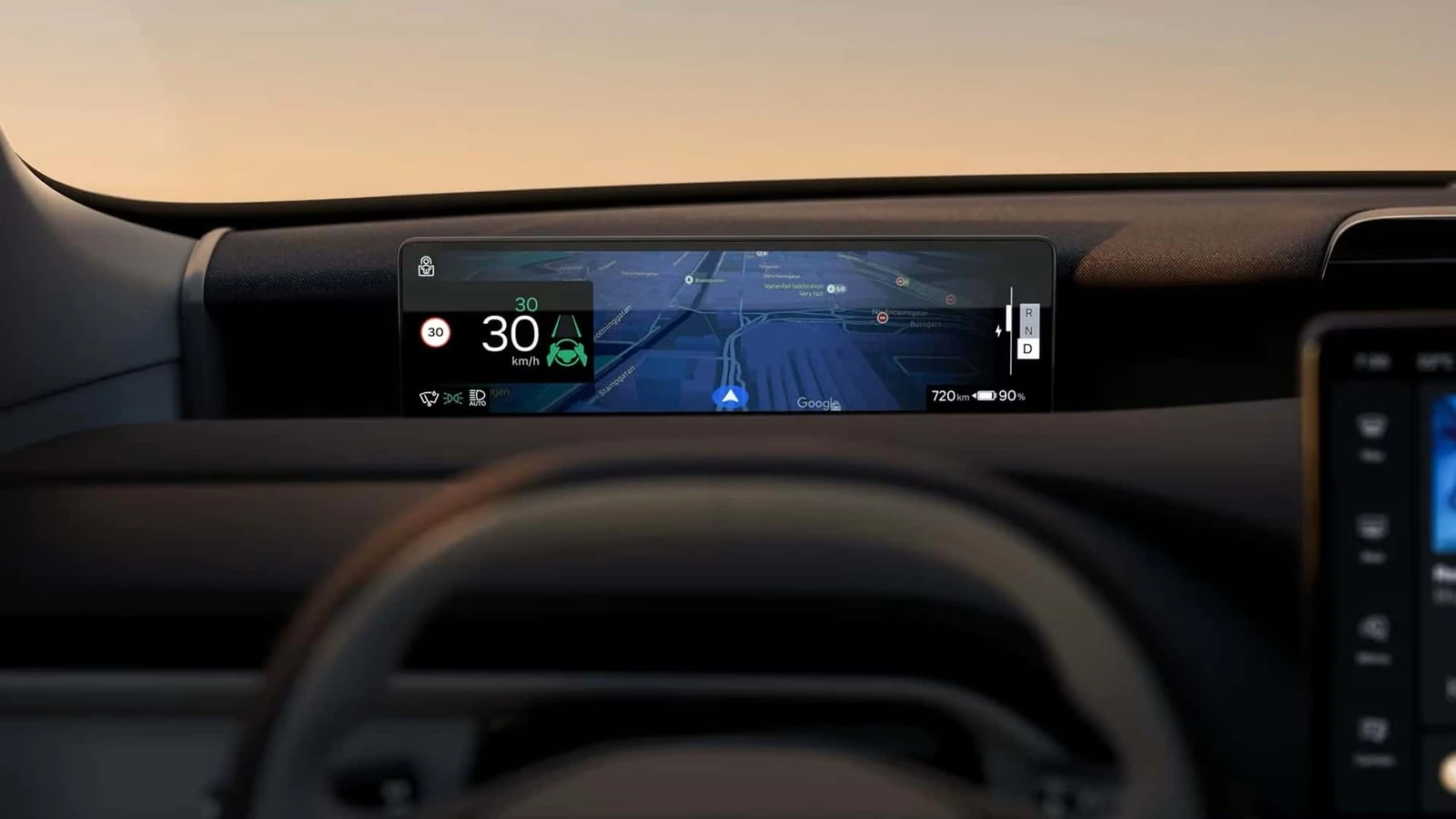
Volvo will use Nvidia's Hyperion platform to bring hands-free, point-to-point automated driving to its next generation of cars, with the new models expected to debut by the end of 2030. The system is designed to work much like Tesla's Full Self-Driving (Supervised) or Rivian's Universal Hands-Free, using cameras and sensors to read the road rather than relying on pre-mapped areas.
Further out, Volvo says the AI-powered setup will eventually deliver 'eyes-off and mind-off' driving, though no timeline has been given and no models have been confirmed for that feature.
What the system will do
The initial setup offers what Volvo calls Level 2++ functionality, a label that does not appear on the Society of Automotive Engineers' official levels of driving automation chart. The automaker says the driver assistance system will cope with complex urban environments without explicit driver intervention, including stop signs, traffic lights and unprotected left turns, according to Ali Kani, VP and general manager of Nvidia's automotive team.
That is a step beyond Volvo's current Pilot Assist, which only works on roads with clear lane markings and bundles adaptive cruise control, steering assistance, lane change assistance and curve speed assistance. The new system, by contrast, is meant to handle point-to-point driving in urban traffic with the driver's hands off the wheel.
The hardware and software behind it
Nvidia's Hyperion platform bundles custom high-powered chips with a full suite of sensors mounted around the vehicle. Volvo will also adopt Nvidia's Alpamayo software stack, which uses 'reasoning' models to interpret complex road conditions and decide when to brake, accelerate or steer.
Nvidia argues that reasoning-based driving improves safety because the vehicle can work through rare situations it was never explicitly trained on, and that the reasoning trace makes each decision transparent and auditable for safety validation. Notably, the initial setup does not include lidar, although the platform can accommodate it if Volvo decides to add it later.
What it means for Volvo
Volvo is staking its safety reputation on a system that must actively adapt to real road conditions while offering true hands-free driving. The company has been under commercial pressure, with sales tumbling to the point where it abandoned its full-year guidance, so a credible driver assistance story could help it win back buyers.
The risk cuts both ways. A system that performs well would strengthen the brand's core selling point at a moment when Volvo needs the momentum. One that frustrates owners would damage the trust the brand has spent decades building.