INDEPENDENT AUTOMOTIVE NEWSGLOBAL PERSPECTIVE / AUSTRALIAN EDITION
TDCNTHE DAILY
CAR NEWS.

The road ahead.
Every day.

RSS ↗
Latest/Safety

156 original articles

Safety / TDCN ORIGINAL

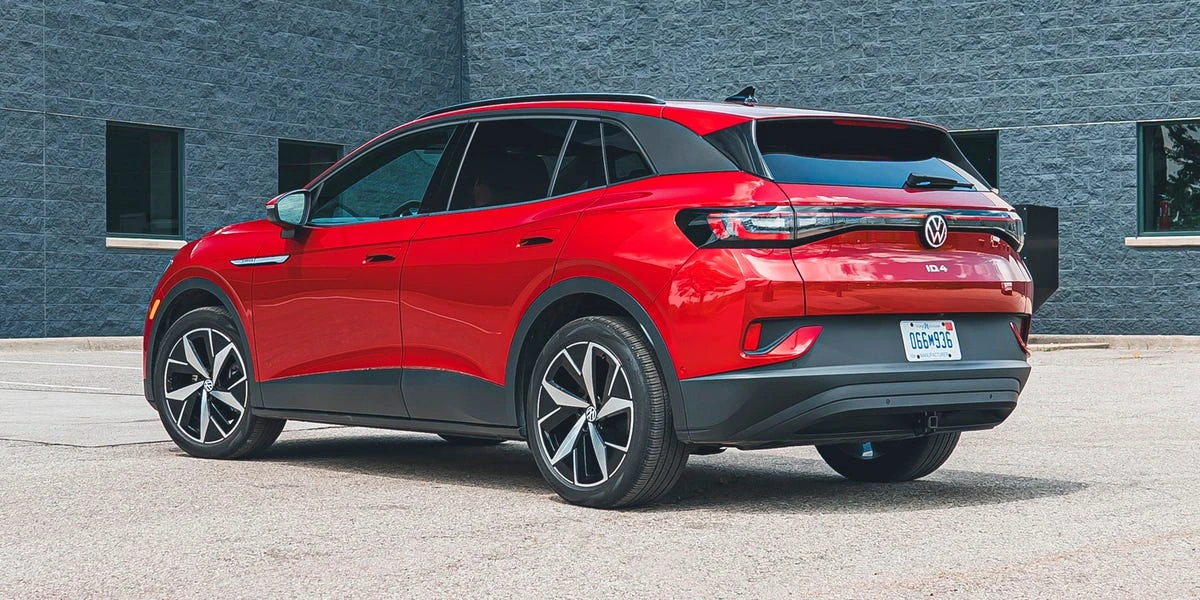
Volkswagen to cap charging at 80 percent on 22,524 ID.4s under fire recall

An over-the-air update will limit state of charge while the company works out why the batteries can catch fire, with owner letters not due until late November.

Volkswagen plans to send an over-the-air update that limits maximum charge to 80 percent on 22,524 ID.4 electric SUVs, according to recall documents filed with the National Highway Traffic Safety Administration. The documents state that the batteries in the affected vehicles could catch fire if certain charging conditions are met while the vehicle is above 80 percent state of charge.

The fix is temporary, and the cause is still unknown

The charge cap is intended as a temporary measure while Volkswagen works toward a permanent remedy. According to the NHTSA documents, the company still is not entirely sure why the batteries are catching fire, and limiting charge to 80 percent or less reportedly helps minimise the risk.

Owners will also receive warning stickers to place on the car telling them not to charge beyond that point. The documents indicate that customers may experience degraded range or performance if the recall conditions are present, so there is no clear warning sign that a given ID.4 is affected beyond the recall itself.

That matters because a charge cap is not a repair. It buys Volkswagen time, but it also asks owners to live with less usable battery capacity in the meantime, and the absence of a definitive root cause means nobody can say yet how long that arrangement lasts.

Dealers know now, owners hear later

Dealers have already been notified of the issue, while owner notification is not scheduled until late November. According to a report from InsideEVs, the over-the-air update will have been in place for nearly a month by the time those letters arrive.

Car and Driver contacted Volkswagen for confirmation of the report and said it would update its story when it learned more. The sources do not specify which model years or trim levels fall within the 22,524 vehicles covered by this action, and that detail has not been announced.

A second ID.4 battery recall in the same year

This is not the first ID.4 recall tied to battery fires in 2025. An earlier action in January covered nearly 44,000 vehicles spanning the 2023 to 2025 model years.

Whether the two campaigns are formally linked has not been confirmed. Car and Driver asked Volkswagen whether the recalls are related and was awaiting an answer at the time of its report.

The scale of the January recall, roughly double the number of vehicles in this update, suggests Volkswagen is narrowing its focus to a subset of cars as it learns more, though the company has not said so publicly. For anyone shopping a used ID.4, the practical consequence is a car that may arrive with a software-imposed 80 percent ceiling and a sticker on the charge port, at least until a permanent fix is ready.
Open this article ↗
New cars / TDCN ORIGINAL

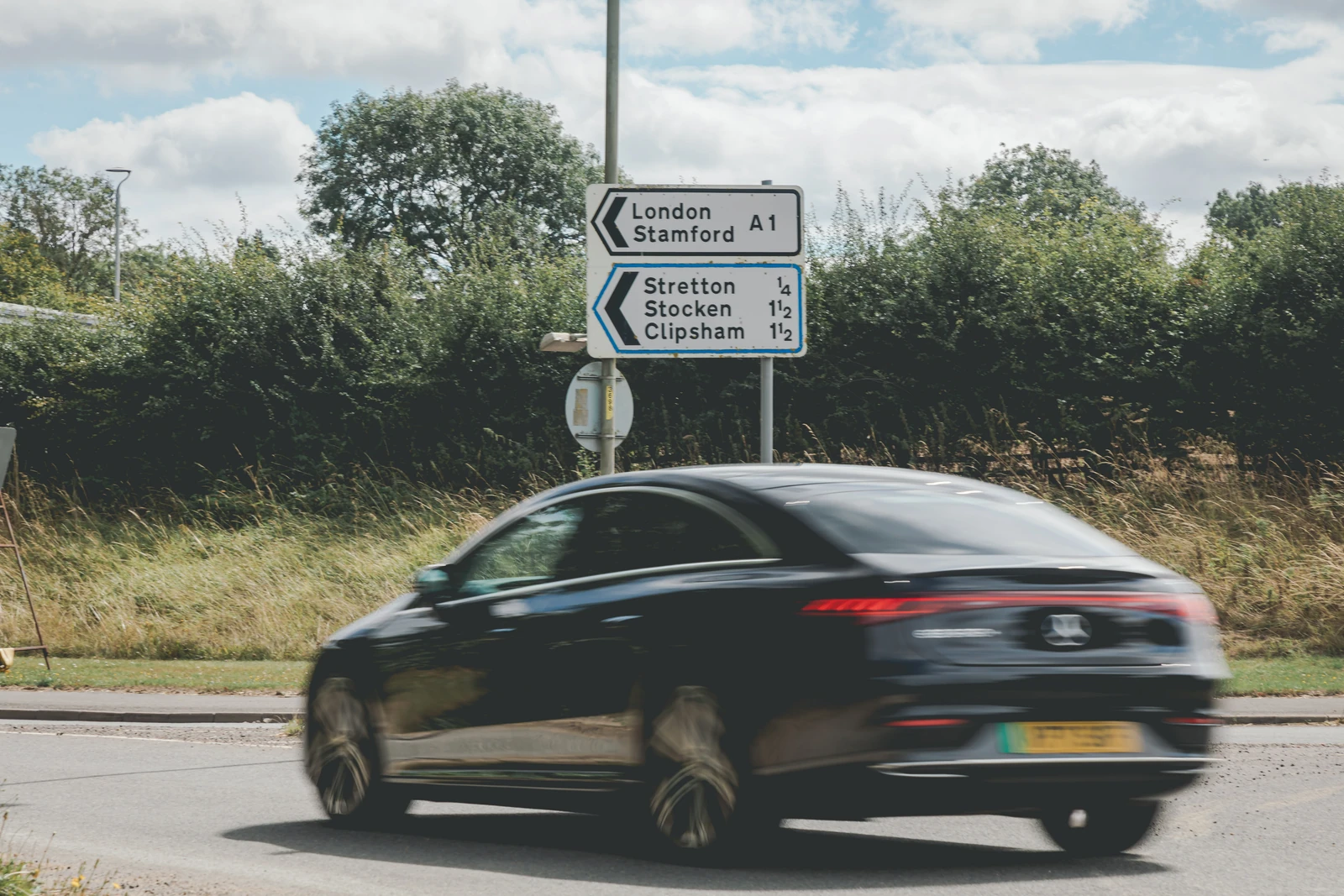
Brego warns used luxury EVs depreciate faster than petrol and diesel equivalents

Valuation specialist Brego cites forecast data showing residual value gaps of up to 6.4% in favour of ICE luxury models, with Volvo the exception.

Used luxury electric cars are depreciating faster than their petrol and diesel equivalents, according to valuation specialist Brego. The company cited forecast data for luxury models from Mercedes-Benz, Porsche, Volvo and Genesis, showing an average retail residual value difference of 1.9% at one year old, 0.7% at two years, 0.9% at three years and 1.3% at four years, all in favour of the ICE version.

The models analysed were the Mercedes EQS and S-Class, the Porsche Taycan and Cayenne, the Volvo XC90 and EX90, and the Genesis G80 and Electrified G80. Brego's head of insight and communication, Rupert Pontin, told Autocar that the residual value percentage is generally lower for luxury EVs, pointing to the pace of battery evolution as a partial driver.

Mercedes shows the widest gap

Mercedes recorded the starkest difference between EV and ICE residual values, which broadly increased over time. The ICE version held a 5.9% advantage at one year old, 5.4% at two years, 6.3% at three years and 6.4% at four years.

Volvo was the only one of the four manufacturers with a retained value bias in favour of the EV, consistent over the four years and again increasing over time. It was 0.8% at one year, 1.4% at two years, 1.6% at three years and 1.9% at four years.

Battery evolution cited as a driver

Pontin told Autocar that the reasoning is partly the arrival of solid-state batteries, which could double the range of today's luxury EVs. He questioned who would want a used luxury car, often used as a chauffeur or private hire vehicle, when at a year old or in two, three or four years it has that range. Even without jumping to solid-state, he said, battery evolution is constant and that is partially a driver.

The analysis covers forecast data for specific luxury models, not the entire electric car market. Brego's figures compare like-for-like pairs from four manufacturers, and the sources do not indicate whether the depreciation gap applies to cheaper electric cars or only to luxury models.

Tax changes shaped fleet choices

Although flagships such as the S-Class are not typically found on conventional fleet choice lists, some company car drivers opted for prestigious, well-specified EVs when benefit-in-kind tax on EVs was reduced to 0% in April 2020. That rate has since risen to 4% and is poised to hit 9% in 2029/2030, but remains significantly lower than BIK tax rates for ICE cars.

Where employers and suppliers permitted it, drivers who may previously have chosen a BMW 3 Series company car or equivalent have plumped for more aspirational models, according to Peter Golding, managing director of fleet software and management specialist Fleetcheck.

Cash values not disclosed

The sources give the residual value gaps only as percentages, not as cash amounts. Brego's forecast data does not state the monetary difference in pounds between the EV and ICE models at each age, and no cash values have been announced.

Open this article ↗

Keep scrolling to read the next story.

Older articles →