INDEPENDENT AUTOMOTIVE NEWSGLOBAL PERSPECTIVE / AUSTRALIAN EDITION
TDCNTHE DAILY
CAR NEWS.

The road ahead.
Every day.

RSS ↗
Latest/Australia

136 original articles

Australia / TDCN ORIGINAL

Volkswagen confirms Chinese-built cars will be sold in Australia

Brand CEO Thomas Schäfer named Australia among the first export markets for Chinese-made Volkswagens, but the models, timing and prices have not been announced.

Volkswagen will sell Chinese-built cars in Australia, brand CEO Thomas Schäfer has confirmed. Speaking to Autocar at the Paris motor show, Schäfer named Australia among the markets set to receive vehicles exported from China, alongside the Middle East.

Schäfer framed the move as a push into markets with easier access from China than Europe. "We're starting now to export to the global south and countries that have easier access from China than Europe, such as Australia and the Middle East," he said. "For the future, we're getting ready for bringing one or more vehicles in from China".

What has not been announced

The confirmation leaves the practical questions open. Schäfer did not say which models would be sold in Australia, whether they would be versions of cars already sold elsewhere or nameplates developed specifically for the Chinese market, when they would arrive, or what they would cost. Volkswagen Australia has yet to announce any Chinese-built models for its local lineup.

That gap matters for buyers trying to plan a purchase. Until Volkswagen Australia names the models and the launch dates, there is nothing concrete to compare against the brand's existing European-built range, and no Australian pricing or specification to weigh up.
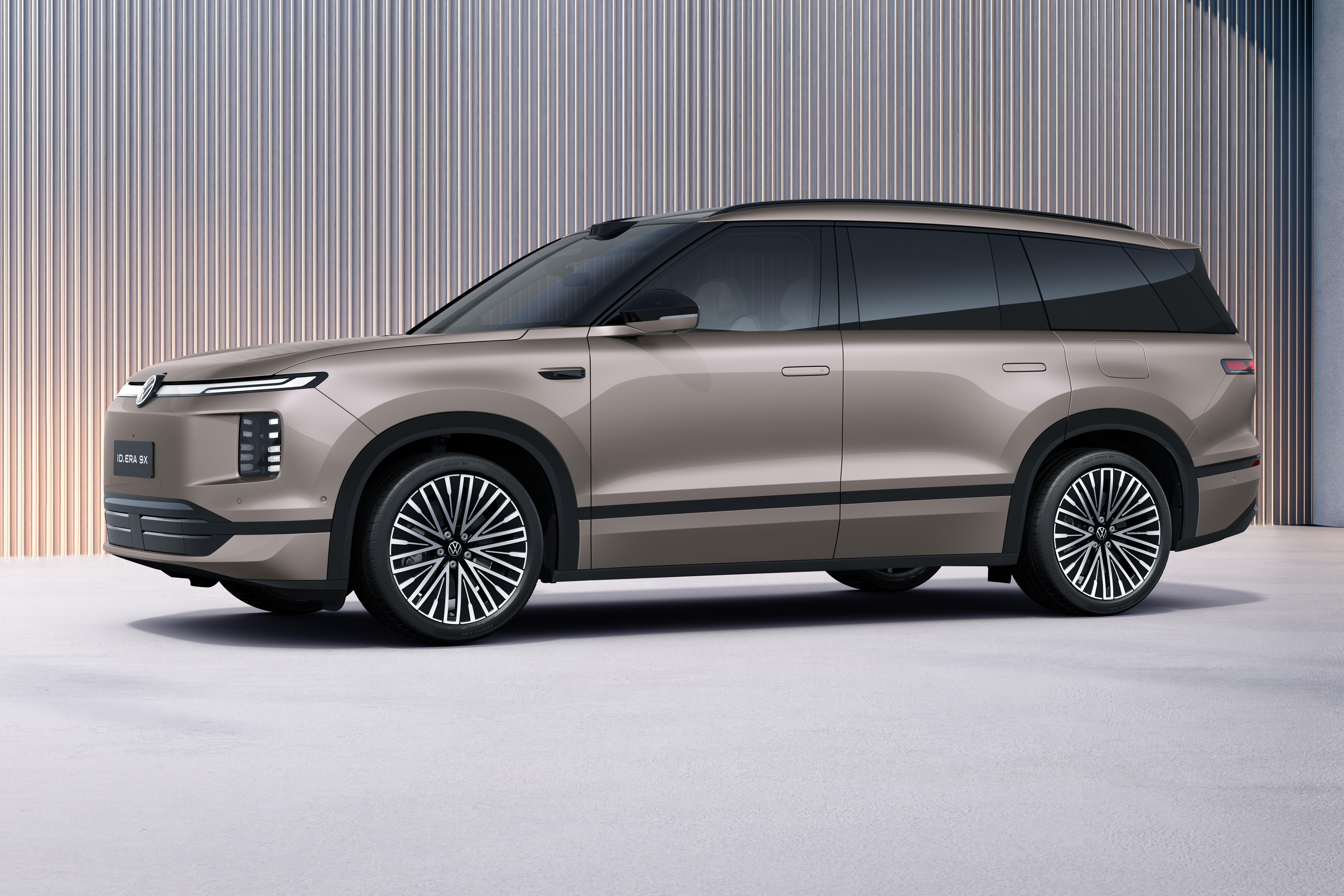
A Chinese-built Volkswagen SUV model that could reach Australian showrooms
A Chinese-built Volkswagen SUV model that could reach Australian showrooms, Image: CarExpert

A shift in how Volkswagen sources its cars

Schäfer said Chinese-made models would likely supplement Volkswagen's existing European lineup, which is largely built in Germany and Spain. The brand produces vehicles in China through partnerships with SAIC, FAW and JAC.

The product mix available from those Chinese operations is broad. Local versions of the Golf, Passat, Tiguan and Tayron are built there, alongside China-specific nameplates including ID. Era, ID. Aura, Lavida, Lamando, Talagon and Tavendor. SAIC, which owns MG Motor, builds China-specific Volkswagens such as the ID. Era 9X, a 5.2-metre-long six-seat SUV with an extended-range electric powertrain unveiled in January.

Volkswagen plans to introduce more than 30 new electrified models in China by 2029, spanning battery-electric, plug-in hybrid and range-extender powertrains. That pipeline is the likely pool from which Australian exports would be drawn, though the company has not said so.
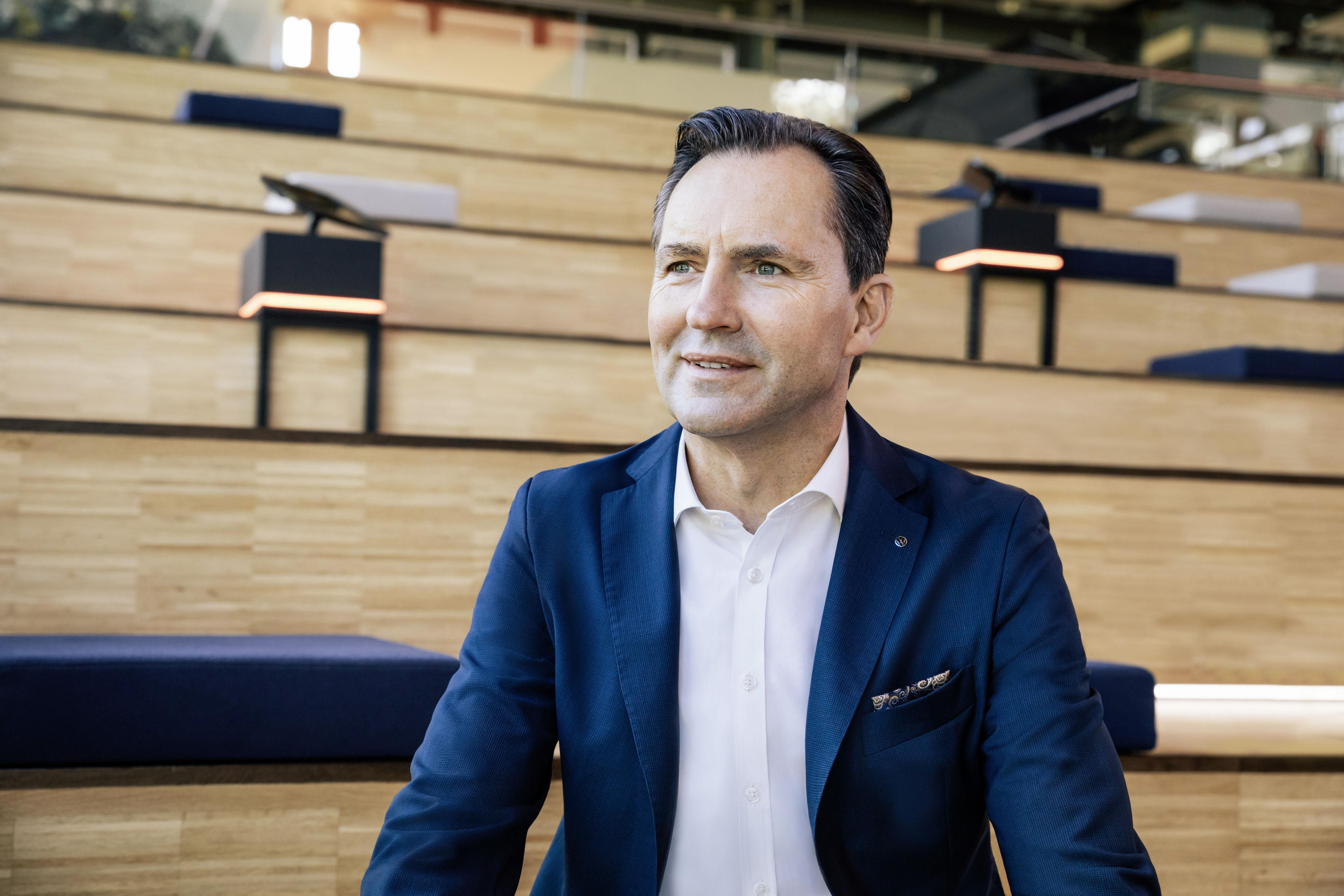
Volkswagen executives outline the brand's new China-sourced vehicle strategy for Australia
Volkswagen executives outline the brand's new China-sourced vehicle strategy for Australia, Image: CarExpert

Not Volkswagen's first Chinese-built car for Australia

The brand was the first official vehicle distributor to offer a Chinese-made passenger car in Australia, bringing Polo Classic sedans built by Shanghai Volkswagen at Anting, near Shanghai, to local showrooms in 2004.

Volkswagen began negotiations on Chinese production in 1978, with its first locally assembled Santana rolling off the line in 1983. Its Volkswagen-brand manufacturing operations now span 13 vehicle assembly plants and 21 component plants in China.

The export push comes as Volkswagen looks to rebound from sluggish global sales. The brand was the best-selling auto brand in China from 1986 until 2022, when BYD took the top spot in 2023.

For Australian buyers, the significance is less about heritage than about what lands in showrooms. Chinese-built Volkswagens would sit alongside European-built cars rather than replace them, according to Schäfer's description, which suggests the brand is widening its lineup rather than switching its sourcing wholesale. The unanswered question is whether those cars will be priced to compete with the Chinese brands already selling strongly here, or positioned as premium additions above the existing range.

Volkswagen's Chinese-built electric SUV lineup, now confirmed for Australia
Volkswagen's Chinese-built electric SUV lineup, now confirmed for Australia, Image: CarExpert
Open this article ↗
Australia / TDCN ORIGINAL

BYD Yangwang U8 gains Australian design rule certification, but launch still unconfirmed

The flagship plug-in hybrid SUV has appeared in the government approval database in a single five-seat variant, though BYD Australia says it is too early to discuss local plans.

BYD's flagship Yangwang U8 has taken a step toward Australian showrooms after receiving Australian Design Rule (ADR) certification, with the luxury SUV now listed in the federal government's road vehicle approval database.

The approval covers a single variant of the regular-length, five-seat U8, and does not include the extended-length, six-seat U8L. BYD Australia said it was too early to comment on launch plans, and as recently as August 2026 the company confirmed it had no plans to bring the U8 here.

What the approval documents show

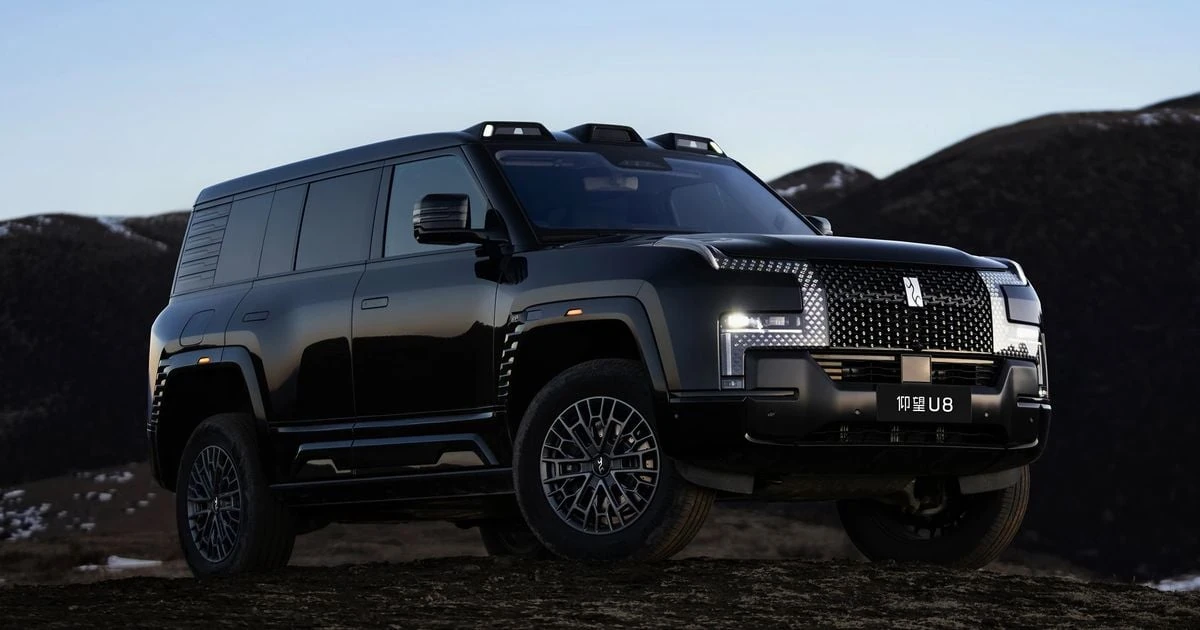
The filing lists a 145kW turbocharged 2.0-litre four-cylinder petrol engine paired with four 220kW electric motors, for a total system output of 880kW. A combined torque figure does not appear in the documents, though the U8 is listed at 1520Nm overseas, where BYD claims a 0-100km/h time of 3.5 seconds.

Tare weight is recorded at 3644kg, braked towing capacity at 3500kg, and buyers would be offered a choice of 20- or 22-inch alloy wheels. The filing lists Yangwang as the brand name rather than Denza, which raises the possibility that BYD is preparing to introduce another brand locally.

ADR certification is a compliance milestone rather than a sales commitment. A vehicle can sit in the approval database for some time before a launch is confirmed, so the listing should be read as a sign that paperwork is progressing, not as a firm on-sale date.

A plug-in hybrid in name, an EREV in practice

BYD describes the U8 as a plug-in hybrid (PHEV), and the approval documents follow suit, but the vehicle is more accurately an extended-range electric vehicle (EREV). Chinese-market specifications list a 56.58kWh lithium iron phosphate (LFP) battery with 230km of electric-only range on the CLTC cycle and 1205km of total combined range.

Those figures come from the Chinese CLTC test cycle and are not directly comparable with the WLTP or EPA cycles used for Australian and European fuel and range labelling. Buyers should expect local numbers to differ if the U8 is eventually sold here.

Off-road hardware and showpiece features

The U8 uses body-on-frame construction, as do the Denza B5 and B8 large off-road SUVs already sold in Australia, and it has locking front and rear differentials. It also features an intelligent hydraulic body control system called DiSus-P+, along with 'crab walk' and 'tank turn' functions and an emergency flotation capability that lets it stay afloat and manoeuvre in deep water for a limited time.

Inside, the U8 leans upmarket with a leather-lined cabin and an array of large screens.

BYD Australia has previously said the U8 has "many innovative features and technologies we are assessing in local conditions, some of which may trickle down to other models that could eventually be sold here". That wording points to a technology-scouting exercise as much as a sales plan, and it suggests some U8 systems could reach cheaper models even if the flagship itself never arrives.

Yangwang's place in the lineup

Yangwang sits above Denza as BYD's flagship brand, and it has yet to be confirmed for an Australian launch. First customer deliveries of Denza models in Australia only began early this year.

Local sightings of the U8, including spots shared by the CarsAustralia Reddit community, have fuelled speculation about an Australian debut. The approval filing gives that speculation a paper trail, but it does not settle the question of whether the U8 will be sold here, at what price, or when. No Australian pricing or launch timing has been announced.

Open this article ↗

Keep scrolling to read the next story.

Older articles →