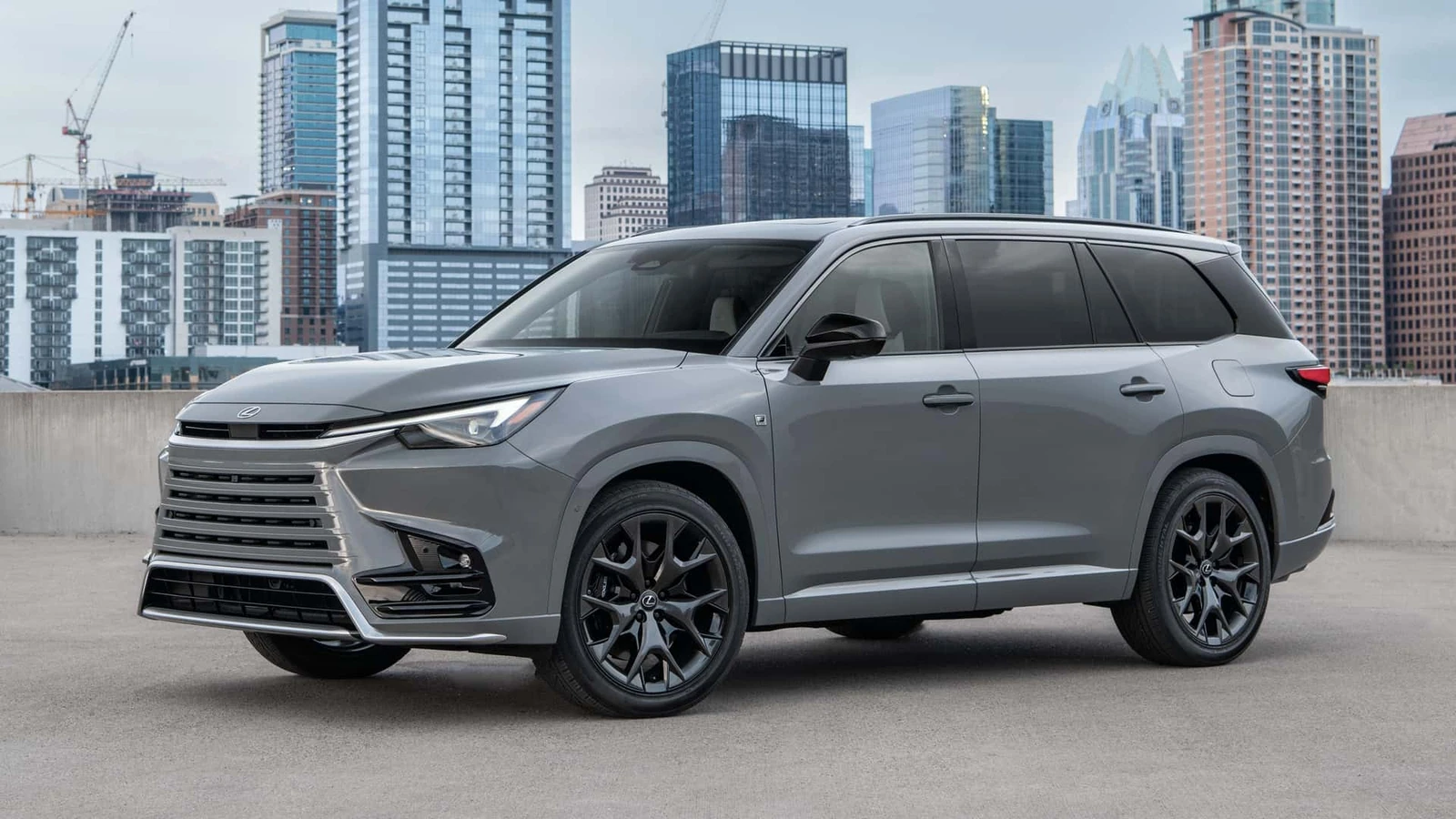
Lexus has confirmed the TX 550h+ plug-in hybrid will not return for the 2027 model year, ending the three-row SUV's most electrified variant after a single generation on sale. The TX, launched for 2024, now offers just two powertrains for 2027: the TX 350 gasoline model and the TX 500h conventional hybrid.
Lexus has not publicly stated why the plug-in was dropped. The decision lands as the brand prepares to add the all-electric, three-row TZ SUV, which arrives for 2027 as an all-wheel-drive battery-electric alternative sitting alongside the gasoline and hybrid TX.
What replaces the plug-in
Buyers who want a three-row Lexus with a charge port are now pointed toward the upcoming TZ battery-electric model rather than a plug-in TX. Neither of the two remaining TX powertrains plugs in, so neither qualifies for the federal electric vehicle tax credit the 550h+ could claim.
The TZ's price, battery size and range have not been announced in the material available, so it is not yet possible to say how it compares with the TX 550h+ on cost or electric-only driving.
The two remaining TX powertrains
The TX 350 starts at $58,890 and uses a turbocharged 2.4-liter inline-four rated at 275 horsepower and 317 pound-feet of torque, paired with an eight-speed automatic. It is the only TX offered with front-wheel drive, though all-wheel drive is available across every trim; the optional AWD system shifts power from a 75:25 front-rear split to 50:50 depending on conditions. Fuel economy tops out at 23 miles per gallon combined.
The TX 500h is all-wheel drive only and starts at $72,410, $13,520 more than the base TX 350. Its hybrid system is built around the same 2.4-liter engine plus a 64-kilowatt front motor and a 76-kilowatt rear eAxle, for a combined 366 horsepower and 27 miles per gallon combined.
Lexus Safety System+ 3.0 is standard across the 2027 TX range, and the feature set carries over from 2026 at the same starting price, making the loss of the plug-in the main mechanical change this year.
Why the plug-in went
Public data confirm total TX sales volume in the United States each year but do not break out official powertrain splits for the TX 350, TX 500h and TX 550h+ in 2025 or 2026, so how many TX 550h+ models Lexus actually sold has not been disclosed.
The broader market pattern is clearer: conventional hybrid versions of three-row luxury crossovers outsell plug-in hybrids by a wide margin, particularly when the plug-in carries a higher sticker price and needs home charging to deliver its best fuel savings. That pattern fits the TX's position, where the plug-in sat above the conventional hybrid on price while depending on owners plugging in to realise its advantage. Dropping it simplifies the lineup for shoppers who never intended to charge at home, and hands the plug-in role to a dedicated EV instead of a compromised compromise.