INDEPENDENT AUTOMOTIVE NEWSGLOBAL PERSPECTIVE / AUSTRALIAN EDITION
TDCNTHE DAILY
CAR NEWS.

The road ahead.
Every day.

RSS ↗
Latest/New cars

109 original articles

New cars / TDCN ORIGINAL

Porsche Mission S concept shows the driver-first details planned for its flagship above the 911

A red button kills the driver aids, the phone replaces the central screen and the tachometer physically moves closer to the driver.

Image: Motor1

Porsche has revealed the Mission S, a concept that previews a new flagship supercar destined to sit above the 911 as a permanent member of the lineup rather than a limited-run special. It is mid-engined and is not simply another 911 variant, though Porsche has not yet said when the production car arrives, what it will cost, or whether it will be electric or combustion powered.

Instead of chasing headline numbers, the concept concentrates on how the driver interacts with the car: a cockpit that mixes old-school sports car rituals with modern technology, laid out in detail by Tobias Sühlmann, Head of Style at Porsche, in a walkaround video.

The production car's powertrain, on-sale date and price have not been announced. What Porsche has confirmed is positioning and hardware direction: the platform is being engineered to support a manual gearbox alongside the PDK dual-clutch the concept wears, with a third pedal depending on customer demand.

One button to silence the electronics

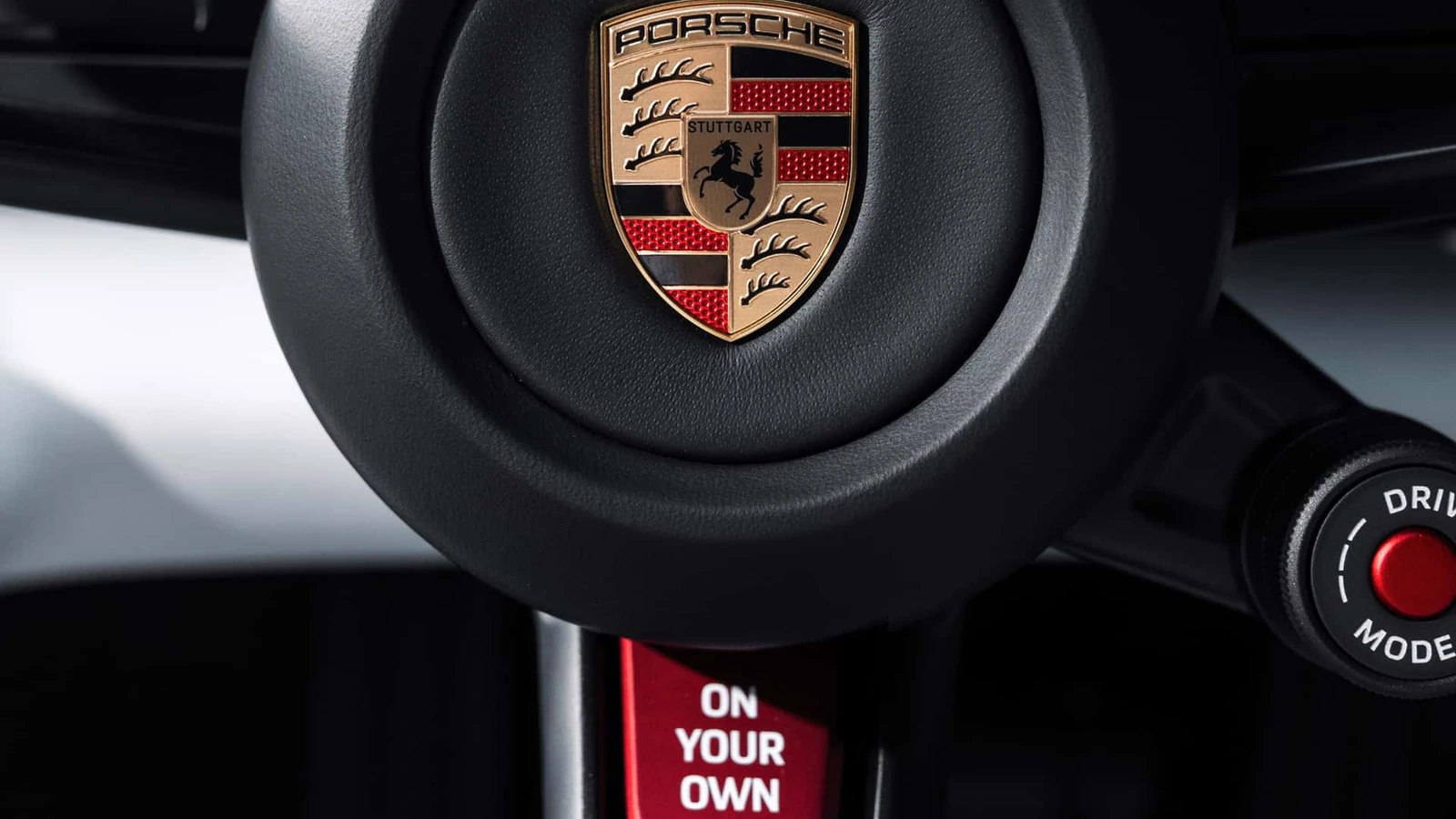
A dedicated red button on the steering wheel activates an 'On your own' mode that switches off the driver assistance systems in one press, no menu diving required.

That is a pointed answer to a real trend: assistance systems grow more intrusive with every generation, nudging the wheel and pinging warnings. A physical kill switch treats the driver as the default, not the exception.

Your phone is the infotainment

There is no permanently integrated central touchscreen and no passenger display. Instead there is a retractable holder compatible with Apple's MagSafe, so the driver's own phone serves as the navigation and information display and disappears when it is not wanted.

The My Porsche app unlocks the car's functions and allows the digital instrument graphics to be customised with heritage-inspired designs.

Porsche is not abandoning screens, it is refusing to duplicate one the owner already carries. The idea has history in the Volkswagen Group, appearing years ago on the VW up!, and even entry-level Dacias use a similar setup.

A gear lever you can feel, and maybe a clutch pedal

The Mission S has a height-adjustable gear lever built around tactile feedback, so selection feels physical rather than like another digital command. The concept uses a PDK, but Porsche has confirmed the platform is engineered for a manual too, with production hinging on how many buyers ask for one.

At a time when rivals replace conventional controls with touch surfaces, a substantial lever is a deliberate statement, and a proper manual would be the natural next step.

The key slot returns

A specially designed aluminium key slots into a holder to the left of the steering wheel, the traditional Porsche layout rooted in endurance racing. Zuffenhausen deleted the feature from the 911 facelift, so its return here is a small but pointed gesture.

Gauges that physically move

The five round instruments blend classic sports car styling with digital function. The central tachometer carries a real analog needle over a digital display, and depending on the driving mode it physically moves closer to the driver to make engine speed easier to read. The surrounding instruments also rearrange, sitting side by side or stacking behind one another as the mode demands.

The comparison that comes to mind is the Lexus LFA's movable display, but Porsche's version makes digital tech feel mechanical rather than merely animated.

Seats, buckles and a fan with a pedigree

The sports seats carry an integrated seatbelt buckle in the centre bolster, a motorsport-inspired layout that cleans up the cabin, and the electric seat controls have been repositioned. Whether the buckle survives to production is an open question.

At the rear, a central fan pays tribute to the 917 and works as a functional cooling solution rather than a retro flourish, echoing the race car that cemented Porsche's endurance racing reputation. It fits the concept's habit of putting functional hardware on display instead of hiding it.
Open this article ↗
Performance / TDCN ORIGINAL

DeLorean enters flying-car racing as first American constructor in 2026-27 Airspeeder series

The brand will race a rebadged Airspeeder Mk3C this season, with a student-designed aircraft promised for 2027-28 alongside UC Berkeley and Georgia Tech.

Image: Carscoops

DeLorean will enter the Airspeeder flying-car racing International Series as its first American constructor, debuting at the season opener in Adelaide this November. The 2026-27 series begins next month, with the DeLorean Team representing the United States.

The catch is that the first-season entry is largely a livery exercise. DeLorean will race the existing Airspeeder Mk3C rather than an aircraft of its own, with its initial contribution limited to design identity and team presentation.

The announcement comes from Airspeeder itself, which introduced DeLorean as the championship's first American constructor ahead of the 2026-27 International Series. A specific race date and venue for the Adelaide opener have not been confirmed publicly.

For a brand whose promised road car has slipped repeatedly, the racing programme is at least a way to put the name in front of people again. Whether a badge-engineered racer moves the needle is another question.

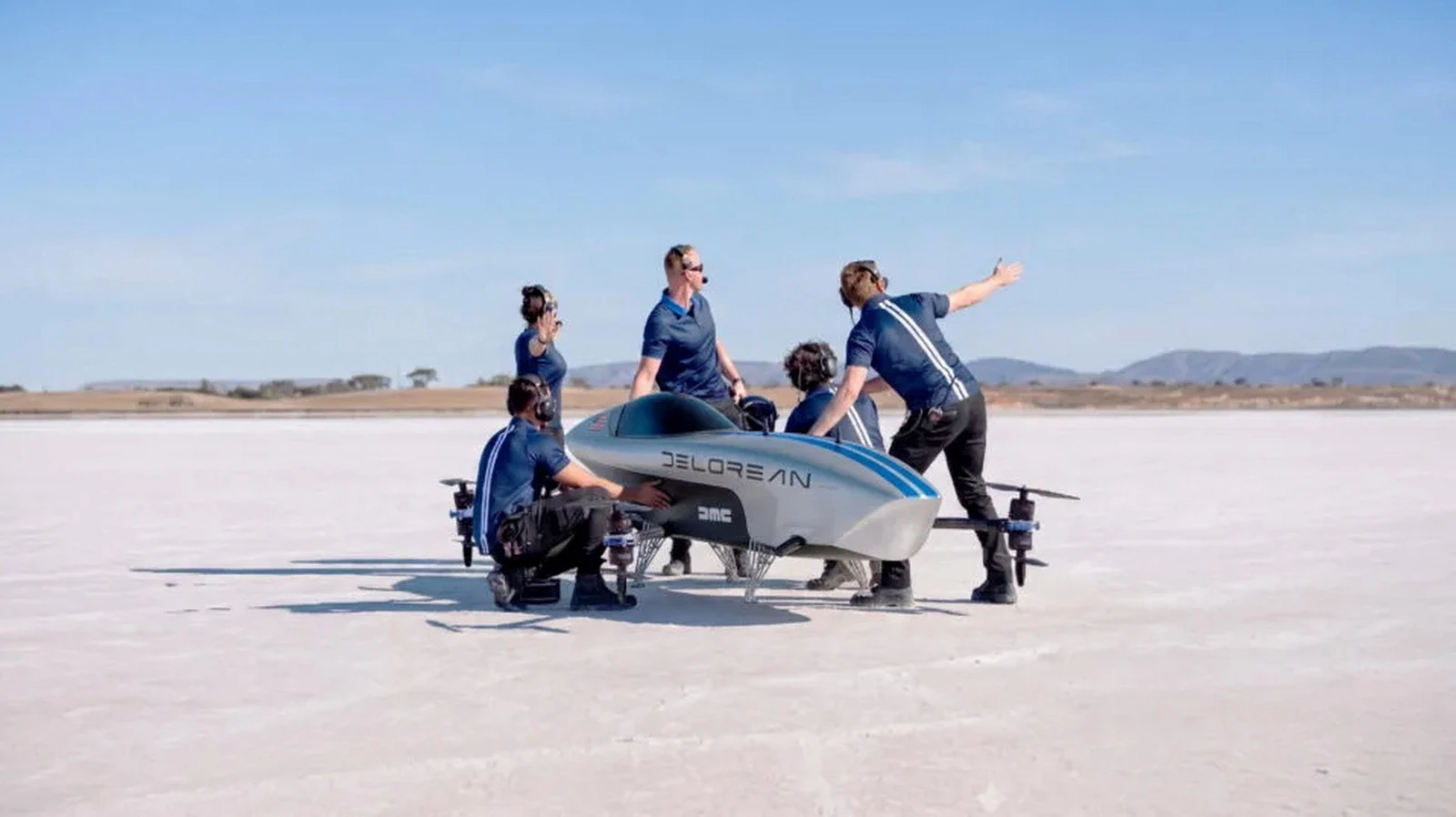
DeLorean's Airspeeder entry is readied by crew on the salt flats ahead of its 2026-27 racing debut
DeLorean's Airspeeder entry is readied by crew on the salt flats ahead of its 2026-27 racing debut, Image: Carscoops

The fine print on the first season

Rather than arrive with an in-house aircraft, DeLorean will run the existing Airspeeder Mk3C in its debut season. Its contribution for 2026-27 is described as leading its own design identity, which in practice means how the aircraft looks and how the team presents itself.

The comparison to badge-engineering may even be generous. The DeLorean pit-stop image in the announcement appears to reuse the same crew, poses and background from an earlier Airspeeder Team Australia photo, with only the branding changed.

The more substantial engineering is scheduled for the following season. For 2027-28, DeLorean plans an aircraft designed with American university engineering students, including collaborators at UC Berkeley and Georgia Tech.

What is still to be revealed

The pilot lineup, the aircraft design and the sporting program are all still due to be announced ahead of the season opener next month. The cost of the racing programme has not been disclosed.

That leaves a short window for DeLorean to fill in the details. A debut next month with no named pilots and no confirmed race date or venue is an unusual position for a new constructor, and it suggests the entry came together late.

The road car is still missing

None of this changes the status of the Alpha5, the car that was supposed to mark DeLorean's return to production. Unveiled in 2022 with gullwing doors and a body styled by Italdesign, the all-wheel-drive four-seater was claimed at 300 miles (483 km) of range and 0-60 mph in 2.99 seconds, with sales promised for 2024.

That timing came and went, and the production car has not materialised. The racing programme does not alter that, but it does keep the brand visible while the road car remains overdue. For a company that has spent four years promising a comeback, a flying racer with someone else's hardware underneath is a thin result, even if the 2027-28 student-built aircraft adds real substance later.

Open this article ↗

Keep scrolling to read the next story.

Older articles →