INDEPENDENT AUTOMOTIVE NEWSGLOBAL PERSPECTIVE / AUSTRALIAN EDITION
TDCNTHE DAILY
CAR NEWS.

The road ahead.
Every day.

RSS ↗
Latest/New cars

621 original articles

New cars / TDCN ORIGINAL

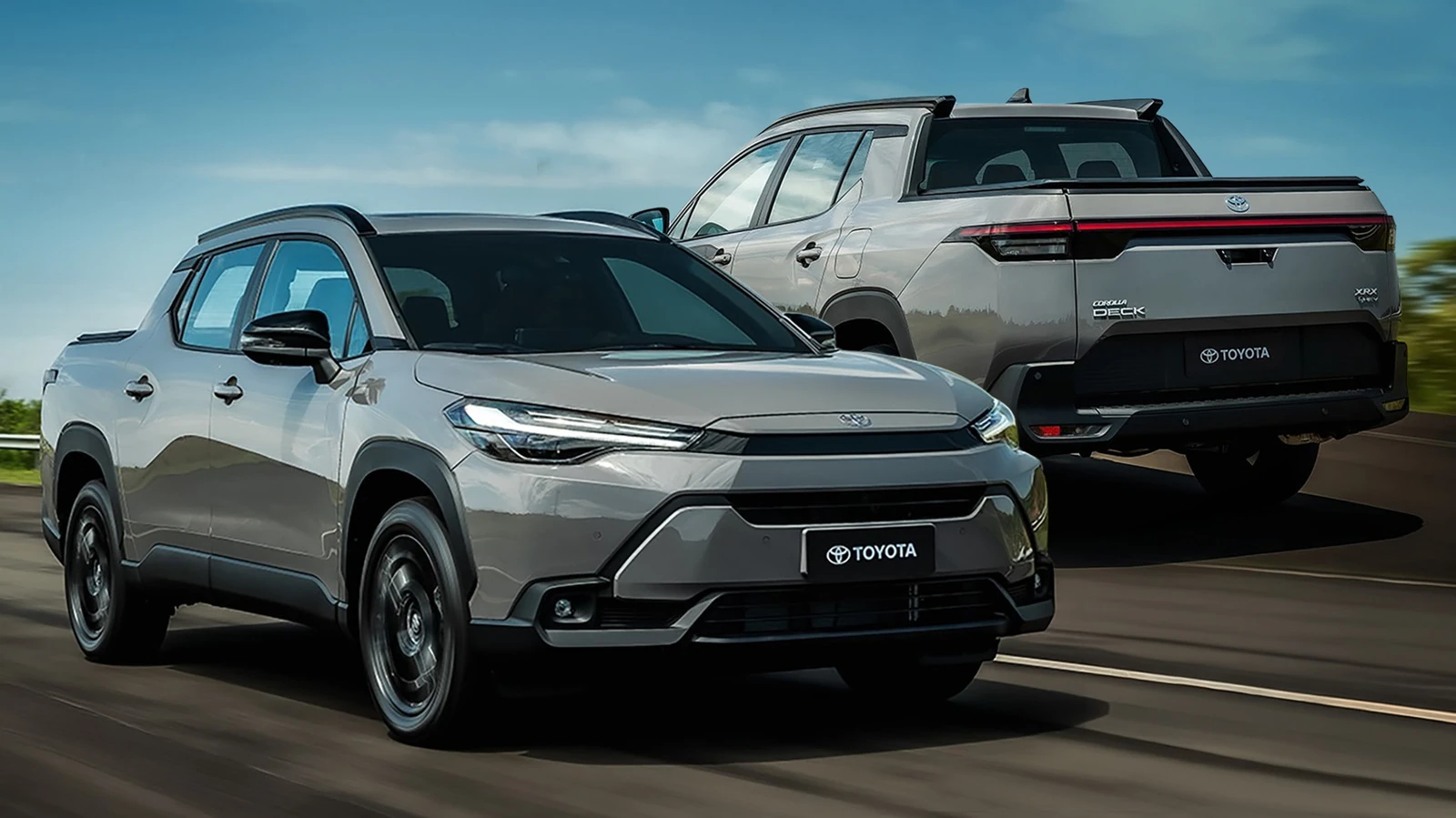
Toyota unveils Corolla Deck compact hybrid pickup in Brazil

The unibody truck is built on Corolla Cross underpinnings and goes on sale in Brazil next year, but Toyota has not confirmed a US launch.

Image: Carscoops

Toyota has revealed the Corolla Deck, a compact pickup built on the same unibody platform as the Corolla Cross, with production in Brazil and a market launch planned for next year. It is the first time Toyota has put a pickup bed behind the Corolla nameplate, 60 years after the badge was introduced.

The truck is a Brazil-only proposition for now, and Toyota has not announced pricing or detailed specifications.

What the Corolla Deck is

The Corolla Deck is a unibody compact pickup that shares its headlights, hood, front fenders, windshield, front doors, mirrors and roofline with the Corolla Cross. The front bumper appears to be borrowed from the Chinese-market Frontlander, with a body-coloured insert, new cooling intakes and repositioned fog lights.

The rear is entirely new: a longer wheelbase and stretched rear overhang create room for a small bed behind the five-seat cabin, and the truck gets full-width LED taillights, a bed cover, a custom tailgate and a rear bumper with an integrated step. Toyota has not shown the interior, though it is expected to mirror the crossover's dashboard layout with possible new trim and truck-specific features.

The HEV badge on the tailgate confirms a self-charging hybrid powertrain, and Toyota will most likely offer all-wheel drive at least as an option. A flex-fuel plug-in hybrid running on petrol, ethanol or electricity has been rumoured for the future, but that has not been confirmed. Photos from the presentation suggest a multi-link rear suspension, likely retuned for a higher payload.
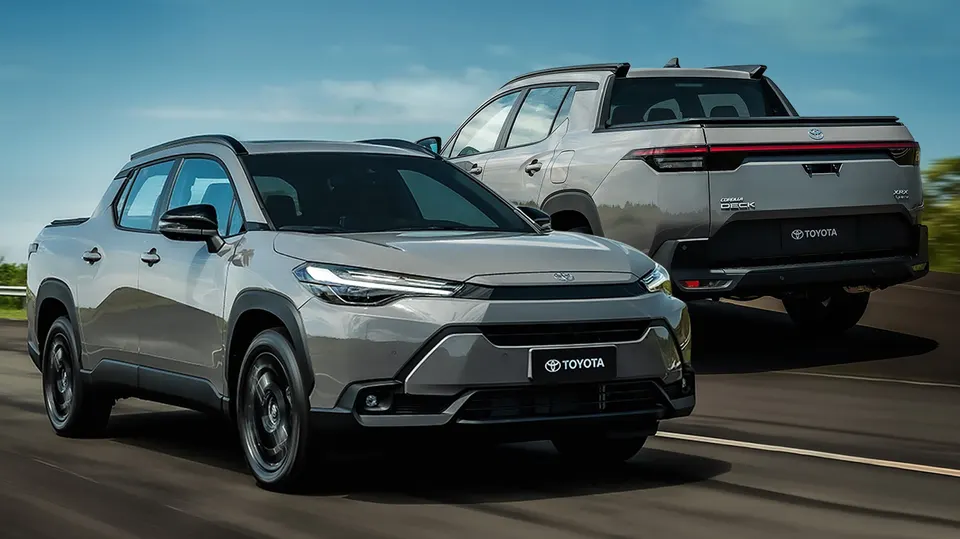
The Corolla Deck, Toyota's new compact hybrid pickup, shown in motion in Brazil
The Corolla Deck, Toyota's new compact hybrid pickup, shown in motion in Brazil, Image: Carscoops

Where it will be built

Production will take place at Toyota's new Sorocaba 2 plant in Brazil, part of a R$ 11.5 billion (about $2 billion) investment in the country through 2030. The plant will start with a capacity of 100,000 units a year, lifting Toyota's total Brazilian output to 270,000 units a year.

The Corolla Deck enters a crowded South American segment that already includes the Fiat Toro and Ram Rampage, with the Volkswagen Tukan, Renault Niagara and BYD Mako also on the way. That competition matters because the compact unibody pickup class is filling out fast, and Toyota is arriving after several rivals rather than before them.

No price yet, and no US confirmation

Toyota has not announced pricing for the Corolla Deck, and detailed specifications beyond the hybrid powertrain remain unconfirmed. More information is expected in the coming months ahead of the launch next year.

North American buyers hoping for a Ford Maverick rival will have to wait. Toyota Motor North America CEO Tetsuo Ogawa said earlier this year that the larger RAV4 is the more likely foundation for a future US-market compact pickup, and that such a project takes time. The Corolla Deck may therefore not be the truck America gets, even though it is the one Toyota has just shown.

What it means for buyers

For Brazilian buyers, the Corolla Deck offers a hybrid compact truck from a brand with a long-established dealer and manufacturing footprint in the country, built on running gear already proven in the Corolla Cross. The hybrid badge is the notable part: most of its direct rivals are not confirmed as hybrids, so Toyota is leaning on fuel economy in a segment where that has not been a given.

For everyone else, the Corolla Deck is a reminder that Toyota's compact pickup strategy is regional. The company is building where the demand and the plant capacity are, and North America's turn, whenever it comes, looks set to use a different base vehicle.
Open this article ↗
New cars / TDCN ORIGINAL

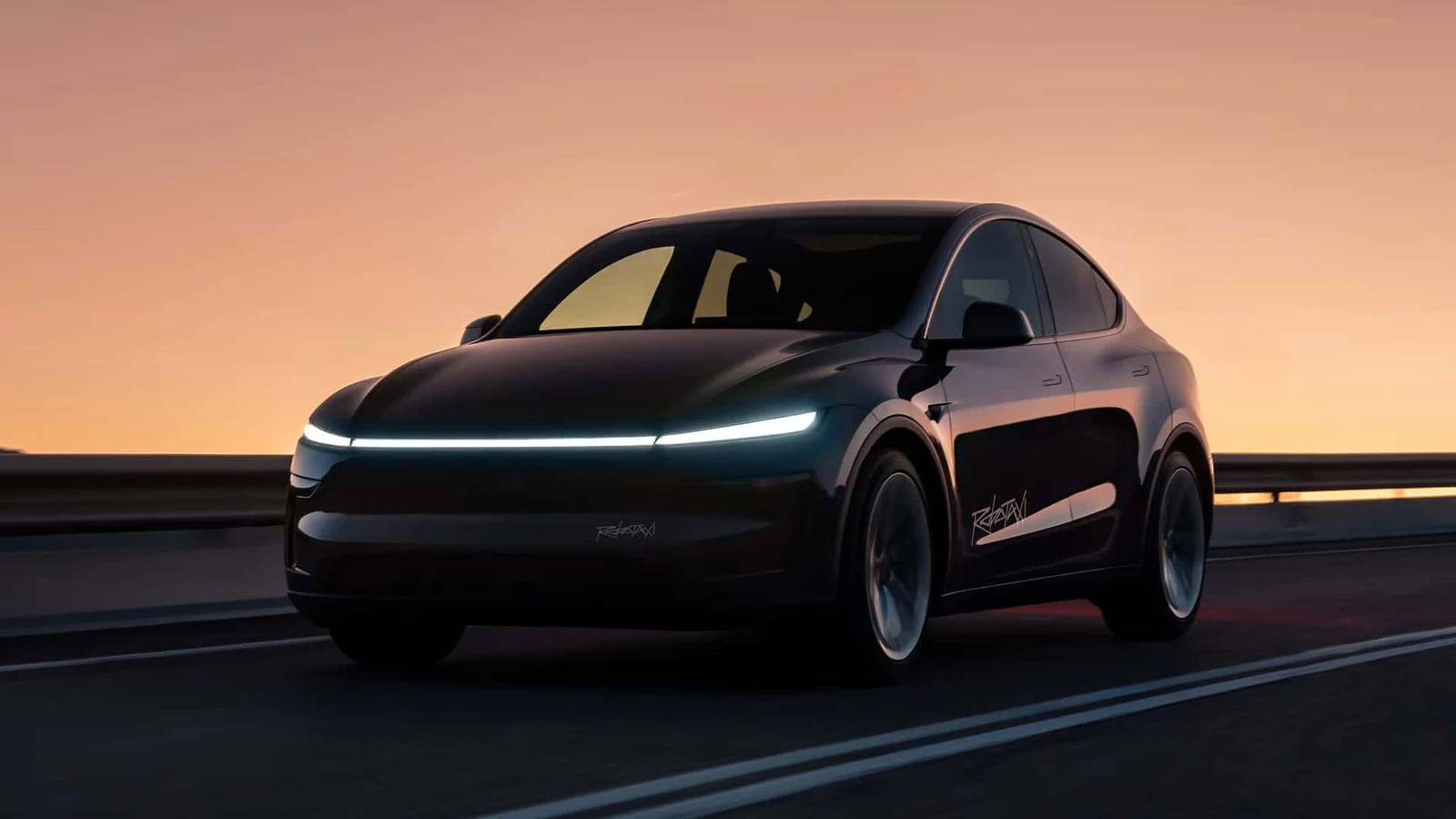
Tesla plans a steering-wheel-free Model Y for six or seven passengers, Musk says

The fully autonomous variant would join the two-seat Cybercab in a planned robotaxi lineup, though timing and pricing for buyers remain unannounced.

Tesla intends to build a fully autonomous version of the Model Y with no steering wheel or pedals, designed to carry groups of six or seven people, CEO Elon Musk said at the New York Times DealBook Summit on Wednesday.

The vehicle would extend the driverless formula Tesla has already applied to the Cybercab, its two-seat robotaxi, onto a larger platform aimed at families and group travel.

Why Tesla wants a bigger robotaxi

Musk framed the Model Y variant as a complement to the Cybercab rather than a replacement. He said the two-seat Cybercab covers about 90 percent of all passenger miles, leaving roughly 10 percent of rider miles that need more than two seats.

"It's going to make sense for us to make cars that can seat different amounts of people," Musk said. "We still need autonomous vehicles if you've got four or six, or a whole family".

The logic is straightforward: a small two-seater keeps production costs down, but it cannot serve a family trip. A driverless Model Y lets Tesla chase the remaining group-travel demand without designing an entirely new model from scratch.

The regular Model Y stays

Buyers who want to drive themselves are not being pushed aside. The standard Model Y with a steering wheel remains on sale for the foreseeable future, and Tesla already uses Model Ys with conventional controls in its autonomous fleet.

The new variant would differ by deleting those controls at the factory, creating a car passengers ride in but cannot drive, much like the Cybercab.

That distinction matters for how the car is owned and used. A vehicle without pedals or a wheel is built for managed fleet service first, which raises the question of whether private buyers will be offered one at all.

Cybercab economics set the template

Tesla's approach with the Cybercab has been to strip interior complexity to hold costs down, a strategy Musk has linked to a sub-$30,000 price target for that model.

The Cybercab only recently became available to hand-picked private buyers, and even then with conditions attached, including where the car is permitted to operate and a mandatory $300 per month autonomy subscription required for the car to move.

That subscription changes the maths for anyone thinking of owning one. A driverless Model Y carrying the same monthly cost on top of the purchase price may suit fleet operators more naturally than private households, at least while the subscription model stands.

Timing and pricing still open

Musk did not say when, or whether, the autonomous Model Y would be offered to the public to buy. Tesla has not announced a launch date or a price for the variant.

What is clear is the direction: Tesla is building out a robotaxi family with different seating capacities rather than a single vehicle. Whether the six- or seven-seat Model Y reaches private driveways or stays inside a managed fleet is the part still to be settled.

Open this article ↗

Keep scrolling to read the next story.

Older articles →