INDEPENDENT AUTOMOTIVE NEWSGLOBAL PERSPECTIVE / AUSTRALIAN EDITION
TDCNTHE DAILY
CAR NEWS.

The road ahead.
Every day.

RSS ↗
Latest/New cars

621 original articles

New cars / TDCN ORIGINAL

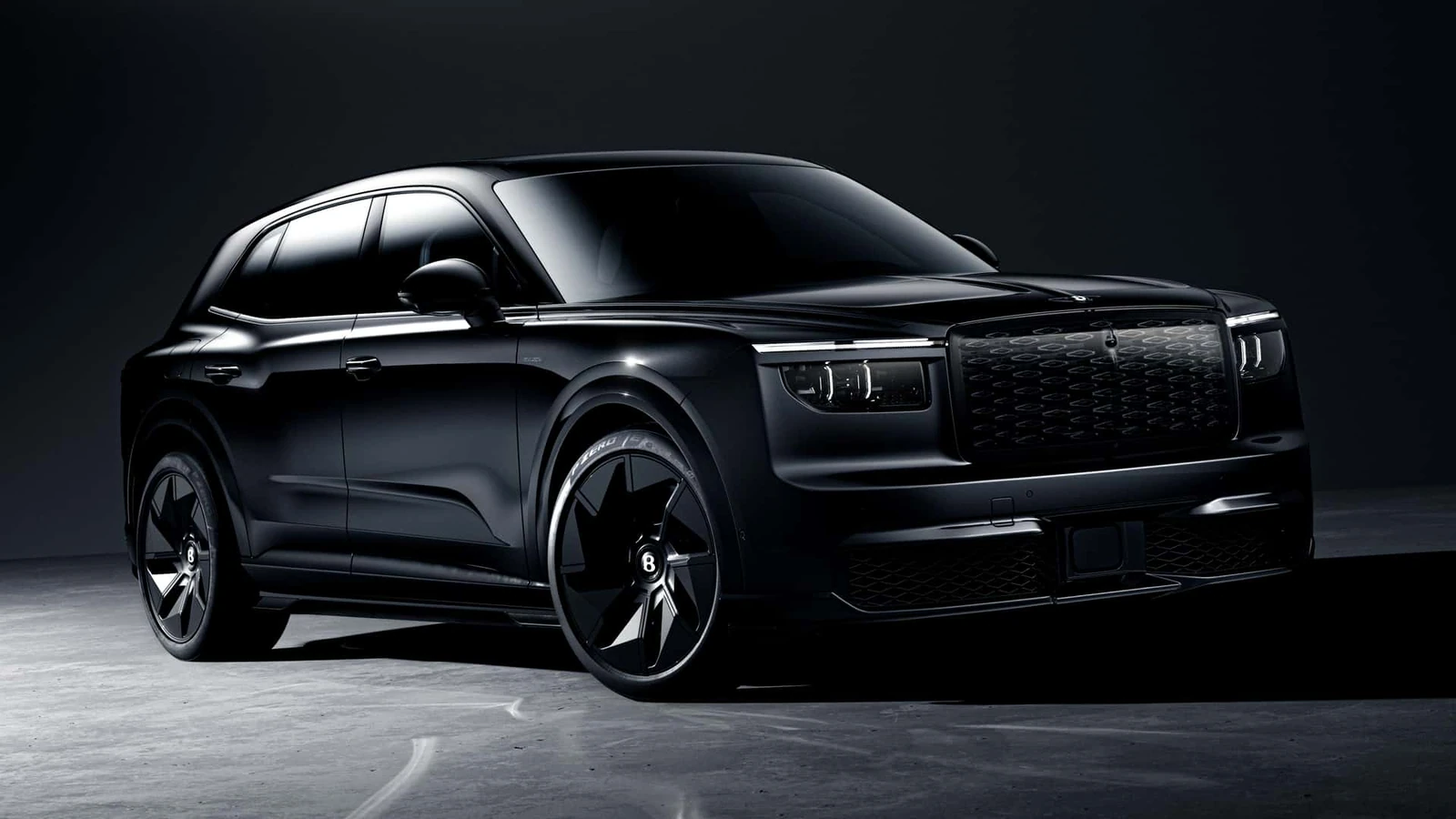
Bentley names Hiroshi Fujiwara's Fragment Design as first Torcal commission

Mulliner will build 20 Beluga-finished Torcal First Editions with two-tone leather cabins, and Bentley has not said what each one costs.

Image: Motor1

Bentley has confirmed Hiroshi Fujiwara and his Fragment Design label as the author of the first bespoke commission on the electric Torcal, a 20-car run built by Mulliner on the Torcal First Edition. The Tokyo designer, who founded Fragment Design in 2003, has also signed on as a global brand ambassador for the British marque.

The FRGMT commission gives every car the same solid Beluga paint, black-finished 22-inch Vortex wheels and Anthracite Satin body accents, with FRGMT branding on the front fenders and rear. Inside, Mulliner has split the cabin between Imperial Blue and Beluga hides stitched by hand, with piano black veneers and Bentley x FRGMT treadplates and door trim graphics.

A dark palette in place of chrome

Bentley describes the look as deliberately quiet, a monochromatic treatment that departs from the brighter, chrome-heavy finishes usually associated with Mulliner commissions. The company framed the project as a demonstration of what its bespoke arm can do with a single collaborator, saying the commission "showcases Bentley's ability to work closely with customers to transform individual ideas into one-of-one expressions of luxury".

Fujiwara is not a newcomer to the brand. He has previously owned a Continental GT and, according to Bentley, was struck by the Mulliner team's attention to detail during a visit to the Crewe factory in England. His four decades across fashion, music and design, and Fragment Design's mostly black-and-white aesthetic, run through the car inside and out.

Twenty cars, no two alike

The run is capped at 20 units worldwide, and Bentley says no two buyers will get identical options despite the shared exterior and Mulliner-finished cabin. The commission follows other recent Mulliner special editions, including the Olympia collection marking a 1926 milestone and a Continental GT tribute model built earlier this year.

Bentley has not disclosed how many of the 20 cars are still available, nor what the commission costs. The standard Torcal starts above $220,000 in the United States, the Torcal S passes $260,000 and the First Edition on which this car is based tops $300,000, so the FRGMT build should sit well above that last figure.

That pricing gap is the practical question for anyone considering one. Buyers are paying for a Mulliner-built interior and a designer's signature rather than extra output or hardware, since the commission is a trim and trim-finish exercise on an existing First Edition. Bentley's own positioning of the car as a one-off expression of a collaborator's ideas, rather than a performance variant, supports that reading.

Where the Torcal stands

The Torcal is Bentley's first EV, and demand has already run ahead of supply: the model is sold out through 2027, with new Torcal buyers facing a wait until 2028. The car has also completed 621,000 miles of extreme testing, according to Bentley.

For the 20 FRGMT customers, the practical consequence is that the commission's arrival does not shorten the queue. The design work is done and the specification is set, but the cars still have to be built alongside the rest of the Torcal order book.
Open this article ↗
Performance / TDCN ORIGINAL

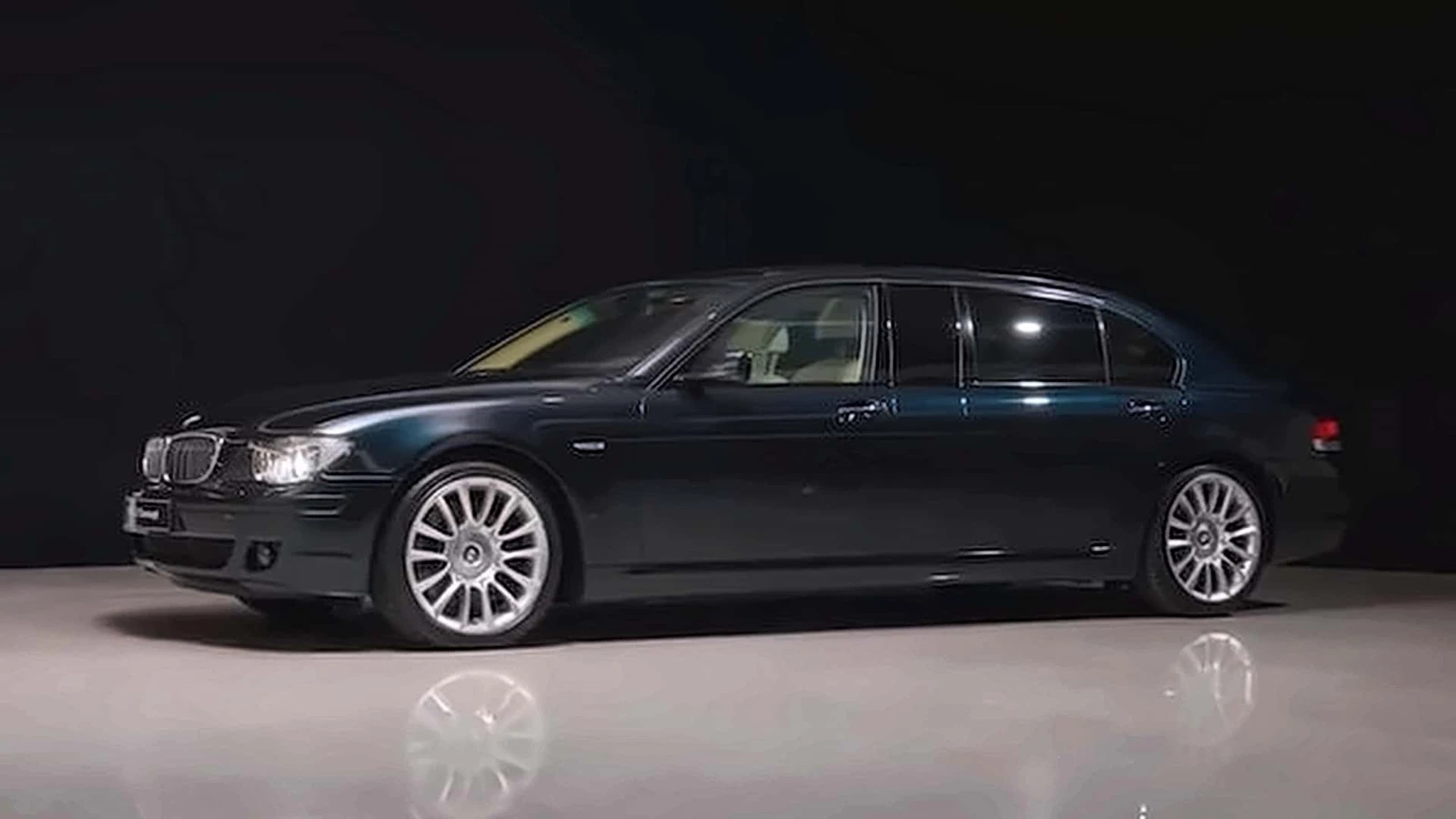
BMW reveals a one-off V12 L7 limousine it built but never sold

The stretched E65-generation 7 Series, hidden for 21 years, has made its public debut in a video shared by Retro Garage with BMW Classic.

Image: Motor1

BMW has shown a one-off long-wheelbase limousine based on the E65-generation 7 Series, a fully built concept that spent 21 years out of public view. The car, called the L7 Concept, is a stretched 2005 760Li and has now appeared in an Instagram video shared by Retro Garage with help from BMW Classic.

The concept is not a clay model or a design study. BMW built a working car with an extended rear cabin, and the extra length went entirely into passenger space rather than luggage capacity.

How much longer the L7 Concept is

BMW added roughly 51 centimetres (about 20 inches) at the B-pillar, the same approach it used on the previous-generation E38 L7. The stretch gives the rear doors a much longer profile and reserves all the added room for the back seats.

At approximately 5.53 metres (218 inches) long, the E65 L7 is about 35 centimetres (14 inches) longer than the long-wheelbase 760Li it is based on, and around 14 centimetres (5.5 inches) longer than the current 7 Series. It is roughly as long as a standard-wheelbase Rolls-Royce Ghost.

The proportions are most obvious from the side, where the extended section between the doors makes an already large E65 look bigger still. BMW did it without extravagant bodywork.

A rear cabin built like a lounge

The rear compartment is finished in cream-coloured leather with wood trim and gets a second sunroof for rear passengers. A refrigerator sits in the centre console, and a separate compartment holds bottles upright.

Legroom in the back is enough for occupants to stretch their legs almost completely straight, a rarity among luxury sedans.

The car is finished in dark blue and, in size and intent, reads as an answer to Maybach from the years when Maybach was a standalone brand rather than part of the Mercedes lineup.

BMW has built an L7 before

This was not BMW's first attempt at a more luxurious 7 Series. Between 1997 and 2001 the company built 899 examples of the E38-based L7, each derived from the 750iL and its 5.4-litre V12. Those cars were about 25 centimetres (9.8 inches) longer than the standard long-wheelbase 7 Series.

BMW sold the E38 L7 in Europe, the Middle East and Southeast Asia, but not in the United States. America did get the older E23 L7 as a range-topping version, which BMW also sold in Japan; that car did not have a stretched wheelbase and was essentially a fully loaded standard 7 Series.

The E65 L7 Concept carried that formula for a third time, and it is the one that stayed a concept.

Why it never reached showrooms

BMW has not explained why the E65 L7 Concept was never put into production. The sources offer no official reason, so the question stays open.

The likely pressures are visible in the car itself. The regular 760Li was already an expensive proposition, which makes the business case for an even more extravagant limousine harder to justify. BMW also owns Rolls-Royce, part of the group since 1998, and a very long, very costly 7 Series risked taking sales from a brand built on exactly that proposition.

That reading fits the pattern: BMW has kept the stretched 7 Series alive as a concept three times over, but only the E38 version ever reached customers, and only in selected markets.

A more luxurious 7 Series is coming, without the stretch

BMW is preparing to move the 7 Series upmarket again. In 2027 the company will launch a more luxurious version under the newly established BMW Alpina brand, positioned above the regular flagship and below Rolls-Royce.

Unlike the Mercedes-Maybach S-Class, it will not get a stretched wheelbase. BMW's view is that the standard 7 Series already offers 3,215 mm (126.6 inches) between the axles, enough room to make the flagship more exclusive without making it longer.

For buyers, that means the next step up in 7 Series luxury will be about trim, materials and positioning rather than the extra rear-door length BMW engineered into the L7 Concept and then set aside.

Open this article ↗

Keep scrolling to read the next story.

Older articles →