INDEPENDENT AUTOMOTIVE NEWSGLOBAL PERSPECTIVE / AUSTRALIAN EDITION
TDCNTHE DAILY
CAR NEWS.

The road ahead.
Every day.

RSS ↗
Latest/New cars

621 original articles

New cars / TDCN ORIGINAL

Acura adds Urban Spec trims to 2027 Integra, ADX and MDX for $1,500

All three wear Urban Gray paint and black accents, with the package unavailable on the 320-hp Integra Type S.

Image: Carscoops

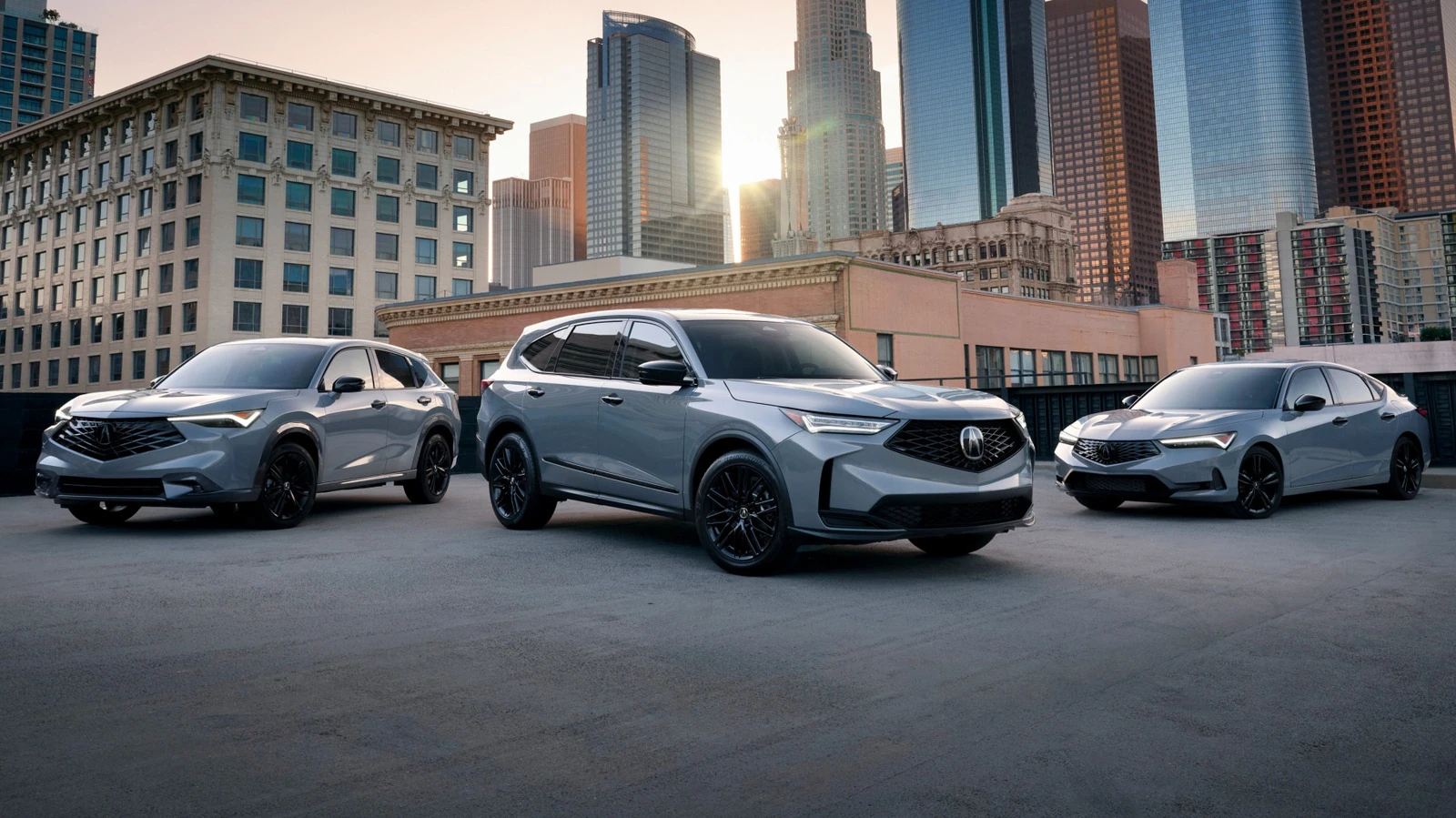
Acura has added Urban Spec trims to the 2027 Integra, ADX and MDX, a $1,500 appearance package that dresses all three models in Urban Gray paint with black exterior and interior details. The three vehicles will be shown at the LA Auto Show later this month.

What the package includes

The Integra Urban Spec rides on black 18-inch A-Spec wheels with black wheel lugs, and adds black door handles, a black rear lip spoiler, a black antenna, black badges and an Ebony interior. The trim is not offered on the Integra Type S, the 320-hp flagship of the range.

The ADX Urban Spec uses 19-inch black wheels, while the MDX version steps up to 20-inch A-Spec Advance wheels. Both SUVs get black badges, antennas, door handles and Ebony cabins, and the MDX adds black wheel well trim and bumper trim. Buyers can specify all-wheel drive on either SUV.
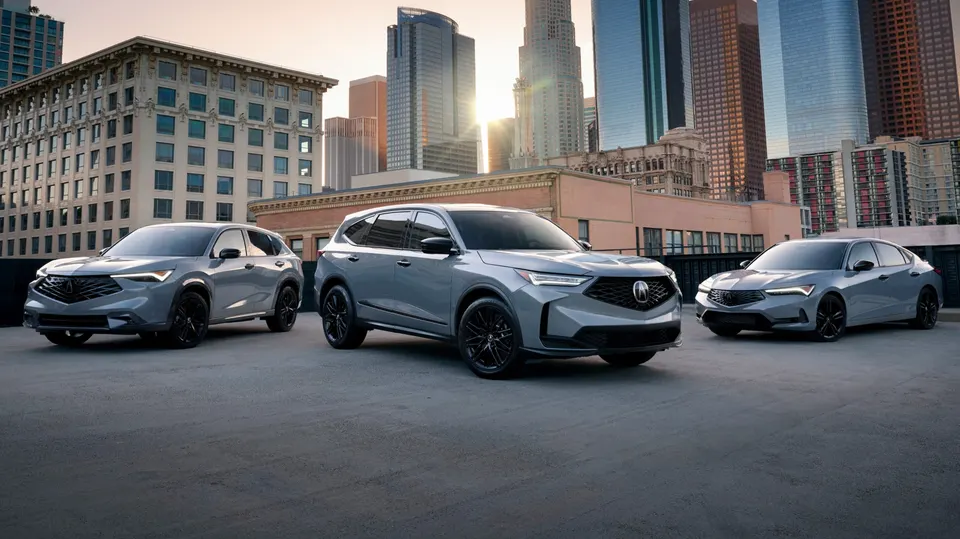
Acura's 2027 Integra, ADX and MDX lineup, now available with the new Urban Spec trim
Acura's 2027 Integra, ADX and MDX lineup, now available with the new Urban Spec trim, Image: Carscoops

Pricing and what's still unknown

The Urban Spec package adds $1,500 to the MSRP of each model. Acura has not yet announced prices for the 2027 Integra, ADX and MDX, so the full cost of each 2027 vehicle has not been confirmed.

For reference, the 2026 Integra starts at $34,795 including a $1,395 destination and handling charge. The 2026 ADX starts at $36,550 with front-wheel drive or $38,550 with all-wheel drive, and the 2026 MDX starts at $53,350 with FWD or $55,550 with AWD.

That means the Urban Spec premium is a straightforward cosmetic upcharge rather than a mechanical one: buyers are paying for the gray-and-black look, not extra output or hardware.

Powertrains carry over

The Integra's base engine is a turbocharged 1.5-liter inline-four making 200 horsepower at 6,000 rpm and 192 pound-feet of torque between 1,800 and 5,000 rpm, paired with front-wheel drive and a continuously variable transmission. Every Integra except the Type S uses this powertrain.

The ADX uses the same turbocharged 1.5-liter four-cylinder and CVT but is capped at 190 hp and 179 lb-ft. The MDX runs a naturally aspirated 3.5-liter V6 with 290 hp and 267 lb-ft, mated to a 10-speed automatic.

No significant changes are expected for the Integra or ADX in the 2027 model year. The MDX will receive upgrades that Acura says it will detail closer to the launch date.

Why Acura is keeping its current lineup fresh

The Urban Spec trims arrive while Acura develops several all-new SUVs, including a new three-row adventure-ready flagship. Appearance packages like this are a low-cost way to keep existing models in showrooms looking current without a full redesign, and the $1,500 ask sits in the range most buyers already accept for a factory cosmetic upgrade.
Open this article ↗
Australia / TDCN ORIGINAL

Xpeng says Chinese drivers use its NGP assistance system for over half their distance

The brand is targeting a 2027 over-the-air rollout of the Tesla FSD rival in Australia, where only the incoming L03 Ultra has the required hardware.

Xpeng says more than half of the distance its Chinese customers drive is covered using its NGP driver-assistance system, as the company prepares to bring the Tesla Full Self-Driving rival to Australia in 2027. Vice-chairman and president Brian Gu made the claim at Xpeng's UK launch event, where the brand outlined the technology planned for its next overseas expansion.

NGP remains a driver-supervised assistance system rather than full autonomy, and the Australian rollout depends on buyers choosing a specific L03 variant that carries the necessary computing hardware.

What Xpeng's usage figure does and does not show

Gu said that of the total miles driven by Xpeng customers in China today, more than 50 per cent already uses NGP in daily driving. He did not specify the measurement period, nor whether the calculation covered the entire Chinese fleet or only vehicles equipped with NGP.

That gap matters for anyone reading the figure as a measure of how widely the system is trusted. A share of distance driven says nothing on its own about how many cars have the system installed, so the claim is best treated as a usage statistic rather than a penetration rate.

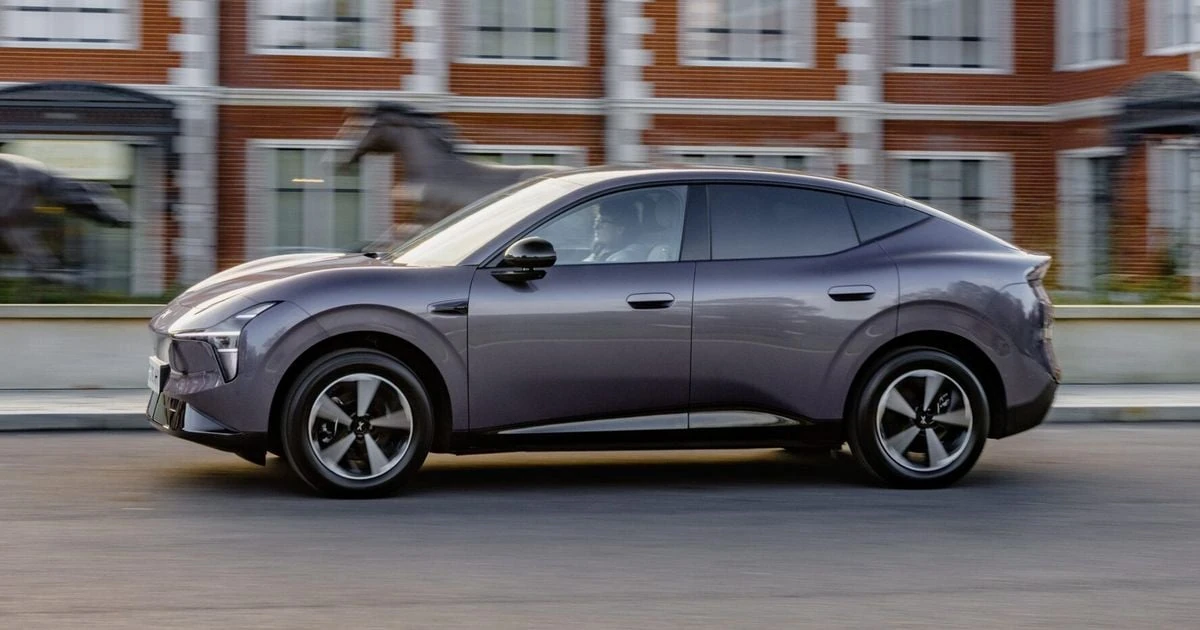
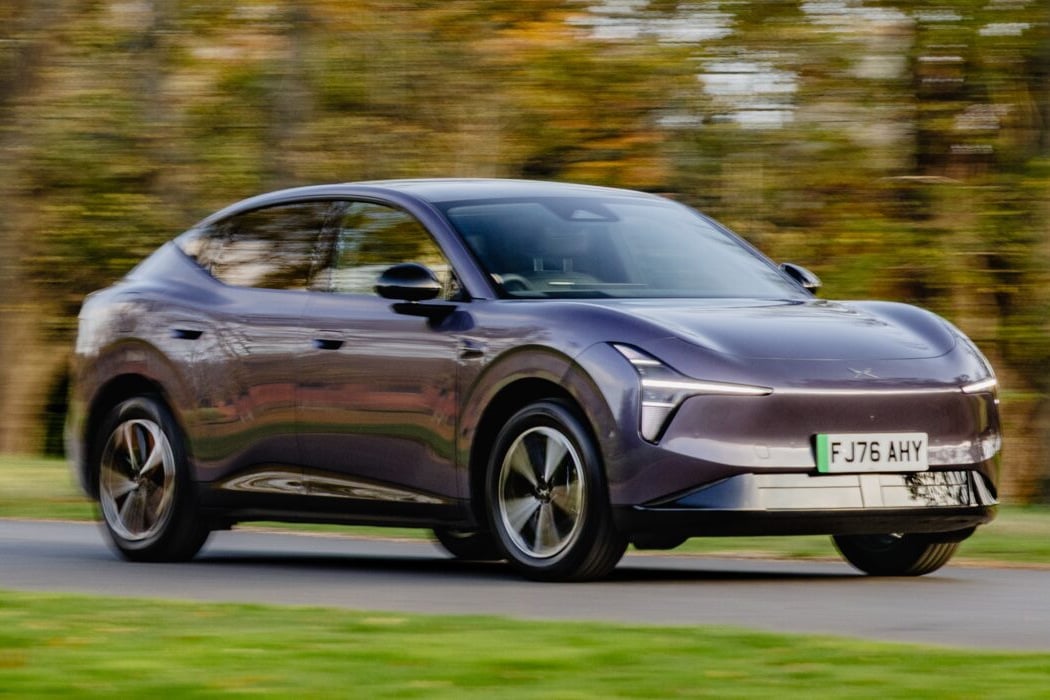
An Xpeng sedan on the move, the kind of vehicle whose drivers log NGP distance.
An Xpeng sedan on the move, the kind of vehicle whose drivers log NGP distance., Image: CarExpert

Supervised, not autonomous

Xpeng Europe product marketing manager Giovanni Grimaldi stressed that the driver must stay at the controls and be ready to intervene. "So it's not full autonomous driving," he said.

Tesla makes a comparable statement about Full Self-Driving (Supervised), which requires an attentive driver ready to take over and does not make the vehicle autonomous. Systems of this type are typically described as Level 2+ autonomous driving.

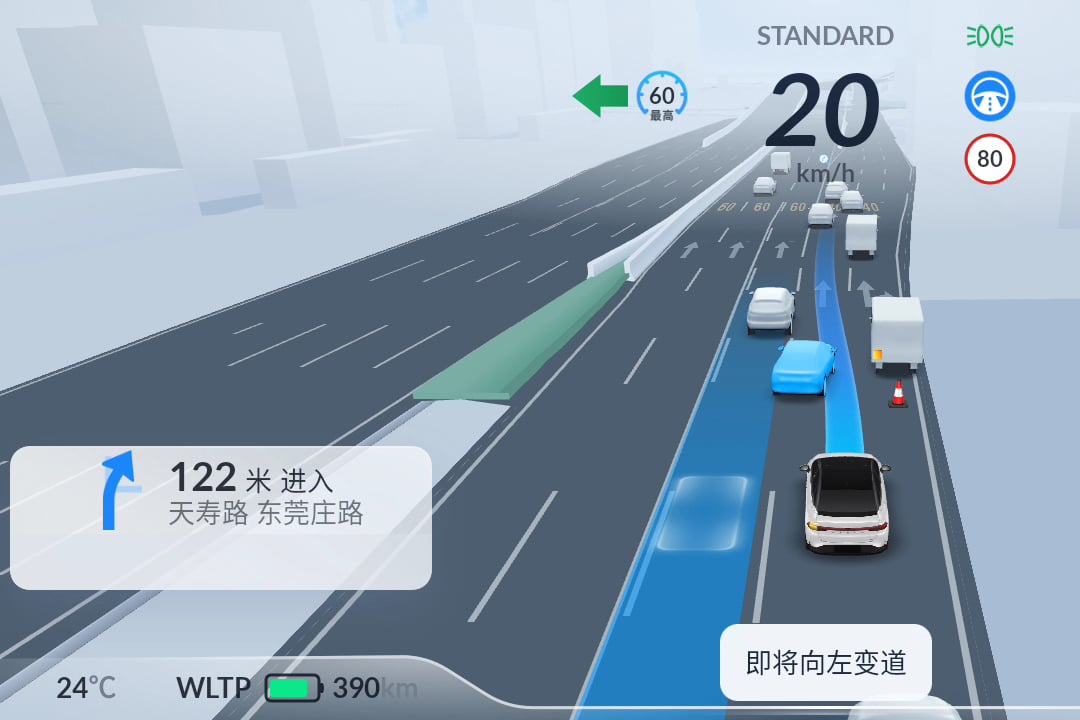
The NGP interface in action: supervised lane-change prompts and speed limits displayed to the driver.
The NGP interface in action: supervised lane-change prompts and speed limits displayed to the driver., Image: CarExpert

Which Australian L03 gets NGP

The incoming L03 AWD Performance Ultra, priced from $53,900 before on-road costs, has the required hardware and is due in dealerships in December 2026. Its local specification lists two Turing chips, which Xpeng rates at 750 trillion operations per second (TOPS) each, for a claimed combined 1500 TOPS.

That is a hardware specification rather than a measure of how safely or competently the car drives. The other three Australian L03 variants do not carry the same Turing hardware.

Xpeng Australia is still targeting 2027 for customer access to NGP, delivered through an over-the-air update. Buyers who take the Ultra in December 2026 therefore secure the hardware ahead of the expected software activation.

For Australian shoppers, the practical consequence is that NGP is not a brand-wide feature here. It is tied to the most expensive L03 variant, so the 2027 software date only becomes relevant to drivers who have already paid for the Ultra's hardware.

How the system is built

Xpeng says it has already been testing and calibrating its assistance technology on Australian roads. The company says the VLA 2.0 model behind NGP uses camera information without relying on LiDAR or high-definition maps, and is designed to interpret how a traffic situation develops over time.

According to Grimaldi, the model can use up to 30 seconds of recent visual information and predict possible developments over the next six seconds. One demonstration showed the system waiting for a vehicle.

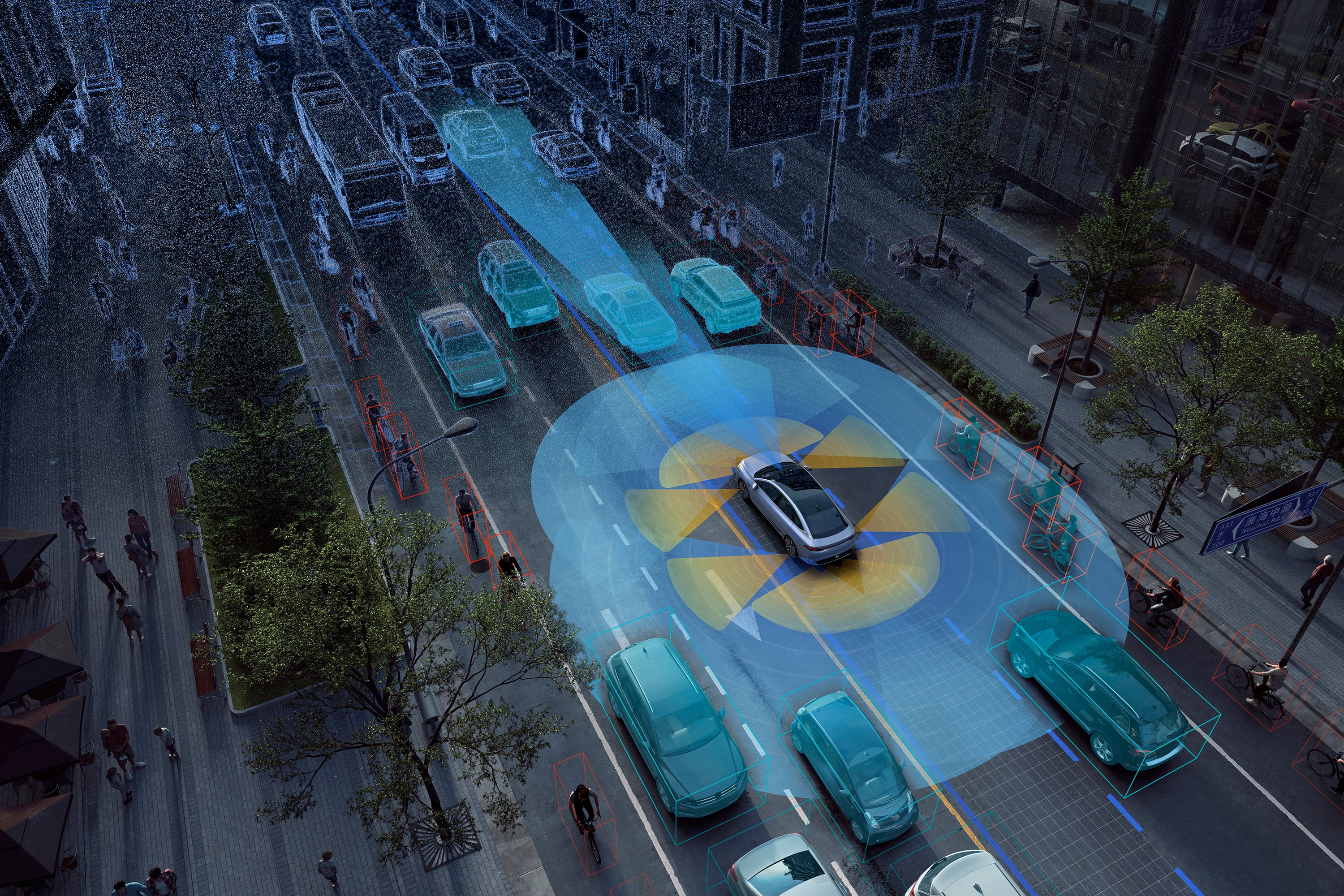
Xpeng's NGP system visualised as a sensor footprint over dense urban traffic.
Xpeng's NGP system visualised as a sensor footprint over dense urban traffic., Image: CarExpert
Open this article ↗

Keep scrolling to read the next story.

Older articles →