INDEPENDENT AUTOMOTIVE NEWSGLOBAL PERSPECTIVE / AUSTRALIAN EDITION
TDCNTHE DAILY
CAR NEWS.

The road ahead.
Every day.

RSS ↗
Latest/Australia

621 original articles

Australia / TDCN ORIGINAL

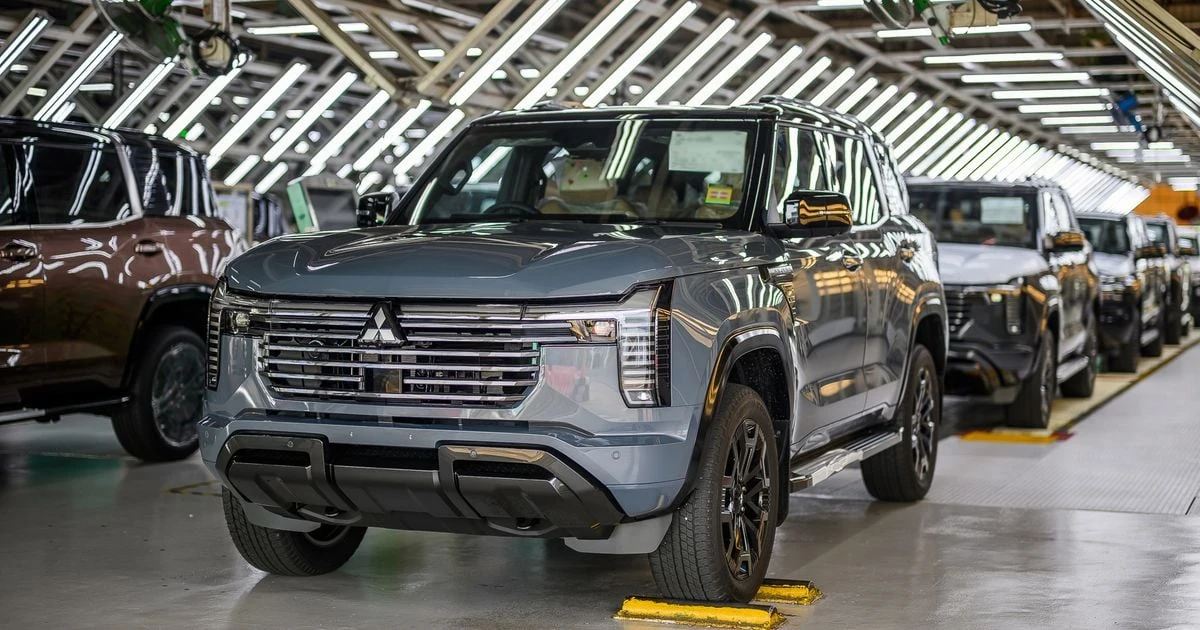
Mitsubishi Pajero returns to Australia in December at $68,490, diesel only

The reborn off-roader ships from a Thai plant rather than Japan, undercuts the cheapest Toyota Prado and arrives with hybrid and plug-in hybrid versions still in development.

The revived Mitsubishi Pajero will reach Australian showrooms in December 2026, with production under way and the first vehicles now en route, priced from $68,490 before on-road costs.

It is the fifth-generation Pajero and the first to be built outside Japan: Mitsubishi is assembling it at its Laem Chabang plant in Thailand, the same factory that produced the Pajero Sport it effectively replaces.

A Thai-built Pajero with a Triton base

Australia, Japan and Thailand are the first three markets slated to receive the new Pajero, and Mitsubishi intends to build it for roughly 100 countries from April 2027 onward. Depending on the market it will be sold as either Pajero or Montero.

The vehicle sits on an upgraded version of the ladder frame used under the latest Triton ute, which launched in Australia in 2024. Power comes solely from a single-turbo 2.4-litre four-cylinder diesel making 150kW and 480Nm, paired with an eight-speed automatic and four-wheel drive. Mitsubishi lists AdBlue as required and says the Pajero meets Euro 6d emissions standards.

No rear-wheel-drive variant will be offered in Australia, though buyers will be able to choose between five- and seven-seat layouts. The December launch will be accompanied by Australian-designed accessories including nudge bars and other exterior protection.

Pricing lands between Everest and Prado

At $68,490 before on-road costs, the new Pajero sits about $17,000 above the old Pajero Sport and $13,500 above the previous-generation Pajero GLX Final Edition, which last sold in 2021 at $54,990 plus on-road costs. It is dearer than the cheapest Ford Everest, from $58,990 plus on-road costs, but cheaper than the most affordable Toyota Prado at $73,200 plus on-road costs.

That positioning matters because the Pajero is not being pitched as a budget ute-based wagon. Mitsubishi is asking Prado-adjacent money for a diesel-only model, and buyers cross-shopping the segment will notice the new Pajero no longer undercuts the Everest on price the way its predecessor's positioning might suggest.
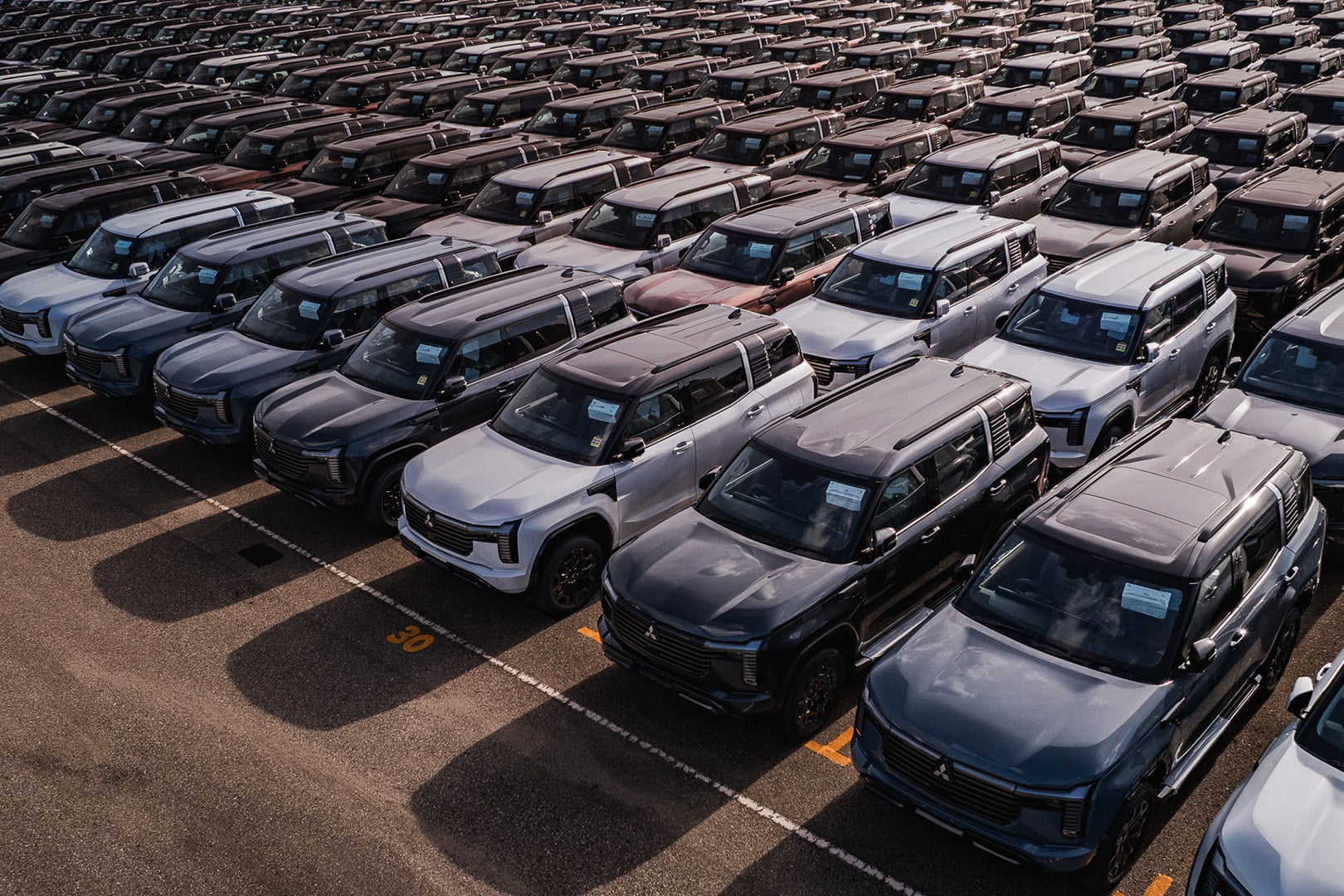
Pajero stock awaiting delivery, priced at $68,490 to sit between Everest and Prado
Pajero stock awaiting delivery, priced at $68,490 to sit between Everest and Prado, Image: CarExpert

Hybrids confirmed but not yet dated

Diesel is the only powertrain at launch, but Mitsubishi has confirmed that both hybrid and plug-in hybrid powertrains are in development. The company has not announced timing for either, so Australian buyers wanting electrified power have no confirmed on-sale date yet.

Mitsubishi Motors Australia CEO Shunichi Kihara said interest since September's global premiere has stayed high, with more than 10,000 expressions of interest received and a growing Australian order bank. He added that initial dealer and media feedback has been very positive and that the brand expects to see the first customers on Australian roads in their new Pajero before Christmas.
Open this article ↗
Electric / TDCN ORIGINAL

Global survey of 29,547 EV owners finds myths, not batteries, seen as adoption barrier

Three quarters of respondents blame misconceptions for holding back electric car uptake, even though most say they are not worried about their own battery's life.

A global survey of 29,547 electric vehicle owners has found that 74% of them see myths about EVs as a leading barrier to adoption in their country, putting misinformation ahead of purchase prices and charging access. The 2026 Global EV Driver Survey ran from September to October across 34 countries, with participants recruited through EV associations, volunteers and enthusiasts and results weighted by each country's share of the global EV fleet.

The findings describe how owners perceive the gap between living with an electric car and hearing about one, rather than measuring directly why non-owners stay away. Respondents could pick up to three barriers, so the answers were not mutually exclusive: 49% cited purchase prices and 47% pointed to charging access for people in apartment buildings.

Battery life tops the list of misconceptions

Battery longevity was the most commonly reported misconception, named by 72% of respondents, followed by the claim that EVs catch fire more easily at 58% and the belief that widespread adoption would collapse the electricity grid at 45%. A further 40% identified the claim that EVs are not better for the climate as a common misconception.

Owners' personal confidence runs in the opposite direction to the myths they report. Asked whether they were concerned about their own battery's lifespan, 65% disagreed and only 18% agreed. That split is the survey's most useful signal: the fear that dominates outside conversation is largely absent among the people with real-world experience of the technology.

Field data backs owners' confidence

There is independent evidence behind that confidence. Ford collected battery health data from 36,000 Mustang Mach-E SUVs and found that 2021-model-year examples retained an average of 92% of usable battery capacity after 5.2 years and 55,000 miles (88,500 km). More than 2,000 Mach-Es with over 100,000 miles (161,000 km) on them still had 91% of original capacity left.

Those are averages rather than a guarantee for any individual car, and some capacity loss over time is inevitable. But the figures do not support the idea that EVs become expensive paperweights after a few years, and a battery replacement is rarer than the myths suggest.

Fire and grid fears need context

The belief that EVs are more prone to catching fire than petrol or diesel cars is not supported by studies, although the data has limitations including differences in vehicle age, and generally points to lower fire rates than combustion-engined vehicles. When an EV battery fire does happen it is notoriously hard to extinguish, can reignite after being put out and requires special procedures from emergency responders.

On the grid, smart charging can refill cars when electricity demand is lower, and while more EVs will require planning and grid upgrades, they do not all need to charge at the same time. The climate claim also depends on how a car is assessed: comparing emissions means looking at the whole life of a vehicle, including manufacturing and the energy it uses, and how much cleaner an EV is depends partly on where its electricity comes from.

What the survey does and does not show

The survey captures the views of existing owners, so it does not prove that misinformation matters more than affordability to someone shopping for their first EV. Owners did acknowledge the real obstacles: EVs remain expensive, and charging is difficult for people without a place to plug in at home.

The practical takeaway for buyers is narrower than the headline number. Running out of usable battery capacity is not the near-term cost that the myths imply, and the survey suggests that fear fades once someone has lived with an electric car. The survey did not break down results by individual model or market, and no separate figures for Australia were released.

Open this article ↗

Keep scrolling to read the next story.

Older articles →