INDEPENDENT AUTOMOTIVE NEWSGLOBAL PERSPECTIVE / AUSTRALIAN EDITION
TDCNTHE DAILY
CAR NEWS.

The road ahead.
Every day.

RSS ↗
Latest/Performance

621 original articles

Performance / TDCN ORIGINAL

BMW reveals a one-off V12 L7 limousine it built but never sold

The stretched E65-generation 7 Series, hidden for 21 years, has made its public debut in a video shared by Retro Garage with BMW Classic.

Image: Motor1

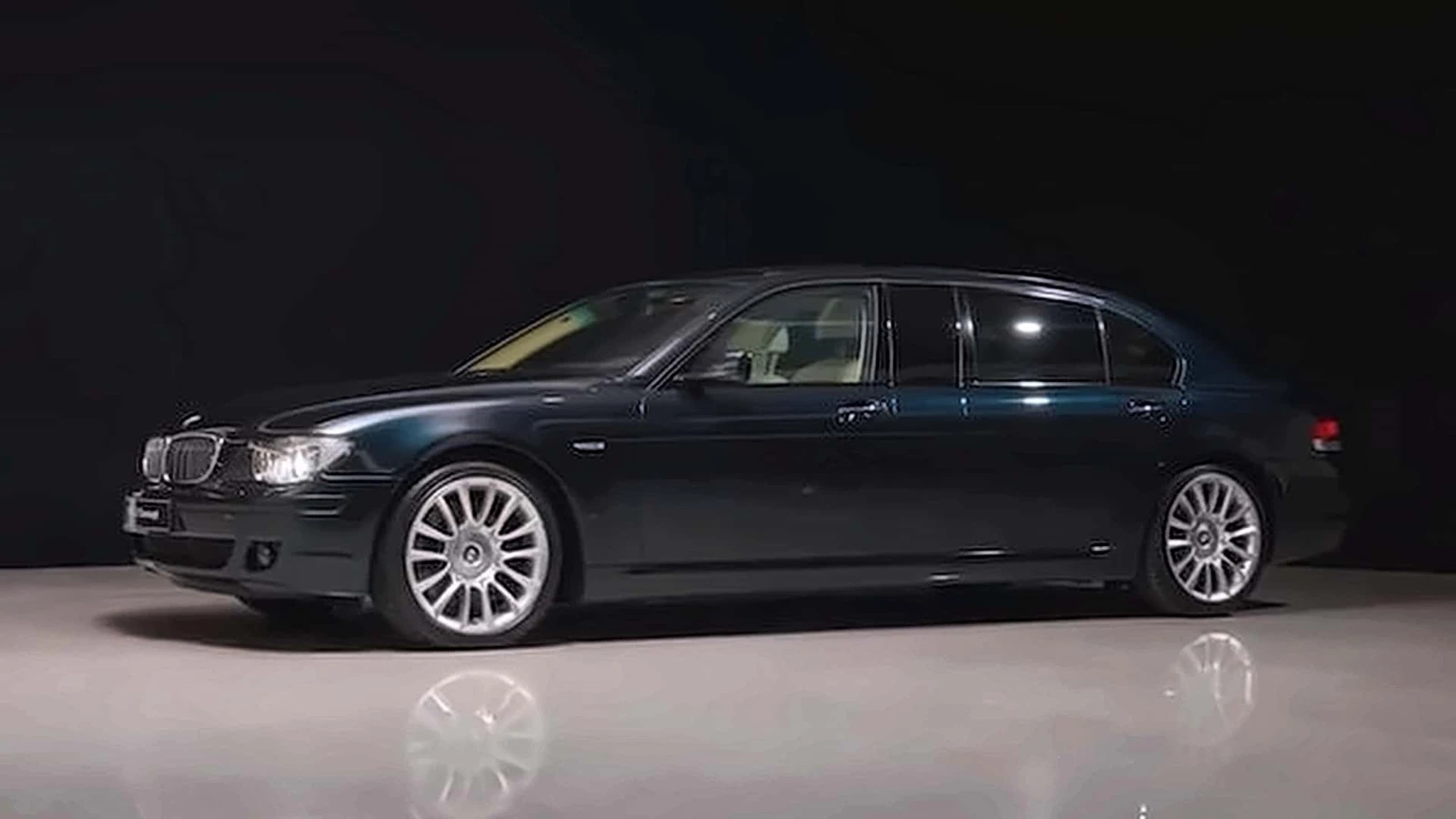
BMW has shown a one-off long-wheelbase limousine based on the E65-generation 7 Series, a fully built concept that spent 21 years out of public view. The car, called the L7 Concept, is a stretched 2005 760Li and has now appeared in an Instagram video shared by Retro Garage with help from BMW Classic.

The concept is not a clay model or a design study. BMW built a working car with an extended rear cabin, and the extra length went entirely into passenger space rather than luggage capacity.

How much longer the L7 Concept is

BMW added roughly 51 centimetres (about 20 inches) at the B-pillar, the same approach it used on the previous-generation E38 L7. The stretch gives the rear doors a much longer profile and reserves all the added room for the back seats.

At approximately 5.53 metres (218 inches) long, the E65 L7 is about 35 centimetres (14 inches) longer than the long-wheelbase 760Li it is based on, and around 14 centimetres (5.5 inches) longer than the current 7 Series. It is roughly as long as a standard-wheelbase Rolls-Royce Ghost.

The proportions are most obvious from the side, where the extended section between the doors makes an already large E65 look bigger still. BMW did it without extravagant bodywork.

A rear cabin built like a lounge

The rear compartment is finished in cream-coloured leather with wood trim and gets a second sunroof for rear passengers. A refrigerator sits in the centre console, and a separate compartment holds bottles upright.

Legroom in the back is enough for occupants to stretch their legs almost completely straight, a rarity among luxury sedans.

The car is finished in dark blue and, in size and intent, reads as an answer to Maybach from the years when Maybach was a standalone brand rather than part of the Mercedes lineup.

BMW has built an L7 before

This was not BMW's first attempt at a more luxurious 7 Series. Between 1997 and 2001 the company built 899 examples of the E38-based L7, each derived from the 750iL and its 5.4-litre V12. Those cars were about 25 centimetres (9.8 inches) longer than the standard long-wheelbase 7 Series.

BMW sold the E38 L7 in Europe, the Middle East and Southeast Asia, but not in the United States. America did get the older E23 L7 as a range-topping version, which BMW also sold in Japan; that car did not have a stretched wheelbase and was essentially a fully loaded standard 7 Series.

The E65 L7 Concept carried that formula for a third time, and it is the one that stayed a concept.

Why it never reached showrooms

BMW has not explained why the E65 L7 Concept was never put into production. The sources offer no official reason, so the question stays open.

The likely pressures are visible in the car itself. The regular 760Li was already an expensive proposition, which makes the business case for an even more extravagant limousine harder to justify. BMW also owns Rolls-Royce, part of the group since 1998, and a very long, very costly 7 Series risked taking sales from a brand built on exactly that proposition.

That reading fits the pattern: BMW has kept the stretched 7 Series alive as a concept three times over, but only the E38 version ever reached customers, and only in selected markets.

A more luxurious 7 Series is coming, without the stretch

BMW is preparing to move the 7 Series upmarket again. In 2027 the company will launch a more luxurious version under the newly established BMW Alpina brand, positioned above the regular flagship and below Rolls-Royce.

Unlike the Mercedes-Maybach S-Class, it will not get a stretched wheelbase. BMW's view is that the standard 7 Series already offers 3,215 mm (126.6 inches) between the axles, enough room to make the flagship more exclusive without making it longer.

For buyers, that means the next step up in 7 Series luxury will be about trim, materials and positioning rather than the extra rear-door length BMW engineered into the L7 Concept and then set aside.
Open this article ↗
Electric / TDCN ORIGINAL

Volkswagen files ID. UP trademark as sub-€20,000 electric city car nears 2027 build

Pre-series ID.1 hatchbacks are already running down the Palmela line in Portugal, with regular production slated for the fourth quarter of 2027.

Image: Motor1

Volkswagen has applied to register the name ID. UP with the European Union Intellectual Property Office, a filing dated October 22, 2026 that points to the badge its long-promised sub-€20,000 electric city car could wear. The car itself, currently referred to as the ID.1, is already being built in pre-series form at the company's Autoeuropa plant in Palmela, Portugal, ahead of regular production planned for the fourth quarter of 2027.

The trademark is a signal of intent rather than a decision. A filing protects a name; it does not confirm the name will reach the boot lid, and Volkswagen has said nothing about final pricing, range or badge until it confirms those details closer to the production date.

What the EUIPO filing does and does not settle

Volkswagen's application to the EUIPO was lodged on October 22, 2026. The ID. prefix is already established across the brand's electric range, and the UP element reaches back to the petrol-powered Up city car.

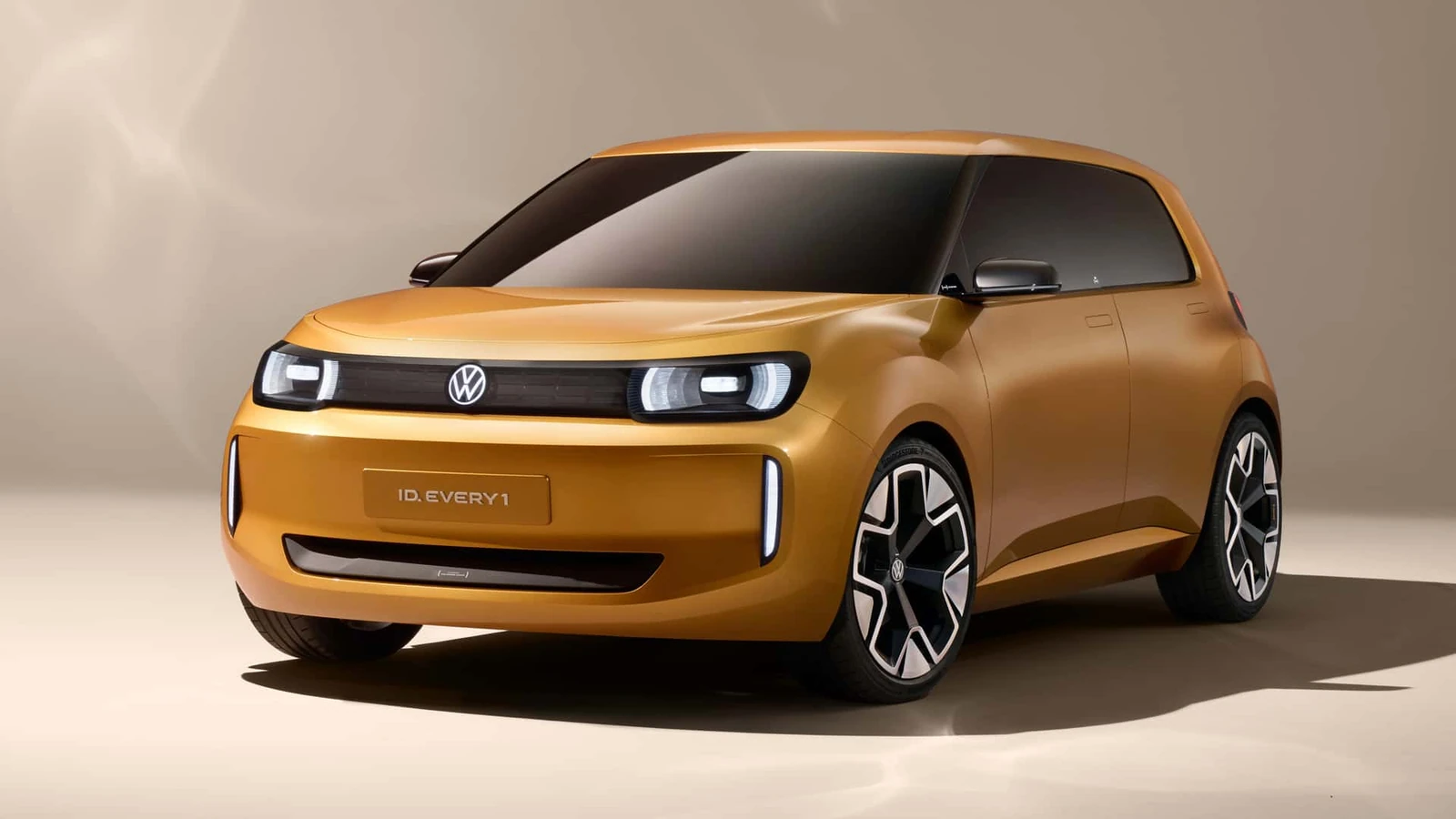
That combination makes ID. UP a plausible fit for the entry-level model previewed by the ID. EVERY1 concept, but the filing alone does not lock it in. The pre-production cars now running in Portugal are still being called ID.1.

Palmela pre-series build and the 2027 timeline

Volkswagen built the first ID.1 pre-production units at Autoeuropa in Palmela, using them to test tools, assembly methods, work steps and cycle times on the line, according to Volkswagen Group as reported by Electrek. The cars reportedly came off the line clean and the plant met the targets set for this stage of testing.

Regular series production is scheduled for the fourth quarter of 2027 at Palmela. The plant is set to share the ID.1's assembly line with the T-Roc, and Autoeuropa already runs three shifts with capacity for up to 1,000 vehicles a day, a figure the T-Roc has so far carried alone.

Anabel Andión Lomero, the plant's new general manager, told Portuguese outlet Razão Automóvel that Autoeuropa can adjust the production split between the T-Roc and the new EV according to demand once both are at full regular output. The plant built 240,400 cars in 2025, its second-best year on record, with the T-Roc accounting for that volume.

Volkswagen chief executive Thomas Schäfer has cited the plant's efficiency as the reason Palmela was chosen to build the group's cheapest EV, a decision the company has linked directly to the sub-€20,000 target. Group management has described the choice of plant as decisive in reaching that price.

Concept-derived targets and the Rivian connection

Early figures based on the ID. EVERY1 concept describe a car around 3,880 millimetres long, sitting between the old Up at 3,600 millimetres and the ID. Polo at 4,050 millimetres. The concept carries a 37 kWh LFP battery, a 70 kW motor, a minimum range target of roughly 250 kilometres and a 305-litre trunk.

Volkswagen has not confirmed final production specifications and has not published usable battery capacity or peak charging power. The range figure is a target tied to the concept rather than a certified result on a WLTP, EPA or any other test cycle, so it should not be read as a homologated number.

The ID.1 is set to be the first Volkswagen Group series model built on electronics and software architecture co-developed with Rivian. That architecture consolidates vehicle functions into fewer control units and supports adding features after delivery through over-the-air updates.

The positioning puts the car against the Dacia Spring and Citroën ë-C3, and the Palmela cost base is what gives Volkswagen room to price it in that fight. For buyers, the significance is less about the badge than about whether a European-built EV can undercut those rivals without the compromises usually attached to the cheapest electric hatchbacks.

What is still open

Volkswagen has used ID. naming on larger electric SUVs including the ID. Tiguan, and the separate ID. Cross remains a near-production compact B-segment SUV concept previewing a future addition to the family.

Final pricing, range and the production badge all remain unconfirmed until Volkswagen announces them nearer the fourth quarter of 2027. The ID. UP filing is the clearest hint yet of the name, but it is a hint, not a specification sheet.

Open this article ↗

Keep scrolling to read the next story.

Older articles →