INDEPENDENT AUTOMOTIVE NEWSGLOBAL PERSPECTIVE / AUSTRALIAN EDITION
TDCNTHE DAILY
CAR NEWS.

The road ahead.
Every day.

RSS ↗
Latest/Industry

621 original articles

Industry / TDCN ORIGINAL

Alpitronic to build $33.94m fast charger plant in South Carolina

The Italian company's Fort Mill facility will assemble its 400 kW and 1,000 kW DC fast chargers and is due to start production in early 2027.

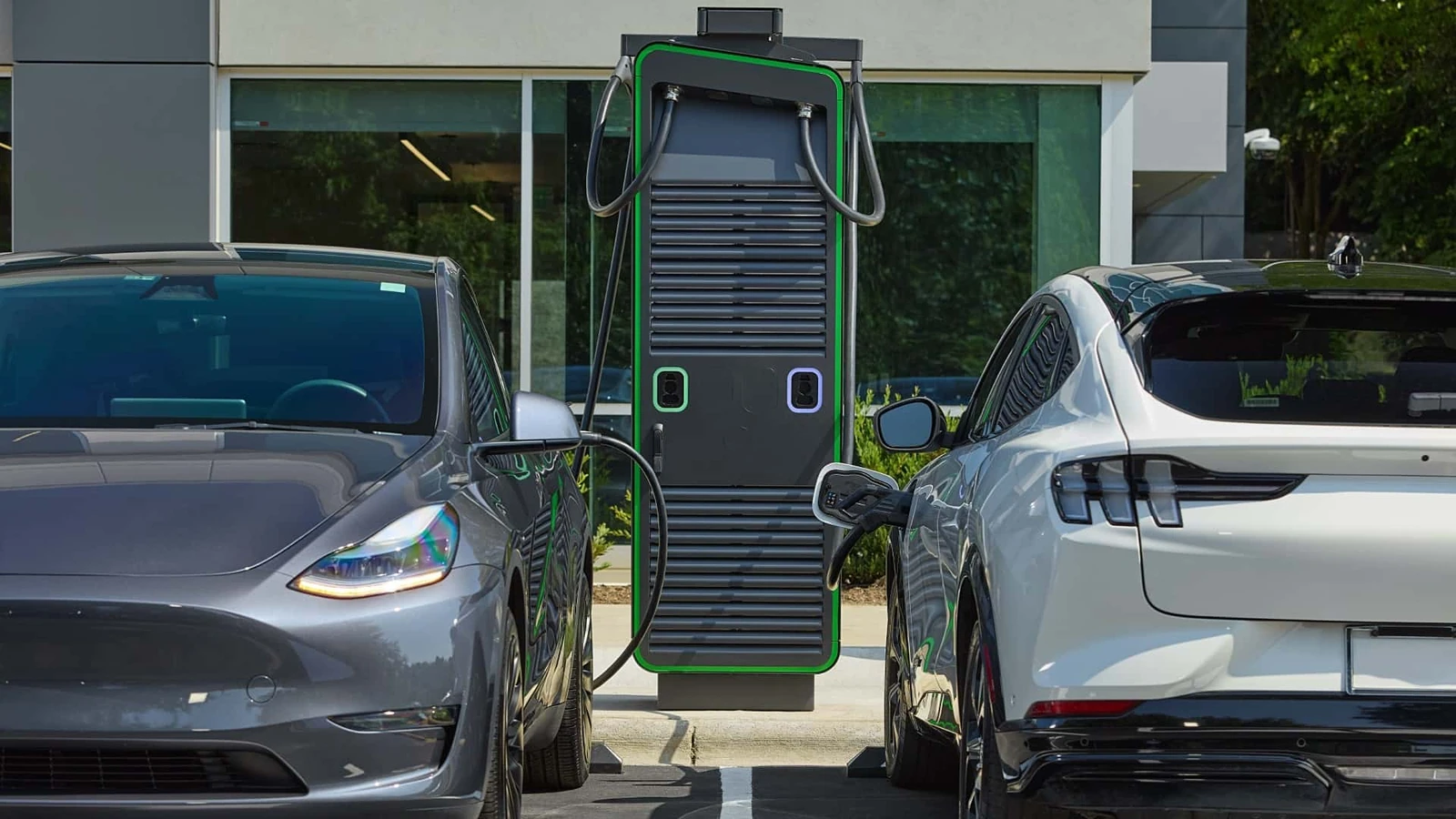
Alpitronic is building a $33.94 million factory in Fort Mill, South Carolina, to assemble its 400-kilowatt and 1,000-kilowatt DC fast chargers for the U.S. market. The Italian charging equipment maker says production at the 173,315-square-foot site is scheduled to begin in early 2027, with the plant due to go online in February of that year.

What the Fort Mill plant will do

The facility will assemble the HYC400 and HYC1000 stalls, the hardware used by operators including Ionna, Walmart, Mercedes-Benz and BP Pulse. Beyond assembly, Alpitronic says the site will serve as a testing lab, repair centre, logistics hub and warehouse, and it is expected to create 70 jobs.

Alpitronic will put $33.94 million into the project, with $200,000 coming from York County's Coordinating Council for Economic Development as a Set-Aside grant toward building improvements. The company's North American headquarters is in Charlotte, North Carolina, while its global base is in Bolzano, Italy.

Alpitronic has not announced how many chargers the Fort Mill plant will produce each year. The company has only said the facility will boost output of its 400 kW and 1,000 kW stalls.

The hardware and why efficiency matters

The HYC400 is an all-in-one dispenser that can deliver up to 400 kW to a single connected EV without a separate power cabinet, and it is the current charger of choice for Ionna and Walmart. The HYC1000 pairs a 1,000 kW power cabinet with up to four stalls, each able to deliver up to 600 kW to a single EV, with two ports per stall and dynamic allocation of power between vehicles.

Alpitronic says its use of silicon carbide components sets its dispensers apart from most competitors, lowering energy losses and, by extension, what drivers pay for a top-up. The company claims SiC modules enable 97.5% efficiency and allow for smaller, quieter and cooler stalls.

That efficiency claim is a manufacturer figure rather than an independently measured result, but it points at where charging operators feel the difference: less energy lost in conversion means more of what a site pays for reaches the car, which feeds directly into the price of a fast-charging session.

A U.S. footprint that is still taking shape

The South Carolina announcement follows Alpitronic's first local manufacturing facility, opened in Wisconsin in 2024. Patrik Herrnegger, CEO of Alpitronic Americas, said North America is central to the company's next phase of growth and that Fort Mill will put U.S. production under its direct control, bringing it closer to customers.

Alpitronic's stalls are a common sight in Europe, and its U.S. presence has so far been built on imported hardware sold to network operators. Local assembly shortens the supply line to those operators and gives Alpitronic a repair and logistics base on the same continent as its customers, which matters for uptime as much as for unit cost.

The plant is not the only U.S. charging factory in play, and its early-2027 timing means Alpitronic will be assembling chargers in America roughly three years after its Wisconsin site opened. For drivers, the practical effect depends on how quickly operators such as Ionna and Walmart expand their networks with the hardware it builds.
Open this article ↗
Electric / TDCN ORIGINAL

Mitsubishi ASX VR-e priced from $45,990 drive-away, arriving late 2026

Mitsubishi's new electric small SUV is unrelated to the petrol ASX and tops out at $68,990 drive-away for the 342kW GSR.

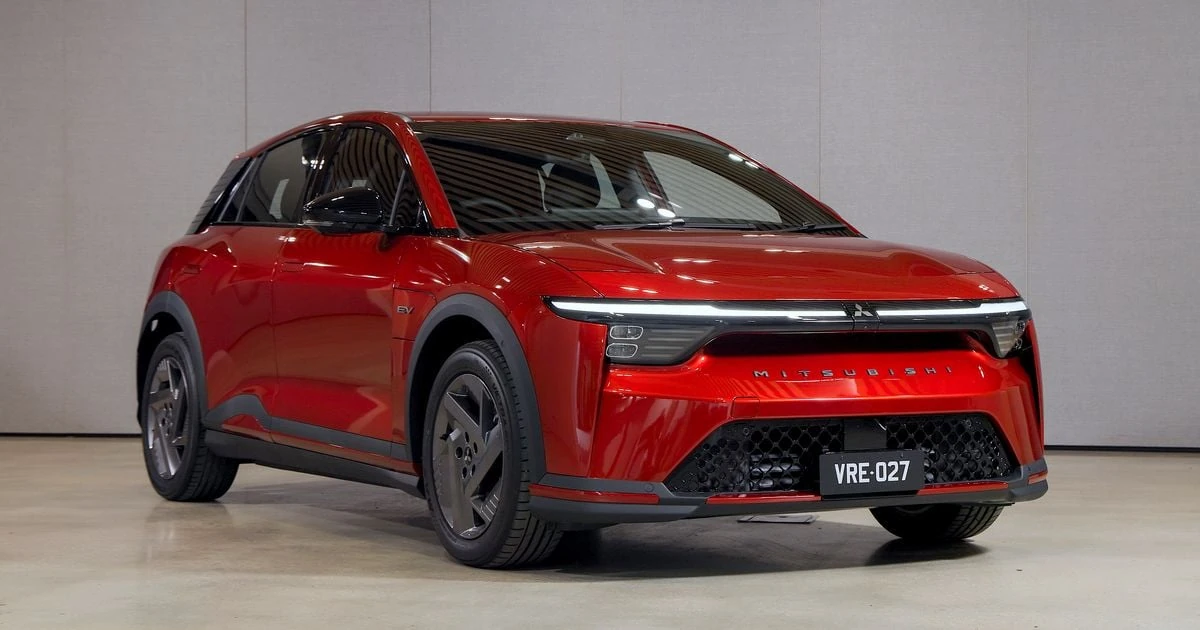
Mitsubishi Motors Australia has announced pricing for the ASX VR-e, a small electric SUV due in showrooms before the end of 2026, with launch drive-away pricing starting at $45,990 for the single-motor rear-wheel drive LS. The range climbs to $68,990 drive-away for the dual-motor all-wheel drive GSR, which lists at $64,990 before on-road costs.

The ASX VR-e shares its name with Mitsubishi's existing petrol small SUV but nothing else: it is based on the Taiwanese-made Foxtron Bria and is a separate model line. Mitsubishi detailed the lineup early in October before confirming prices.

Single and dual-motor powertrains

LS, Aspire and Exceed variants use a single electric motor producing 171kW and 345Nm, driving the rear wheels, with a claimed 0-100km/h time of 6.8 seconds. The GSR adds a second motor for all-wheel drive, lifting outputs to 342kW and 700Nm and cutting the claimed 0-100km/h sprint to 3.9 seconds.

Every ASX VR-e uses a 57.7kWh lithium iron phosphate battery sourced from CATL, built on a 108-cell prismatic high-voltage architecture operating at approximately 350V, with the motors running at 400V. Mitsubishi lists five stages of regenerative braking and a dedicated one-pedal drive mode, and all variants offer vehicle-to-load capability through an external outlet for powering small appliances. Eco, comfort and sport drive modes are fitted across the range, along with light, standard and heavy steering modes; only the GSR allows front-to-rear power delivery to be adjusted from 50/50 to 30/70.

Range varies sharply by grade

Mitsubishi quotes a claimed 403km for the LS, 398km for the Aspire, 380km for the Exceed and 328km for the GSR. The pattern follows the hardware: the single-motor grades go further, and the 342kW all-wheel drive GSR gives up the most. The sources do not state which test cycle those range figures are measured on, so the cycle has not been confirmed.

Charging details are only partly published. The maximum AC charge rate is listed at 6.6kW for both the single-motor and dual-motor versions. A maximum DC charge rate has not been announced in the material available, and Mitsubishi has not yet detailed the equipment fitted to each grade beyond the drivetrain and chassis items described.

Australian chassis tuning

Mitsubishi says the ASX VR-e underwent ride and handling development in Australia, Taiwan and Japan, with revised damper tuning and larger rear bump stop bushings to improve comfort. The power steering was retuned for better on-centre feel, straight-line stability and reduced vibration.

That work is aimed at the roads the car will actually be driven on, and it is the kind of change a buyer cannot read off a spec sheet. The ASX VR-e's success against the Atto 3 Evo, EX5 and EV3 will depend on how that tuning and the launch pricing hold up once the car reaches showrooms before the end of 2026.

Open this article ↗

Keep scrolling to read the next story.

Older articles →