INDEPENDENT AUTOMOTIVE NEWSGLOBAL PERSPECTIVE / AUSTRALIAN EDITION
TDCNTHE DAILY
CAR NEWS.

The road ahead.
Every day.

RSS ↗
Latest/New cars

621 original articles

New cars / TDCN ORIGINAL

Hyundai to reveal 2027 Elantra and 2028 hybrid at AutoMobility LA

The US debut on November 19 follows the sedan's Korean launch as the Avante, with pricing and on-sale dates still under wraps.

Image: Motor1

Hyundai will introduce the next-generation Elantra to the US market at AutoMobility LA on November 19, with a global reveal livestreamed from 9:05 a.m. Pacific Time. The gasoline sedan is confirmed as a 2027 model and the hybrid as a 2028 model.

The sedan has already launched in South Korea as the Avante, and the Los Angeles event serves as its formal US introduction. Hyundai has not yet published specifications, pricing or on-sale dates for either version.

Reveal details and confirmed model years

The presentation runs from 9:05 to 9:35 a.m. Pacific Time at the Los Angeles Convention Center. Hyundai Motor North America president and CEO Randy Parker is scheduled to speak, alongside design chief Brad Arnold and product planning executive Olabisi Boyle.

Both the 2027 Elantra and the 2028 hybrid will stay on display through the public days of the Los Angeles Auto Show, sharing the Hyundai booth with the all-new Tucson. That gives showgoers a look at both cars before either reaches dealers.

Hyundai has not explained why the gasoline car is a 2027 model while the hybrid is a 2028 model, so the reasoning behind the staggered launch has not been announced.

Sales momentum behind the sedan push

The timing reflects real demand for the current car. Hyundai sold 140,614 Elantras from January through October 2026, an 11 percent increase over the same period last year.

In October alone the sedan moved 12,011 units, placing third in the compact-car segment behind the Toyota Corolla and Honda Civic. That matters because rivals keep trimming sedan lineups, and Hyundai is betting compact sedans still have buyers to win.

Design and powertrains

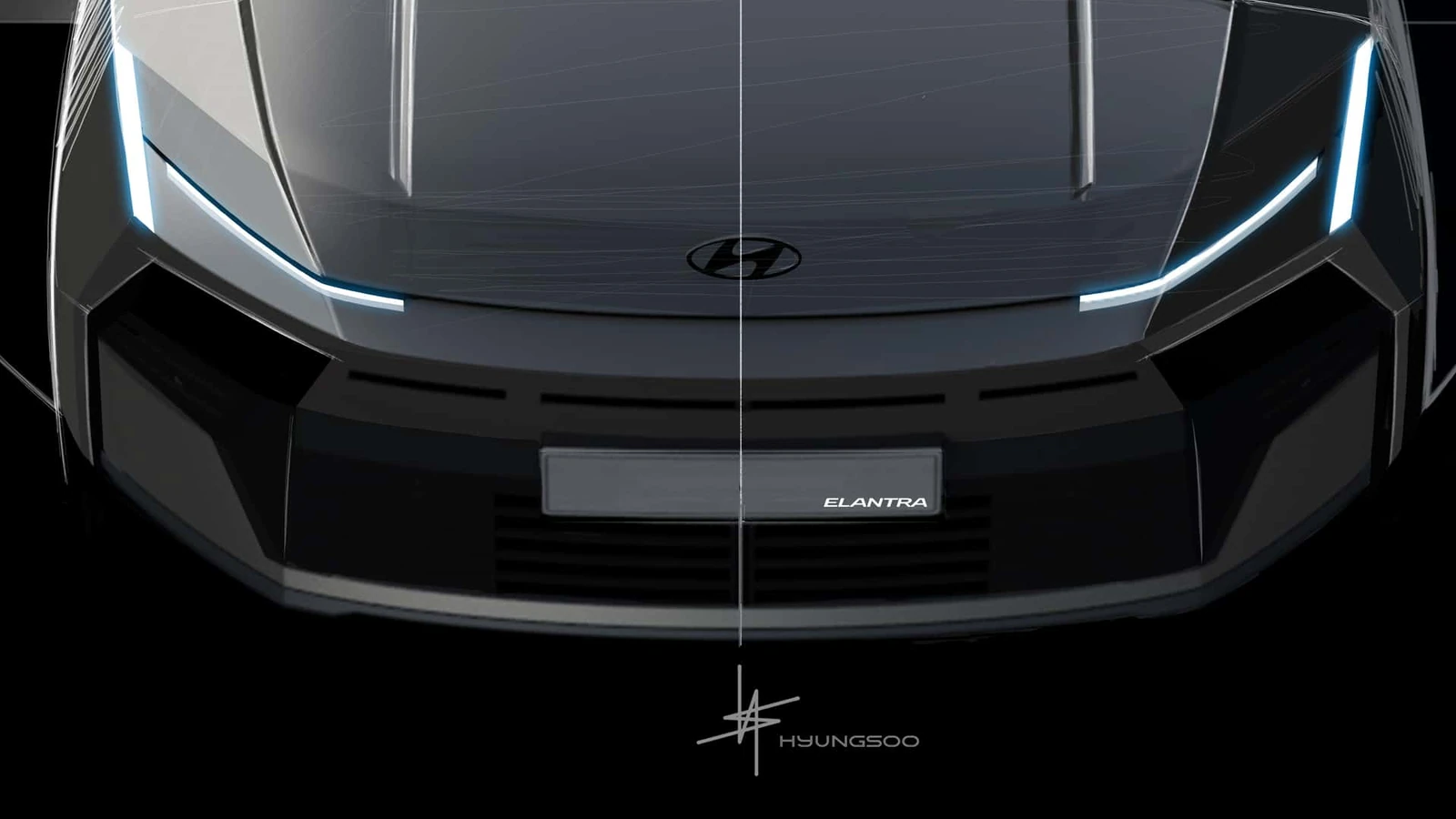
A Hyundai teaser sketch shows a sharper front end, with thin light strips running down the hood corners toward a squared-off nose. It is a clear departure from the softer, more rounded face of the current car and matches the redesign already seen on the Korean-market Avante.

That Avante uses a 2.0-liter gasoline engine rated at 147 horsepower and a 1.6-liter hybrid rated at 155 hp. Both powertrains are expected to carry over, but Hyundai has not published US output or fuel-economy figures.

Early expectations point to a roomier cabin and a larger touchscreen running Hyundai's Android-based Pleos Connect infotainment system with a Gleo AI assistant. None of those features are confirmed for the US-market Elantra.

An Elantra N is in development

Hyundai has said it intends to grow its N range to more than seven models by 2030. A next-generation Elantra N is under development and test mules have already been spotted, though Hyundai has not confirmed its powertrain configuration or output.
Open this article ↗
New cars / TDCN ORIGINAL

Nissan and Food Reborn unveil body panels made from discarded pineapple leaves

The composite hood, developed with an Okinawa materials firm, is claimed to outperform flax-based natural fibre composites and will be shown at a Tokyo exhibition.

Image: Motor1

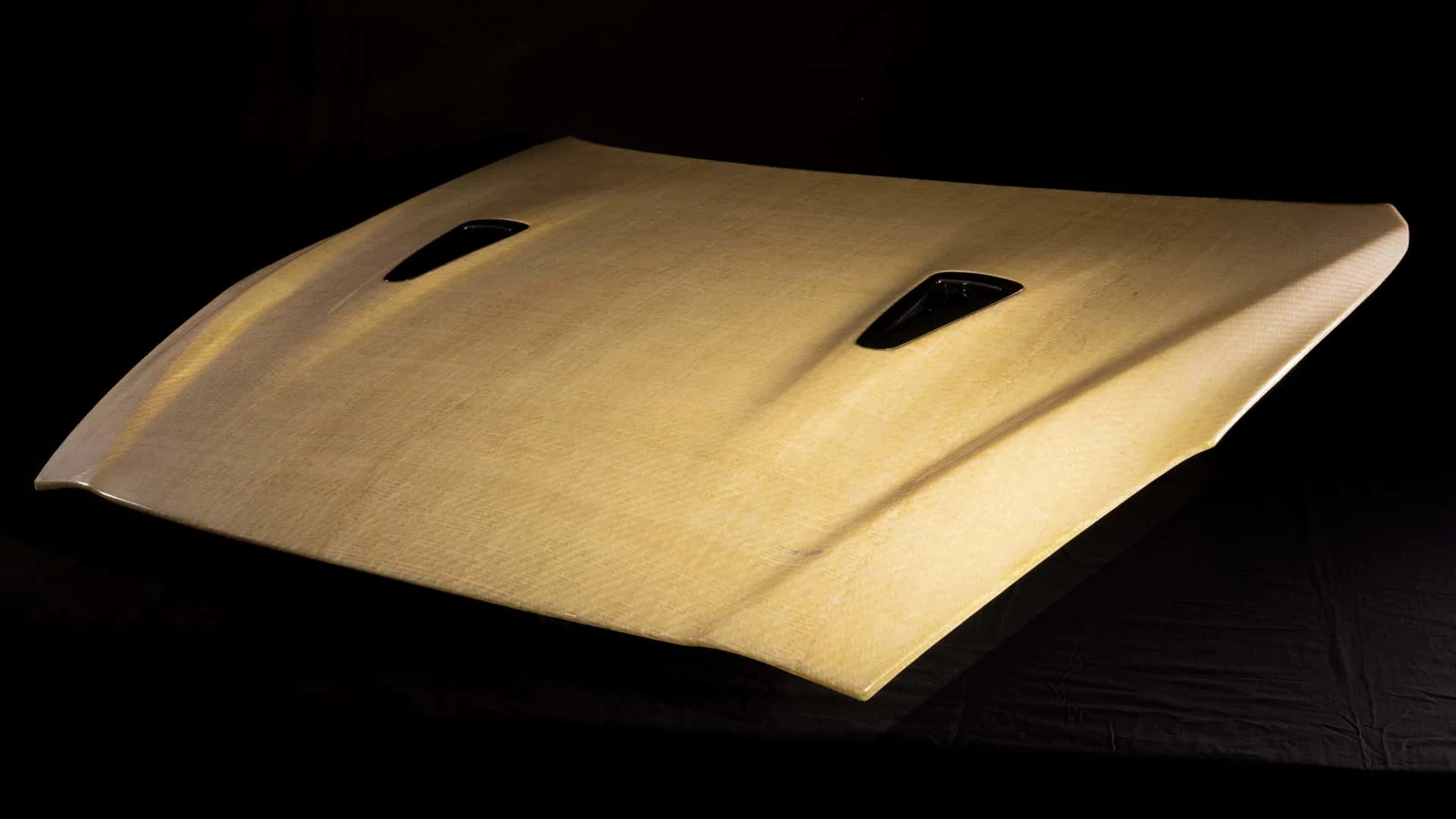
Nissan has developed exterior body panels made from natural fibre-reinforced plastic that uses fibres extracted from discarded pineapple leaves, created with Japanese materials company Food Reborn Co. Ltd. The automaker announced the material on November 17, 2026, a day before it goes on public display.

The panel is aimed at demanding environments including motorsports, where sustainable composites are typically scarce and costly. Nissan says the finished material offers higher tensile strength than conventional natural-fibre composites built on flax, though it has not released test data to let that comparison be checked independently.

From pineapple leaves to a moulded hood

The manufacturing chain runs in several stages: fibres pulled from the leaves are spun into flat yarn, the yarn is woven into fabric, and that fabric becomes the reinforcement layer inside the composite before being moulded into a body panel shape. Under the arrangement, Nissan licenses its natural fibre-reinforced plastic know-how to Food Reborn, covering flat yarn, woven fabric and resin-impregnated prepreg production.

Food Reborn is based in Okinawa, specialises in biodegradable materials and brings its own experience handling pineapple-leaf fibres. The company is set to mark its tenth anniversary in September 2027. Its representative director and CEO, Etsuko Uda, said turning agricultural byproducts like pineapple leaves into high-performance materials for automotive and sporting goods is highly significant.

The raw material is plentiful: farmers worldwide discard more than 50 million tons of pineapple leaves every year, a volume that lets the partnership draw on the waste stream without touching food production.

Motorsport is the target, road cars are not yet

Nissan frames the panel as suited to motorsport, where natural fibre-reinforced plastics are already required by some racing series for modified exterior body panels, but supply of those composites has long been limited and expensive. The pineapple-leaf version is intended to ease that constraint rather than simply to decorate a concept.

The catch is that Nissan has not said whether the composite will reach a production road car. The current panel exists as exhibition technology, and no lifecycle assessment or quantified carbon-footprint figure for the material has been published yet. Until those numbers exist, the environmental case rests on the waste-stream story rather than measured emissions savings.

Nissan ties the work to its broader push to build more interesting cars under its Green Program 2030 sustainability targets. Tatsuzo Tomita, Nissan's corporate executive responsible for technology development, said the material uses pineapple leaves, a byproduct usually unutilised and discarded, while delivering the performance required in demanding environments such as motorsports.

Where to see it

The hood will be shown publicly at the SAMPE Japan Advanced Materials Technology Exhibition 2026, running November 18 through 20 at Tokyo Big Sight's East Hall. Nissan and Food Reborn will share a booth there, alongside the industry group and trade newspaper that organise the annual event.

Nissan's claim of a tensile-strength advantage over flax-based composites lands in a category BMW already uses in motorsport and in the M Concept Neue Klasse, the design study previewing its first fully electric M car. Independent test figures would let buyers and racing teams weigh the pineapple material against established flax composites; for now the comparison stands on Nissan's word alone.

Open this article ↗

Keep scrolling to read the next story.

Older articles →