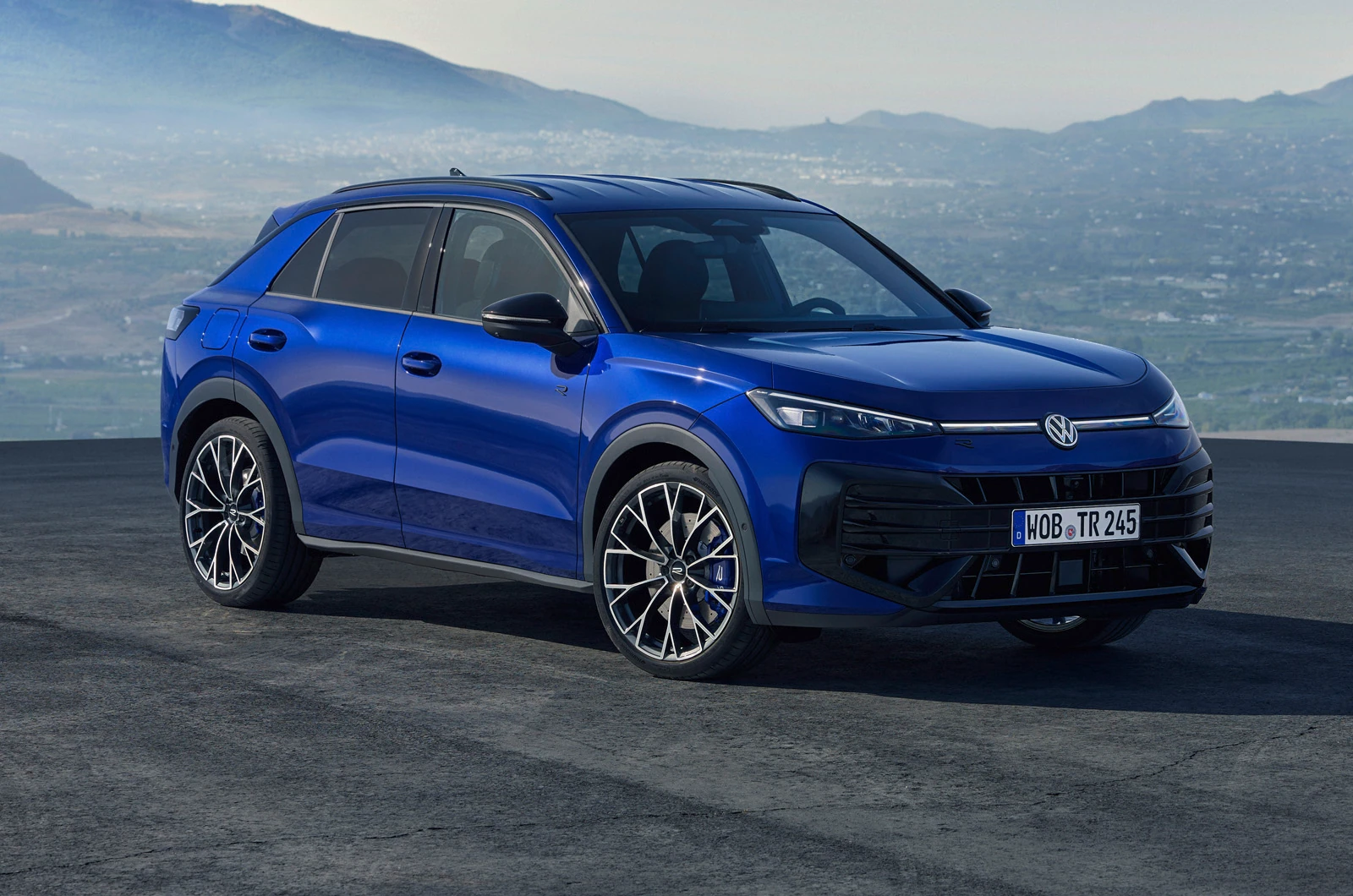
Volkswagen has revealed the 2027 T-Roc R, a second-generation performance version of its small SUV that becomes the first R model to use 48V mild-hybrid assistance. The powertrain pairs the new Evo5 version of Volkswagen's EA888 2.0-litre turbo four with the electrical system, producing 245kW and 420Nm.
Volkswagen quotes a 0-100km/h time of 5.0 seconds and an electronically limited top speed of 250km/h. The car is due to launch in Europe in early 2027, roughly a year after the standard second-generation T-Roc, with pricing to be announced closer to that date.
What the mild-hybrid system does
The 48V starter-generator is not there for electric-only running. Volkswagen R says it improves efficiency and performance, driving an electrically driven compressor for sharper response low in the rev range and increasing energy recuperation under braking to support a fuel-saving coast function. Autocar describes the mild-hybrid setup as mitigating turbo lag and giving the Evo5 engine more torque at low engine speeds.
Official WLTP figures are 8.3-7.9L/100km with CO2 emissions of 190-181g/km. Those are the only consumption numbers released so far, and they are WLTP, not EPA or CLTC, so they cannot be lined up against figures from other test regimes.
The mild-hybrid EA888 is expected to spread to other models as Volkswagen works to make its range compliant with tougher emissions rules, though the company has not said which cars will get it next. That matters because the T-Roc R is effectively a preview of the drivetrain that will underpin future fast Volkswagens, not a one-off.
Chassis, modes and running gear
The T-Roc R uses 4Motion all-wheel drive with R-Performance torque vectoring, splitting torque not only between the front and rear axles but also between the two rear wheels. The rear torque splitter first appeared on the Audi RS3 and later on the Volkswagen Golf R and Cupra Formentor; Volkswagen says the unit in the T-Roc R runs new software for improved behaviour and response.
Dynamic Chassis Control adaptive dampers and progressive steering are standard. The dampers include a Race mode with Special and Drift sub-modes: Special was honed on the Nürburgring Nordschleife, while Drift sends the bulk of torque to the rear axle to allow cornering in the style of all-wheel drive rally cars on closed tracks, according to Volkswagen.
A quad-outlet exhaust is fitted as standard, with a lightweight Akrapovic R-Performance titanium unit offered as an option in Europe. The car also carries over the Golf R's high-rev start-up: pressing the start button without the brake for at least 1.5 seconds and then pressing the brake pedal briefly raises engine start speed to 3000rpm, accompanied by what Volkswagen calls a deep acoustic rumble from the exhaust. Autocar notes the backfire noise on deceleration is retained too.
R-Performance brakes with blue calipers, unique front and rear bumpers with R design elements, and new 19-inch Zandvoort alloy wheels are part of the package, with 20-inch Warmenau forged wheels available as an option.
Position in the range and what comes next
Volkswagen describes the T-Roc R as currently its most powerful SUV. Autocar reads that wording as a hint that the short-lived Tiguan R could return, with the brand marking 25 years of its R division in 2027.
The new model is one of a small group of dedicated hot crossovers, sitting alongside the closely related Cupra Formentor VZ and the most potent BMW X2. It shares its basic engine with the Golf R, Audi S3, Cupra Leon VZ and Formentor, but is the first to add the 48V hardware.
Volkswagen says the MQB architecture beneath the car has taken quantum leaps in its evolution, and that the T-Roc R represents a new level of the R SUV models in driving dynamics, driving safety and ride comfort. Those are manufacturer claims rather than independently measured results.
Price and Australian availability
European pricing has not been announced. Autocar expects the T-Roc R to nudge towards £50,000 when Volkswagen confirms figures nearer the early 2027 launch.
Volkswagen has not announced Australian availability or pricing for the new T-Roc R, so any Australian figure circulating now is not yet official.