INDEPENDENT AUTOMOTIVE NEWSGLOBAL PERSPECTIVE / AUSTRALIAN EDITION
TDCNTHE DAILY
CAR NEWS.

The road ahead.
Every day.

RSS ↗
Latest/Industry

621 original articles

Industry / TDCN ORIGINAL

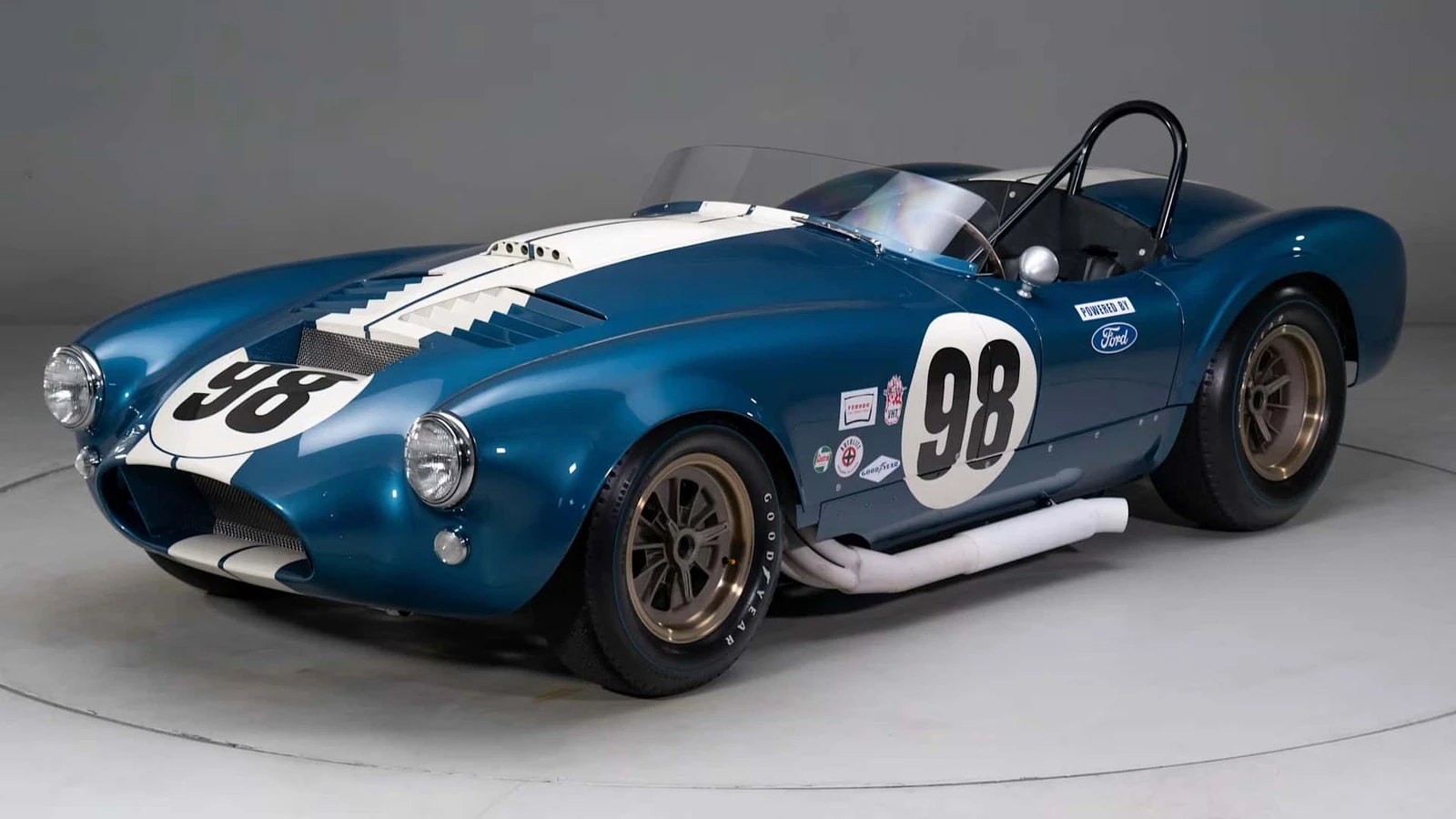
Ken Miles' Flip-Top Shelby Cobra heads to auction with a $25 million estimate

Mecum will offer the 1964 Shelby 427 Prototype Factory Team Cobra, chassis CSX2196, at Kissimmee in January 2027 with a pre-sale estimate above $25 million.

Image: Motor1

A Shelby Cobra that Ken Miles reworked into a one-off race prototype will cross the block at Mecum's Kissimmee auction in Florida with an estimate in excess of $25 million. The car, chassis CSX2196 and known among collectors as the Flip-Top, is scheduled to be sold on January 16, 2027, during an event running from January 5 to January 17.

What makes CSX2196 different from other Cobras

CSX2196 began as a standard 289-style roadster fitted with a 427 engine and raced as a factory Shelby American team car at the 1964 12 Hours of Sebring. After Sebring, Shelby American stripped the car to its frame rails and lengthened the chassis by three inches, adding Daytona Coupe style bracing and triangulation. That work makes it the only Cobra roadster built on a modified Daytona Coupe platform, and one of just two Cobras assembled at Shelby American in the US alongside the prototype Daytona Coupe itself.

Mecum points to documented originality to support the estimate: the car shows 4,096 original miles and retains its original chassis, body, engine, brakes, suspension, gauges and chassis tag, unusual for a car of this age that also raced hard. A four-year restoration by Legendary Motorcar used only original or new-old-stock parts to return it to its 1964 Nassau specification, including period-correct Goodyear Blue Streak tires. Peter Miles, Ken Miles' son, called it "the ultimate Cobra".

Flip-Top bodywork and the aluminum 427

The Flip-Top nickname comes from the car's one-off aluminum body, whose front and rear clips pivot open like a Daytona Coupe's, a detail Shelby designer Pete Brock confirmed. Underneath sits a lightweight aluminum 427 side-oiler built in period by Ford engine specialist Mose Nowland; larger cylinder sleeves needed for the aluminum casting brought actual displacement down to 390 cubic inches despite the 427 name.

With rare 58mm Weber carburetors, the engine produced over 500 horsepower in a car weighing around 1,800 pounds, an extreme power-to-weight ratio even by 1960s sports racer standards. At Nassau Speed Week, the CSX2196, built specifically to beat the Corvette Grand Sports, opened an eight-second lead over the field on the first lap alone, ahead of Ford GT40s and Ferrari's 275 Comp Speciale. Brock called it "the most sophisticated engineering car the Shelby operation ever produced".

The restored car has taken class honors at both Pebble Beach and Amelia Island, a history that runs alongside the Shelby Daytona Coupe's own auction record set earlier this year. For buyers, the estimate rests less on Cobra provenance in general than on a combination that exists nowhere else: a works-racing history, a chassis rebuilt on Daytona Coupe lines, and a body and engine that survived largely intact.

What the auction leaves open

Mecum has published an estimate rather than a reserve or a guaranteed result, so the $25 million figure is a pre-sale guide and the final price will be set by bidding in January 2027. The sources do not state whether the car has been offered at auction before, nor how the estimate compares with the Daytona Coupe record referenced in the listing.
Open this article ↗
Industry / TDCN ORIGINAL

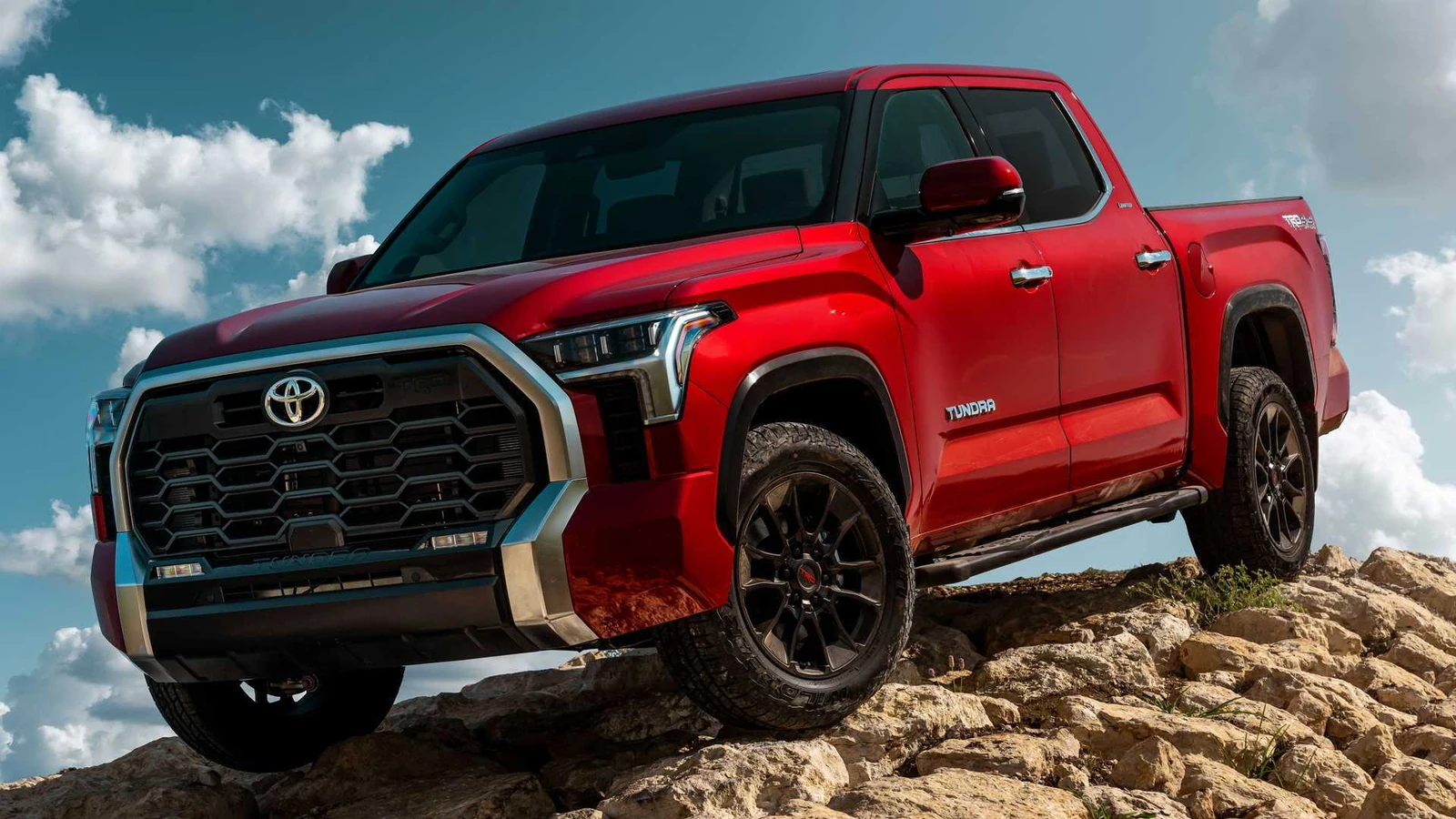
Toyota recalls 62,000 Tundra pickups in the US over camshafts that can snap

The campaign covers non-hybrid 2022-2023 and 2025-2026 trucks built with a suspect engine lot, though Toyota says only about 300 bad parts may have reached production.

Image: Motor1

Toyota is recalling roughly 62,000 Tundra pickups in the United States because a camshaft in the twin-turbocharged 3.4-litre V6 can crack and break while the truck is being driven. A snapped camshaft can cut motive power suddenly, and losing drive at highway speed raises the risk of a crash.

Which trucks are covered, and which are not

The recall is limited to non-hybrid Tundras from the 2022, 2023, 2025 and 2026 model years, built with the 3.4-litre twin-turbo V6 during a production window when faulty camshafts entered the supply chain. Toyota's filing says 2024 model year Tundras, every i-Force Max hybrid Tundra and Sequoia SUVs that share the same engine are not affected by this particular camshaft batch.

Toyota traced the fault to an incorrectly manufactured camshaft. It estimates only about 300 of the bad parts may actually have made it into production trucks, out of the 62,000 vehicles pulled into the campaign as a precaution.

This is a separate problem from Toyota's earlier engine recall on the Tundra, which dealt with manufacturing debris left inside the block. Both trace back to engine assembly, but Toyota has handled them as distinct recalls with distinct remedies.

The dealer inspection and the wait for letters

Owners do not need to act yet. Toyota will notify every known owner of an affected truck and ask them to bring it to a dealer, where the camshaft is checked against the suspect production lot. If the part came from that lot, the dealer replaces it at no cost; trucks with a camshaft from outside the lot need no further work.

Owner notification letters are expected by mid-January 2027, so some owners may not hear from Toyota for about two months. Owners who want an answer sooner can check their vehicle identification number against Toyota's recall records, or call the Toyota Brand Engagement Center on 1-800-331-4331 to confirm whether a specific VIN is included.

Toyota has not tied the defect to any confirmed crashes or injuries in its filing. The risk was judged serious enough for a full inspection campaign rather than a software fix or a simple warning.

The recall as described covers the US market. Whether Tundras sold in other countries fall under the same campaign is a question the filing does not settle, so owners elsewhere have no confirmed answer yet.

Why an inspection campaign rather than a blanket replacement

Inspecting all 62,000 trucks to find roughly 300 suspect parts is a wide net, but it is the only way to identify which engines actually received a camshaft from the bad lot, since the defect is a manufacturing error rather than a design flaw across the whole engine family. For owners, the practical effect is a short dealer visit and, in most cases, no repair at all.

The exclusion of the i-Force Max hybrid and the Sequoia is the detail that matters most for buyers: sharing the 3.4-litre twin-turbo V6 does not put those vehicles in this campaign, because Toyota says the suspect batch did not reach them. The recall also skips the 2024 model year entirely.

Open this article ↗

Keep scrolling to read the next story.

Older articles →