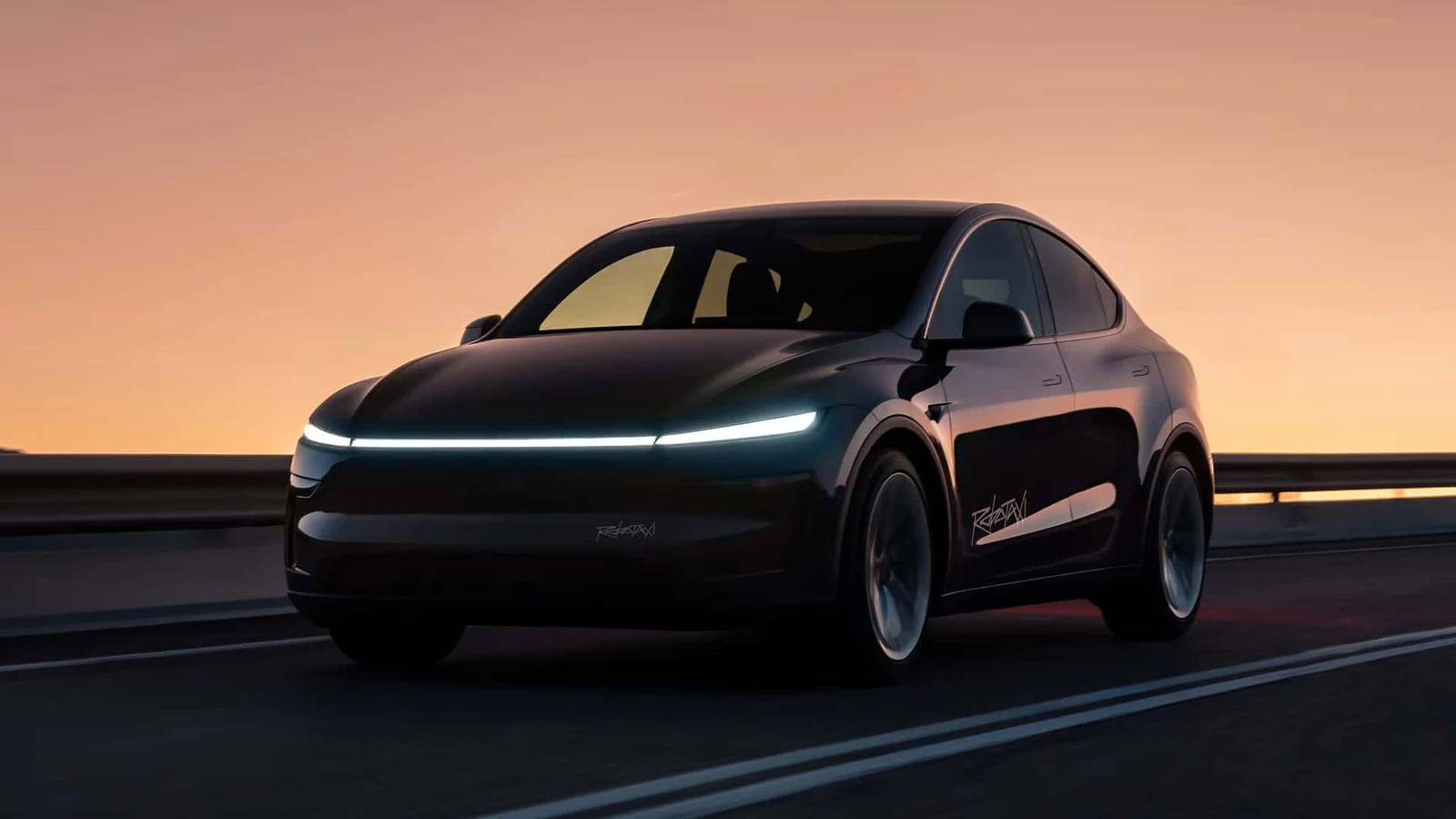
Tesla intends to build a fully autonomous version of the Model Y with no steering wheel or pedals, designed to carry groups of six or seven people, CEO Elon Musk said at the New York Times DealBook Summit on Wednesday.
The vehicle would extend the driverless formula Tesla has already applied to the Cybercab, its two-seat robotaxi, onto a larger platform aimed at families and group travel.
Why Tesla wants a bigger robotaxi
Musk framed the Model Y variant as a complement to the Cybercab rather than a replacement. He said the two-seat Cybercab covers about 90 percent of all passenger miles, leaving roughly 10 percent of rider miles that need more than two seats.
"It's going to make sense for us to make cars that can seat different amounts of people," Musk said. "We still need autonomous vehicles if you've got four or six, or a whole family".
The logic is straightforward: a small two-seater keeps production costs down, but it cannot serve a family trip. A driverless Model Y lets Tesla chase the remaining group-travel demand without designing an entirely new model from scratch.
The regular Model Y stays
Buyers who want to drive themselves are not being pushed aside. The standard Model Y with a steering wheel remains on sale for the foreseeable future, and Tesla already uses Model Ys with conventional controls in its autonomous fleet.
The new variant would differ by deleting those controls at the factory, creating a car passengers ride in but cannot drive, much like the Cybercab.
That distinction matters for how the car is owned and used. A vehicle without pedals or a wheel is built for managed fleet service first, which raises the question of whether private buyers will be offered one at all.
Cybercab economics set the template
Tesla's approach with the Cybercab has been to strip interior complexity to hold costs down, a strategy Musk has linked to a sub-$30,000 price target for that model.
The Cybercab only recently became available to hand-picked private buyers, and even then with conditions attached, including where the car is permitted to operate and a mandatory $300 per month autonomy subscription required for the car to move.
That subscription changes the maths for anyone thinking of owning one. A driverless Model Y carrying the same monthly cost on top of the purchase price may suit fleet operators more naturally than private households, at least while the subscription model stands.
Timing and pricing still open
Musk did not say when, or whether, the autonomous Model Y would be offered to the public to buy. Tesla has not announced a launch date or a price for the variant.
What is clear is the direction: Tesla is building out a robotaxi family with different seating capacities rather than a single vehicle. Whether the six- or seven-seat Model Y reaches private driveways or stays inside a managed fleet is the part still to be settled.