INDEPENDENT AUTOMOTIVE NEWSGLOBAL PERSPECTIVE / AUSTRALIAN EDITION
TDCNTHE DAILY
CAR NEWS.

The road ahead.
Every day.

RSS ↗
Latest/Safety

621 original articles

Safety / TDCN ORIGINAL

NHTSA opens investigation into Honda start-stop failures across 1.03 million vehicles

The defect inquiry covers 2024 to 2026 Honda Passport, Odyssey, Pilot and Ridgeline models plus the Acura MDX after 701 complaints of engines not restarting.

The National Highway Traffic Safety Administration has opened a defect investigation into the automatic engine start-stop system used on more than a million Hondas and Acuras, after owners reported engines failing to restart once the system shut them down at a stop. The inquiry, announced on Friday, November 13, covers 1,033,632 vehicles from the 2024 through 2026 model years.

The affected models are the Honda Passport, Odyssey, Pilot and Ridgeline, along with the Acura MDX. NHTSA's Office of Defects Investigation has received 701 complaints about the system, which is designed to cut the engine when a vehicle comes to a complete stop and restart it when the driver releases the brake pedal.

What owners reported

The complaints allege that the engines are failing to restart once they have been shut off by the start-stop system, according to NHTSA documents. The agency says there have been no injuries linked to the problem.

The system exists to improve fuel economy by limiting idle time, so a failure to restart is more than an inconvenience: it can leave a driver stranded at a light with a dead engine in traffic. That the agency has logged 701 complaints across a population of just over a million vehicles gives a rough sense of how widespread owners believe the fault to be, though complaint counts are not a defect rate.

A second look at a familiar fault

This is not the first federal inquiry into Honda's start-stop setup. In 2025 the government investigated the system across 2.2 million units of the Pilot, Odyssey, Passport, Ridgeline, MDX and Acura TLX, a population that included everything in the current investigation except the 2026 model year.

NHTSA says that although the failure looks similar in both groups, the vehicles in the current investigation appear to have different root causes and respond differently to repairs. That distinction matters for owners: a fix that worked on an earlier car may not carry over, so the remedy for these vehicles could differ from the previous campaign.

What happens next

The investigation is at the defect inquiry stage, which means NHTSA is gathering and assessing evidence rather than having ordered a recall. No recall has been announced for the 1,033,632 vehicles covered, and Honda has not yet issued a remedy for the affected models.

The agency has not said when the investigation will conclude; its findings, and any decision on whether to escalate to a formal recall, are still to come. NHTSA says more information should emerge as the inquiry continues.

For drivers of a 2024 to 2026 Passport, Odyssey, Pilot, Ridgeline or Acura MDX, the practical position is unchanged for now: the cars remain on the road, and the question of a fix depends on what the agency finds.
Open this article ↗
Performance / TDCN ORIGINAL

BMW i3 to get simulated gear shifts on M Performance versions after Hyundai Ioniq 5 N test

BMW engineers dismissed Hyundai's N e-Shift as a gimmick until they drove it, and the feature will now appear as Stages on the i3 M60.

Image: Carscoops

BMW will fit simulated gear shifts to performance versions of the new i3 when the car goes on sale next year, and the idea came from driving Hyundai's Ioniq 5 N rather than from BMW's own engineering brief. The feature will be called Stages and will be offered on M Performance grades, which for now means the i3 M60.

BMW dynamics engineer Christian Heiss described the sequence to CarSale.com.au: when Hyundai launched the Ioniq 5 N during the i3's development, BMW's engineers initially thought the simulated eight-speed dual-clutch transmission was a gimmick unsuited to an electric world. Driving the car changed their minds.

What Stages does and why BMW built it

Hyundai's system, branded N e-Shift, mimics the feel of an eight-speed dual-clutch transmission in the Ioniq 5 N, which launched in 2023. BMW's version arrives under a different name and, according to Heiss, a different internal approach. "We've ended up with something close to a gearbox simulation, but we don't call it a gearbox simulation. It's thought out a bit differently, but everyone hoping for a gear shift simulation will be happy with this, hopefully even more than happy," he said.

Heiss framed the case for the feature around driving dynamics rather than nostalgia. BMW's dynamics team argued that paddle shifters bring advantages in drivability and feedback, particularly on track. That reasoning lands on the weakest point of fast electric cars: straight-line pace is easy to deliver, but the interaction between driver and machine that combustion performance models trade on is harder to fake. A staged shift gives the driver something to do and something to feel, which is why BMW's engineers moved from scepticism to signing off on it.

M Performance only, and the hardware explains why

Stages will not be rolled out across the i3 range. Heiss says it is limited to M Performance grades, currently the i3 M60. The reason is physical: those versions get paddle shifters behind the wheel and the cheaper models do not, so the feature follows the hardware rather than a software paywall.

That distinction matters for buyers weighing up an i3. Anyone who wants the simulated shifts will need to step up to the M Performance variant, so the engagement argument BMW is making doubles as a reason to spend more. It also means the standard i3 will drive like a conventional single-speed EV, with no staged soundtrack or paddle interaction at all.

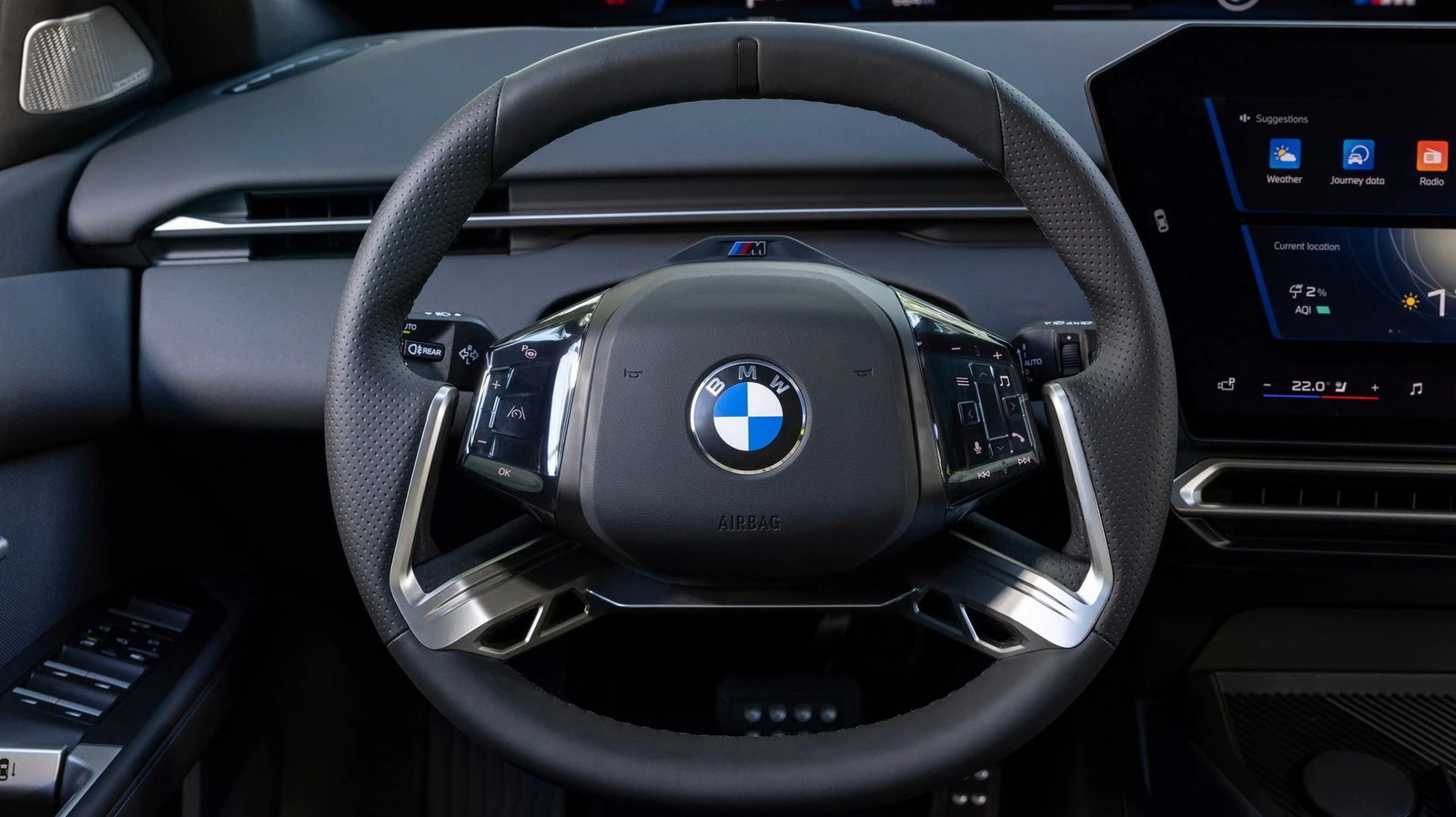
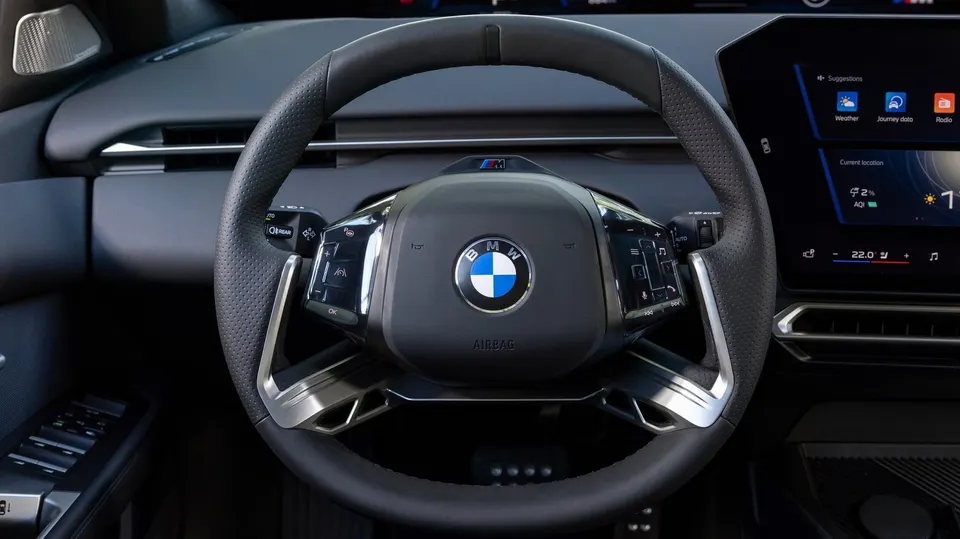
The i3's steering wheel-mounted paddles are the hardware that will let M Performance drivers trigger simulated gear shifts.
The i3's steering wheel-mounted paddles are the hardware that will let M Performance drivers trigger simulated gear shifts., Image: Carscoops

What BMW has not announced

BMW has not published pricing for the i3 or for the Stages feature, and the sources do not give a figure for either. The i3's on-sale date is given only as next year, with no month confirmed. Output, battery size, range and charging figures for the i3 M60 are also absent from the material, so the car's test cycle and range claims are still to come.

What is clear is the competitive read. A mainstream German maker has publicly credited a Korean rival with pushing it toward a feature it had already dismissed, and the result is a performance EV that leans on theatre as well as torque. For drivers, the practical question is whether that theatre is worth the jump to an M Performance model. For BMW, the bet is that engagement, not just acceleration, is what keeps buyers interested in fast electric cars.

Open this article ↗

Keep scrolling to read the next story.

Older articles →