INDEPENDENT AUTOMOTIVE NEWSGLOBAL PERSPECTIVE / AUSTRALIAN EDITION
TDCNTHE DAILY
CAR NEWS.

The road ahead.
Every day.

RSS ↗
Latest/New cars

551 original articles

New cars / TDCN ORIGINAL

Hyundai Elantra N prototype spied testing with wider tyres and a possible 2.5-litre turbo

A camouflaged test car caught in South Korea hints at a bigger engine and a wider track, though Hyundai has confirmed neither the powertrain nor a launch date.

Image: Motor1

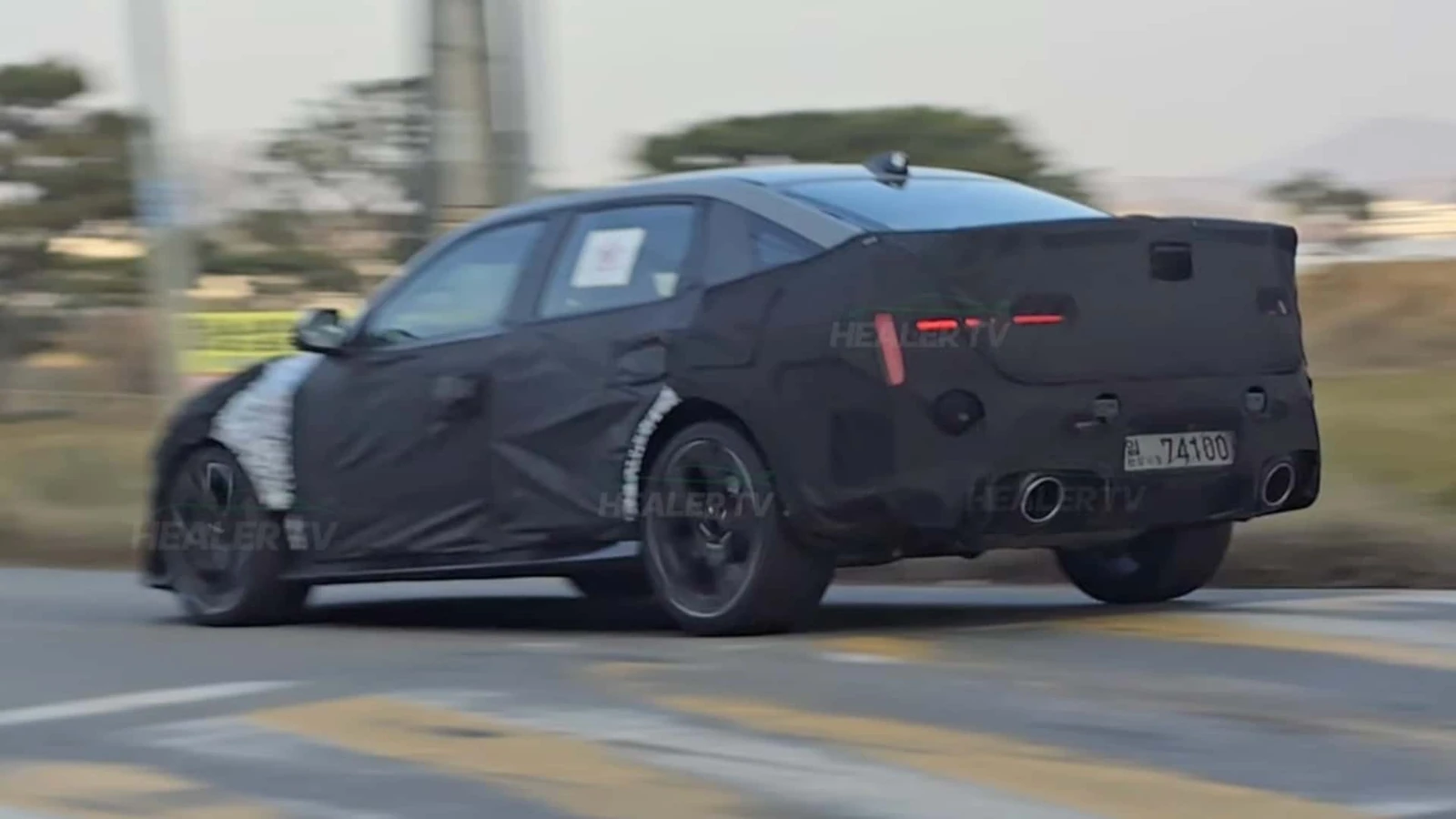
Hyundai is already testing a next-generation Elantra N on public roads in South Korea, with a heavily camouflaged prototype caught on video by the Korean channel Healer TV. The sighting is the first unofficial look at the performance sedan that will sit above the newly debuted eighth-generation Elantra, which launched in South Korea as the Avante.

The prototype shows a lower, more aggressive front end, pronounced side skirts, wider fenders and two large round exhaust tips set near the outer edges of the rear bumper. Previous test cars have worn red brake calipers and tyres sized 275/30ZR19, considerably wider than the 245-section rubber on the current model.

A wider stance and hardware to match

The test car appears to run a wider track than today's Elantra N, a change that should sharpen grip and stability. Camouflage around the wheel arches hides some of the bodywork, and a rear spoiler looks more prominent than before, though the wrapping makes the final shape hard to judge.

The base design carries over from the standard eighth-generation Elantra, which itself adopts sharper bodywork, slim lighting elements, pronounced fenders and a fastback-like roofline. Hyundai is clearly giving the N variant its own look on top of that, with the lower nose and deeper side skirts visible on the prototype.

The engine question

The biggest expected change sits under the bonnet. Hyundai is tipped to replace the current Elantra N's turbocharged 2.0-litre four-cylinder with a larger 2.5-litre turbocharged unit. The automaker has not confirmed the swap or published any figures for the Elantra N.

Hyundai already uses versions of that 2.5-litre turbo-four elsewhere, including the Sonata N Line, where it makes 290 horsepower and 311 pound-feet of torque, and the Genesis G70, which produces as much as 300 hp from a similar setup. Previous reports have suggested the next Elantra N could exceed 330 hp, a significant jump on the current car's 276 hp and 289 lb-ft.

That gap is the number to watch. If the 330-plus hp figure holds, the new Elantra N would move from scrappy front-wheel-drive underdog to something closer to the output of larger performance sedans, and the wider tyres and track spotted on the prototype suggest Hyundai is preparing the chassis for exactly that.

Manual gearbox and timing still open

The current Elantra N can be ordered with a six-speed manual or an eight-speed dual-clutch automatic. Hyundai has not said whether either transmission carries over to the new generation.

The stick shift matters because affordable three-pedal performance cars are getting harder to find, and dropping it would narrow the Elantra N's appeal to the buyers who made its reputation. Hyundai has also stayed quiet on power output, pricing and a release date.

The next Elantra N could arrive as early as 2027, though no official debut date has been announced. Until Hyundai publishes specs, the engine, transmission and launch timing all remain unconfirmed.
Open this article ↗
New cars / TDCN ORIGINAL

BMW reveals secret 1990s M7 prototype with an M5 V8 and manual gearbox

The one-off E38 7 Series packed the E39 M5's 394 hp S62 V8 and six-speed manual, and BMW Classic has only now shown it publicly.

Image: Motor1

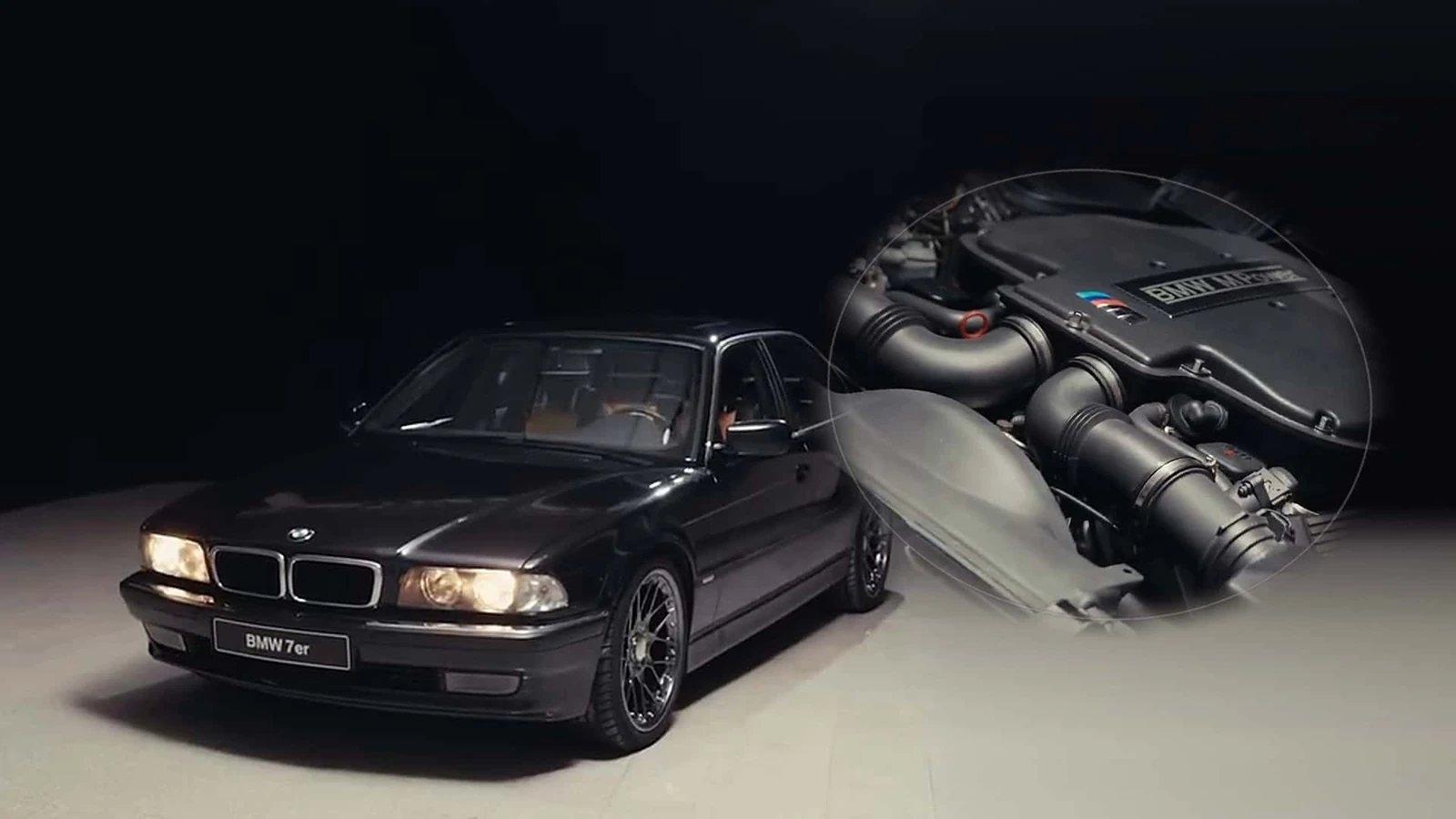
BMW built a secret M7 prototype in the 1990s and has only now shown it publicly, via a video posted on social media by BMW Classic. The car began life as a 740i before being reworked with the engine and gearbox from the E39 M5.

It never reached production, and BMW has not explained why the project stopped at a single car. The prototype is an E38-generation 7 Series, the flagship saloon of the 1990s, and it stayed under wraps for close to three decades.

What is under the skin

The engine is the S62, a 4.9-litre naturally aspirated V8 rated at 394 horsepower at 6,600 rpm, driving the rear wheels through a six-speed manual gearbox. BMW quotes a top speed of 155 mph (250 km/h), the same electronically limited figure as the E39 M5 that donated the drivetrain. The prototype weighs 4,134 pounds (1,875 kg).

A V8 and a clutch pedal in a full-size luxury saloon is the detail that stands out most, because nothing in today's flagship class offers three pedals. The weight also puts the idea in perspective: this was never going to be a sports car, but the M5's engine in a much larger body is a combination no BMW buyer could order at the time.

The clues are deliberately subtle

BMW did not dress the car up. There are no aggressively sculpted bumpers, oversized air intakes or prominent M badges. The giveaways are dark cross-spoke BBS wheels and a quad exhaust with two outlets on each side of the rear bumper.

Inside, black and beige leather trim is joined by an M steering wheel and the six-speed manual shifter. A telephone handset mounted in the rear centre console is a period touch from the late 1990s. For a car meant to preview a flagship M sedan, the restraint is the point: it looks like an ordinary E38 until you notice the details.

Why a production M7 never happened

BMW has not given a reason, so the explanation remains open. The 750i already sat at the top of the regular 7 Series range with its V12, while the E39 M5 delivered broadly the same V8 performance in a smaller, lighter and presumably cheaper package.

That overlap is the most plausible reading of the decision: a production M7 would have had to justify itself against two cars BMW already sold, one with more cylinders and one with less weight. Enthusiasts have since built their own E38s using E39 M5 engines and manual gearboxes, but a factory-built example carries a different kind of credibility.

Whether BMW will now build a production M7 has not been announced. The modern range-topping 7 Series has long been a not-quite-M car, and the E38 prototype remains a one-off.

Not even the wildest 7 Series experiment

The M7 was not BMW's most extreme 7 Series prototype. In 1988, engineers fitted a 6.7-litre V16 developed from the M70 V12 into an E32 7 Series, producing 402 horsepower. Packaging the extra cylinders left no room for the cooling system under the bonnet, so the radiators moved to the rear, behind the oversized ducts that earned the car its Goldfish nickname.

A second V16 prototype followed in 1990 with 348 hp and a five-speed automatic, wearing more conventional bodywork without the rear scoops. At 214.5 inches (5,448 mm) long, it was bigger than today's 7 Series. Neither V16 reached production, and BMW eventually dropped the idea of a flagship above the 7 Series.

Open this article ↗

Keep scrolling to read the next story.

Older articles →