INDEPENDENT AUTOMOTIVE NEWSGLOBAL PERSPECTIVE / AUSTRALIAN EDITION
TDCNTHE DAILY
CAR NEWS.

The road ahead.
Every day.

RSS ↗
Latest/New cars

621 original articles

New cars / TDCN ORIGINAL

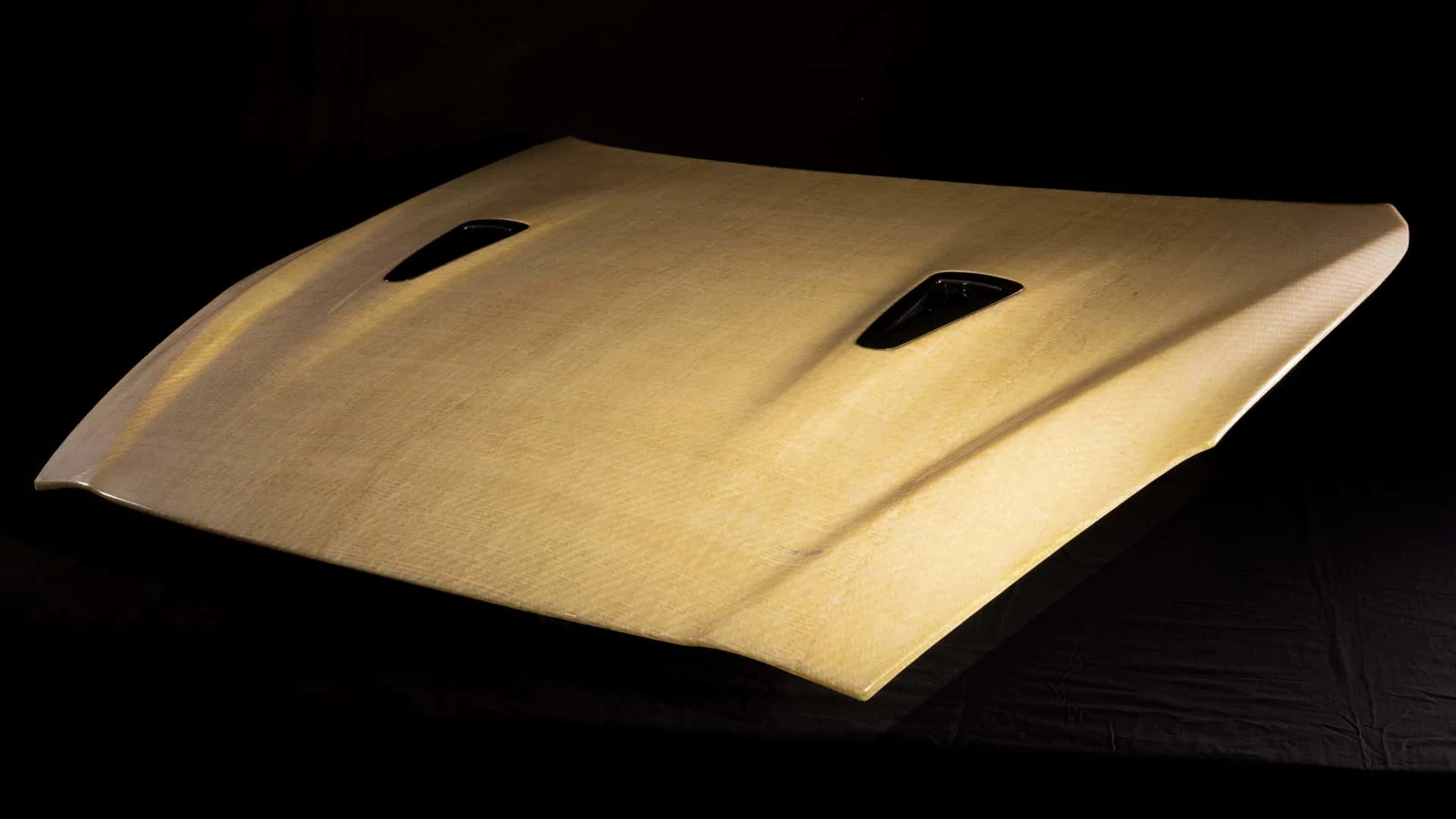
Nissan and Food Reborn unveil body panels made from discarded pineapple leaves

The composite hood, developed with an Okinawa materials firm, is claimed to outperform flax-based natural fibre composites and will be shown at a Tokyo exhibition.

Image: Motor1

Nissan has developed exterior body panels made from natural fibre-reinforced plastic that uses fibres extracted from discarded pineapple leaves, created with Japanese materials company Food Reborn Co. Ltd. The automaker announced the material on November 17, 2026, a day before it goes on public display.

The panel is aimed at demanding environments including motorsports, where sustainable composites are typically scarce and costly. Nissan says the finished material offers higher tensile strength than conventional natural-fibre composites built on flax, though it has not released test data to let that comparison be checked independently.

From pineapple leaves to a moulded hood

The manufacturing chain runs in several stages: fibres pulled from the leaves are spun into flat yarn, the yarn is woven into fabric, and that fabric becomes the reinforcement layer inside the composite before being moulded into a body panel shape. Under the arrangement, Nissan licenses its natural fibre-reinforced plastic know-how to Food Reborn, covering flat yarn, woven fabric and resin-impregnated prepreg production.

Food Reborn is based in Okinawa, specialises in biodegradable materials and brings its own experience handling pineapple-leaf fibres. The company is set to mark its tenth anniversary in September 2027. Its representative director and CEO, Etsuko Uda, said turning agricultural byproducts like pineapple leaves into high-performance materials for automotive and sporting goods is highly significant.

The raw material is plentiful: farmers worldwide discard more than 50 million tons of pineapple leaves every year, a volume that lets the partnership draw on the waste stream without touching food production.

Motorsport is the target, road cars are not yet

Nissan frames the panel as suited to motorsport, where natural fibre-reinforced plastics are already required by some racing series for modified exterior body panels, but supply of those composites has long been limited and expensive. The pineapple-leaf version is intended to ease that constraint rather than simply to decorate a concept.

The catch is that Nissan has not said whether the composite will reach a production road car. The current panel exists as exhibition technology, and no lifecycle assessment or quantified carbon-footprint figure for the material has been published yet. Until those numbers exist, the environmental case rests on the waste-stream story rather than measured emissions savings.

Nissan ties the work to its broader push to build more interesting cars under its Green Program 2030 sustainability targets. Tatsuzo Tomita, Nissan's corporate executive responsible for technology development, said the material uses pineapple leaves, a byproduct usually unutilised and discarded, while delivering the performance required in demanding environments such as motorsports.

Where to see it

The hood will be shown publicly at the SAMPE Japan Advanced Materials Technology Exhibition 2026, running November 18 through 20 at Tokyo Big Sight's East Hall. Nissan and Food Reborn will share a booth there, alongside the industry group and trade newspaper that organise the annual event.

Nissan's claim of a tensile-strength advantage over flax-based composites lands in a category BMW already uses in motorsport and in the M Concept Neue Klasse, the design study previewing its first fully electric M car. Independent test figures would let buyers and racing teams weigh the pineapple material against established flax composites; for now the comparison stands on Nissan's word alone.
Open this article ↗
New cars / TDCN ORIGINAL

Waymo robotaxi tries to pass a CHP traffic break on I-280 and falls back in line

Video of the November 6 encounter drew over 3.3 million views, and CHP says officers steered cruisers into the gap the driverless car was aiming for.

Image: Motor1

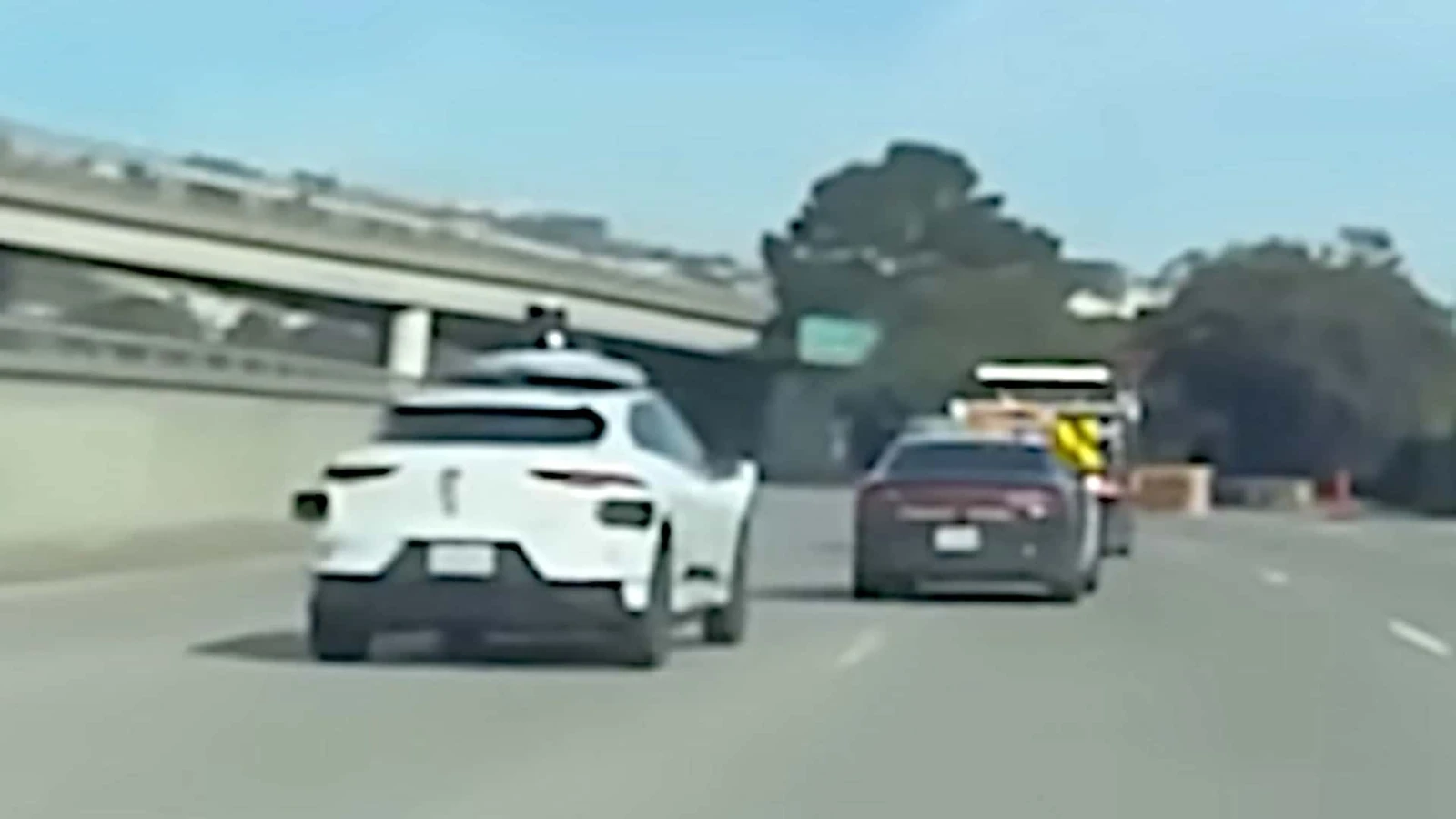
A driverless Waymo tried to get around a California Highway Patrol traffic break on northbound Interstate 280 on Friday, November 6, and ended up slotting back in behind the patrol cars like everyone else. CHP confirmed the sequence to local media, and passenger video of the encounter has drawn more than 3.3 million views since it surfaced.

What happened at the traffic break

Officers had closed lanes near John Daly Boulevard to clear debris from the freeway, a routine traffic break in which patrol cars slow and hold traffic while a hazard is cleared. The Waymo approached the stopped line of cars and began looking for a way around it, edging toward an opening near the CHP units before hesitating.

CHP told NBC Bay Area that multiple officers maneuvered their cruisers to physically prevent the Waymo from passing, and footage shows one cruiser swerving into the gap the car was aiming for. The agency said it had no contact with Waymo before or after the incident, and that the blocking maneuver was improvised on the spot rather than coordinated with the vehicle's remote operators.

The Waymo eventually abandoned the attempt and settled back into the stopped lane. Instagram user @luluesque posted the clip with the caption "California Highway Patrol Blockade 1, Waymo 0". No citation was reported in connection with the incident, and CHP's public statement went no further than describing how the traffic break was enforced.

A pattern of unusual road moments

This is not the first time a Waymo has drawn scrutiny for how it reads an odd situation: the company's vehicles have previously been recorded veering into oncoming traffic and driving through a flooded street, each clip prompting its own round of attention. Riders have also reported being boxed in behind the company's own fleet, including one passenger who said they were stuck behind a cluster of Waymos for 50 minutes.

A Reddit user going by WeldAE framed the I-280 episode as a learning moment rather than a scandal, writing that "these are interesting corner cases" and that the clip shows "something that needs more improvement" rather than a failure.

That framing is the fair one. A traffic break is an improvised, human-directed maneuver with no fixed lane markings to follow, which is exactly the kind of edge case a driverless system has to learn by encountering. The car did not break a rule or ignore a signal; it read an ambiguous gap as an opening, and a human officer closed it. The useful takeaway for riders is that these encounters are being resolved by the people on the ground, not by coordination between CHP and Waymo, which the agency says did not happen here.

What has not been announced

Waymo has not said whether it will change how its cars handle traffic breaks, and CHP has not indicated any change to how officers run them around driverless vehicles. The sources describe the encounter and the agency's account of it, and nothing more.

Open this article ↗

Keep scrolling to read the next story.

Older articles →