INDEPENDENT AUTOMOTIVE NEWSGLOBAL PERSPECTIVE / AUSTRALIAN EDITION
TDCNTHE DAILY
CAR NEWS.

The road ahead.
Every day.

RSS ↗
Latest/New cars

621 original articles

New cars / TDCN ORIGINAL

Aston Martin to enter 2027 Dakar Rally with Alonso, Loeb and Moraes

The British marque will field three Prodrive-built Dreadnought rally-raid cars, named after its Call of Duty SUV, in its first Dakar entry.

Aston Martin will contest the Dakar Rally for the first time in 2027, entering three cars built with motorsport engineering firm Prodrive and driven by Fernando Alonso, Sébastien Loeb and Lucas Moraes. The rally runs from January 9 to January 23, 2027, over 12 stages from Loulé, Portugal, to Marrakesh, Morocco.

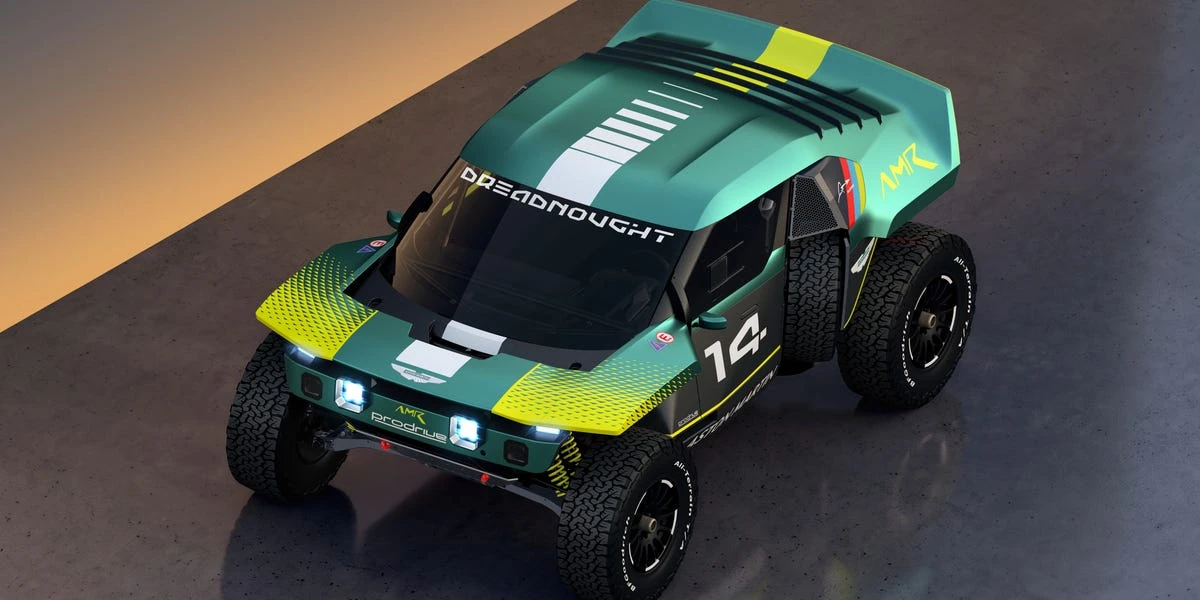
The car is called the Dreadnought, a rally-raid machine that borrows its name and some styling cues from the Dreadnought SUV Aston Martin designed for the video game Call of Duty: Modern Warfare 4. It shares visual links with the virtual off-roader, including octagonal lights echoing the game car's square pixel lighting, spare tyres housed in the bodywork behind the rear doors, and a slatted roof, tall ducktail spoiler and LED lighting at the rear.

A proven partner in Prodrive

Prodrive brings deep Dakar experience to the project. The British company developed the BRX Hunter, which competed from 2021 to 2024 with a best finish of second, then partnered with Dacia on the Sandrider, which ran in 2025 and 2026 and won last year's event. Prodrive and Aston Martin already collaborate in endurance GT racing, which makes the Dakar tie-up a natural extension of an existing relationship.

The Dreadnought's technical specification has not been announced. The sources do not confirm its engine, power, torque, battery (if any), gearbox or suspension, so the powertrain remains unknown for now. What is known is the pattern set by Prodrive's previous cars: the Hunter used a Ford twin-turbo 3.5-litre V6 and the Sandrider a Nissan twin-turbo 3.0-litre V6, so a fresh engine is expected, with a Mercedes-Benz V6 floated as a possibility rather than a confirmed choice. Expecting the Aston Martin to share components with the Sandrider, much as the Sandrider evolved from the Hunter, is inference rather than stated fact.

A driver line-up built for the desert

Alonso, a two-time Formula 1 world champion and current Aston Martin F1 driver, will step away from circuit racing for one of the three cars. He has contested Dakar once before, finishing 13th in a Toyota Hilux race truck in 2020.

Loeb, a nine-time World Rally champion, has finished second at Dakar three times and has spent the last six years driving Prodrive machinery, first the BRX Hunter and then the Dacia Sandrider. Moraes, the 2025 World Rally Raid champion, has a best Dakar finish of third and takes the third car.

That is an unusually strong roster for a debutant team, and it is the clearest signal of intent in the whole programme. Pairing a proven builder in Prodrive with drivers who already know how its cars behave shortens the learning curve that normally costs new Dakar outfits entire events. The unknown quantity sits under the bodywork, not behind the wheel.

The route and the challenge

The 2027 event covers a total of 4,228 miles, of which 2,600 miles are special stages, the timed sections run over the most demanding terrain. Dakar began in 1979 as a race from Paris to Dakar in Senegal, later moved to Saudi Arabia after violence in Mauritania, and has now shifted again, with the tension in the Middle East caused by the war between the United States and Iran cited as the reason for the change.

For Aston Martin, the entry extends a motorsport portfolio that already runs from a Vantage-based GT3 car to Formula 1 into rally-raid, a discipline far removed from the grand tourers the brand is known for. The move also gives the Dreadnought name a life beyond the game: a virtual SUV becomes a real competition machine, and the styling transfer runs in that direction, from screen to sand.
Open this article ↗
Australia / TDCN ORIGINAL

Lexus Australia makes facelifted NX hybrid-only, leaves room for more PHEVs

The updated NX arrives in Australia in the first half of 2027 with no petrol-only option, and Lexus says plug-in hybrid variants could expand beyond the current two.

Lexus Australia has confirmed the facelifted NX will be sold exclusively with hybrid powertrains when it reaches local showrooms in the first half of 2027, ending petrol-only versions of the mid-size luxury SUV. The brand has also left open the possibility of adding more plug-in hybrid variants beyond the two already offered.

Lexus Australia boss Jack Hobbs told CarExpert the shift reflects collapsing demand for the non-electrified NX. "We listen to our customer base, and increasingly over the life of NX, that demand for the internal combustion engine has only diminished to a very, very low percentage, and it's the right time to just move straight into hybrid," he said at the Australian preview drive of the revised model.

Petrol NX350 F Sport is the last of its kind

The final petrol-only NX is the turbocharged NX350 F Sport, which has stood alone since the base NX250 Luxury was discontinued in 2025. The facelifted range is expected to mirror the breadth of the outgoing line-up, which spans nine hybridised variants.

Specific powertrains for the updated NX have not been confirmed for Australia. The two existing plug-in hybrid grades, the flagship NX450h+ F Sport and the lower-spec NX450h+ Luxury that joined the range in late 2025, are likely to carry over at launch, potentially with a revised battery that delivers more electric-only range and faster charging. Lexus has not published those battery or range figures yet.

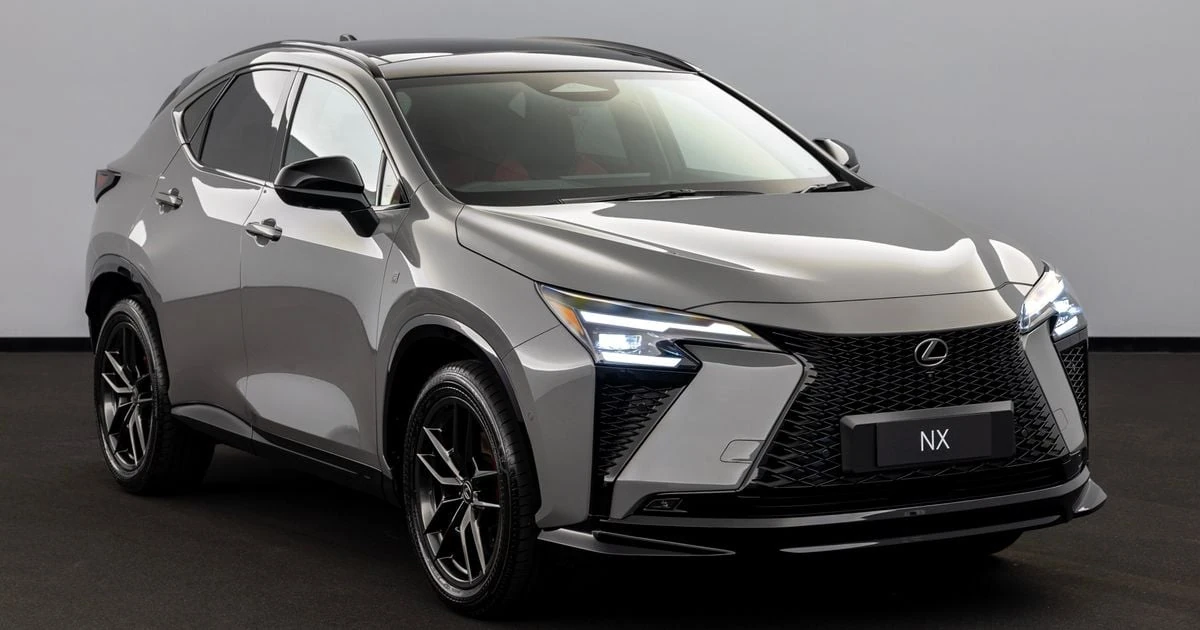
The updated NX hybrid in the Australian landscape it now calls home.
The updated NX hybrid in the Australian landscape it now calls home., Image: CarExpert

Hobbs hints at a broader PHEV line-up

Asked whether additional plug-in hybrid variants could join the NX range, Hobbs gave a qualified yes. "We definitely are always looking at the market and our customer base to understand what they want, and we want to try and give the best luxury of choice. That's the short answer to say probably, yes," he told CarExpert. He added that plug-in hybrid is expected to account for a larger share of NX sales than it does today.

The NX has offered a plug-in hybrid since 2022, when the NX450h+ F Sport arrived. That makes the model an early adopter of the technology in its segment, but the volume has stayed modest. Hobbs's comments suggest Lexus sees PHEV as the growth area within the NX rather than a niche flagship.

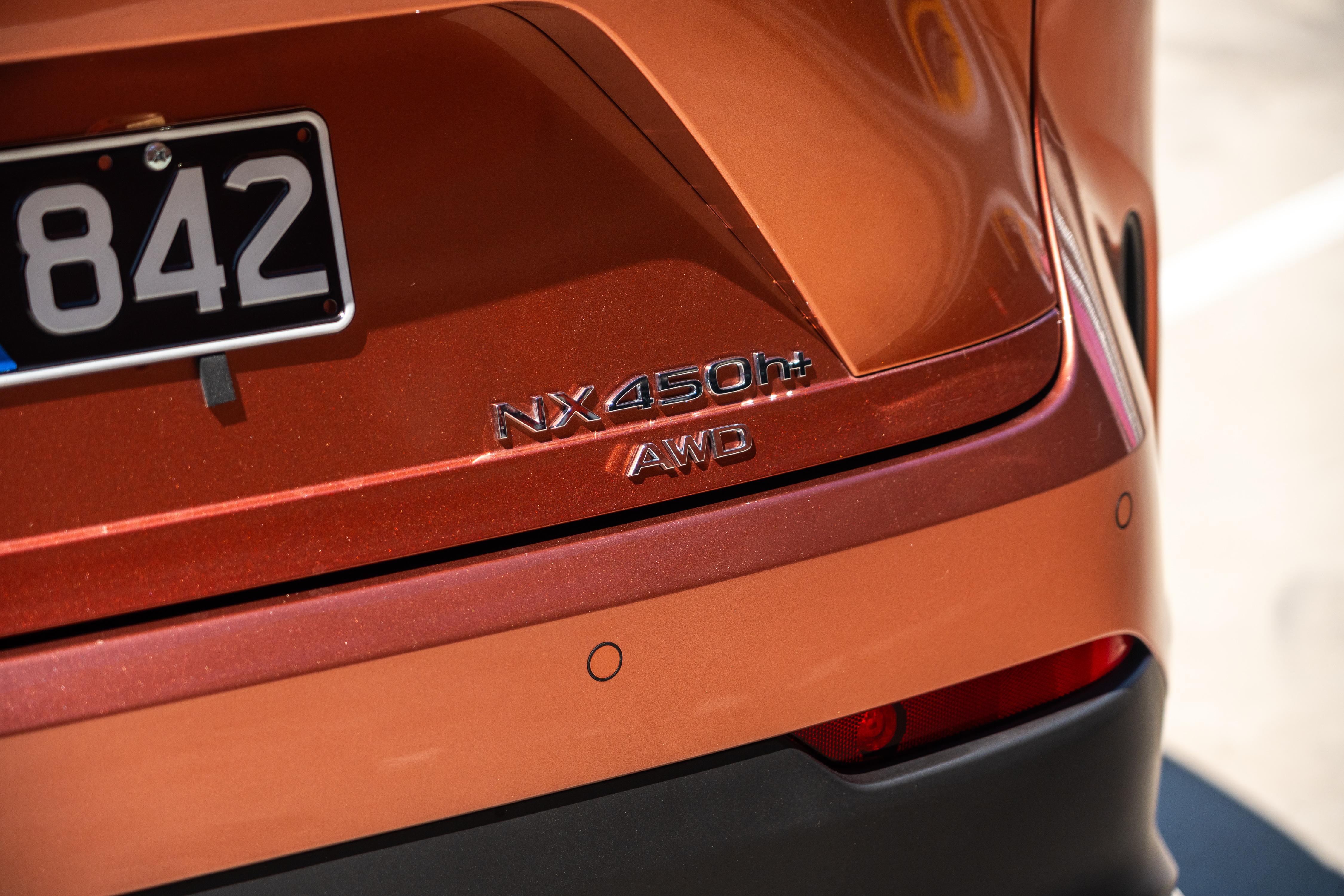
The NX 450h+ plug-in hybrid badge: the electrified variant Lexus Australia is leaving room for.
The NX 450h+ plug-in hybrid badge: the electrified variant Lexus Australia is leaving room for., Image: CarExpert

A roadmap already travelled by the RAV4

The NX shares its platform with the Toyota RAV4, which went hybrid-only in mid-2024 and added plug-in hybrid variants in Australia when its current generation launched earlier in 2026. The NX decision follows the same logic: keep the bodyshell and badge, drop the pure combustion engine, and lean on electrified powertrains for both economy and performance positioning.

For buyers, the practical effect is that the facelifted NX will be a hybrid or plug-in hybrid purchase only. Anyone wanting a petrol NX350 F Sport has until the updated model lands in the first half of 2027 to buy one new.

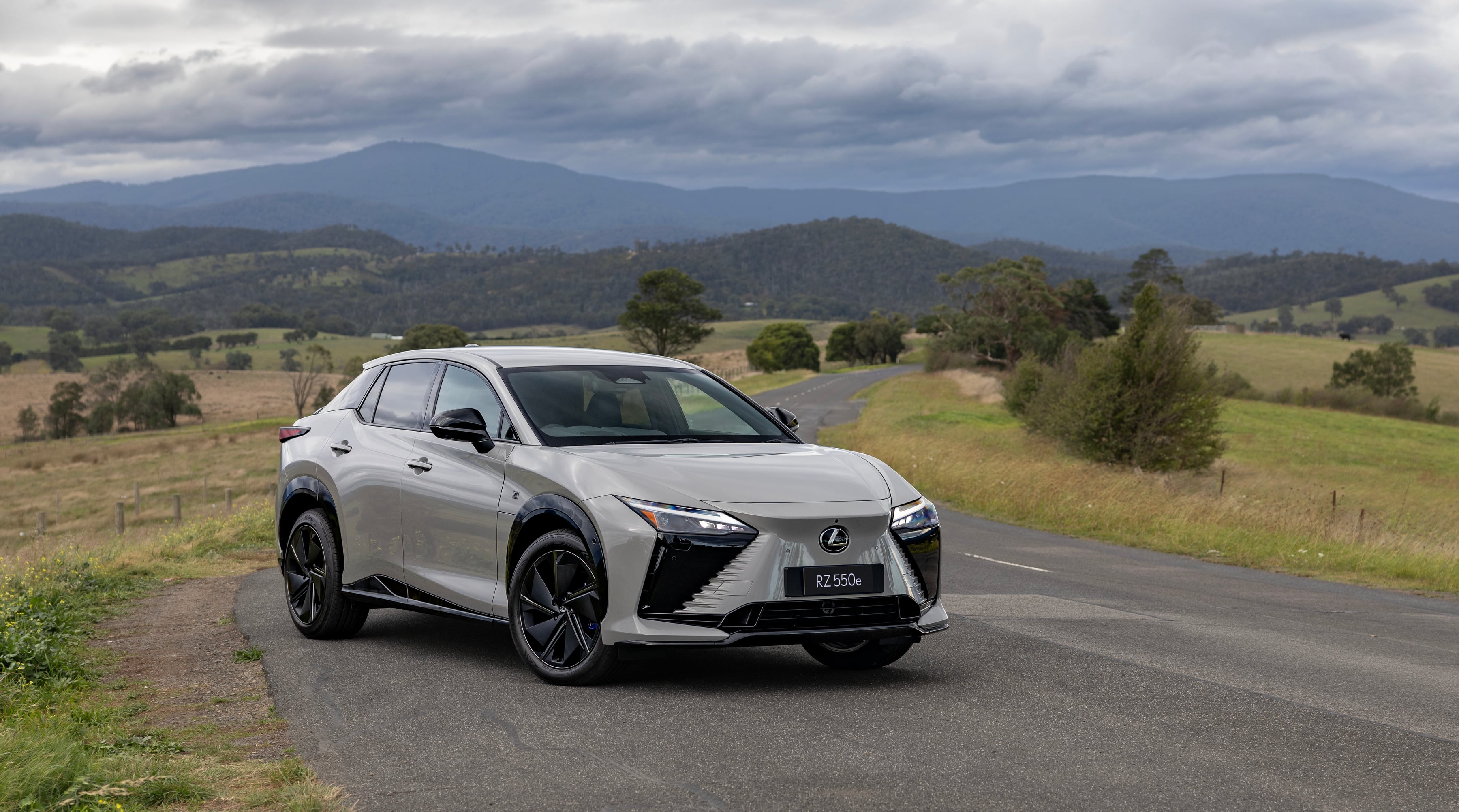
Lexus has been steadily widening its electric line-up in Australia at the same time. Production of the old-generation UX300e small SUV is winding down, the RZ electric SUV received a substantial update earlier in 2026, the ES sedan gained electric powertrains for the first time, and the three-row TZ large SUV is slated for local launch. The hybrid-only NX therefore sits alongside a growing battery-electric range rather than replacing it.

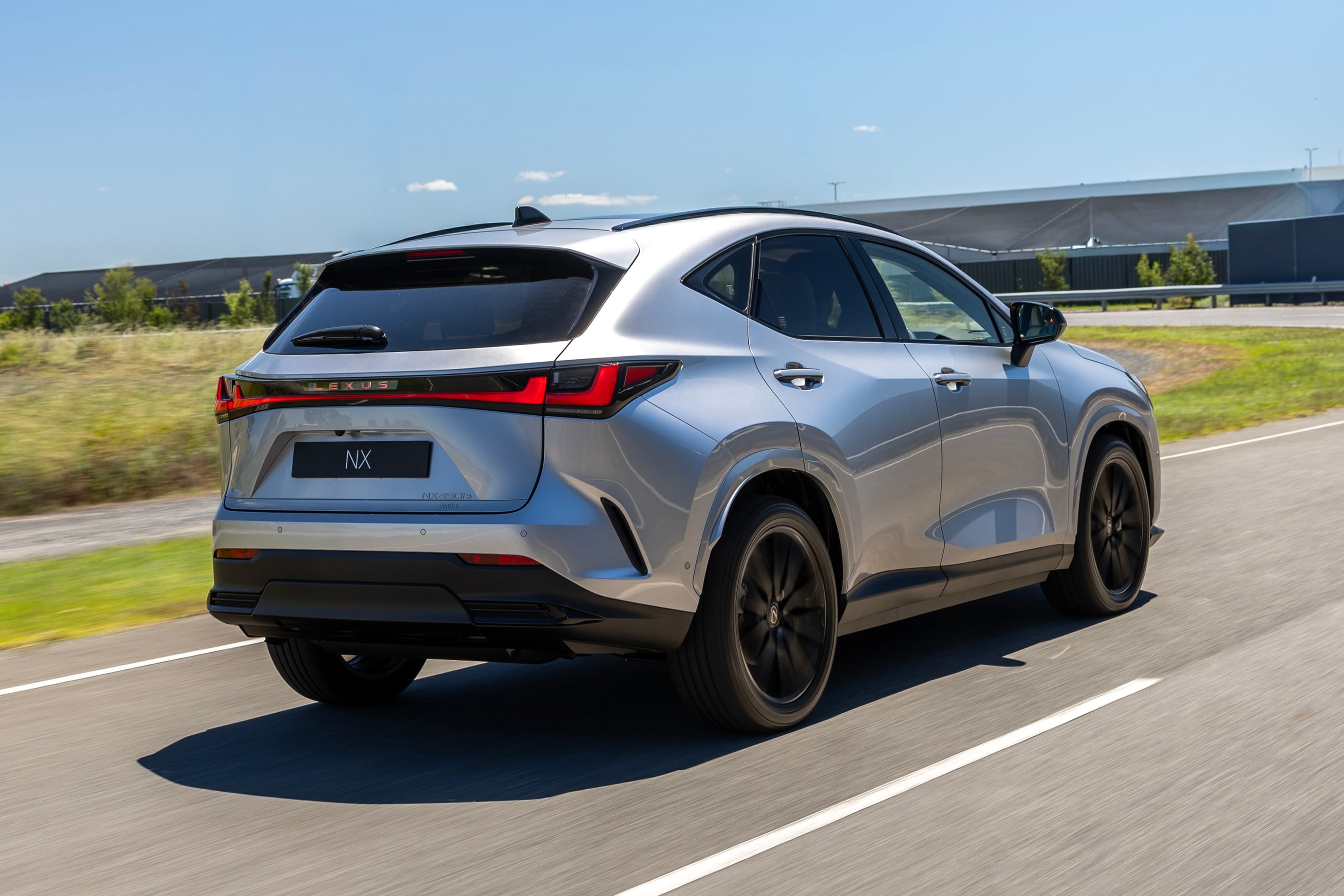
The facelifted NX on the move, now offered in Australia exclusively as a hybrid.
The facelifted NX on the move, now offered in Australia exclusively as a hybrid., Image: CarExpert
Open this article ↗

Keep scrolling to read the next story.

Older articles →