INDEPENDENT AUTOMOTIVE NEWSGLOBAL PERSPECTIVE / AUSTRALIAN EDITION
TDCNTHE DAILY
CAR NEWS.

The road ahead.
Every day.

RSS ↗
Latest/Electric

547 original articles

Electric / TDCN ORIGINAL

Porsche recycles end-of-life EV batteries into new cathode material

The carmaker is testing cells made entirely from recovered raw materials, with a goal of feeding them into new cell production from 2028.

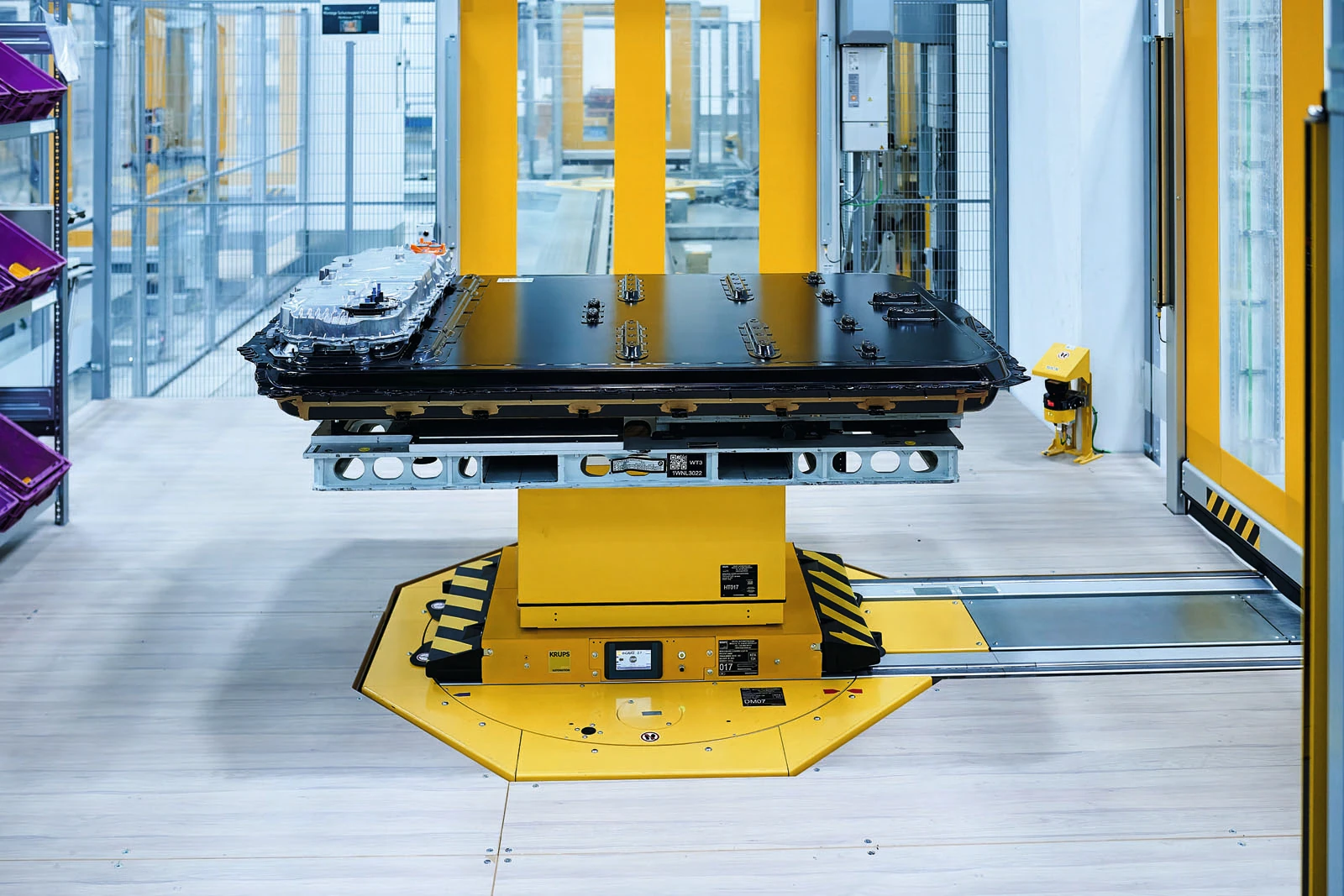
Porsche has reached a battery recycling milestone, producing cathode active material from entirely recycled raw materials and moving to test the resulting cells in real-world conditions. End-of-life high-voltage batteries from Porsche Centres in Germany have been recycled since May 2026 using a water-based process, run with partners including recycling specialist Cylib.

The carmaker's stated aim is for recovered raw materials to be available for new cell production from 2028. Cells comprising 100 per cent recycled materials have already been made and are undergoing testing in Porsche EVs.

How the recycling process works

Porsche describes three stages: recover, refine and reuse. End-of-life batteries are dismantled and mechanically processed into a black mass containing raw materials, which is then refined and separated into nickel, cobalt, manganese and lithium for future cell production.

Porsche stresses quality and traceability, tracking recovered materials through a dedicated material account. The caveat is that at this stage the company says only that the materials "could be" used in its high-voltage batteries, so recycled content in production packs is not yet confirmed. That distinction matters for buyers weighing how green an EV really is: a recycling loop that works in a lab and a pilot line is not the same as one feeding the cars on a dealer forecourt.

BMW's Gen6 battery wins an award in China

BMW became the first foreign car maker to win an Innovative Technology Award at the World New Energy Vehicle Congress in China, recognised for its Gen6 battery. The Gen6 pack is a key technology of the Neue Klasse architecture, which BMW says lays the foundation for greater range and faster charging in its EVs.

The design is flat, with cylindrical cells fitted directly into the main housing rather than split into separate modules, and is intended to fit within an 800V electrical architecture. Its cell-to-pack construction makes more efficient use of space and delivers higher energy density than conventional designs, according to the company. The concept also combines Energy Master hardware and software, a central control unit developed in-house that acts as the brain of the EVs.

For drivers, the 800V architecture is the more consequential detail: it is the hardware basis for the faster charging BMW is promising, though the sources do not give charging times or range figures for Gen6-equipped cars.

Leapmotor pushes cells into the chassis

Leapmotor announced its CTC 3.0 High-Low Fusion Battery in September, taking the cell-to-pack idea further with cell-to-chassis construction. The company describes it as a "package-less battery and power supply system" and claims a sevenfold increase in low-voltage capacity and function over its previous-generation battery.

That allows the battery to match the 12V supply delivered by a traditional 12V car battery, which EVs usually carry for ancillary systems. Leapmotor claims vehicles equipped with CTC 3.0 will be the first in more than, though the source material cuts off before completing the claim.

The three announcements point in the same direction: battery innovation is spreading beyond range and charging figures into manufacturing, materials and packaging. Porsche's loop is about what happens at the end of a pack's life, BMW's about how tightly cells can be packed into a car, and Leapmotor's about removing the distinction between battery and chassis altogether. None of the three has yet been translated into published range or charging numbers for a production model in these sources.
Open this article ↗
New cars / TDCN ORIGINAL

Tesla opens Cybercab orders at $29,990 with a mandatory $299 monthly subscription

Private buyers can reserve the two-seat robotaxi with a $1,000 non-refundable deposit, but it will only drive itself in eight US cities from December 2026.

Image: Motor1

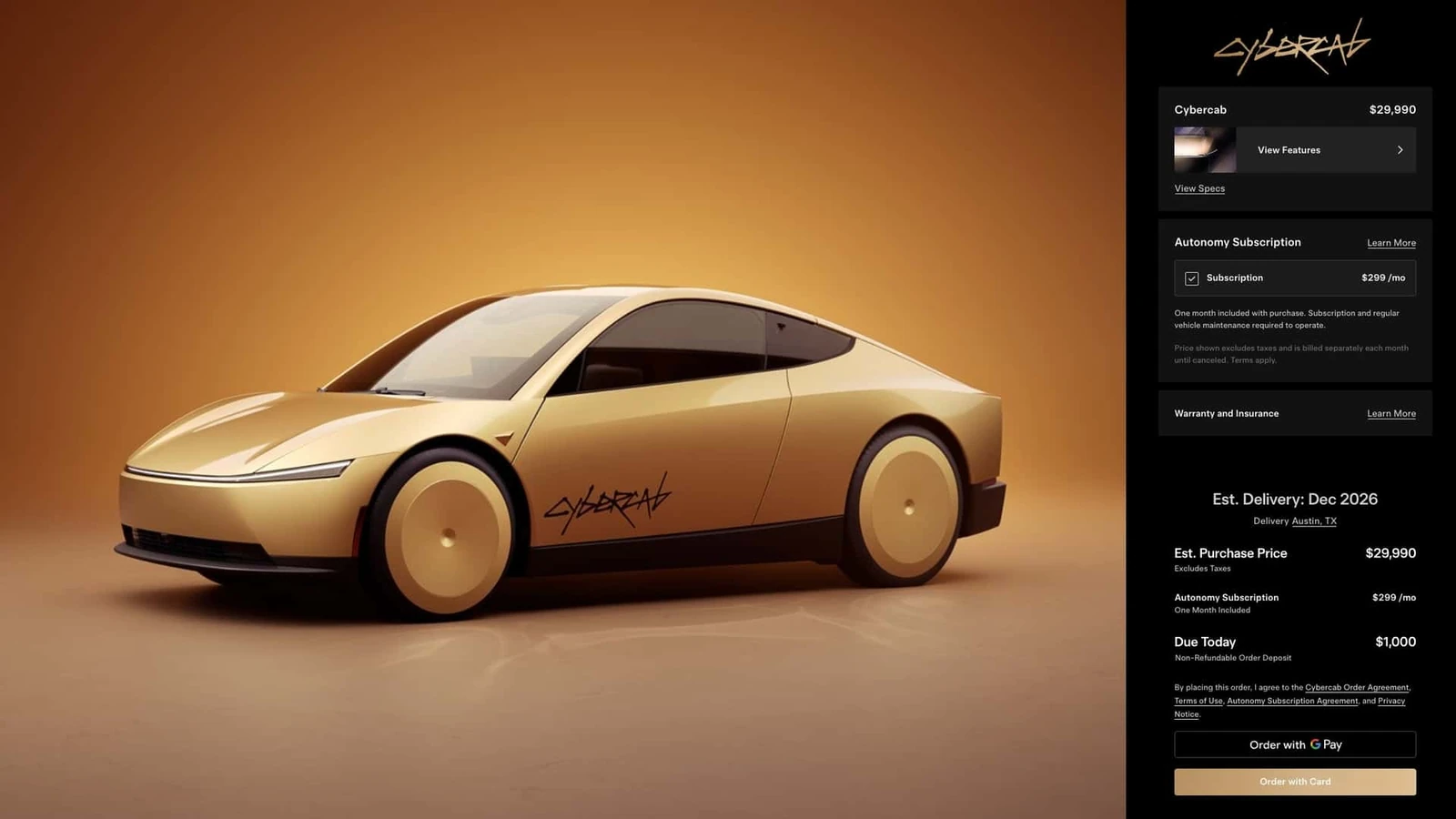
Tesla has opened the Cybercab to private buyers at $29,990 before taxes, with deliveries due to begin in December 2026 starting in Austin. The order page sets out conditions that go well beyond the sticker price: a $1,000 non-refundable deposit to lock in a build slot, and a mandatory $299 monthly Autonomy Subscription for the car to operate.

Tesla's email to invited buyers stated the limits directly: "Only available in supported service areas. Subscription required for operation". The first month of the subscription is included in the purchase, and Tesla says the terms allow it to suspend autonomous driving features if the agreement is violated.

What the subscription and deposit commit buyers to

The deposit is non-refundable, so reserving a build slot is a committed purchase rather than a refundable hold. The Autonomy Subscription is not an optional extra: without it, the car does not run.

Run the numbers and a Cybercab costs roughly $65,600 over its first ten years, assuming the $299 monthly fee and today's vehicle price hold roughly steady across that period and factoring in the included first month. That figure is a projection from the published terms rather than a Tesla announcement, and it excludes taxes and any change in pricing or fees over the decade.

Tesla plans to sell Cybercabs through the end of 2026, with the Austin plant handling early builds before other markets come online. The car is described as a purpose-built autonomous vehicle with no steering wheel or pedals in its normal setup.

Two seats, a 21-inch screen and eight cities

Inside, buyers get two seats, a 21-inch centre touchscreen and 20.1 cubic feet of cargo room, figures Tesla first published when it detailed the Cybercab's specs.

Operation is confined to geofenced Robotaxi service areas. Tesla lists eight supported cities: Austin, Dallas, Houston, Fort Worth and San Antonio in Texas, plus Miami, Orlando and Tampa in Florida. The terms say the zones are limited and can change over time.

Coverage inside those cities may be narrower than Tesla's wider marketing maps suggest, which can limit how far a Cybercab travels on its own in daily use, particularly on trips that stretch toward the edge of a service area. For a buyer, that makes the practical question less about the car's capability than about whether their regular journeys fall inside the fence.

Federal scrutiny of a car without pedals

The sales launch arrives with the Robotaxi programme already under federal attention. The National Highway Traffic Safety Administration has opened an Audit Query into Tesla's certification that the Cybercab meets all Federal Motor Vehicle Safety Standards. The agency is examining the technical data behind the car's missing manual controls, including how a vehicle certified without a traditional foot pedal and steering wheel fits rules that typically assume those parts are present.

The programme has also drawn scrutiny tied to a hidden joystick control, which raised questions about how hands-off the rides actually are. Neither matter is resolved by the order page, and Tesla has not said how either will affect deliveries.

What buyers still cannot see

Tesla has not announced pricing or availability for markets beyond the United States, and the eight-city service list is the only operating territory named so far. The order page also leaves the long-term subscription price open: the ten-year cost estimate only holds if the $299 monthly fee stays roughly steady.

Open this article ↗

Keep scrolling to read the next story.

Older articles →