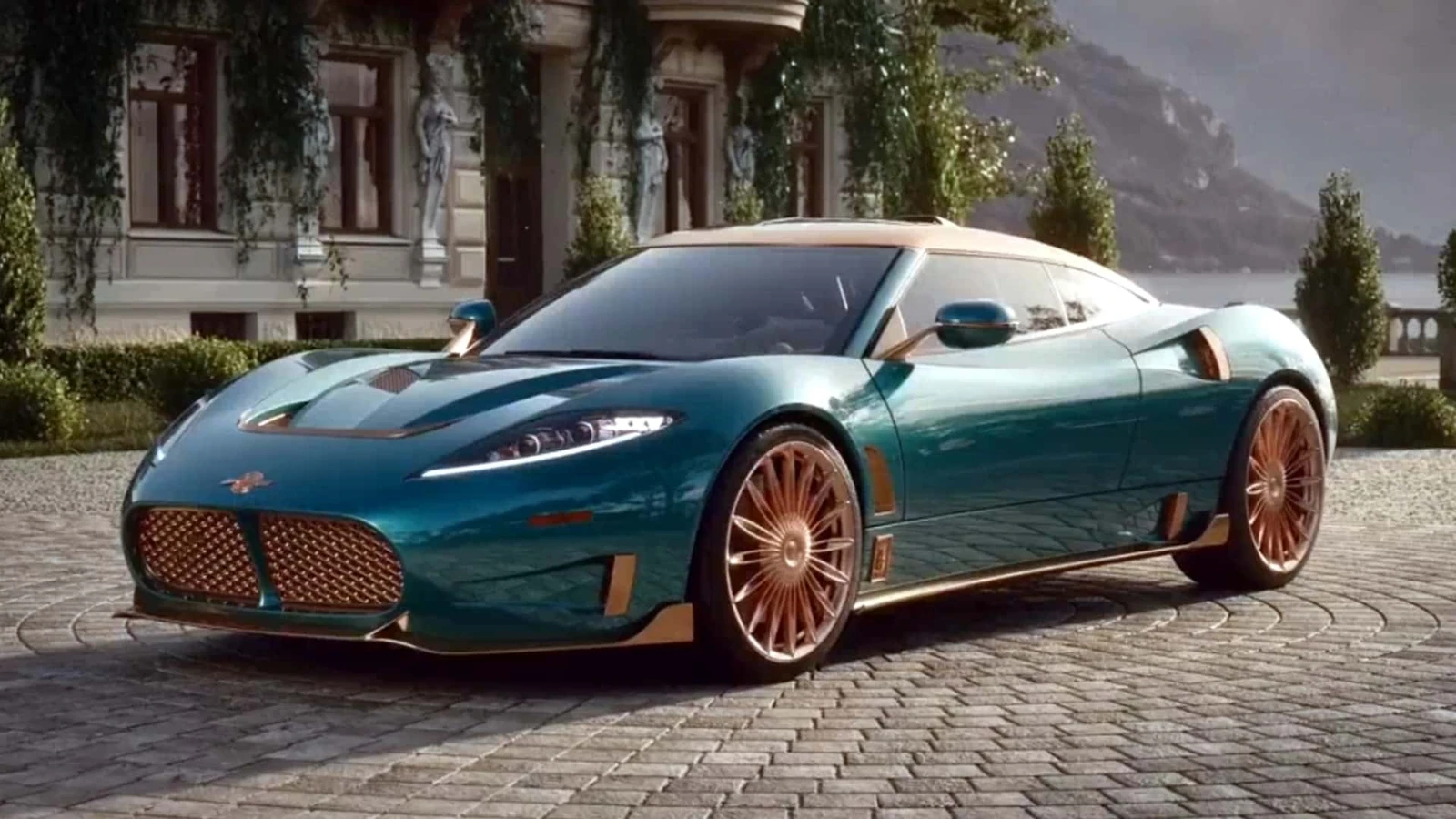
Spyker intends to return to the top of the hypercar market with the C8 Preliator XXV Coupe, a 25-car run powered by an 800-horsepower twin-turbocharged 4.0-litre V8 and a six-speed manual gearbox. Deliveries are scheduled to begin in the second quarter of 2027, with all 25 cars completed by the end of that year.
Victor Muller, who secured the rights to the Spyker name in October 2025 after the brand's second bankruptcy in 2021, says the funding and engineering work are finished, and the first checks have already cleared.
A manual V8 aimed at Pagani and Bugatti
The coupe's engine produces 737 pound-feet of torque, sent to the rear wheels through a six-speed manual with no dual-clutch or automatic option offered. That is a deliberate throwback: most of the rivals Spyker names have moved to paddle shifters.
Muller is explicit about where he wants the car placed. "We will position ourselves at the very top of the market, where Pagani, Koenigsegg, Bugatti, and Gordon Murray Automotive are the established brands," he told CarScoops, which first reported the plan.
The pitch rests less on output than on character. Muller says a clearly defined group of buyers is drawn to Spyker's aviation-inspired design, its craftsmanship and its Dutch identity. The griffin badge and cockpit-style cabins have carried that aviation theme since earlier Spyker models.
Hand-formed aluminium and a 25-car ceiling
Spyker forms the body from hand-shaped aluminium panels rather than machine-stamped steel, a slower and more expensive process. Each car takes roughly 2,100 hours to build, which explains why the run stops at 25 rather than running into the hundreds.
That labour intensity is the reason the production figure is so low, and it is also the car's main claim on buyers who want something visibly made by hand rather than assembled at volume. The risk sits on the other side of the ledger: a slow build process leaves little room to lift output if demand exceeds the plan.
Price and markets still unannounced
Spyker has not published a price for the C8 Preliator XXV Coupe, and no currency figure has been confirmed. The company has also not confirmed which countries the car will be sold in, beyond describing the 50-car annual target as covering the entire global market.
What is known is the scale of the ambition. Muller says Spyker intends to build 50 cars a year worldwide once the brand is running at full pace, with the Preliator XXV accounting for half that number through 2027. "Spyker will build 50 cars for the entire global market in a good year," he said.
He has also said enough buyers are lined up to sustain that pace, though Spyker has not published order numbers or a waiting list count. For a buyer weighing a deposit, that means the 25-car run is the only firm commitment on the table so far.
A comeback with two bankruptcies behind it
Spyker went bankrupt in 2014 and again in 2021, leaving the brand's survival uncertain for years before Muller regained the name. That history means the comeback plan will be scrutinised more closely than a well-funded start-up's would be.
Muller has tied the company's future to more than one model. "Success for Spyker means building a long-term, sustainable business, fed by new designs and new models for years to come," he said.
Spyker is not alone in chasing this tier with low-volume engineering. Peregryn is moving Ultima-based GT-R and GT-S production to the United States, while the revived Bristol Fighter is returning as a small continuation run built from existing chassis with a specialist British manufacturing partner.
Whether 25 buyers actually sign for the Preliator XXV by the end of 2027 will be the first real test of the plan. The manual gearbox and hand-formed bodywork give Spyker a clear identity to sell; the unanswered price and the brand's two collapses are what a buyer has to weigh against it.