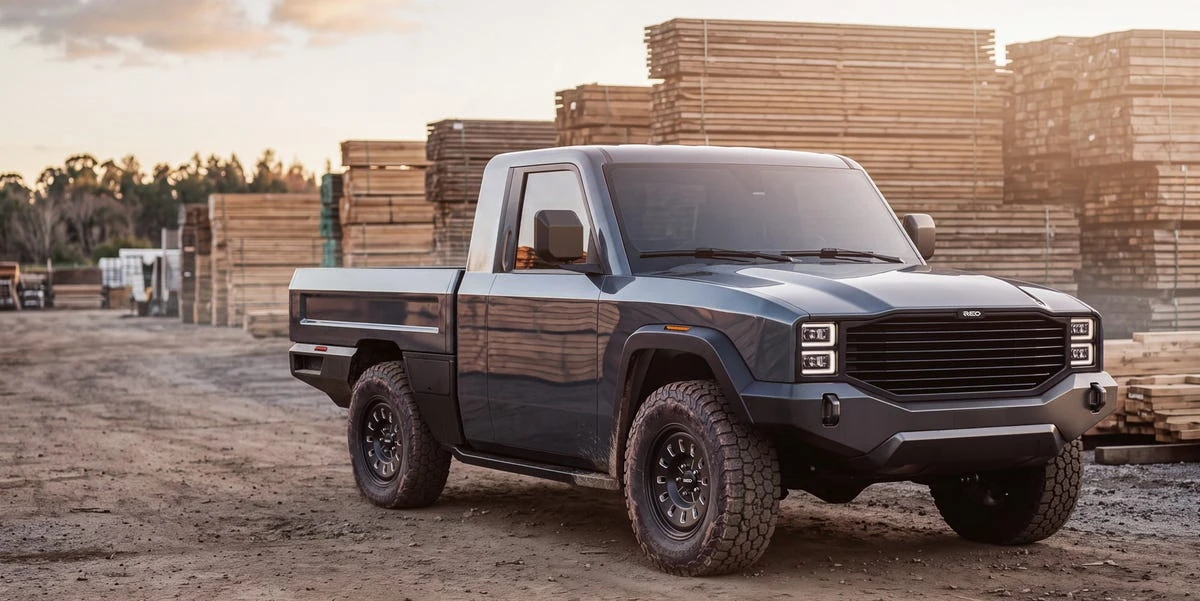
REO Trucks has revealed the Runabout line, a family of three simple petrol vehicles led by the T4X single-cab pickup, which the company says will start at $21,500 when deliveries begin in late 2028. The Texas-based startup is reviving a name founded in 1905 by Ransom Eli Olds and best known for the Speed Wagon, an early ancestor of the modern pickup.
The pitch is that pickups have grown larger and more expensive, leaving room for a compact, affordable and easy-to-repair option. REO plans prototypes in 2027 and full production in 2028 at an unnamed assembly plant in Texas.
Right-to-repair as a sales pitch
Sales will be direct to consumers, with right-to-repair central to the plan: REO will etch a service diagram under the hood and says bumpers, door panels, headliner and trim can be removed in under five minutes with common tools. The company also intends open-source parts availability, giving approved manufacturers factory mounting patterns and the ability to sell directly through REO's online marketplace.
That approach matters more than the sticker price for buyers who keep vehicles for a decade or more, because it puts parts and diagrams in the hands of independent workshops rather than locking servicing into a dealer network.
Prices, timing and the fine print
The T4X is promised at $21,500, the T4C at $25,000 and the S4C at $28,500. Prototypes are due in 2027, production in 2028 and deliveries later that year or early 2029. REO claims 40,000 reservations, though each requires only a refundable $25 fee.
The context is a market where cheap cars are fading as makers chase profit over volume. Michigan-based Slate Auto is preparing an electric truck for production by the end of this year, but its 205-mile range will not suit every buyer, and REO is positioning a petrol alternative against it.
The obvious question is whether the prices hold. A refundable $25 deposit is a weak signal of real demand, and the launch price of a vehicle still two years from production is a target rather than a commitment. REO's case rests on keeping the specification simple enough that the maths still works at $21,500 when the trucks reach customers.