INDEPENDENT AUTOMOTIVE NEWSGLOBAL PERSPECTIVE / AUSTRALIAN EDITION
TDCNTHE DAILY
CAR NEWS.

The road ahead.
Every day.

RSS ↗
Latest/New cars

621 original articles

New cars / TDCN ORIGINAL

Mercedes is putting physical buttons back into its cars, CEO Ola Källenius says

The company's boss concedes the screen-heavy interiors went too far, but says digital controls will stay in some form.

Image: Motor1

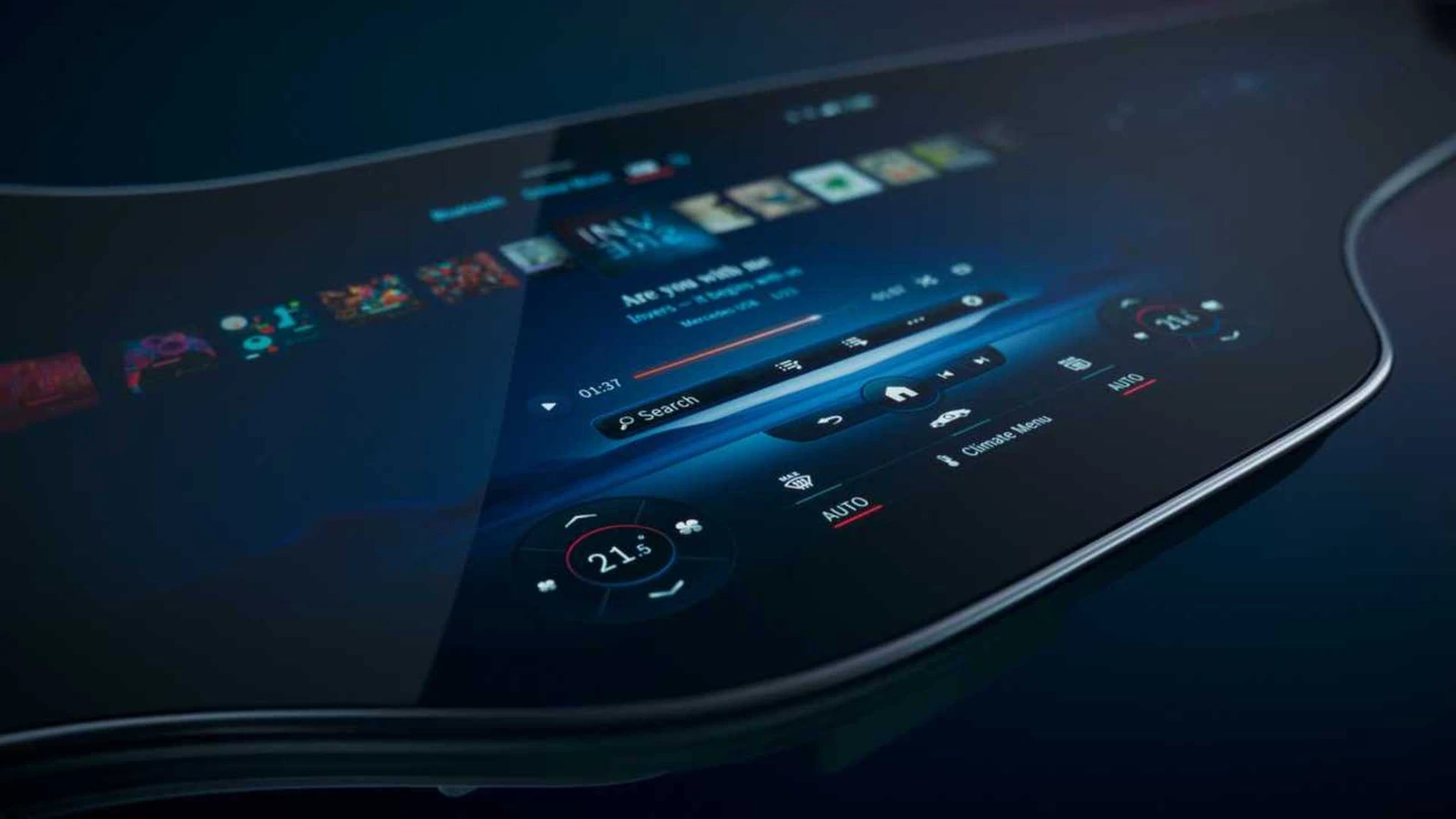
Mercedes-Benz is reintroducing physical buttons and switches in its cars after its CEO, Ola Källenius, acknowledged the brand leaned too heavily on touchscreens. Källenius made the admission during a Q&A on Reddit, where he said replacing physical controls with screen functions did not automatically produce a better interior.

The reversal is already visible in recently launched or updated models, and Mercedes says more are coming. Screens are not being dropped, though: Källenius framed the change as a rebalancing rather than a return to the past.

What Källenius said about the screen-first era

Källenius attributed the shift toward touch interfaces to the industry's wider push into digital technology, which gave carmakers flexibility to add features and update the in-car experience over time. "We basically just moved on with the times," he said, noting that cars becoming more digital played a part in Mercedes adding more functions to its models.

He also conceded that physical controls have advantages screens cannot always match, and said he personally prefers some of them: "I do love a good rocker and roller on a steering wheel myself". The admission matters because Mercedes was among the first carmakers to commit to screen-heavy dashboards, so its change of direction signals where the wider industry may be heading.

Which Mercedes models have more buttons

Källenius named several recently introduced or updated models that place more emphasis on physical controls: the GLS, GLE, S-Class, GLC EV and GLB EV. Those are the concrete examples Mercedes has put on the record so far.

The company is also restoring physical controls in other upcoming models, but Källenius did not specify which ones, so the full list has not been announced. That leaves the next round of Mercedes launches as the place to watch for how far the rethink goes.

Screens are staying, just not for everything

Mercedes is not abandoning digital interfaces. Källenius said simply turning back the clock is not the right approach, and that new ways of interacting with a car must keep being created. In his view, moving toward digital controls felt right and, for the most part, still feels like the right thing to do in developing modern cars.

The practical effect is a split interior: large displays remain, but frequently used functions are candidates for dedicated hardware again. Drivers have pushed back against the loss of buttons for climate controls, audio adjustments and other everyday functions, criticism that has hit several carmakers, not just Mercedes.

The smarter read for buyers is that the debate is no longer screens versus buttons. Mercedes is conceding that some functions belong on a physical switch, which is a more useful outcome for drivers than a wholesale retreat from either approach.

Why the about-face carries weight

Digital dashboards and larger displays are not going anywhere, but Mercedes' change of direction suggests carmakers are starting to recognise that not every function needs to live on a touchscreen. For a brand that helped normalise the screen-dominated cabin, that is a notable correction.

For shoppers, the near-term question is which models benefit. The named GLS, GLE, S-Class, GLC EV and GLB EV show the direction, while the unspecified upcoming models mean the picture will only be complete once Mercedes details them.
Open this article ↗
New cars / TDCN ORIGINAL

Toyota unveils Corolla Deck compact hybrid pickup in Brazil

The unibody truck is built on Corolla Cross underpinnings and goes on sale in Brazil next year, but Toyota has not confirmed a US launch.

Image: Carscoops

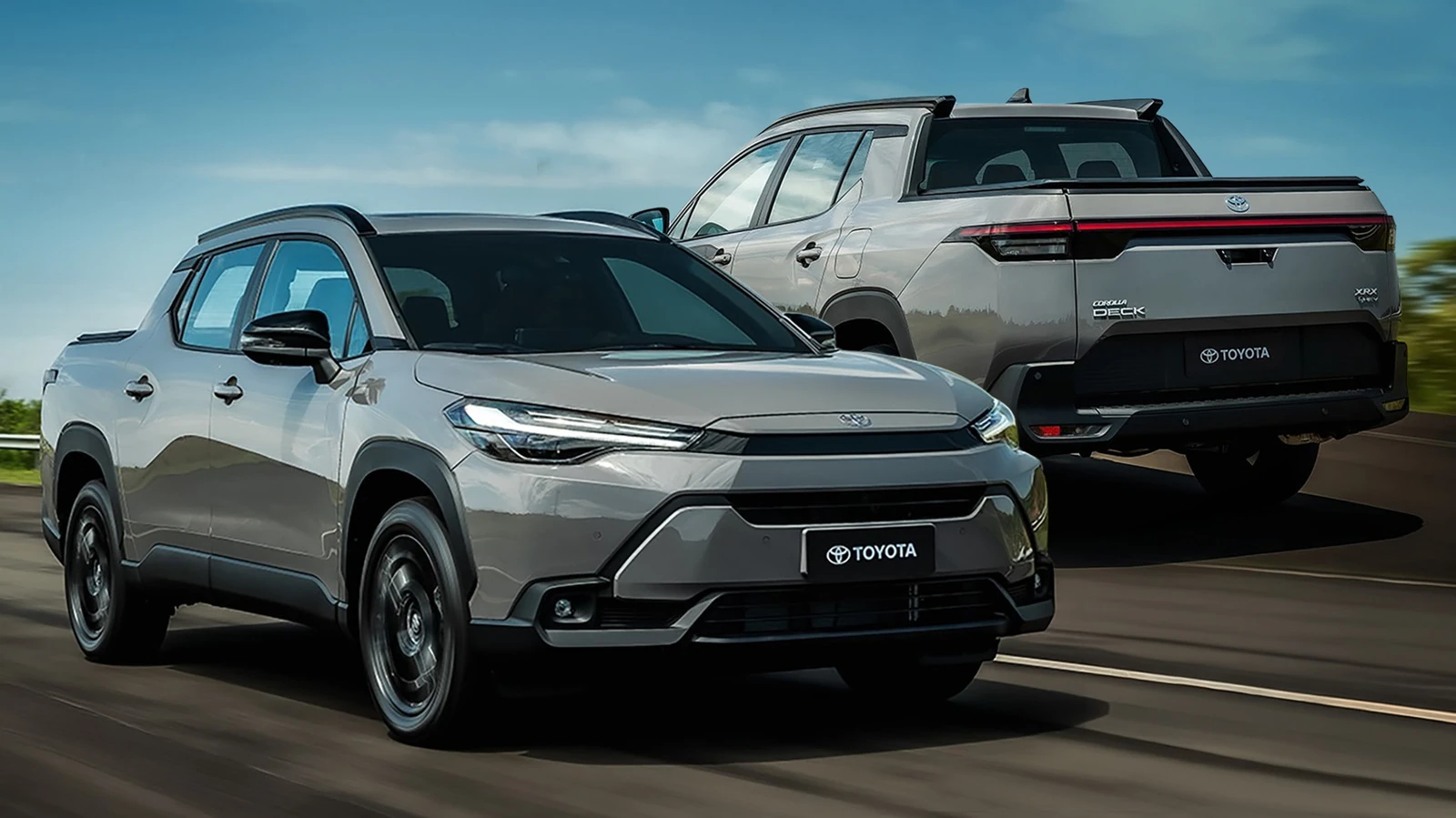
Toyota has revealed the Corolla Deck, a compact pickup built on the same unibody platform as the Corolla Cross, with production in Brazil and a market launch planned for next year. It is the first time Toyota has put a pickup bed behind the Corolla nameplate, 60 years after the badge was introduced.

The truck is a Brazil-only proposition for now, and Toyota has not announced pricing or detailed specifications.

What the Corolla Deck is

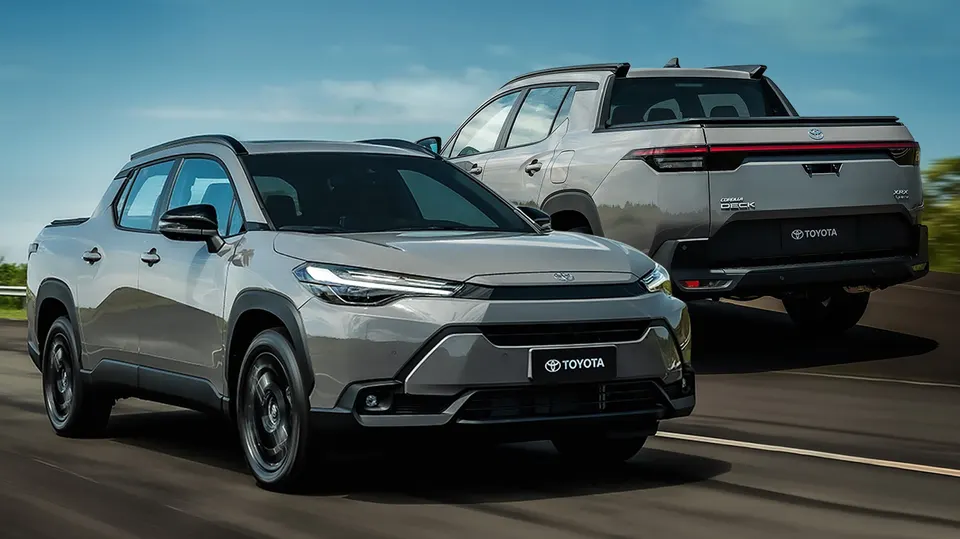
The Corolla Deck is a unibody compact pickup that shares its headlights, hood, front fenders, windshield, front doors, mirrors and roofline with the Corolla Cross. The front bumper appears to be borrowed from the Chinese-market Frontlander, with a body-coloured insert, new cooling intakes and repositioned fog lights.

The rear is entirely new: a longer wheelbase and stretched rear overhang create room for a small bed behind the five-seat cabin, and the truck gets full-width LED taillights, a bed cover, a custom tailgate and a rear bumper with an integrated step. Toyota has not shown the interior, though it is expected to mirror the crossover's dashboard layout with possible new trim and truck-specific features.

The HEV badge on the tailgate confirms a self-charging hybrid powertrain, and Toyota will most likely offer all-wheel drive at least as an option. A flex-fuel plug-in hybrid running on petrol, ethanol or electricity has been rumoured for the future, but that has not been confirmed. Photos from the presentation suggest a multi-link rear suspension, likely retuned for a higher payload.

The Corolla Deck, Toyota's new compact hybrid pickup, shown in motion in Brazil
The Corolla Deck, Toyota's new compact hybrid pickup, shown in motion in Brazil, Image: Carscoops

Where it will be built

Production will take place at Toyota's new Sorocaba 2 plant in Brazil, part of a R$ 11.5 billion (about $2 billion) investment in the country through 2030. The plant will start with a capacity of 100,000 units a year, lifting Toyota's total Brazilian output to 270,000 units a year.

The Corolla Deck enters a crowded South American segment that already includes the Fiat Toro and Ram Rampage, with the Volkswagen Tukan, Renault Niagara and BYD Mako also on the way. That competition matters because the compact unibody pickup class is filling out fast, and Toyota is arriving after several rivals rather than before them.

No price yet, and no US confirmation

Toyota has not announced pricing for the Corolla Deck, and detailed specifications beyond the hybrid powertrain remain unconfirmed. More information is expected in the coming months ahead of the launch next year.

North American buyers hoping for a Ford Maverick rival will have to wait. Toyota Motor North America CEO Tetsuo Ogawa said earlier this year that the larger RAV4 is the more likely foundation for a future US-market compact pickup, and that such a project takes time. The Corolla Deck may therefore not be the truck America gets, even though it is the one Toyota has just shown.

What it means for buyers

For Brazilian buyers, the Corolla Deck offers a hybrid compact truck from a brand with a long-established dealer and manufacturing footprint in the country, built on running gear already proven in the Corolla Cross. The hybrid badge is the notable part: most of its direct rivals are not confirmed as hybrids, so Toyota is leaning on fuel economy in a segment where that has not been a given.

For everyone else, the Corolla Deck is a reminder that Toyota's compact pickup strategy is regional. The company is building where the demand and the plant capacity are, and North America's turn, whenever it comes, looks set to use a different base vehicle.

Open this article ↗

Keep scrolling to read the next story.

Older articles →