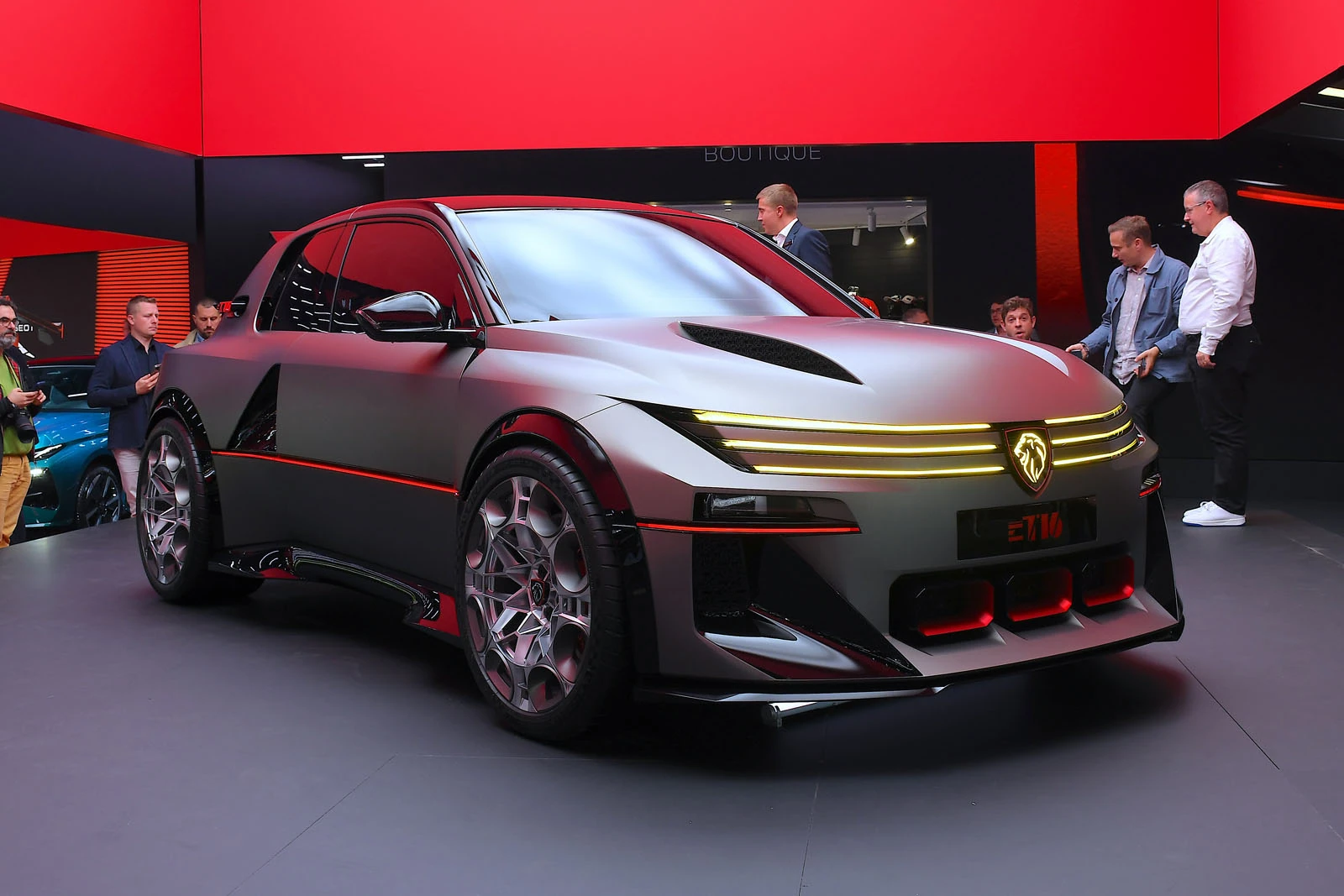
Peugeot is seriously considering putting its dramatic e-T16 concept into production, with chief executive Alain Favey saying the 805bhp electric hatchback could be built as soon as next year. The car was unveiled at the Paris motor show as a preview of the next-generation e-208, but its dual-motor powertrain and wide-arched bodywork, inspired by the 1980s 205 T16 homologation special, led many to assume it was pure concept-car theatre.
Favey told Autocar that the car is underpinned by Stellantis's new STLA platform and shares elements with the upcoming e-208, making it viable as shown. "We can make it. The car is based on STLA One. We have a lot of elements from the new e-208. We can make it as it is, as you see it here. We can make this car next year. Let's see," he said.
The key argument for feasibility is the platform. Stellantis's STLA One architecture underpins the concept, and Peugeot Sport has been involved in its development, which Favey cited as evidence that the technical specification is more than a headline grab. "[805bhp], this and that and the other, they are real facts," he said. "If we make this car, we can make it. That's the performance we can get to."
A halo car in the Renault 5 Turbo 3E mould
If it reaches production, the e-T16 would be a low-volume, high-cost flagship for the brand, in the same spirit as the Renault 5 Turbo 3E. Favey did not discuss pricing, but the £140,000 to £220,000 figures mooted for the Renault indicate the sort of money Peugeot could ask for the four-wheel-drive hyper-hatch.
That pricing territory would be new ground for Peugeot, whose current range tops out well below such figures. It would also sit alongside a broader push upmarket: Favey said the brand wants to grow annual sales from 1.1 million to 1.5 million cars, targeting profitable growth rather than volume at any cost.
The RCZ coupé is a longer wait
A second concept shown alongside the e-T16, the RCZ coupé, is further from reality. Its low-slung proportions cannot be achieved with Peugeot's current electric platforms, and the design depends on thin, energy-dense solid-state batteries that can charge in roughly the time it takes to refuel a petrol car. Those cells are not yet on the market.
"That's a wish list. That's what we need, and even if it's five years or six years, that's what we need one day," Favey said, drawing a clear line between the two projects: the e-T16 is buildable now, the RCZ is not.
Moving upmarket, not down
Favey also ruled out a return to the entry-level city car segment, saying Peugeot has no plan to compete with value-led brands on price, pointing to the new Citroën 2CV as the kind of car rivals do well. Instead, the brand will chase higher margins through design and technology.
He framed this as a deliberate response to Chinese manufacturers, who he said compete heavily on price. "We know we're not going to win the war on pricing. That's clear for millions of reasons... But we are actually winning the commercial war. Being clear on design, on technology, on innovation, that's where we are at home, with sporty cars," he said.
Favey also made an appeal to European buyers to consider the provenance of the cars they purchase, arguing that supporting European brands sustains the continent's economy and employment.