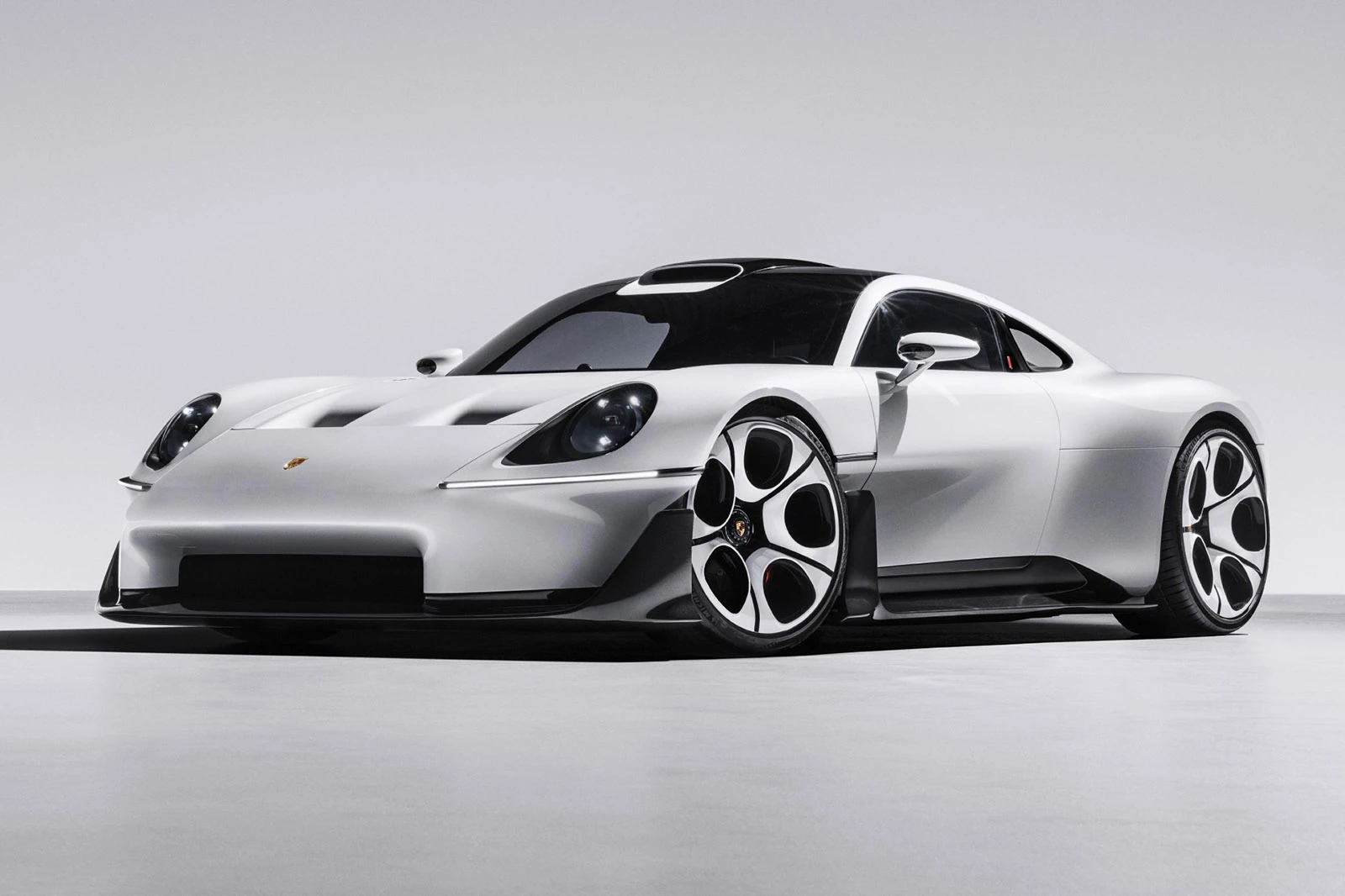
Porsche has revealed the Mission S, a mid-engined hypercar concept with an open-top two-door body and no electric hardware, at a presentation in Queens, New York. The car previews a combustion-powered super sports car that will sit above the 911 in the range as a permanent model, not a limited-run flagship like the Carrera GT or 918 Spyder.
Chairman Michael Leiters described the project as a mid-engined super sports car platform positioned above the 911, and a company statement said Porsche is planning, for the first time, a permanently available super sports car offer. Autocar reports the production car is expected to be built alongside the 911 in Zuffenhausen, with performance targeted between the 911 and the 918 Spyder.
A combustion answer to the Mission X
The Mission S arrives after Porsche scrapped the electric Mission X concept from 2023, which had been the earlier candidate for a model above the 911. Leiters has confirmed the new car will be offered only with internal combustion, not as a hybrid or battery-electric vehicle, and the company's media material refers to an engine rather than a motor. The underlying platform is being designed to accept pure-petrol, hybrid and plug-in hybrid drivetrains, but Leiters said there won't be an EV on it because there is no demand in the segment yet.
That is a clear reversal from the path Porsche mapped out when it launched the Taycan in 2020, and it follows slower-than-expected EV take-up, sales declines and profit slides through 2025 that have continued into 2026. The company now expects a roughly 2:1 split of combustion to electric models across its line-up in the medium term, with combustion dominating at the top end. The concept also lands alongside the Sportwagenschmiede '35 revitalisation plan outlined earlier this month, which pushes Porsche towards more premium, higher-revenue models.
Design under a new chief
The concept is the first public work of Tobias Sühlmann, who replaced long-time design boss Michael Mauer in February after stints at McLaren, Volkswagen, Bugatti, Aston Martin and Bentley. Sühlmann said the design was developed in just eight months, after Leiters called him with the idea for a car above the 911.
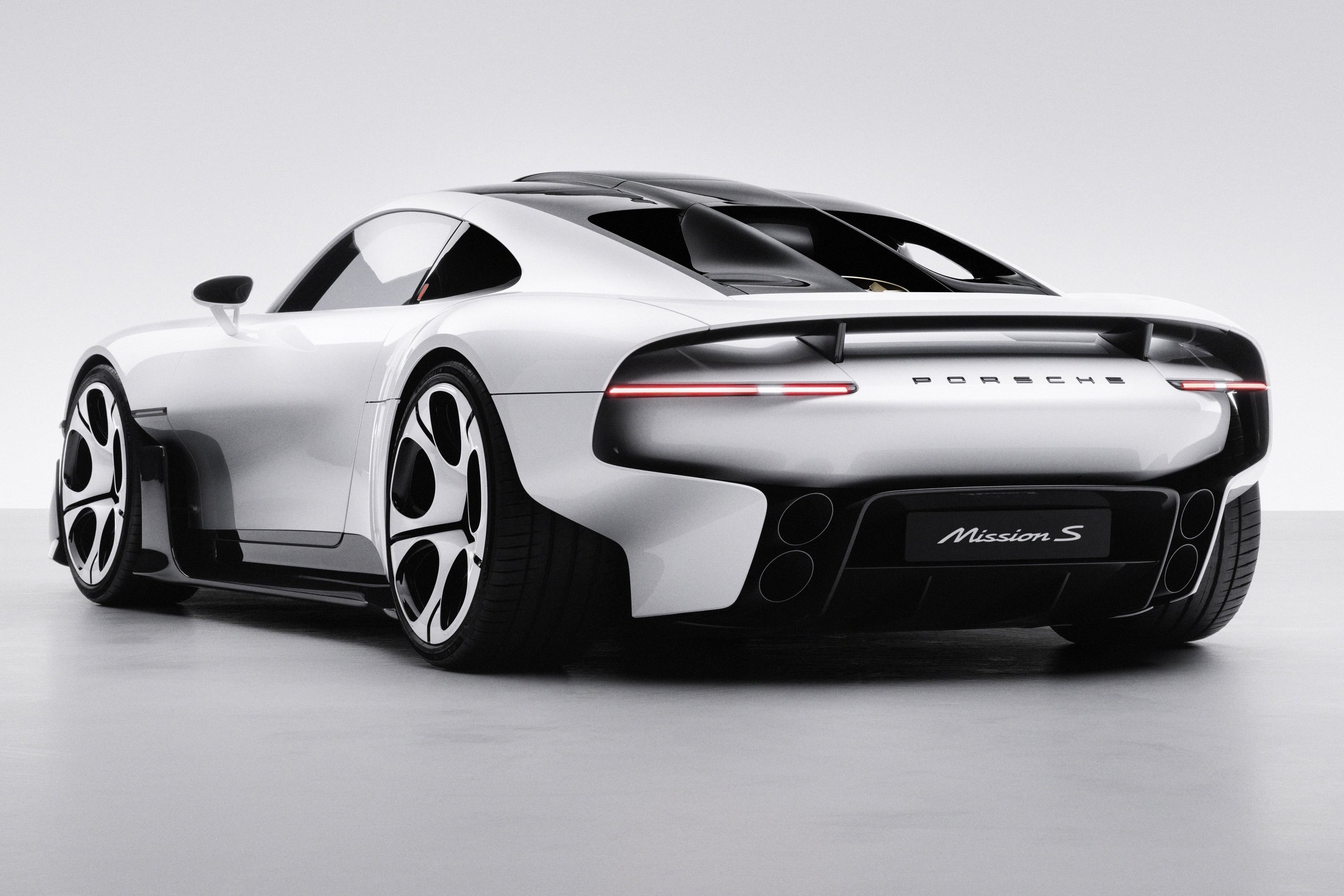
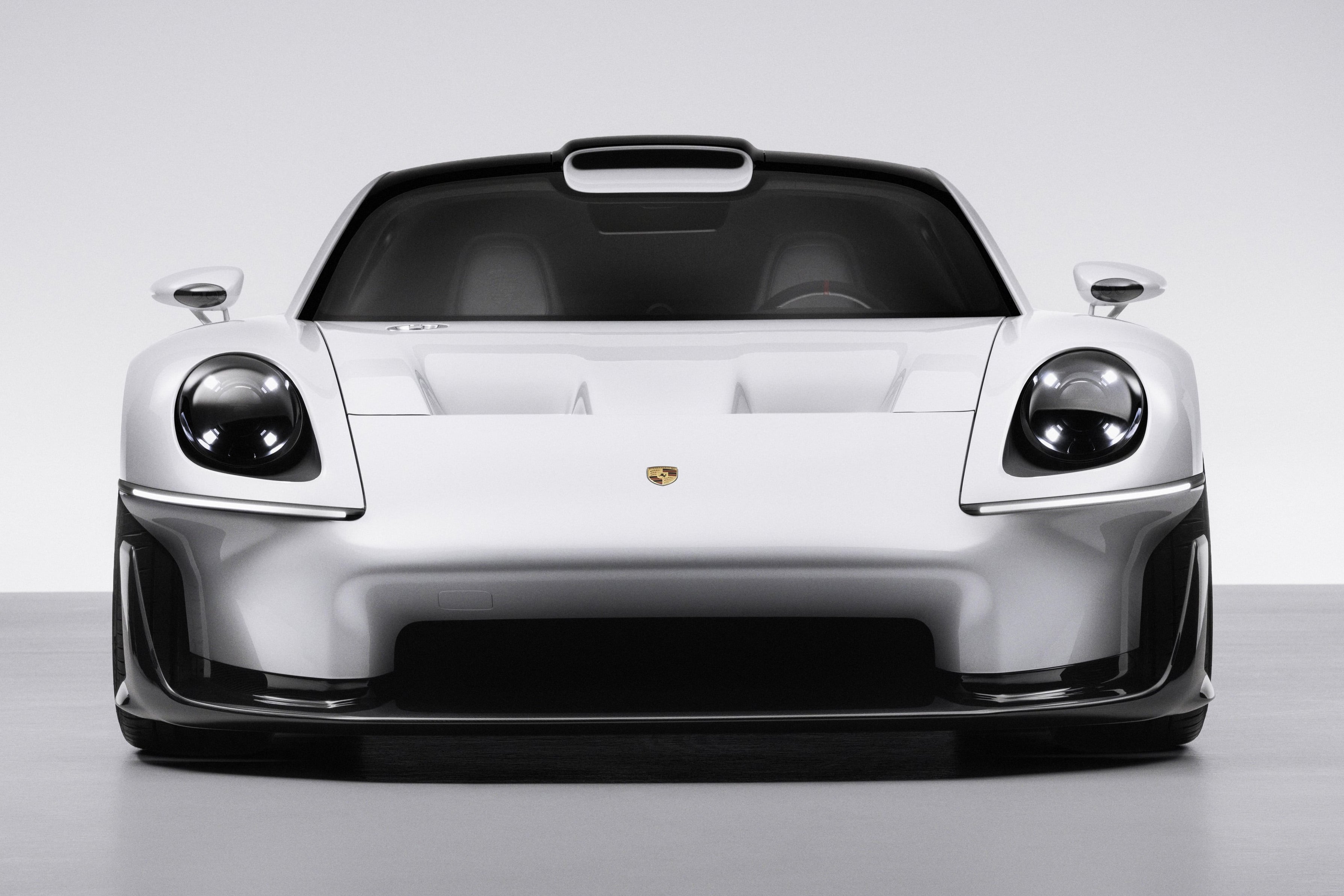
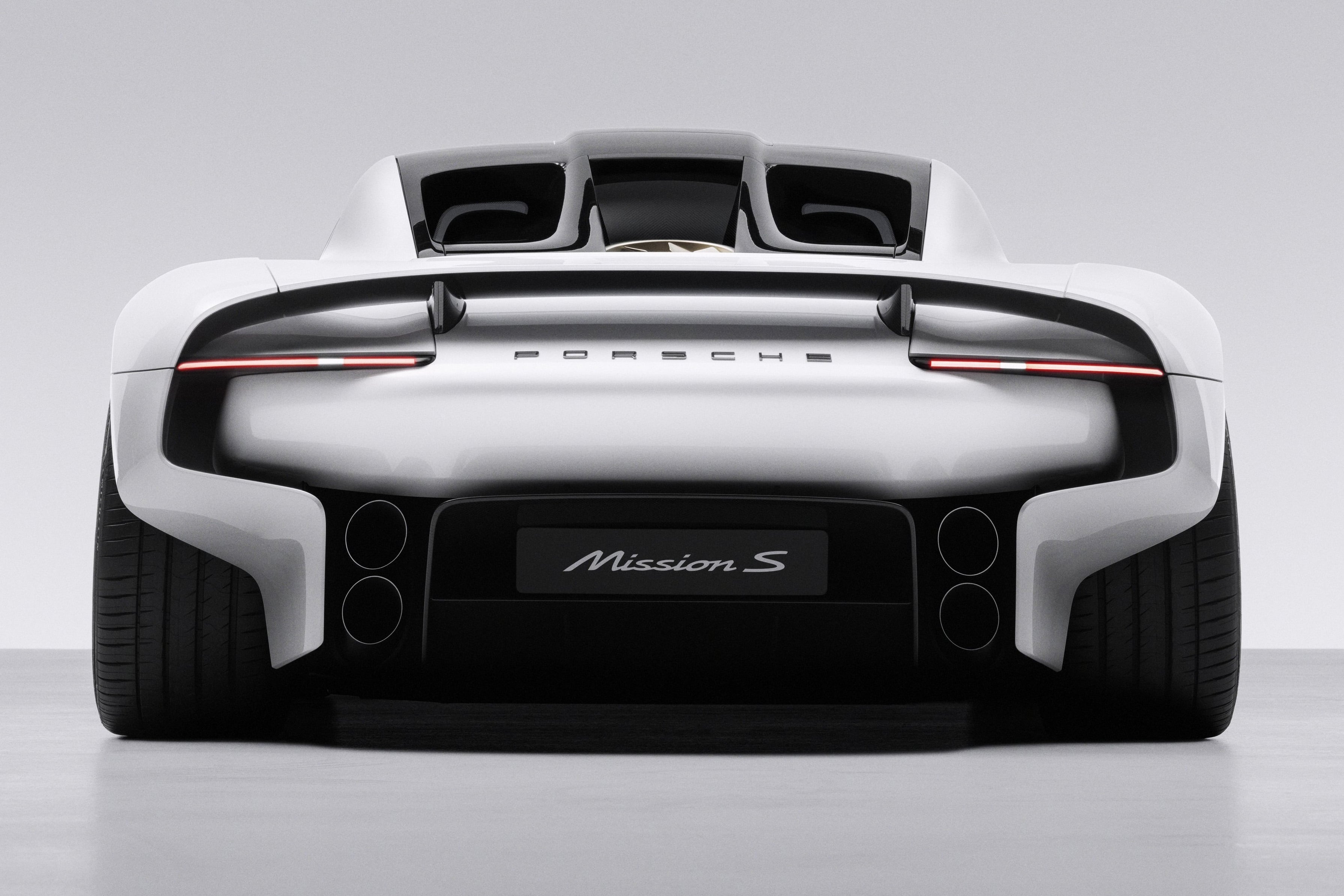
The styling leans heavily on Porsche history: torpedo front lights and rear sculpting drawn from the 911 GT1, a roofline inspired by the 959, a Carrera GT influence, telephone-dial wheels echoing the 928, and a large cooling fan above the engine bay modelled on the 917's. New cues include narrow split rear lights, while the show car wears specially developed shades of white and black chrome.
Inside and underneath
The cabin is stripped back and driver-focused, referencing the 550 Spyder and 356, with five round instruments including an analogue rev counter whose positions shift with the drive mode. There is no central touchscreen; instead a smartphone attaches to a retractable magsafe mount, and the seatbelt buckle fixes to the centre console.
Mechanically, Porsche has released no engine details. Autocar notes future Porsche models will use four-cylinder, V6, V8 and boxer engines, with a V8 or even a flat eight the likeliest fit for a mid-engined flagship, a layout hinted at by the extreme engine cover. Leiters also said the flexible platform is being developed in-house rather than borrowed from Lamborghini's mid-engined architecture.
Timing, price and Australia
Porsche has not announced when a production version will arrive, what it will cost, or whether it will be sold here by Porsche Cars Australia. The New York reveal location was chosen because the first images of the 550 Spyder, the brand's first mid-engined production model, were taken there in 1953.